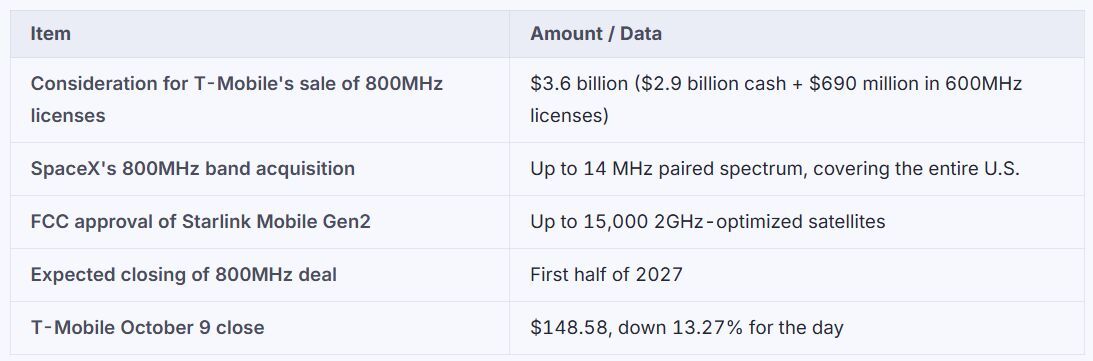
SpaceX has taken another step toward becoming the next big US carrier. According to a quarterly report filed by T-Mobile US on October 28, the company sold its 800MHz band spectrum licenses to SpaceX (through an asset management firm) for $2.9 billion.
T-Mobile has sold its 800MHz band spectrum licenses
T-Mobile has sold its 800MHz band spectrum licenses. | Image by BigGo Finance
Financial records show that T-Mobile sold its 800MHz band spectrum licenses to Grain Management, an asset management firm, back on August 10.
The deal included $2.9 billion in cash plus 600MHz spectrum licenses valued at $690 million.
Grain Management subsequently sold the low-band licenses to SpaceX on October 8. The deal awaits regulatory bodies to finalize it, which is expected to happen in early 2027.
SpaceX will have nationwide US coverage
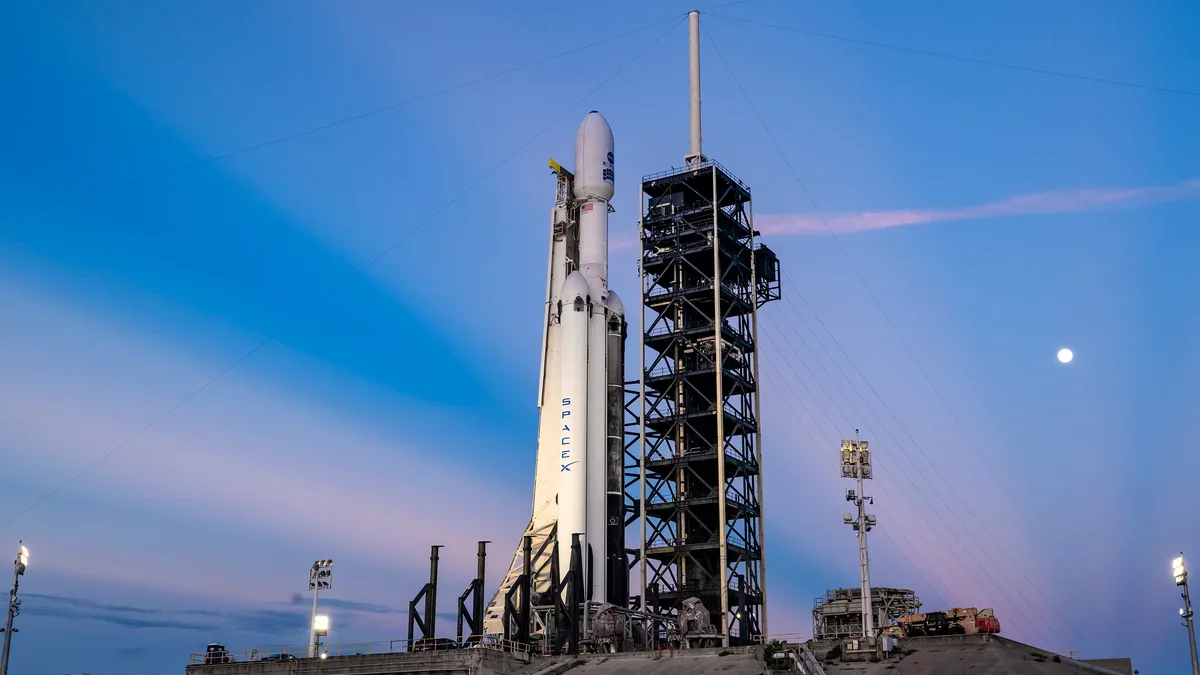
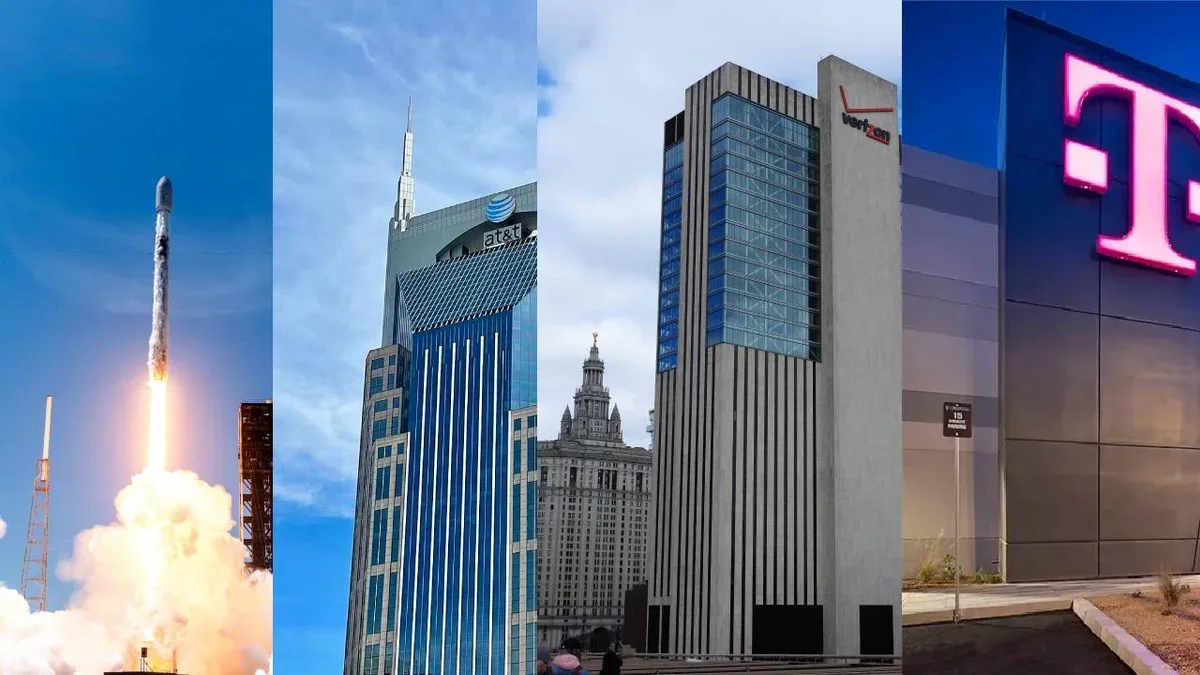
SpaceX is building its satellite and terrestrial infrastructure. | Image by SpaceX
The deal will give SpaceX the necessary low-band spectrum resources to cover the entire United States.
Elon Musk said that the existing 2GHz mid-band spectrum, coupled with the newly purchased 800MHz low-band licenses, will cover most scenarios, with the new spectrum penetrating walls and buildings, allowing Starlink Mobile customers to get a signal basically everywhere.
Starlink Mobile also emphasized that this newly acquired 800MHz spectrum is natively supported by most mobile devices on the market.
Poll
1 Votes
Do you think SpaceX will succeed in becoming the fourth biggest US carrier?
FCC already approved another piece of the puzzle
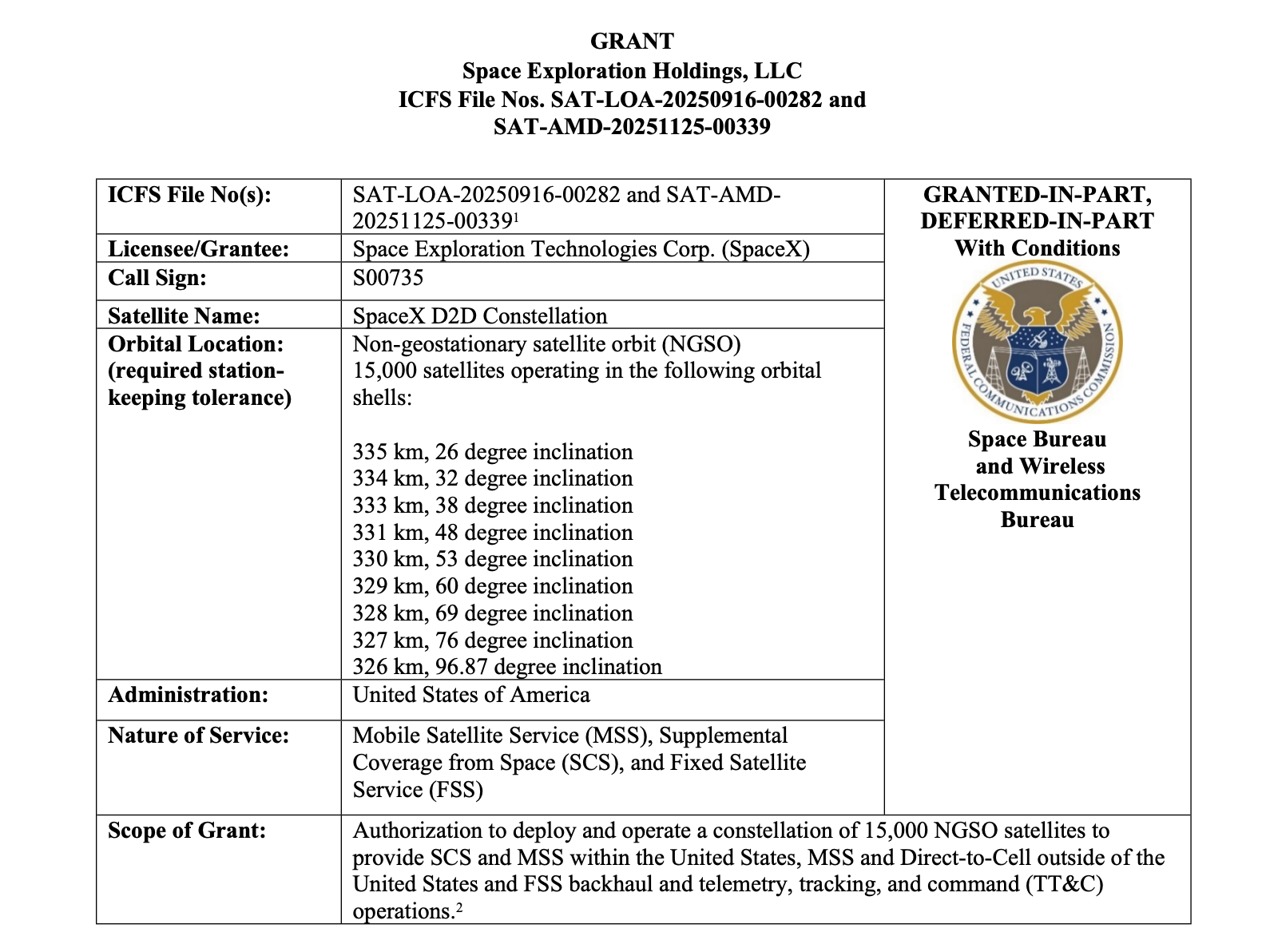
The FCC approves SpaceX's request to use additional spectrum and new satellites for its D2D service. | Image by FCC
The U.S. Federal Communications Commission (FCC) has already approved the deployment of 15,000 SpaceX satellites optimized for 2GHz spectrum, as part of Starlink Mobile's second-generation satellite constellation infrastructure.
Recommended For You
The frequencies that SpaceX will use in the US include AWS-3 Unpaired A1 (1695-1700 MHz) and B1 (1700-1710 MHz), PCS G Block (1910-1915 MHz) and (1990-1995 MHz), AWS-H Block (1915-1920 MHz) and (1995-2000 MHz), and the 2 GHz MSS bands (2000-2020 MHz) and (2180-2200 MHz).
The new satellites will be positioned between 326 km and 335 km from the Earth's surface, a slight drop from the previous constellation's 350 km shell. This will improve performance and reduce latency between phones and satellites.
T-Mobile has an ace in its sleeve and is not afraid of SpaceX
There's a specific clause in this recent deal, stating that if Grain Management profits from monetizing the 800MHz licenses, T-Mobile is entitled to an additional 50% of the gains minus the invested capital.
During T-Mobile's earnings call on October 28, the company's CEO Srini Gopalan said that T-Mobile views satellite as a complementary product, "so we don't see room in that scenario for a satellite or SpaceX to be an MVNO." However, he didn't rule out further commercial agreements between T-Mobile and SpaceX.
SpaceX is exploring Boost Mobile acquisition
Is SpaceX going to be the fourth carrier? | Image by PhoneArena
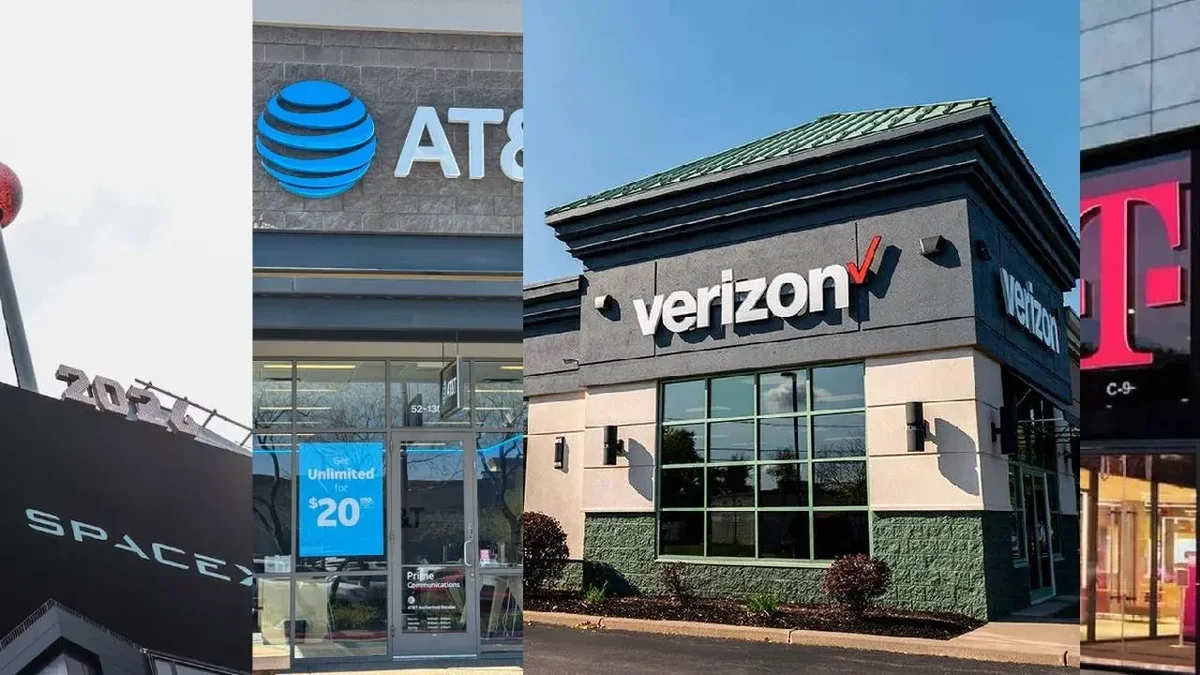
Starlink Mobile will need a user base in addition to the technical side of things such as satellites and spectrum licenses. The company is reportedly in talks with EchoStar about a possible acquisition of its prepaid brand Boost Mobile.
SpaceX is aiming to get access to about 7.38 million wireless subscribers and a ready-made distribution system, and if the deal goes through, Elon Musk will be one step closer to challenging the big three US carriers: AT&T, Verizon, and T-Mobile.
We're still a couple of years away from that scenario, though, as according to Verizon CEO Dan Schulman, SpaceX would need at least four to six years and $300 billion to $500 billion to build the necessary terrestrial network infrastructure. Do you think we need another big carrier on the US scene?
Read more about the Starlink Mobile bid to become the fourth biggest US carrier here:
Mariyan, a tech enthusiast with a background in Nuclear Physics and Journalism, brings a unique perspective to PhoneArena. His childhood curiosity for gadgets evolved into a professional passion for technology, leading him to the role of Editor-in-Chief at PCWorld Bulgaria before joining PhoneArena. Mariyan's interests range from mainstream Android and iPhone debates to fringe technologies like graphene batteries and nanotechnology. Off-duty, he enjoys playing his electric guitar, practicing Japanese, and revisiting his love for video games and Haruki Murakami's works.
A discussion is a place, where people can voice their opinion, no matter if it
is positive, neutral or negative. However, when posting, one must stay true to the topic, and not just share some
random thoughts, which are not directly related to the matter.
Things that are NOT allowed:
Off-topic talk - you must stick to the subject of discussion
Offensive, hate speech - if you want to say something, say it politely
Spam/Advertisements - these posts are deleted
Multiple accounts - one person can have only one account
Impersonations and offensive nicknames - these accounts get banned
To help keep our community safe and free from spam, we apply temporary limits to newly created accounts:
New accounts created within the last 24 hours may experience restrictions on how frequently they can
post or comment.
These limits are in place as a precaution and will automatically lift.
Moderation is done by humans. We try to be as objective as possible and moderate with zero bias. If you think a
post should be moderated - please, report it.
Have a question about the rules or why you have been moderated/limited/banned? Please,
contact us.




Things that are NOT allowed:
To help keep our community safe and free from spam, we apply temporary limits to newly created accounts: