T-Mobile hopes to repeat its 5G magic with 6G and AI
The decisions made by T-Mobile years ago made it the US 5G leader; the carrier hopes to repeat this with 6G and AI.
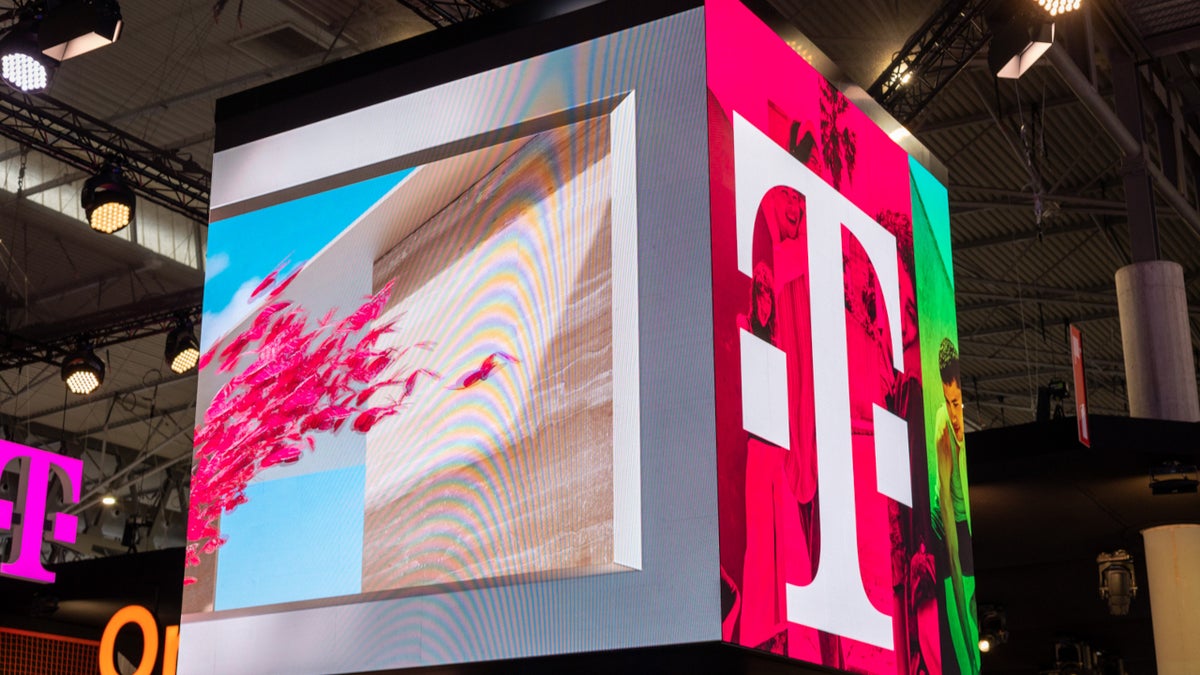
T-Mobile wants to recapture 5G spectrum magic with 6G and AI | Image by PhoneArena
We've gone through the story of how T-Mobile became the 5G King in the US thanks to a brilliant decision to go with mid-band 2.5GHz spectrum for its buildout. AT&T and Verizon made the wrong decision by going with high-band mmWave airwaves for their 5G buildouts. Yes, mmWave is faster than mid-band but its short-range propagation means that the signals traveled only a short distance and were also blocked by trees and buildings.
T-Mobile needs to be smart when bidding for spectrum, just as it was with 5G
T-Mobile lusted after Sprint's 2.5GHz mid-band spectrum, which was faster than the 600MHz low-band spectrum that the carrier was using for its nationwide 5G service. Low-band travels farther than mid-band and mmWave but does not deliver fast data speed. So T-Mobile built its 5G service around the 2.5GHz mid-band spectrum it paid $26.5 billion for when it acquired Sprint.
AT&T and Verizon regretted their decision and realized that T-Mobile had built out its 5G network the right way. Needing to obtain some mid-band spectrum, Verizon and AT&T spent more than $68 billion to pick up mid-band spectrum in the C-band via an FCC auction.
Some of the C-band frequencies obtained in the auction by Verizon and AT&T interfered with airplane altimeters. Once this problem was resolved, Verizon customers saw a huge improvement in 5G performance.
The FCC will hold two big auctions in 2027 and 2028
The FCC is going to be holding another C-band auction next year and T-Mobile has an interest in bidding for spectrum in the upper C-band. But there is more. The carrier is reportedly looking forward to an auction in 2027 of 2.7GHz.
Which spectrum should T-Mobile heavily go after?
150 Votes
2.7GHz
48.67%
Higher C-band (3.98 GHz-4.14 GHz)
32%
More 2.5GHz
19.33%
During the conference call following the release of T-Mobile's second-quarter earnings report today, T-Mobile CEO Srini Gopalan made things interesting by stating that the wireless provider could end up interested in both auctions. "We think we're approaching one of those moments, and the thing T-Mobile has been incredible at is waiting for those moments where we think this is the time for us to step in and really take a big lead," the chief executive stated.
"6G is not just 5G on steroids," says the carrier's CEO
Gopalan was comparing this moment to the one T-Mobile had at the start of the 5G rollout when it vowed to be the leader in 5G. This is a vow that T-Mobile never wavered from, and with 6G expected to debut perhaps as soon as 2030, T-Mobile has to maintain its current leadership position.
Gopalan sees the similarities between then and now. "6G is not going to just be 5G on steroids, but it’s also going to give us all sorts of opportunities like edge AI and physical AI," he said.
Edge AI processes AI locally on a device rather than a cloud server. It delivers responses to users with zero network latency and keeps personal and sensitive material stored safely on the user's device. It also works without an active internet connection. Physical AI uses sensors, cameras, thermal imaging, and tactile feedback to collect raw data from the environment, and motors, arms, wheels, or hydraulic actuators handle the movement in the physical world.
AI has yet to strain mobile networks, says T-Mobile's CTO
T-Mobile's Chief Technical Officer, John Saw, was asked about whether the upper C-band spectrum would be used for AI. Saw said that the current AI growth is focused on model training, large-scale agentic automations, and heavy backend automation. So far the surge in AI usage has not caused any strain for mobile networks.
Saw said, "We have not seen any surge in mobile traffic due to AI, even though every year we see mobile traffic going up, regardless of AI or not. If AI traffic continues to grow, especially with the growth of physical AI, I think we are more than prepared."

T-Mobile Chief Technical Officer John Saw. | Image by T-Mobile
One reason T-Mobile is confident in its abilities to handle a surge in AI-related traffic is because of the improvement in uplink performance that comes with the rollout of 5G Advanced. Saw points out that 5G Advanced tools like uplink carrier aggregation, uplink MIMO, and transmit switching will help the carrier deal with the future AI traffic that is on the way.
Like it did with its 5G buildout, T-Mobile is trying to take the early leadership in 6G and in AI. With the 2.7GHz spectrum so close to the wireless provider's bread and butter 2.5GHz airwaves, that is the auction you can expect to get the most attention from the carrier.


Popular stories



Latest News



Things that are NOT allowed:
To help keep our community safe and free from spam, we apply temporary limits to newly created accounts: