A major battle is brewing for the prized 2 GHz Mobile Satellite Services (MSS) band, which is considered ideal for Direct-to-Device (D2D) services. It's currently held by EchoStar and Viasat. Under a 2012 Federal Communications Commission (FCC) rule, a single operator must hold both terrestrial wireless and MSS rights to avoid signal coordination issues. Consequently, new applications are limited to existing operators or entities to whom they transfer licenses.
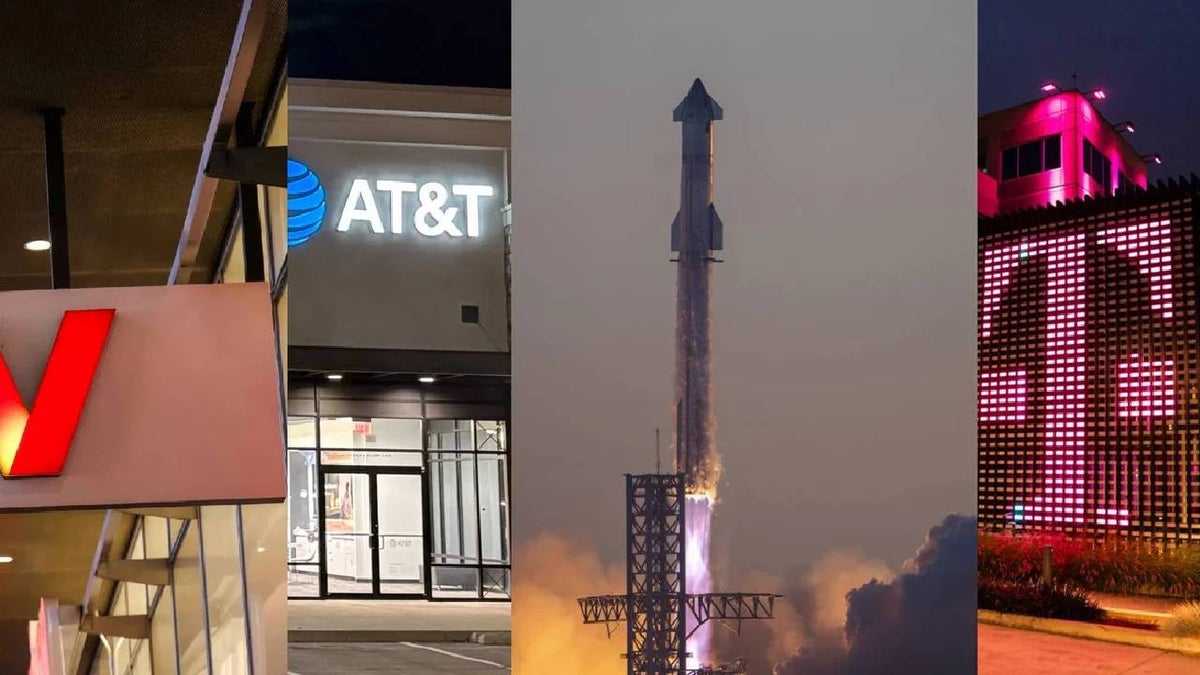
Satellite operator Sateliot is hoping to change that, but SpaceX and Globalstar have mounted fierce opposition. For AT&T, T-Mobile, and Verizon, there's a lesson hidden in that fight.
SpaceX's defense strategy
SpaceX points out that the FCC has long maintained that the 2 GHz band can only support one operator in the US. Sateliot tried to use the 2019 Smallsat Order, which opened MSS bands to small satellite systems, to bypass the strict 2 GHz licensing policy and requested a formal review.
However, the Space Bureau has consistently enforced the 2012 policy, rejecting applications from Inmarsat in 2013, AST in 2026, Sateliot in 2025 and 2026, and even SpaceX in 2024.
Sateliot said in 2025 that the directive no longer applied under the new small satellite framework. The Bureau held firm, explaining that preventing harmful interference was necessary. Moreover, no waivers can be granted until the FCC changes its core policy.
Recommended For You
SpaceX has requested that the FCC uphold the Bureau's decision and toss Sateliot's application out.
Globalstar's views
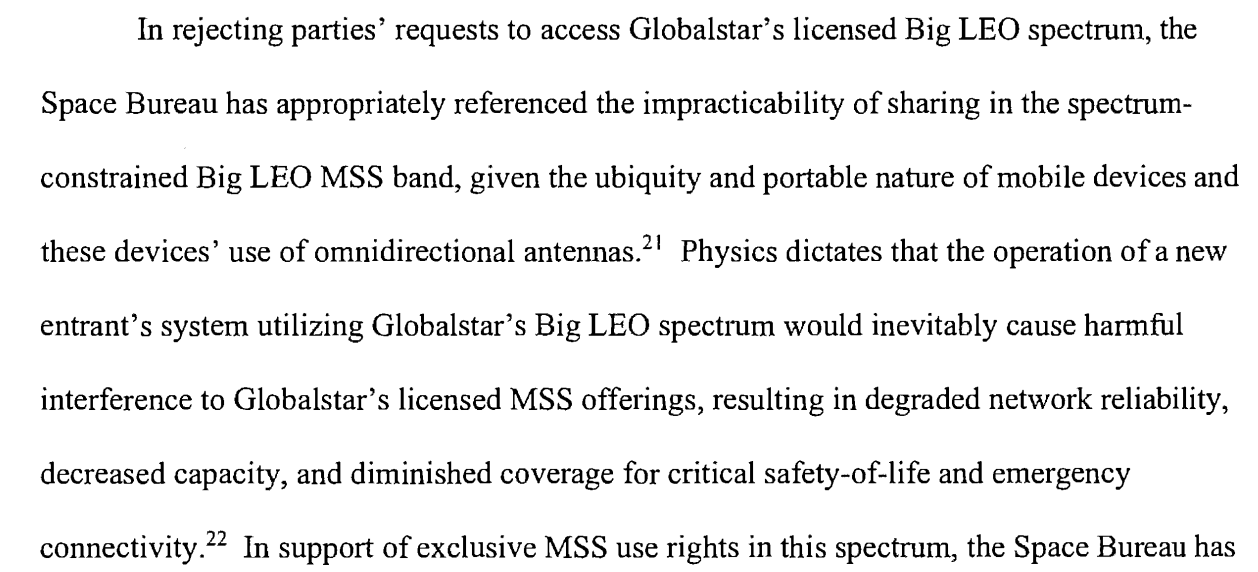
Globalstar points out the technicalities. | Image by Globalstar
Globalstar went a step further, chiding Sateliot for misunderstanding the FCC's 2019 small satellite systems licensing rules. It argued that those streamlined procedures didn't grant small satellite operators any additional spectrum rights, and they must abide by the existing rules about exclusive MSS band rights, such as the "Big LEO band where Globalstar holds exclusive MSS operational rights."
Globalstar warned that trying to share the spectrum-constrained Big LEO MSS band is impractical. The company claimed that the entry of a new operator would reduce network reliability, decrease capacity, and reduce coverage for critical emergency services.
How do you feel about the space situation?
161 Votes
The FCC needs to be very cautious.
26.09%
New entrants should be let in if possible.
26.09%
SpaceX will have a monopoly because of EchoStar spectrum.
47.83%
Same enemy, different agendas
While SpaceX and Globalstar both want the band to stay closed to new entrants, Globalstar took a subtle shot at Elon Musk's company too. Unlike SpaceX, which concentrated more on the current rules, Globalstar leaned into technical barriers, a move that keeps SpaceX's massive ambitions in check.
SpaceX asked the FCC in 2023 to let it operate Gen2 Starlink satellites in EchoStar's 2 GHz bands and Globalstar's 1.6/2.4 GHz bands. It claimed that circumstances had changed since the FCC last examined the bands. The company asserted that it would use strategies such as phased arrays and beam scheduling protocols to coexist with existing operations without causing harmful interference. The FCC dismissed the application.
All's well for SpaceX
SpaceX is acquiring 2 GHz spectrum from EchoStar and has already asked the FCC for permission to launch satellites capable of running on it. The spectrum will bolster the company's ability to provide text, voice, and broadband services from space to mobile users.
The next-gen Starlink satellites will fully utilize EchoStar's spectrum, enabling 20 times the throughput capability of the current satellites. This will allow full 5G cellular connectivity with a user experience comparable to land-based LTE service.
By aggressively guarding the precious 2 GHz license, SpaceX has demonstrated that it intends to defend exclusivity in the MSS spectrum, keeping threats from new players at bay.
Meanwhile, there is radio silence from AT&T, T-Mobile, and Verizon regarding their satellite alliance. SpaceX has demonstrated that it wants to keep new entrants out, and no joint venture is going to deter it from that.
Separately, Qualcomm's X105 5G Modem-RF is expected to start showing up in devices soon, allowing newer devices to tap into radio frequencies acquired from EchoStar.
Get iPhone 18 Pro with Visible, get $480 off!
$719
/mo
$1199
$480 off (40%)
On the Visible+ Pro plan, you get access to 5G Ultra Wideband data on Verizon's fastest network. Along with unlimited roaming across Mexico and Canada, 2 days of Global Pass per month, 3x hotspot speeds, 4K streaming, and Smartwatch service.
Anam Hamid is a computer scientist turned tech journalist who has a keen interest in the tech world, with a particular focus on smartphones and tablets. She has previously written for Android Headlines and has also been a ghostwriter for several tech and car publications. Anam is not a tech hoarder and believes in using her gadgets for as long as possible. She is concerned about smartphone addiction and its impact on future generations, but she also appreciates the convenience that phones have brought into our lives. Anam is excited about technological advancements like folding screens and under-display sensors, and she often wonders about the future of technology. She values the overall experience of a device more than its individual specs and admires companies that deliver durable, high-quality products. In her free time, Anam enjoys reading, scrolling through Reddit and Instagram, and occasionally refreshing her programming skills through tutorials.
A discussion is a place, where people can voice their opinion, no matter if it
is positive, neutral or negative. However, when posting, one must stay true to the topic, and not just share some
random thoughts, which are not directly related to the matter.
Things that are NOT allowed:
Off-topic talk - you must stick to the subject of discussion
Offensive, hate speech - if you want to say something, say it politely
Spam/Advertisements - these posts are deleted
Multiple accounts - one person can have only one account
Impersonations and offensive nicknames - these accounts get banned
To help keep our community safe and free from spam, we apply temporary limits to newly created accounts:
New accounts created within the last 24 hours may experience restrictions on how frequently they can
post or comment.
These limits are in place as a precaution and will automatically lift.
Moderation is done by humans. We try to be as objective as possible and moderate with zero bias. If you think a
post should be moderated - please, report it.
Have a question about the rules or why you have been moderated/limited/banned? Please,
contact us.




Things that are NOT allowed:
To help keep our community safe and free from spam, we apply temporary limits to newly created accounts: