Decisive round concludes for AT&T, T-Mobile, Verizon, and SpaceX, but who won?
The AWS-3 auction has ended.
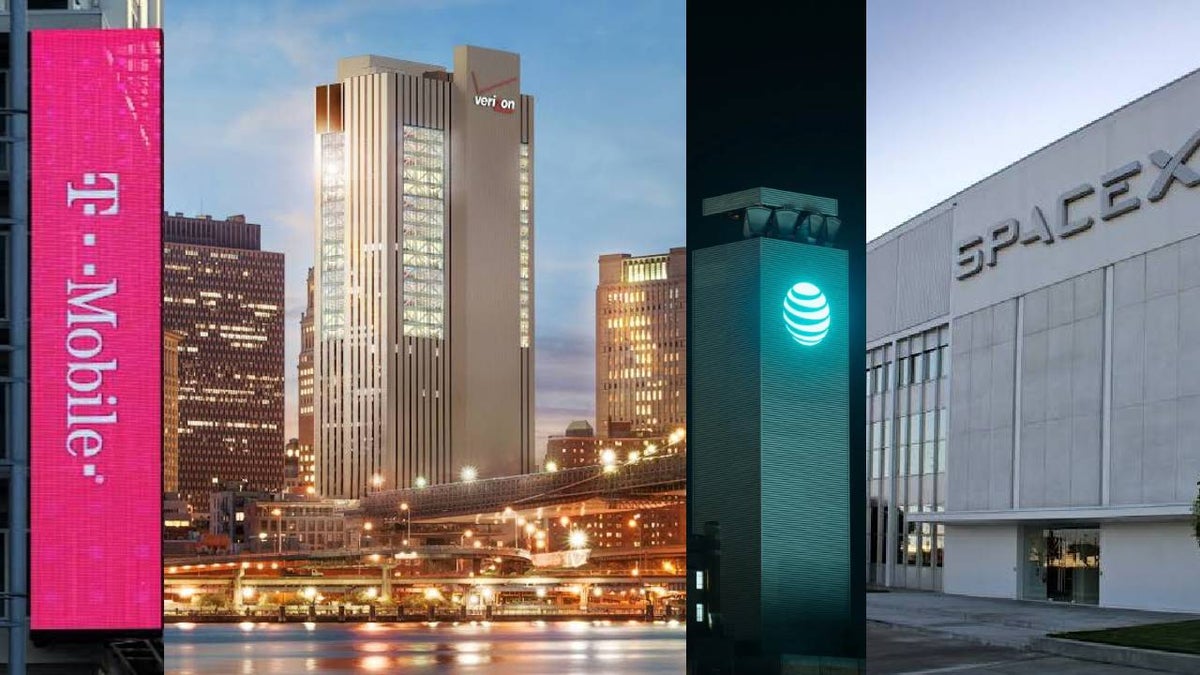
Unused spectrum is finally getting put to good use. | Image by PhoneArena
The AWS-3 auction has officially wrapped up, the Federal Communications Commission (FCC) revealed today. As the first spectrum auction in four years, it didn't disappoint, raking in over $3.5 billion across 200 licenses. There were 17 participants, including AT&T, EchoStar, T-Mobile, Verizon, and SpaceX.
The FCC said the bidding blew past expectations, proving that demand for airwaves remains strong. That was to be expected, considering a carrier's spectrum portfolio is the most important factor in determining network performance.
FCC Chairman Brendan Carr expects the availability of more spectrum to drive down prices and foster competition.
Bidding for the midband spectrum began on June 2 and stretched across 72 rounds. The proceeds will go toward covering amounts borrowed to support various initiatives, including the rip-and-replace program, which is meant to rid American networks of Chinese gear.
The spectrum that was auctioned was licensed to smaller companies backed by EchoStar in 2014. They received a discount that the FCC later revoked, causing EchoStar to default on the licenses. As a result, they have been sitting unused in the FCC’s inventory ever since.
The 200 licenses cover the 1695-1710 MHz, 1755-1780 MHz, and 2155-2180 MHz bands. They are scattered across the US and also cover major cities such as Boston, New York, and Chicago. The additional spectrum will boost 5G services in these areas.
The FCC is expected to announce the winners by the end of the week. What makes this particular auction interesting is the current landscape.
For instance, SpaceX might have bid just to gain leverage. It is currently tussling with T-Mobile over satellite communications pricing while simultaneously attempting to ward off a joint effort by the Big Three to keep its cellular ambitions grounded.
On the flip side, if AT&T, T-Mobile, and Verizon walk away as the dominant winners, it will reinforce the notion that the triumvirate is amassing far too much power.
Analysts at BNP Paribas expect the Big Three to secure the majority of the licenses. That makes sense, considering that the spectrum sits between blocks already owned by AT&T, T-Mobile, and Verizon, as pointed out by Recon Analytics founder Roger Entner. Wireless networks can take better advantage of a continuous block of spectrum than a patchwork of scattered frequencies.
If SpaceX did bid, it was likely a warm-up for the Upper C-Band auction, which will take place in July 2027. Its bidding was likely targeted at rural markets where demand is highest for the satellite-powered direct-to-cell service.
A success
The FCC said the bidding blew past expectations, proving that demand for airwaves remains strong. That was to be expected, considering a carrier's spectrum portfolio is the most important factor in determining network performance.
Today’s successful auction generated billions of dollars in competitive bids to put spectrum to effective commercial use, and it bolsters competition in the wireless marketplace.
Brendan Carr, FCC Chairman, June 2026
Took a whole month
Bidding for the midband spectrum began on June 2 and stretched across 72 rounds. The proceeds will go toward covering amounts borrowed to support various initiatives, including the rip-and-replace program, which is meant to rid American networks of Chinese gear.
The 200 licenses cover the 1695-1710 MHz, 1755-1780 MHz, and 2155-2180 MHz bands. They are scattered across the US and also cover major cities such as Boston, New York, and Chicago. The additional spectrum will boost 5G services in these areas.
Who are you rooting for?
114 Votes
The Big Three, because they are doing pretty well.
41.23%
SpaceX, because I want it to challenge the Big Three.
39.47%
Whoever the other 12 bidders were.
19.3%
Results
The FCC is expected to announce the winners by the end of the week. What makes this particular auction interesting is the current landscape.
For instance, SpaceX might have bid just to gain leverage. It is currently tussling with T-Mobile over satellite communications pricing while simultaneously attempting to ward off a joint effort by the Big Three to keep its cellular ambitions grounded.
On the flip side, if AT&T, T-Mobile, and Verizon walk away as the dominant winners, it will reinforce the notion that the triumvirate is amassing far too much power.
Guessing game
Analysts at BNP Paribas expect the Big Three to secure the majority of the licenses. That makes sense, considering that the spectrum sits between blocks already owned by AT&T, T-Mobile, and Verizon, as pointed out by Recon Analytics founder Roger Entner. Wireless networks can take better advantage of a continuous block of spectrum than a patchwork of scattered frequencies.
Of course these highly fragmented AWS-3 licenses aren't much use for satellite D2D and all Starlink really needs is the two unpaired blocks (Davenport A1 + Cincinnati B1) that sold for a total of $10.5M.
Tim Farrar, Technology Consultant, TMF Associates
If SpaceX did bid, it was likely a warm-up for the Upper C-Band auction, which will take place in July 2027. Its bidding was likely targeted at rural markets where demand is highest for the satellite-powered direct-to-cell service.


Popular stories
Latest News
Things that are NOT allowed:
To help keep our community safe and free from spam, we apply temporary limits to newly created accounts: