The Galaxy S Plus made perfect sense a few years ago. It offered a bigger screen and battery than the base model without the full price jump of the Ultra.
After the Galaxy S26 series announcement, however, it seems even more like an upward nudge in the pricing ladder. The Plus model is now just $200 away from the Galaxy Ultra (only the S26 Ultra didn't get a price hike) and judging by sales numbers from last year, I expect the new model to be even less popular.
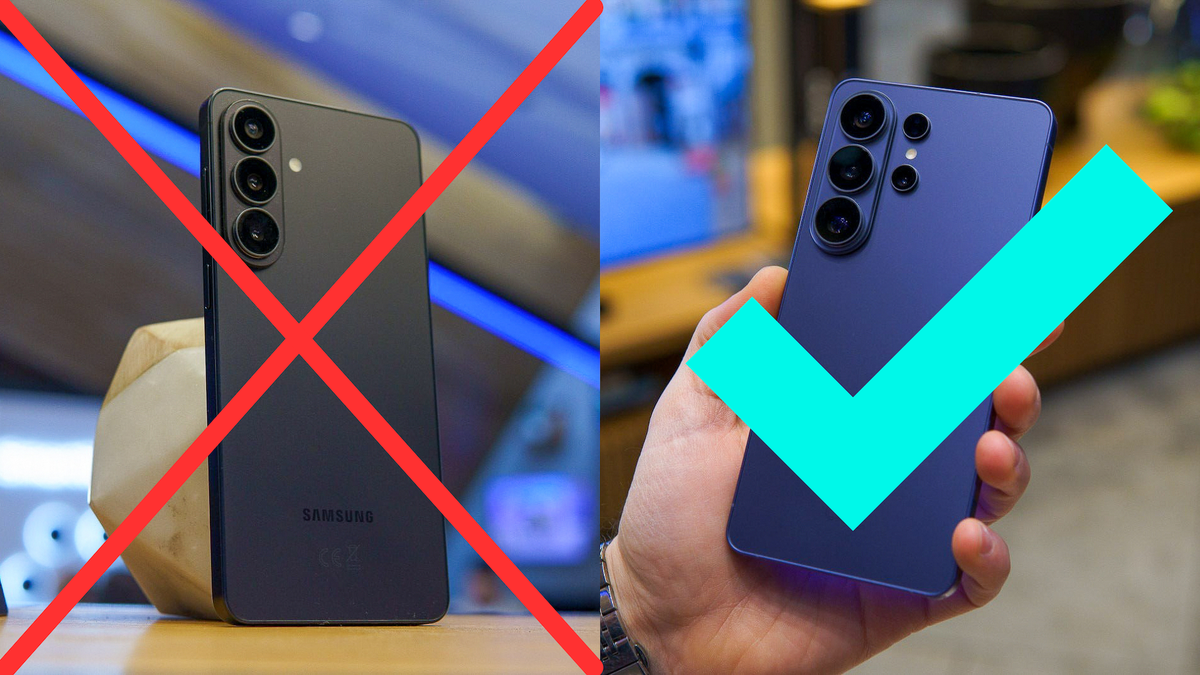
Of course, that’s the case with any middle-of-the-road flagship that sits between the entry-level edition and the ultimate one. But wouldn’t you like to see a smaller Galaxy Ultra instead of a larger Galaxy “normal”?
Galaxy S26 Ultra: save up to $720 now
$579
99
$1299
99
$720 off (55%)
The Galaxy S26 Ultra has been announced, bringing a Privacy Screen feature, insanely fast processor, and multiple Galaxy AI enhancements. Right now, you can save up to $720 at the Samsung Store with eligible trade-ins. You also get 15% off the Buds 4 series with your purchase. Alternatively, you can get $150 credit for add-ons, no trade-in required.
The Galaxy S26 is currently available at the Samsung Store with an exciting trade-in discount. Right now, you can buy the model with a $340 maximum price cut. Alternatively, you can save $125 with Samsung Instant Savings.
The Plus is good, but a smaller Ultra would bring much more value
I don’t mean to present the Galaxy S26 Plus as a bad phone. But it is basically the same phone as last year's generation but more expensive, so what's really the point of it now? Of course, you get the Snapdragon 8 Elite Gen 5 (in the US), but does that upgrade really justify $1,100?
Wouldn’t it be better for buyers to have the Galaxy Ultra’s benefits be more accessible? My take is that a $1,200 smaller Galaxy Ultra would be much more desireable.
What does that give you? Here are the main benefits of the Galaxy Ultra:
Recommended For You
Galaxy S26 Ultra
Galaxy S26 Plus
Gorilla Glass Armor 2
Gorilla Glass Victus 2
Anti-reflective coating
No anti-reflective coating
Privacy Display
No Privacy Display
Built-in S Pen support
No built-in S Pen support
Sharper and 200 MP main camera with better low-light performance and HDR
50 MP main camera
Sharper 50 MP ultrawide camera that's better in low light
12 MP ultrawide camera
Dual telephoto setup: 50 MP 5x and 10 MP 3x zoom
Only 10 MP 3x zoom
Now, with a smaller Ultra, you’d get a smaller display and likely less battery life than the Galaxy Plus, but the benefits outweigh the downsides by a landslide. Even if one or two of these upgrades don't tickle your fancy, then the rest probably will.
Apple and Google have moved on
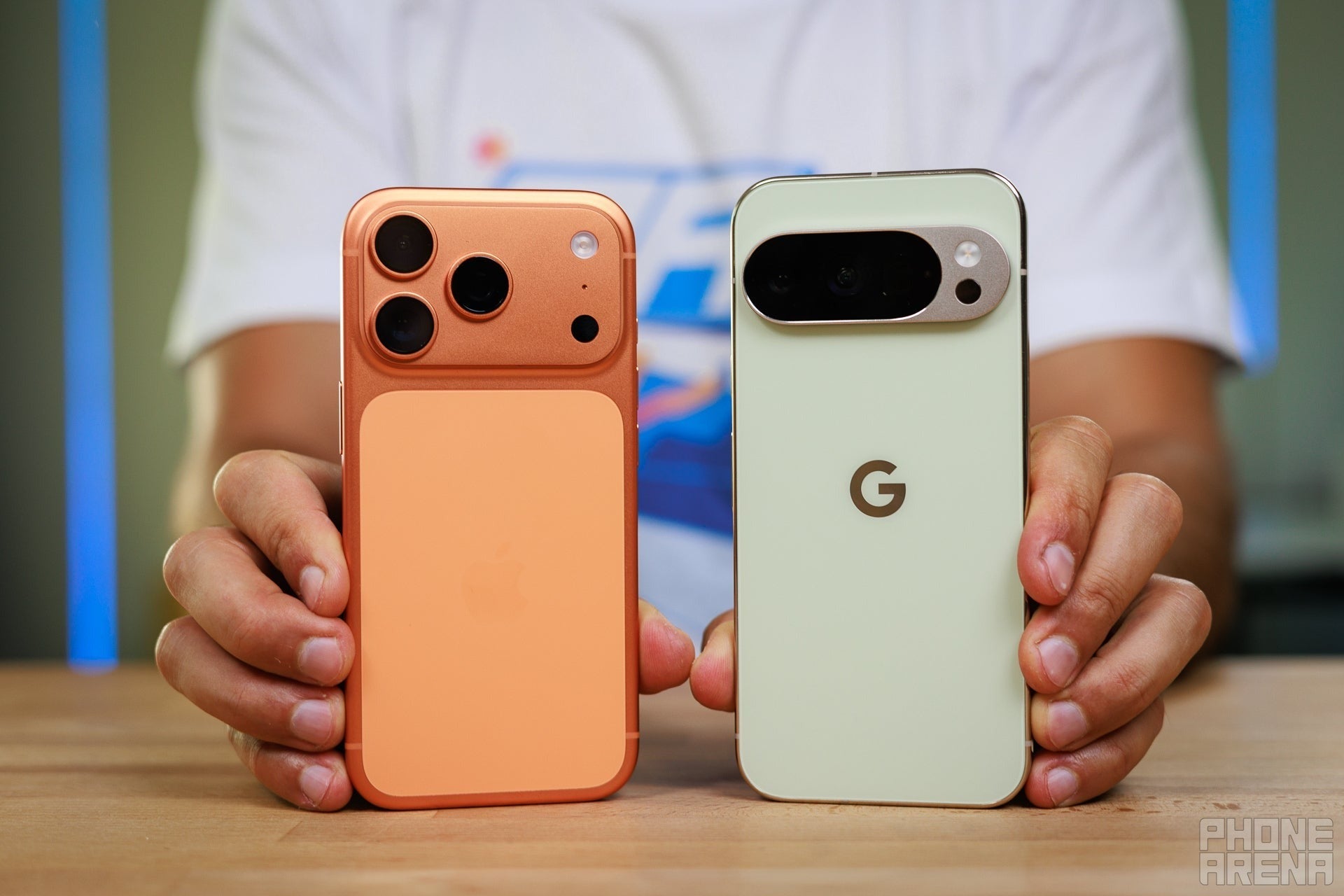
The iPhone 17 Pro and Pixel 10 Pro are Apple's and Google's best but in small format, so why can't Samsung do the same? | Image by PhoneArena
The iPhone 17 Pro and iPhone 17 Pro Max offer virtually the same experience. Apple has not compromised the smaller Pro by any means compared to the larger one. It has the same processor, the same telephoto camera, the same cooling and just as much RAM.
Google recently did the same with its Pixel phones and introduced a smaller Pixel Pro model next to a Pixel Pro XL. The high-end models are already the most popular ones among buyers, so I think it makes sense to have more choices when it comes to the Pros and Ultras out there.
Unfortunately, in Samsung’s case things are still as they were ages ago. If you want the full Galaxy experience you must buy the largest phone in the lineup. Ultra equals big, but that seems like an outdated approach in 2026.
With the price hikes, a smaller Ultra makes even more sense
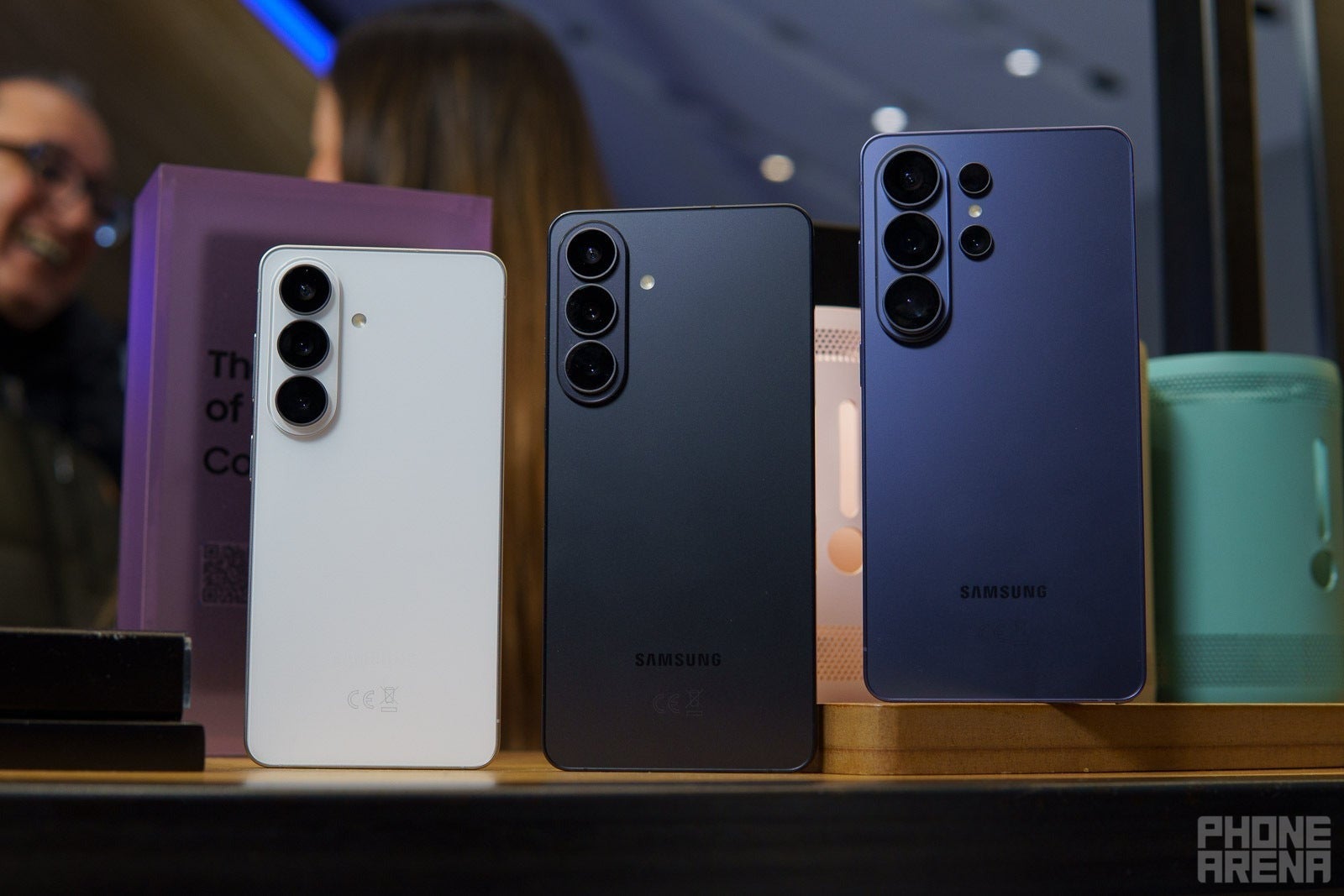
A hundred bucks more for the S26 and S26 Plus, but the Ultra still goes for $1,300. | Image by PhoneArena
There has been a major shift in the business of manufacturing phones. Component costs have jumped—largely due to AI—and even companies like Samsung can’t (or don’t want to) protect the current prices.
Samsung kept the Galaxy S26 Ultra at the same price but raised the Galaxy S26 and S26 Plus by $100. That shift makes the lineup feel even more skewed toward the Ultra, especially when the Plus now sits at $1,100.
At that price, I find it harder to justify the value of the Galaxy Plus. Heck, it was hard for me to justify it when it was $1,000. If I am already spending four figures, I would much rather pay $1,200 for a smaller Ultra than $1,100 for a Plus model that lacks most of the meaningful upgrades.
Samsung appears to be steering buyers in that direction. This year, the company devoted far less stage time to the standard and Plus variants, while nearly all headline features were reserved for the Ultra (more so than in previous years).
At the end of the day…
A 6.3-inch Galaxy S Ultra would give buyers the opportunity to fall in love with all the benefits that come with the cutting-edge tech Samsung has to offer.
One of my favorite features on the new Ultra model is the Privacy Display, as well as the Gorilla Glass Armor 2 and its anti-reflective properties that came with the previous generation. If I want that feature, however, I am forced to get a large phone, even though I prefer regular-sized ones. This applies to all other Ultra-related benefits I mentioned earlier.
The Galaxy Plus used to be acceptable because it offered that lengthy battery life and big screen experience at a lower price, but it was at the edge of being too expensive. Now that it has hit the $1,100 mark, it just seems like a poor decision. Replacing it with a slightly more expensive phone that offers a lot more in return would be better both for Samsung and for buyers.
Switch flash sale! Limited time offer!
Save $20 on Switch consoles from Back Market. Discount automatically applied at checkout. Offer ends 13 September 2026 at 23:59.
Aleksandar is a tech enthusiast with a broad range of interests, from smartphones to space exploration. His curiosity extends to hands-on DIY experiments with his gadgets, and he enjoys switching between different brands to experience the latest innovations. Prior to joining PhoneArena, Aleksandar worked on the Google Art Project, digitizing valuable artworks and gaining diverse perspectives on technology. When he's not immersed in tech, Aleksandar is an outdoorsman who enjoys mountain hikes, wildlife photography, and nature conservation. His interests also extend to martial arts, running, and snowboarding, reflecting his dynamic approach to life and technology.
COMMENTS (25)
COMMENTS (25)
All comments need to comply with our
Community Guidelines
PhoneArena Community Rules
A discussion is a place, where people can voice their opinion, no matter if it
is positive, neutral or negative. However, when posting, one must stay true to the topic, and not just share some
random thoughts, which are not directly related to the matter.
Things that are NOT allowed:
Off-topic talk - you must stick to the subject of discussion
Offensive, hate speech - if you want to say something, say it politely
Spam/Advertisements - these posts are deleted
Multiple accounts - one person can have only one account
Impersonations and offensive nicknames - these accounts get banned
To help keep our community safe and free from spam, we apply temporary limits to newly created accounts:
New accounts created within the last 24 hours may experience restrictions on how frequently they can
post or comment.
These limits are in place as a precaution and will automatically lift.
Moderation is done by humans. We try to be as objective as possible and moderate with zero bias. If you think a
post should be moderated - please, report it.
Have a question about the rules or why you have been moderated/limited/banned? Please,
contact us.







Things that are NOT allowed:
To help keep our community safe and free from spam, we apply temporary limits to newly created accounts: