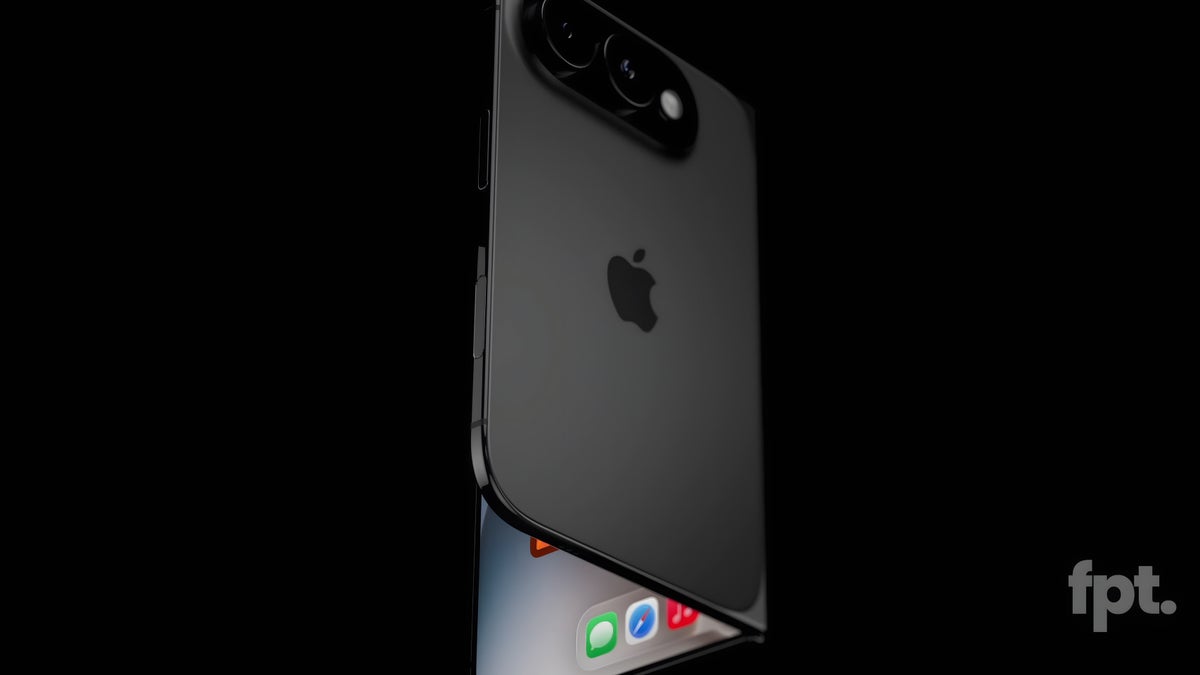
Foldable iPhone expectations have reached the point where a phone nobody outside Apple has held is getting credit for other companies' pre-order records. The iPhone Ultra arrives in September at a rumored $2,000 and up, entering a wide-fold category that both the Galaxy Z Fold 8 and Huawei's Pura X Max already shipped into, and one we've been testing for months.
Xiaomi 18 Fold pre-orders trace back to a single Weibo post
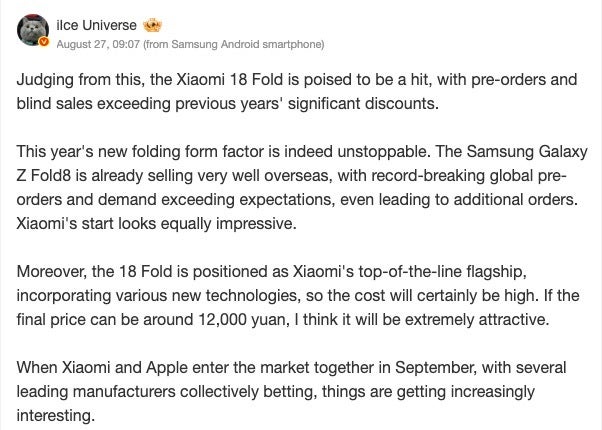
The claim going around is that the Xiaomi 18 Fold's pre-orders beat previous years by a wide margin, which would be solid evidence of something if it had come from Xiaomi. It came from one Weibo post by the leaker Ice Universe on August 27.
The August 27 Weibo post behind the Xiaomi 18 Fold pre-order claim, machine translated. | Image by Ice Universe via Weibo
Ice Universe has a good record, particularly on Samsung hardware, though he has been wrong before and his beat is supply chain specs rather than sales data. In the post itself he does not give a pre-order figure at all, he says the 18 Fold looks poised to do well, which is a forecast.
The record-breaking pre-orders he actually cites belong to the Galaxy Z Fold 8, which he describes as selling very well abroad with demand running past expectations. Xiaomi's start, in his words, looks comparable to that, which is a comparison rather than a number.
Recommended For You
Somewhere between that post and the coverage, then, the record changed companies. Xiaomi opened its 100-yuan reservation window on August 24 (translated source) and has not published a figure since, and no Chinese tech outlet has reported one either.
It should be noted that Samsung is the exclusive display supplier for the iPhone Ultra, and we reported back in February that it was weighing an increase in production of those panels. A company tooling up for a rival's launch has its own reasons to sound confident about it.
Where do you stand on wide-folding phones right now?
287 Votes
I want one, the wider screen is worth the money
34.49%
Interested, but not at that price
30.66%
I'll wait and see how the first ones hold up
24.39%
Foldables don't appeal to me at all
10.45%
What the foldable shipment numbers say about the wide-fold surge
The reader-facing question is simpler than the market one. If you are choosing between a wide fold and a normal phone this fall, what matters is whether the category is genuinely growing or whether it is being talked into growing.
On that, the forecasts and the actual shipments do not agree with each other, and the gap is wide enough to be worth sitting with. Omdia's August figures are the ones that gave me pause:
Global foldable shipments fell 21.6% year on year in the first half of 2026, down to 5.1 million units.
2025 finished at 18.2 million units, up just 6%, the weakest growth the category has recorded in recent years.
The projected recovery to more than 22 million units in 2026 is a forecast covering a half of the year that has not happened yet.
By 2030, foldables are still expected to account for less than 3% of all smartphone shipments.
If you already own a Fold 8 or a Pura X Max, though, the honest answer is that none of this changes your phone. Huawei took 57% of book-type foldable shipments in the first half of the year against Samsung's 18%, according to a new report, so the company most exposed to Apple's arrival is the one that cannot sell in the US anyway.
Our own testing is also less flattering to the layout than the sales talk suggests. We found in our hands-on that the wide inner display does not show you more, it just removes the letterbox bars.
[img center [[453515:"An alleged Xiaomi 18 Fold prototype, showing the wide-fold proportions and a burgundy finish. | Carl Peter via Weibo"]] />
The leaked prototype above is worth a look on its own, since it is one of the few we have. It shows an oval camera island in the top corner carrying three lenses, a flash and a pair of sensors, with a line of engineering markings stamped under the xiaomi wordmark, which is the sort of thing that only turns up on pre-production units.
Closed, it is noticeably shorter and wider than a traditional book-style fold, sitting much nearer the Galaxy Z Fold 8's proportions than Xiaomi's older Mix Fold models. The convergence on this shape is real enough, whatever the pre-order numbers turn out to be.
More on the wide-fold shift and how it holds up in testing:
Foldables are still under 3% of the phones people buy
One of you pointed out that our last vote on this had no option for simply not seeing the appeal of foldables, which is a fair complaint and a useful reminder.
That group is not a fringe. If Omdia is right, better than 97 out of every 100 phones sold in 2030 will still fold exactly zero times, so the people shrugging at wide folds are the overwhelming majority rather than the holdouts.
Apple will grow this category, but it did not start it
The fair version of all this is that Apple's entry probably does expand the wide-fold market, and I would expect it to, because that is what has tended to happen when the company shows up late to a category.
But validation is not invention, and a phone that has not shipped cannot be the reason other phones sold. Those two ideas are being blended together right now, and the blend is doing a lot of work that the evidence is not.
What I am hoping for in September is the plain version: Apple arriving fourth to a form factor Huawei, Samsung and Xiaomi already proved out, and being judged on whether its take on it is better. I would rather read that piece than another projection, and I suspect a lot of you would too.
Get a free Galaxy A17 with Straight Talk. To claim this deal, you need to pair the phone with activation on a Silver Unlimited Plan or higher. This tier costs $45 per month. Offer valid through 01/10/27 while supplies last online.
Johanna Romero is a Senior News Writer at PhoneArena, covering mobile technology news across Android, iOS, wearables, and the Google ecosystem she knows best. Drawing on 15 years in IT and tech support from 2007 to 2022, she brings a user-friendly eye for the practical features and lesser-known tricks readers care about. Google named her an official #TeamPixel member in 2022, and she also reviews the latest devices on her YouTube channel, JoJo the Techie.
A discussion is a place, where people can voice their opinion, no matter if it
is positive, neutral or negative. However, when posting, one must stay true to the topic, and not just share some
random thoughts, which are not directly related to the matter.
Things that are NOT allowed:
Off-topic talk - you must stick to the subject of discussion
Offensive, hate speech - if you want to say something, say it politely
Spam/Advertisements - these posts are deleted
Multiple accounts - one person can have only one account
Impersonations and offensive nicknames - these accounts get banned
To help keep our community safe and free from spam, we apply temporary limits to newly created accounts:
New accounts created within the last 24 hours may experience restrictions on how frequently they can
post or comment.
These limits are in place as a precaution and will automatically lift.
Moderation is done by humans. We try to be as objective as possible and moderate with zero bias. If you think a
post should be moderated - please, report it.
Have a question about the rules or why you have been moderated/limited/banned? Please,
contact us.





Things that are NOT allowed:
To help keep our community safe and free from spam, we apply temporary limits to newly created accounts: