
Editorials · Reviewer Insight
Google Tensor promised a Pixel revolution. Five years later, the results are disappointing
Google is ripping you off with its Pixel phones.
This article may contain personal views and opinion from the author.
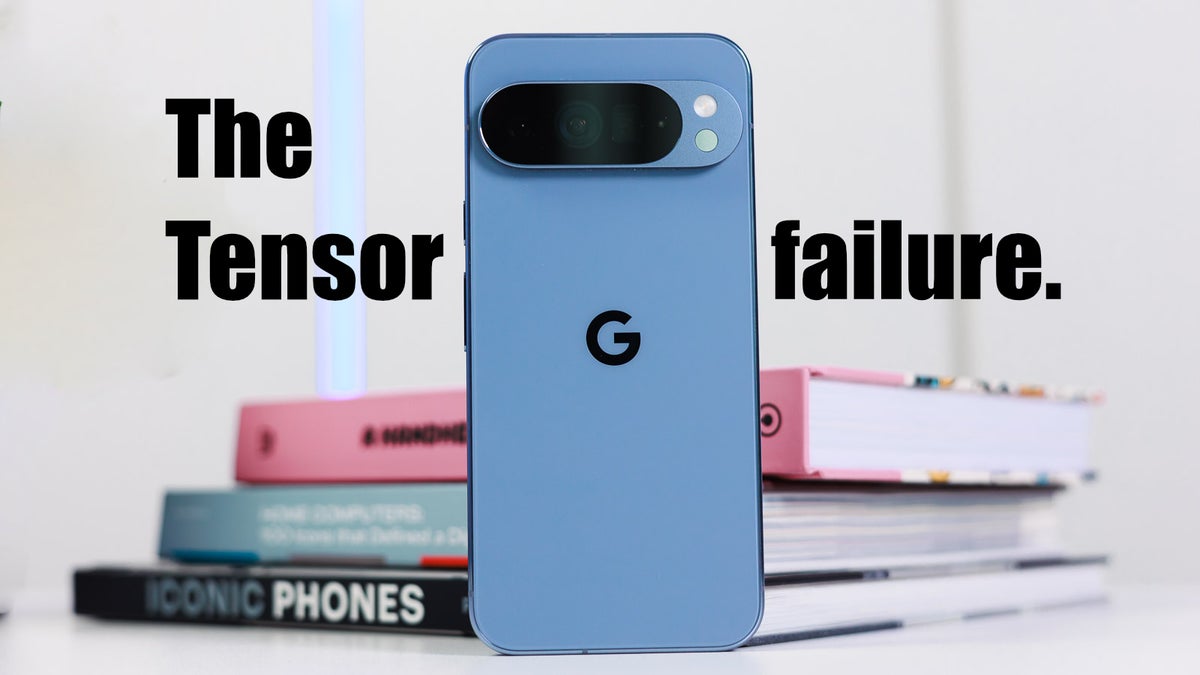
I love the idea behind the Pixel, but the execution makes it hard to justify buying one.
Half a decade. That's how long Google's custom line of Tensor chips has been ticking inside any modern Pixel phone, ever since the Pixel 6 line in late 2021.
And I'm tired of pretending that any of this is fine.
That's five years too many of lackluster performance and efficiency, delivering subpar user experience and questionable generational improvements. Google has been serving us underwhelming chipset leftovers while the competition has been accruing one Michelin star after another.
Google's Tensor line of chips: An unfortunate pipe dream
The first Tensor chipset, the G1, arrived with the Pixel 6 and Pixel 6 Pro, and it demonstrated humble beginnings for the lineup. Google didn't chase high-performance results, foregoing impressive benchmark showcases for an architecture that's more suitable for the Pixel's unique machine-learning needs. And that was fine, as pretty much everyone was willing to give Google the benefit of the doubt back then.
Then, next year, the same adage repeated itself, with the new Tensor G2 inside the Pixel 7-series being pretty much the same in terms of specs, features, and overall performance. Fine, the naysayers finally had the chance to critique Google's unimpressive choices, but just you wait until we go down to a 4 nm manufacturing node, or so Google implied.
And with the Tensor G3, that's exactly what happened. The Pixel 8 chip used Samsung's finest at the time manufacturing process with a very upgraded chip architecture and features which finally showed some light at the end of the tunnel. Sadly, the Tensor still trailed all of its rivals in the chip space, and as a result, Google's Pixels also trailed most other phones out there in terms of raw performance and battery life efficiency.
The Tensor G4? Once again a minimal amount of upgrades that only solidified the Pixel spot at the bottom of the performance and efficiency barrel, being overtaken by virtually any of its competitors that actually mattered.
Google's latest Tensor G5 moved to a 3 nm process in mid-2025, catching up to Apple, Qualcomm, and Samsung which already had 3 nm chips out there, but the Tensor G5 was once again tuned with AI and ML in mind, trailing the benchmarks and the battery life leaderboards.
| Specification | Tensor G5 | Tensor G4 | Tensor G3 | Tensor G2 | Tensor G1 |
|---|---|---|---|---|---|
| Manufacturing process | TSMC 3 nm | Samsung 4 nm | Samsung 4 nm | Samsung 5 nm | Samsung 5 nm |
| Prime cores | 1x Cortex-X4@3.78GHz | 1x Cortex-X4@3.1GHz | 1x Cortex-X3@2.9GHz | 2x Cortex-X1@2.85GHz | 2x Cortex-X1@2.8GHz |
| Mid cores | 5x Cortex-A725@3.05GHz | 3x Cortex-A720@2.6GHz | 4x Cortex-A715@2.37GHz | 2x Cortex-A78@2.3GHz | 2x Vortex-A76@2.25GHz |
| Efficiency cores | 2x Cortex-A520@2.25GHz | 4x Cortex-A520@1.95GHz | 4x Cortex-A510@1.7GHz | 4x Cortex-A55@1.8GHz | 4x Cortex-A55@1.8GHz |
| GPU | PowerVR DXT-48-1536 | ARM Mali-G715 | ARM Mali-G715 | ARM Mali-G710 | AMR Mali-G78 |
| Memory | LPDDR5X | LPDDR5X | LPDDR5X | LPDDR5 | LPDDR5 |
| Wi-Fi | Wi-Fi 7 | Wi-Fi 7 | Wi-Fi 7 | Wi-Fi 6 Wi-Fi 6e | Wi-Fi 6 Wi-Fi 6e |
| Devices | Google Pixel 10 Pro Fold Google Pixel 10 Pro XL Google Pixel 10 Pro Google Pixel 10 | Google Pixel 9 Pro Fold Google Pixel 9 Pro XL Google Pixel 9 Pro Google Pixel 9 Google Pixel 9a | Google Pixel 8 Pro Google Pixel 8 Google Pixel 8a | Google Pixel Fold Google Pixel 7 Pro Google Pixel 7 Google Pixel 7a Google Pixel Tablet | Google Pixel 6 Pro Google Pixel 6 Google Pixel 6a |
Now in late July 2026, we are just days from the Pixel 11 and Tensor G6 announcement, and the big thing about it will be a transition to an ever denser 2 nm manufacturing process. However, as historical evidence points out, this wouldn't fix any of the Tensor chips' problems.
I am convinced neither the performance nor the efficiency of the chipset will get magically fixed with this transition to 2 nm, and I bet all existing issues and shortcomings will remain. Realistically, the Pixel 11-series will once again disappoint in terms of performance and likely efficiency. Here's to hoping that it doesn't throttle that much due to overheating, which is an anticipated shortcoming of the even denser 2 nm process.
Let's talk numbers
But all of this is empty talk if it's not backed up by data. Fortunately, we have some benchmarks. Let's compare Google's best phone of 2025 against its main rivals released released in the same year.
Performance-wise, it's Apple and Samsung scrabbling for the top spots, with the Pixel 10 Pro XL severely lagging behind.
What about battery life? Despite boasting the largest battery of all three phones, the Pixel 10 Pro XL lasts the least amount of time in our combined battery life estimate. "Sure, it's just 45 minutes", some of you may say, but 45 minutes is a long time.
This isn't an isolated case. You can pick any Pixel phone and compare it against its contemporary rivals, and you will see the same discrepancies. Let's see how the Pixel 8 Pro (no XL model that year) compares against the Galaxy S23 Ultra and the iPhone 15 Pro Max.
The Tensor G3 also wasn't a thoroughbred performer, notably lacking in terms of raw compute power.
In this generation, the Pixel 8 Pro is once again last in our battery benchmark tests at the time, although credit where it's due: the Galaxy and the iPhone don't have a truly massive lead in terms of battery life here.
The problem with Tensor
Since its inception, the Tensor chipset has been intended for heavy machine learning and artificial intelligence work. But this has been mostly a smokeshow: other chipsets have been just as good as these same tasks while also crushing the Tensor in terms of raw compute and overall efficiency, as well as graphics performance.
In my experience, no Pixel has ever held a definitive advantage over its rivals as far as unique chipset features go. A device equipped with the Snapdragon 8 Elite or Elite Gen 5, a high-end Exynos, or even any of MediaTek's flagship chips can do all the same features, and then some.
The difference is that these are actually pushing the performance envelopes whereas the Tensor is trailing at the bottom.
Google is ripping us off
Google is ripping its users off by treating them to a subpar line of chipsets that's currently competing with mid-range Qualcomm silicon and is a far cry from what one could call a flagship chip.
Contrary to what I've said up until this point, make no mistake: I have always had a soft spot for Pixel phones despite all of their shortcomings. I have loved the idea behind the Pixel since the first one rolled out, but it's an objective truth that Google has handled its device releases since then in the worst possible way.
And we're at a point where Google can no longer back down on all the investment in the Tensor lineup, so imagining that a Pixel might some day arrive with any other chipset is daydreaming.
But hey, Pixel Glow, am I right?


Popular stories





Latest News




Things that are NOT allowed:
To help keep our community safe and free from spam, we apply temporary limits to newly created accounts: