2025 has some measly hours left in it, and I'm sure AT&T execs can't wait for 2026 – they've now made a big promise about going into space. Yeah, it's satellite time!
AT&T plans to begin a limited beta program for satellite connectivity in the first half of 2026, giving a select group of customers and FirstNet users early access ahead of a broader commercial launch.
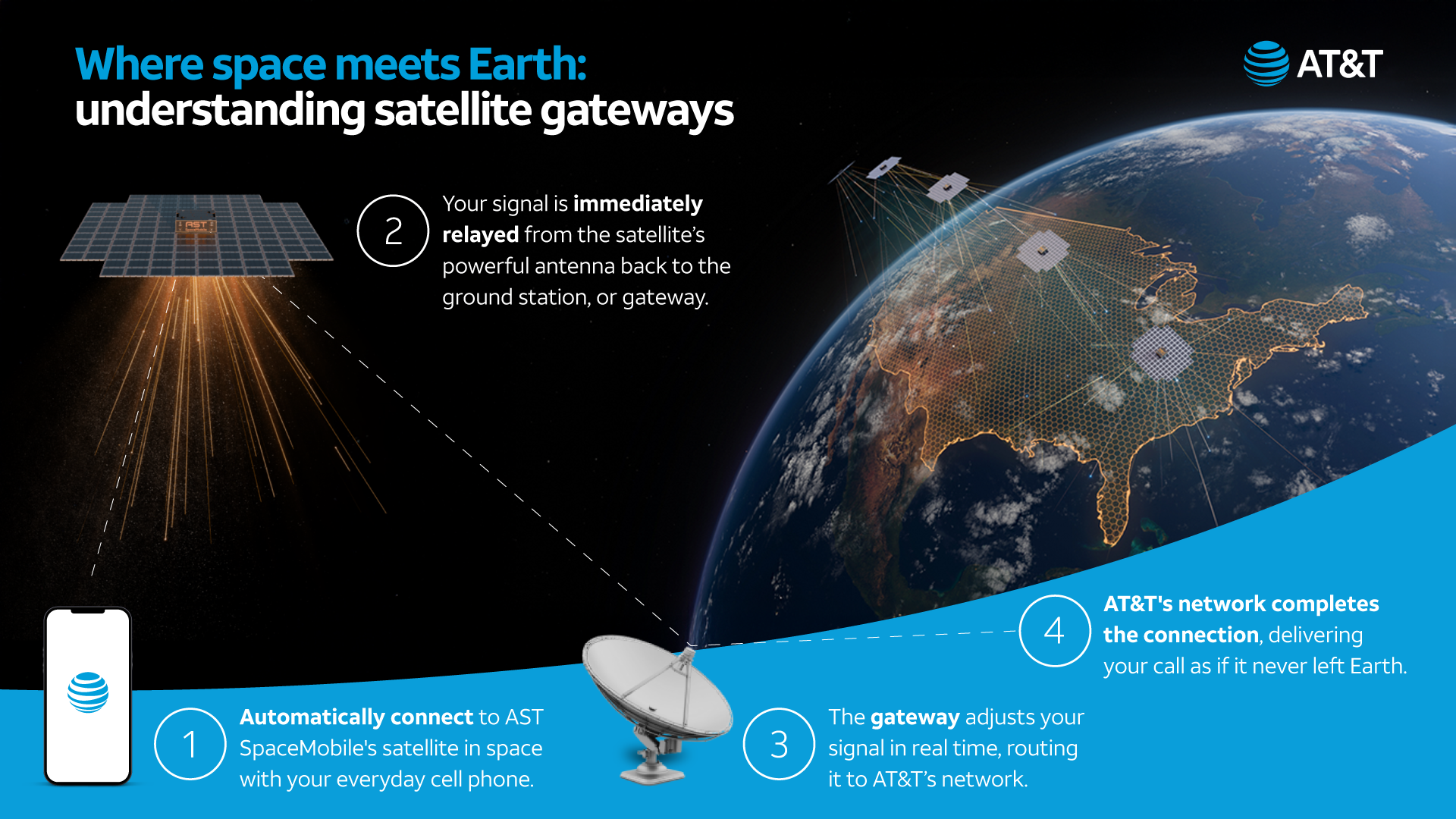
The service is being developed with AST SpaceMobile and is meant to bring coverage to places where regular cell networks struggle to reach, especially remote or hard-to-access areas.
Innovation and dedication
Image by AT&T
The upcoming beta follows a series of milestones achieved in 2025. AST SpaceMobile successfully launched its first next-generation BlueBird 6 satellite, marking a key step toward direct-to-device broadband from low Earth orbit.
The company has stated it remains on track to deploy four additional satellites by March 2026, so I guess T-Mobile will have to respond by further boosting its T-Satellite service!
On the ground, AT&T has brought its fourth satellite gateway online. These gateways link satellite traffic directly into AT&T's terrestrial network and are strategically placed to improve coverage, capacity, and overall performance.
Recommended For You
AST SpaceMobile’s satellites are designed with large, efficient antenna arrays, which not only promise better coverage and performance but also help devices conserve battery life while connected.
AT&T has also conducted early real-world testing with public safety agencies. In West Texas, organizations including the Texas Department of Public Safety, US Customs and Border Protection and the Boulder County Sheriff's Office connected to the FirstNet network via AST SpaceMobile's satellites.
The trials included voice and data connections, along with a satellite version of FirstNet Fusion, a push-to-talk service (like a walkie-talkie) for first responders that is expected to launch next year. Input from the participating agencies is helping shape how satellite connectivity will be used during real emergency situations.
When the cell service is gone…
Satellite service is meant to complement today's mobile networks, not replace them.
For first responders, it acts as a backup when regular coverage drops, helping them stay connected and aware during emergencies.
At the same time, the FirstNet Authority is upgrading the core network to support future satellite-to-phone features.
From a technical standpoint, AST SpaceMobile's satellites feature some of the largest active commercial antenna arrays in low Earth orbit, which AT&T says allows for broader coverage with fewer satellites and improved device efficiency.
Which carrier should double down on satellite?
213 Votes
AT&T.
56.81%
Verizon.
18.78%
T-Mobile.
24.41%
The future is now
The beta program shows that AT&T is moving past testing and into early real-world use. Even though it is still limited, it suggests satellite connectivity is becoming part of AT&T's broader network plans.
If everything stays on track, 2026 could be the first time AT&T customers and FirstNet users can use satellite coverage as a natural extension of their regular mobile service, instead of something reserved only for extreme situations.
Tello Halloween Promo: $10GB for $10/mo
Don’t miss this scary-good deal: 10 GB for $10/mo. Save $5/mo for your first 3 months. Offer valid now through November 9, 2026.
Sebastian is one of PhoneArena’s senior opinionators. A veteran news writer with almost 20 years of experience in media and technology, he not only covers all the hot news about Galaxies and iPhones, but often provides hot takes on industry trends. He’s fascinated with camera-focused flagships from the likes of Oppo and Vivo, as well as foldable phones.
A discussion is a place, where people can voice their opinion, no matter if it
is positive, neutral or negative. However, when posting, one must stay true to the topic, and not just share some
random thoughts, which are not directly related to the matter.
Things that are NOT allowed:
Off-topic talk - you must stick to the subject of discussion
Offensive, hate speech - if you want to say something, say it politely
Spam/Advertisements - these posts are deleted
Multiple accounts - one person can have only one account
Impersonations and offensive nicknames - these accounts get banned
To help keep our community safe and free from spam, we apply temporary limits to newly created accounts:
New accounts created within the last 24 hours may experience restrictions on how frequently they can
post or comment.
These limits are in place as a precaution and will automatically lift.
Moderation is done by humans. We try to be as objective as possible and moderate with zero bias. If you think a
post should be moderated - please, report it.
Have a question about the rules or why you have been moderated/limited/banned? Please,
contact us.










Things that are NOT allowed:
To help keep our community safe and free from spam, we apply temporary limits to newly created accounts: