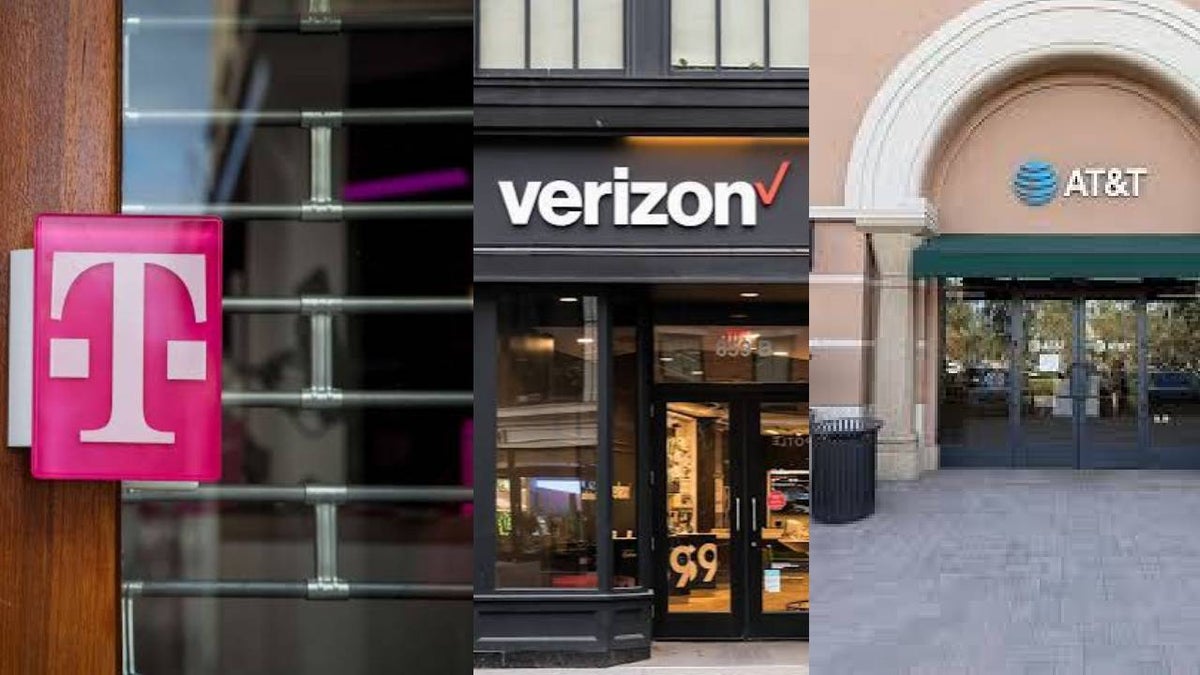
Prices often go up, but rarely go down. Due to a cocktail of unfortunate events, prices for everything have been going up for a while. Food, gas, electronics — everything appears to be more expensive now, and wireless service is no exception. But a group of AT&T and Verizon customers has found a scapegoat: T-Mobile.
T-Mobile wants AT&T and Verizon subscribers to back off
T-Mobilehas asked a federal judge to permanently dismiss a case brought against it by AT&T and Verizon subscribers seeking to unwind the Sprint merger.
The company claims that an explanation from the Bureau of Labor Statistics undermines the federal pricing data consumers have used to support their case and demand damages.
The request, filed on November 19, notes that consumers misinterpreted the government's pricing data, which doesn't actually prove that prices rose after the Sprint merger. This disagreement is central to the case, as it relates to evidence that previously prevented the judge from throwing out the lawsuit.
The consumers have asked T-Mobile to pay three times the amount they claim to have overpaid and urged the court to take measures to address the merger's impact on competition.
T-Mobile wants the judge to dismiss the lawsuit with prejudice, permanently closing the case so the same claims cannot be refiled.
Recommended For You
Poll
3 Votes
What should the judge decide?
Going on for years
The 2023 ruling. | Image by Reuters
In 2022, a class action was filed on behalf of tens to hundreds of millions of AT&T and Verizon customers against T-Mobile, its German owner Deutsche Telekom, and Sprint majority stakeholder SoftBank. They argued that T-Mobile's purchase of Sprint in 2020 stifled competition and drove up prices for everyone, noting that the transaction eliminated a rival that aggressively competed with major carriers through price cuts and new plans.
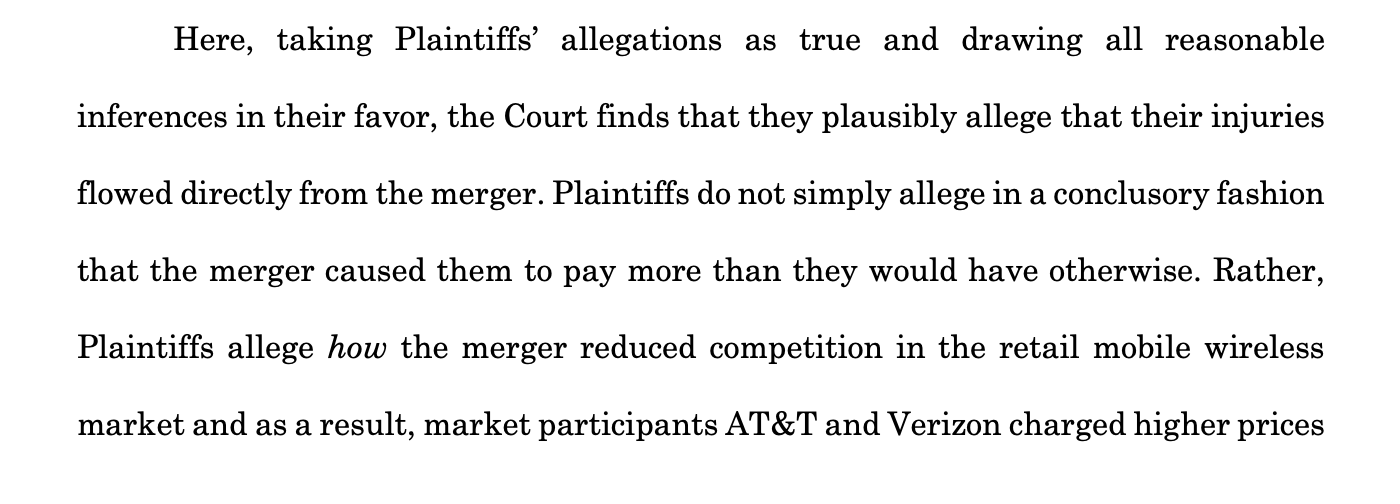
US District Judge Thomas Durkin allowed the lawsuit to proceed, noting that AT&T and Verizon subscribers had plausibly argued that the merger led to higher prices. He pointed to Bureau of Labor Statistics data, which showed declining prices before the deal, followed by a sharp hike several months after it closed.
T-Mobile pushed back against the accusations, saying unhappy AT&T and Verizon customers should switch to its network. The carrier argued that other factors, such as inflation, the COVID-19 pandemic, and the 5G rollout, were responsible for the price increases.
Not T-Mobile's fault?
Federal regulators greenlit the merger on the condition that certain assets, including Boost Mobile, be transferred to Dish, and that Dish be provided network access while building its own infrastructure. Boost Mobile was expected to emerge as a fourth major player, but it couldn't rise to the challenge.
The company came very close to meeting the deadline set by the Federal Communications Commission (FCC), but parent EchoStar eventually sold its spectrum to AT&T and SpaceX. As luck would have it, SpaceX is now plotting a carrier of its own, and might end up using Dish's abandoned gear.
While T-Mobile's purchase of Sprint has been blamed for rising US wireless prices, the company can hardly be faulted if Dish bowed out.
On the other hand, one study found that markets with four carriers are competitive, which keeps prices low. The Sprint merger certainly didn't help with that.
T-Mobile wants to stay out of court
It's not just AT&T and Verizon customers who are causing legal trouble for T-Mobile. The company has been sued by its own customers in the past for not honoring price guarantees.
However, T-Mobile, like most other major corporations, has no appetite for long, drawn-out court fights. Customers who agreed to its terms after May 15, 2023, have given up the right to jury trials and class action lawsuits, leaving arbitration as their only option to settle disputes.
Anam Hamid is a computer scientist turned tech journalist who has a keen interest in the tech world, with a particular focus on smartphones and tablets. She has previously written for Android Headlines and has also been a ghostwriter for several tech and car publications. Anam is not a tech hoarder and believes in using her gadgets for as long as possible. She is concerned about smartphone addiction and its impact on future generations, but she also appreciates the convenience that phones have brought into our lives. Anam is excited about technological advancements like folding screens and under-display sensors, and she often wonders about the future of technology. She values the overall experience of a device more than its individual specs and admires companies that deliver durable, high-quality products. In her free time, Anam enjoys reading, scrolling through Reddit and Instagram, and occasionally refreshing her programming skills through tutorials.
A discussion is a place, where people can voice their opinion, no matter if it
is positive, neutral or negative. However, when posting, one must stay true to the topic, and not just share some
random thoughts, which are not directly related to the matter.
Things that are NOT allowed:
Off-topic talk - you must stick to the subject of discussion
Offensive, hate speech - if you want to say something, say it politely
Spam/Advertisements - these posts are deleted
Multiple accounts - one person can have only one account
Impersonations and offensive nicknames - these accounts get banned
To help keep our community safe and free from spam, we apply temporary limits to newly created accounts:
New accounts created within the last 24 hours may experience restrictions on how frequently they can
post or comment.
These limits are in place as a precaution and will automatically lift.
Moderation is done by humans. We try to be as objective as possible and moderate with zero bias. If you think a
post should be moderated - please, report it.
Have a question about the rules or why you have been moderated/limited/banned? Please,
contact us.












Things that are NOT allowed:
To help keep our community safe and free from spam, we apply temporary limits to newly created accounts: