Samsung Galaxy S27 Ultra vs Galaxy S25 Ultra: Main differences to expect


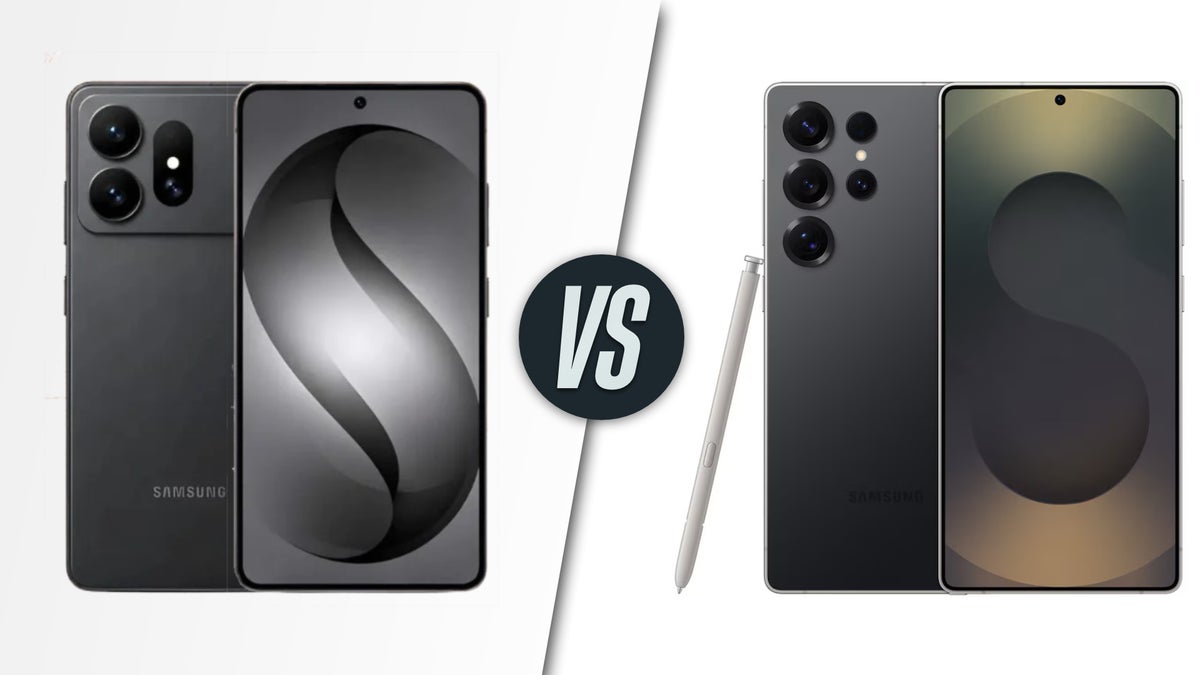
It's nearly 2027, which means that Samsung will be releasing the Galaxy S27 Ultra first thing in Q1, securing precious lead over its rivals in the Android flagship space.
And to make up some lost ground, Samsung is finally caving in and giving us a modern redesign with possibly a magnetic ring in the back, refreshing the camera setup, and potentially giving us a larger than 5,000 mAh battery at long last.
Sounds like a decent round of upgrades, but what does this mean for the Galaxy S25 Ultra, a device that has aged fairly well and is still a very
Samsung Galaxy S27 Ultra vs Samsung Galaxy S25 Ultra expected differences:
| Samsung Galaxy S27 Ultra | Samsung Galaxy S25 Ultra |
|---|---|
| A massive visual redesign with an iPhone-like camera plateau | The classic Galaxy S Ultra design with separate camera rings, rounded corners instead of right-angled |
| Snapdragon 8 Elite Extreme Gen 6 for Galaxy on deck, Exynos 2700 also likely | Snapdragon 8 Elite for Galaxy on board |
| 6.9-inch Dynamic AMOLED 2X with Privact Display feature, anti-reflective coating | Once again a 6.9-inch Dynamic AMOLED 2X display with an anti-reflective coating |
| Possibly a larger battery (5,700 mAh) | A standard 5,000 mAh battery |
| A built-in magnetic ring for magnetic charging in the back | Requires a special case for magnetic wireless charging and accessories |
| Just a single 50 MP periscope camera with 5X optical zoom | 50 MP 5X periscope and 3X 10 MP telephoto cameras |
| 16 MP selfie camera | 12 MP selfie camera |
Table of Contents:
Read more:
Design and Size
Noticeable differences
No two ways around it: Samsung's Galaxy S Ultra flagships haven't really be pushing the frontier with their design language... and they've also been pretty consistent about that. This is why most Galaxies Ultra flagships looked quite familiar over the years.
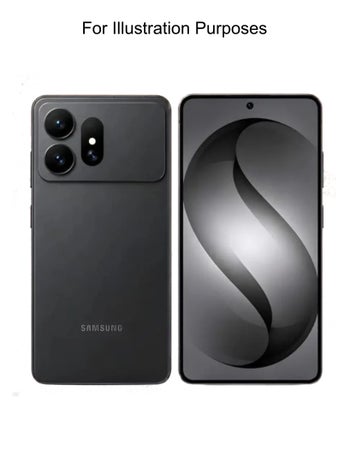
The Gaalxy S27 Ultra is changing that with a new design language that incorporates a camera plateau in the back of the phone, which will curely remind of Apple's design language with the latest Pro iPhones. The now three-cameras are positioned way up on the plateau, so that the majority of the back remains free. The reason for that is Samsung's alleged use of a magnetic ring in the back, which will allows users to attach different MagSafe accessories and charge their devices conveniently.
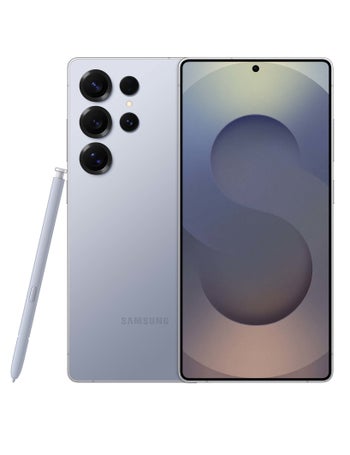
The general design will remain similar to the Galaxy S25 Ultra, though. Flat frame with slightly rounded corners and a completely flat display will remain staples of the lineup, and so will the S Pen stylus and IP68 water and dust resistance.
Size-wise, the Galaxy S27 Ultra will be slightly taller and wider but also thinner than the Galaxy S25 Ultra. The new phone will measure 163.8 x 78.3 x 8 mm, while the older device measures 162.8 x 77.6 x 8.2 mm.
Display Differences
The Galaxy S27 Ultra and the S25 Ultra will have more display similarities than differences. Both will arrive with 6.9-inch Dynamic AMOLED 2X displays with a 120 Hz refresh rate and anti-reflective coatings to eliminate glare. Both will likely compare in terms of peak brightness as well.
The big difference with the Galaxy S27 Ultra is that this one will have the Privacy Display feature of the Galaxy S25 Ultra. This one emulates a privacy screen protector and skews your on-screen content from prying eyes when viewed from the side. It's a useful feature, but the overall screen quality deteriorates due to the extra pixel-layer needed to emulate the privacy screen.
Overall, I wasn't quite impressed with the overall quality of the Galaxy S26 Ultra due to the sophisticated Privacy Display feature, which actually seems to dull out the screen, even when it's off. I much prefer the Galaxy S25 Ultra, which has no such functionalities. It's just a decent AMOLED panel.
Both phones rely on ultrasonic fingerprint sensors as well as picture-based 2D face unlock.
Performance and Software
Serious performance gains
The Galaxy S27 Ultra will most likely arrive with the Snapdragon 8 Elite Extreme Gen 6, the most powerful chipset in Qualcomm's lineup right now. Mind you, it won't be the version available to any other Android manufacturer, but a custom, tuned-up "for Galaxy" variant that will push the clock rate of the prime chip cores even higher.
Let's only hope that Samsung's thermal management will be on point, as these dense 2 nm chips tend to get hot.
In comparison, the Galaxy S25 Ultra arrived with the Snapdragon 8 Elite for Galaxy chip. Still a mighty fine flagship processor that strikes a perfect balance between performance, efficiency, and thermal management. It still is mighty powerful and more than ready to tackle any modern-day challenges and gaming workflows.
In terms of RAM, both will share the same amount of 12 GB of fast LPDDR5 RAM. The Galaxy S27 Ultra will be available with 256 GB, 512 GB, and 1 TB of storage, just like the Galaxy S25 Ultra.
I suspect Samsung will launch the Galaxy S27 Ultra with the One UI 9.5 software update, as it usually launches its standard flagships with an x.5 incremental update. The Galaxy S25 Ultra, on the other hand, right now runs One UI 9. It's a decent update, though it's not as universally loved as One UI 8 was: there are some kinks to iron out, like the large and unappealing brightness and volume sliders.
Camera
Major differences between the two devices
Samsung is shaking things up in the camera section. For starters, the number of camera drops from four to three, as Samsung is getting rid of the largely useless and underperforming 3X telephoto camera. Instead of relying on a dedicated snapper, the phone will crop from the main sensor to cover the focal range between 1X and 5X (23 to 111 mm), which will certainly yield better results than the 3X telephoto on the Galaxy S25 Ultra ever did.
That said, the rest of the camera will likely be similar, with just minor sensor differences. The 200 MP main sensor will reportedly be the ISOCELL HP6, while the ultrawide and 5X periscope cameras on the Galaxy S27 Ultra will share the ISOCELL JN3 sensor.
That's largely similar to the Galaxy S25 Ultra, which comes with a similar setup, just with the aforementioned 3X telephoto on top of that.
The Galaxy S27 Ultra will be scoring a 16 MP selfie camera, a slight upgrade from the 12 MP one on the Galaxy S25 Ultra.
Battery Life and Charging
Here's to the upgrades
Well, it's been a pretty solid run for Samsung's Galaxy S Ultra devices with 5,000 mAh batteries. The Galaxy S27 Ultra is the first Samsung flagship to score an upgrade, as it will reportedly come with a 5,700 mAh battery. It will most certainly be a silicon-carbon battery, and Samsung already made a precedent with that with the Galaxy Z Fold 8 Ultra, which was the first one to boast such a battery in the back.
Hopefully, when we pair that much capacity with the anticipated efficiency of the Snapdragon chip on board, we'd be treated to significantly better battery life. Here's to hoping!
In terms of charging, the Galaxy S27 Ultra will most certainly boast 60 W wired charging, while the Galaxy S25 Ultra supported 45 W charging. Doubtful we'd notice a major speed difference, though.
And while the Galaxy S27 Ultra will likely get a magnetic ring for attaching wireless chargers and accessories, the Galaxy S25 Ultra lacks such a feature. You have to rely on a MagSafe case to emulate the functionality.
Specs Comparison
Here's a quick rundown of the specs between the Galaxy S27 Ultra and the Galaxy S25 Ultra.
|
|
| Samsung Galaxy S27 Ultra | Samsung Galaxy S25 Ultra |
| Dimensions | |
|---|---|
| 163.8 x 78.3 x 8 mm | 162.8 x 77.6 x 8.2 mm (~9.1 mm with camera bump) |
| Weight | |
| 218.0 g | |
| Size | |
|---|---|
| 6.9-inch | 6.9-inch |
| Type | |
| Dynamic AMOLED, 120Hz | Dynamic AMOLED, 120Hz |
| System chip | |
|---|---|
| Snapdragon 8 Elite Extreme Gen 6 SM8975 (2 nm) | Snapdragon 8 Elite for Galaxy SM8750-AB (3 nm) |
| Memory | |
| 12GB (LPDDR6)/256GB (UFS 5.0) 12GB/512GB 16GB/1024GB |
12GB (LPDDR5X)/256GB (UFS 4.0) 12GB/512GB 12GB/1024GB |
| OS | |
| Android (17), up to 7 OS updates | Android (15), up to 7 OS updates |
| Type | |
|---|---|
| 5700 mAh | 5000 mAh |
| Charge speed | |
| Wired: 60.0W | Wired: 45.0W Wireless: 15.0W |
| Main camera | |
|---|---|
| 200 MP (OIS, PDAF) Sensor name: Samsung ISOCELL HP6 |
200 MP (OIS, Laser and PDAF) Sensor name: Samsung ISOCELL HP2 Aperture size: F1.7 Focal length: 24 mm Sensor size: 1/1.3" Pixel size: 0.6 μm |
| Second camera | |
| 50 MP (Ultra-wide, PDAF) Sensor name: Samsung ISOCELL JN3 | 50 MP (Ultra-wide, PDAF) Sensor name: Samsung ISOCELL JN3 Aperture size: F1.9 Pixel size: 0.7 μm |
| Third camera | |
| 50 MP (Telephoto, OIS, PDAF) Sensor name: Samsung ISOCELL JN3 Optical zoom: 5.0x |
10 MP (Telephoto, OIS, PDAF) Sensor name: Sony IMX754 Optical zoom: 3.0x Aperture size: F2.4 Focal Length: 67 mm Sensor size: 1/3.52" Pixel size: 1.12 μm |
| Fourth camera | |
| 50 MP (Telephoto, Periscope, OIS, PDAF) Sensor name: Sony IMX854 Optical zoom: 5.0x Aperture size: F3.4 Focal Length: 111 mm Sensor size: 1/2.52" Pixel size: 0.7 μm |
|
| Front | |
| 12 MP (PDAF, HDR) | 12 MP (PDAF, HDR) |
See the full
Samsung Galaxy S27 Ultra vs Samsung Galaxy S25 Ultra specs comparison
or compare them to other phones using our
Phone Comparison tool
Summary
Overall, the Galaxy S27 Ultra shapes up to be the result of a wake-up call for Samsung, which I feel has been lagging in terms of camera and battery performance in comparison with its rivals.
It's high time the largest Android manufacturer came up with meaningful upgrades for its best conventional flagship, and while it remains to be seen what impact the upgrades will have, it's great to finally see there's will for changes.
But what does this mean for the Galaxy S25 Ultra? Is it becoming immediately obsolete once the Galaxy S27 Ultra launches? No, of course not. In fact, this one is probably my favorite Galaxy S Ultra flagship in recent years, the one that struck the perfect balance between an impeccable design and meaningful features.

Related Content





Popular stories




Latest News



Things that are NOT allowed:
To help keep our community safe and free from spam, we apply temporary limits to newly created accounts: