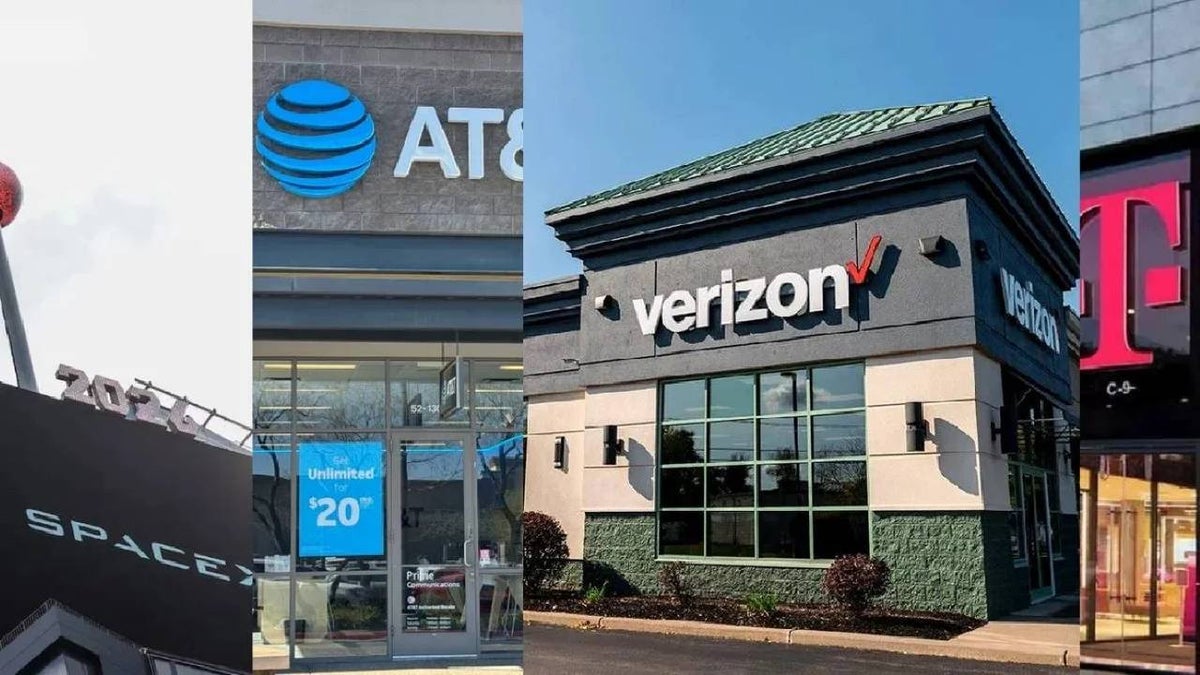
While the FCC is eager to modernize its framework, AT&T, T-Mobile, and Verizon would rather things remain as they are. Case in point: the FCC recently waived the terrestrial buildout requirement for SpaceX and is contemplating opening up more spectrum bands for satellite operators. CTIA, the trade association that represents the major providers, is pressuring the Commission to maintain the existing rules.
The Big Three support Supplemental Coverage from Space, but...
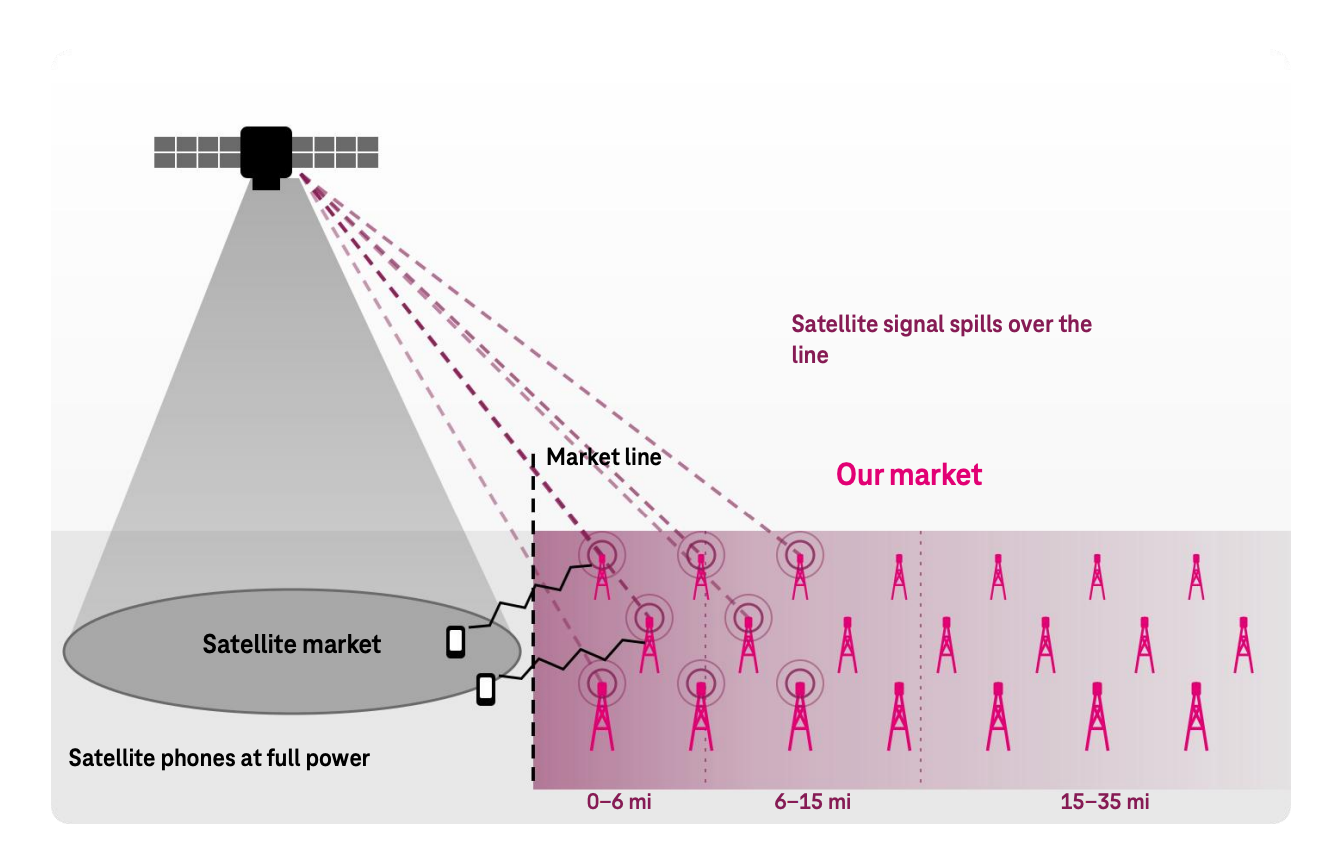
T-Mobile doesn't want satellite operators to access the 2.5 GHz band. | Image by T-Mobile
On October 20, CTIA and representatives from AT&T, T-Mobile, and Verizonmet with FCC staff to urge them not to weaken cellular services as it pursues its goal of advancing space-based connectivity.
Expressing the same concerns as T-Mobile did in a separate filing, CTIA requested that the FCC not open up Time-Division Duplex (TDD) bands, including the 2.5 GHz and 3.45 GHz bands, to satellite operators. CTIA claims that these bands are infeasible for SCS services, and coexistence poses interference challenges.
While the FCC may view the existing framework as restrictive, CTIA contends that cellular carriers should be able to decide whether satellite companies can use their spectrum.
CTIA fears that some of the FCC's proposals could compromise wireless capacity and reliability. The trade association framed satellite services as secondary and complementary to terrestrial networks. Disrupting the "workhorse terrestrial 5G bands" would impact the 300 million consumers who rely on them.
D2D operators shouldn't be relieved of performance obligations
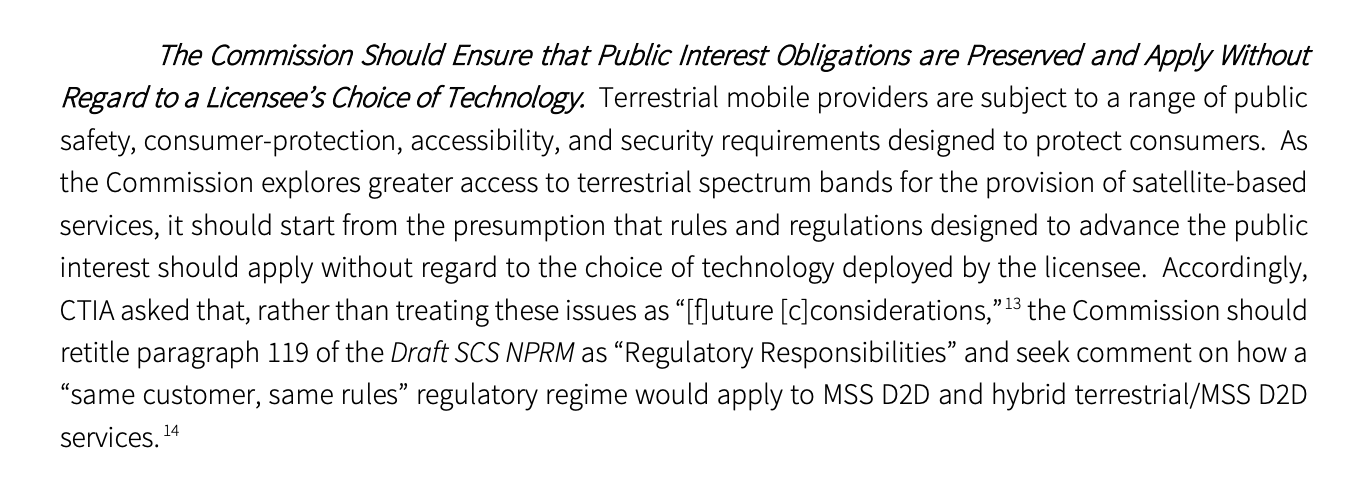
CTIA wants satellite companies to abide by the same rules as cellular providers. | Image by CTIA
The communications industry wants the FCC to enforce performance requirements that are on par with those that cellular providers abide by. CTIA argues that the proposed requirement metrics do not measure the capacity that consumers need. It also wants the FCC to impose terrestrial construction requirements on D2D operators acquiring new spectrum.
The association would also like the FCC to revise the proposed aggregate limit of –76 dBm/m²/MHz PFD on satellite signals to ensure that wireless providers using the same frequencies are protected from interference.
Any lingering assumptions that SpaceX is merely seeking an MVNO agreement are rapidly fading. SpaceX wants a piece of the cellular market, and AT&T, T-Mobile, and Verizon don't want the FCC making things easier for it.
Get a free Galaxy A17 with Straight Talk. To claim this deal, you need to pair the phone with activation on a Silver Unlimited Plan or higher. This tier costs $45 per month. Offer valid through 01/10/27 while supplies last online.
Anam Hamid is a computer scientist turned tech journalist who has a keen interest in the tech world, with a particular focus on smartphones and tablets. She has previously written for Android Headlines and has also been a ghostwriter for several tech and car publications. Anam is not a tech hoarder and believes in using her gadgets for as long as possible. She is concerned about smartphone addiction and its impact on future generations, but she also appreciates the convenience that phones have brought into our lives. Anam is excited about technological advancements like folding screens and under-display sensors, and she often wonders about the future of technology. She values the overall experience of a device more than its individual specs and admires companies that deliver durable, high-quality products. In her free time, Anam enjoys reading, scrolling through Reddit and Instagram, and occasionally refreshing her programming skills through tutorials.
A discussion is a place, where people can voice their opinion, no matter if it
is positive, neutral or negative. However, when posting, one must stay true to the topic, and not just share some
random thoughts, which are not directly related to the matter.
Things that are NOT allowed:
Off-topic talk - you must stick to the subject of discussion
Offensive, hate speech - if you want to say something, say it politely
Spam/Advertisements - these posts are deleted
Multiple accounts - one person can have only one account
Impersonations and offensive nicknames - these accounts get banned
To help keep our community safe and free from spam, we apply temporary limits to newly created accounts:
New accounts created within the last 24 hours may experience restrictions on how frequently they can
post or comment.
These limits are in place as a precaution and will automatically lift.
Moderation is done by humans. We try to be as objective as possible and moderate with zero bias. If you think a
post should be moderated - please, report it.
Have a question about the rules or why you have been moderated/limited/banned? Please,
contact us.








Things that are NOT allowed:
To help keep our community safe and free from spam, we apply temporary limits to newly created accounts: