Huawei Watch D3 review: A health revolution in action
Huawei has perfected the medical-grade Watch D lineup. The third iteration of the watch comes in a very stylish package.
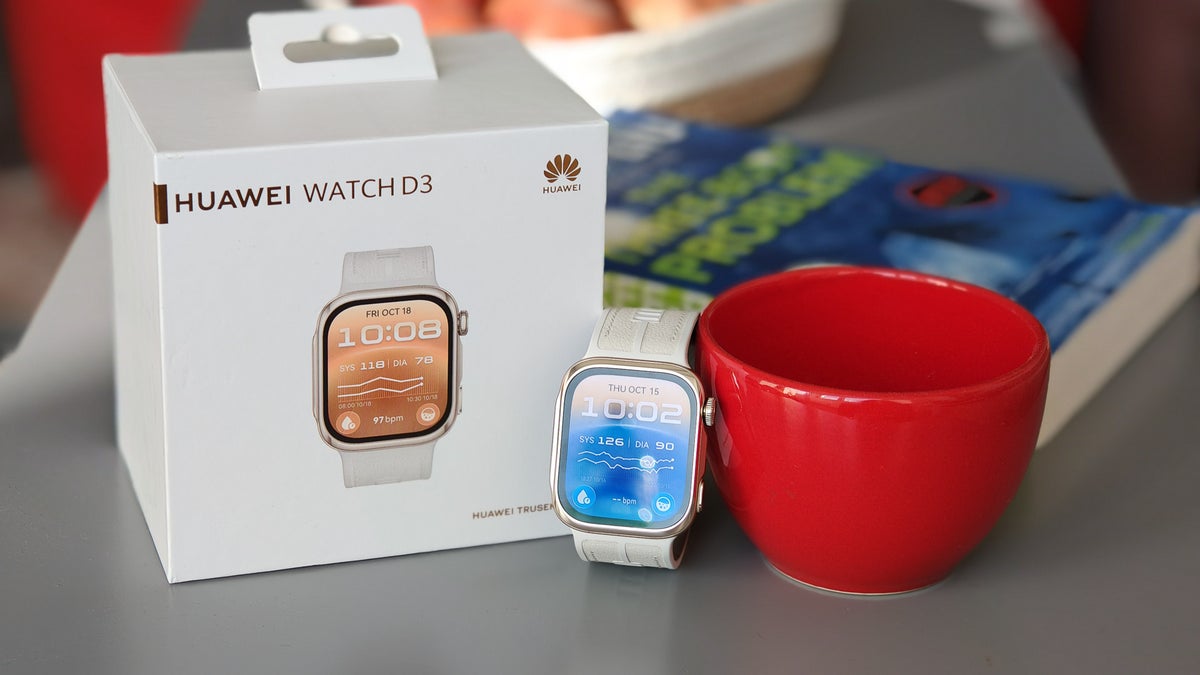
The Huawei Watch D3 is a must-have for people with hypertension. | Image by PhoneArena
The Huawei Watch D3 is a unique device. I believe the company has succeeded in its quest to perfectly blend a medical-grade device with a stylish everyday smartwatch.
The watch is CE-MDR certified in Europe, clearing one of the most rigorous medical device regulations, but on top of that, it's a full-fledged flagship Huawei smartwatch.
The first Huawei Watch D was quite bulky, and you could tell it was a niche device with some compromises baked in to allow for that cuff-based blood pressure measurement.
Now, four years later, the Watch D3 is almost indistinguishable from a normal smartwatch. And that's a feat in and of itself.
I've spent a week with the Huawei Watch D3, and I'm ready to tell you all about it. Let's dive in!
| Huawei Watch D3 | Huawei Watch D |
|---|---|
| Brighter display, up to 3,000 nits | 1,200 nits peak brightness |
| 1.92 inches | 1.64 inches |
| ECG certified | Basic heart rate monitoring |
| Medical-grade and ambulatory blood pressure monitoring | Blood pressure monitoring |
| Thinner at 11.3 mm | Much thicker and bulkier at 13.6 mm |
| Bluetooth 6 | Bluetooth 5.1 |
| Bigger battery (540 mAh) faster 5W wireless charging | Smaller battery (451 mAh), 3.5W wireless charging |
| Built-in NFC | NFC only works in some regions |
Table of Contents:
Design and Display
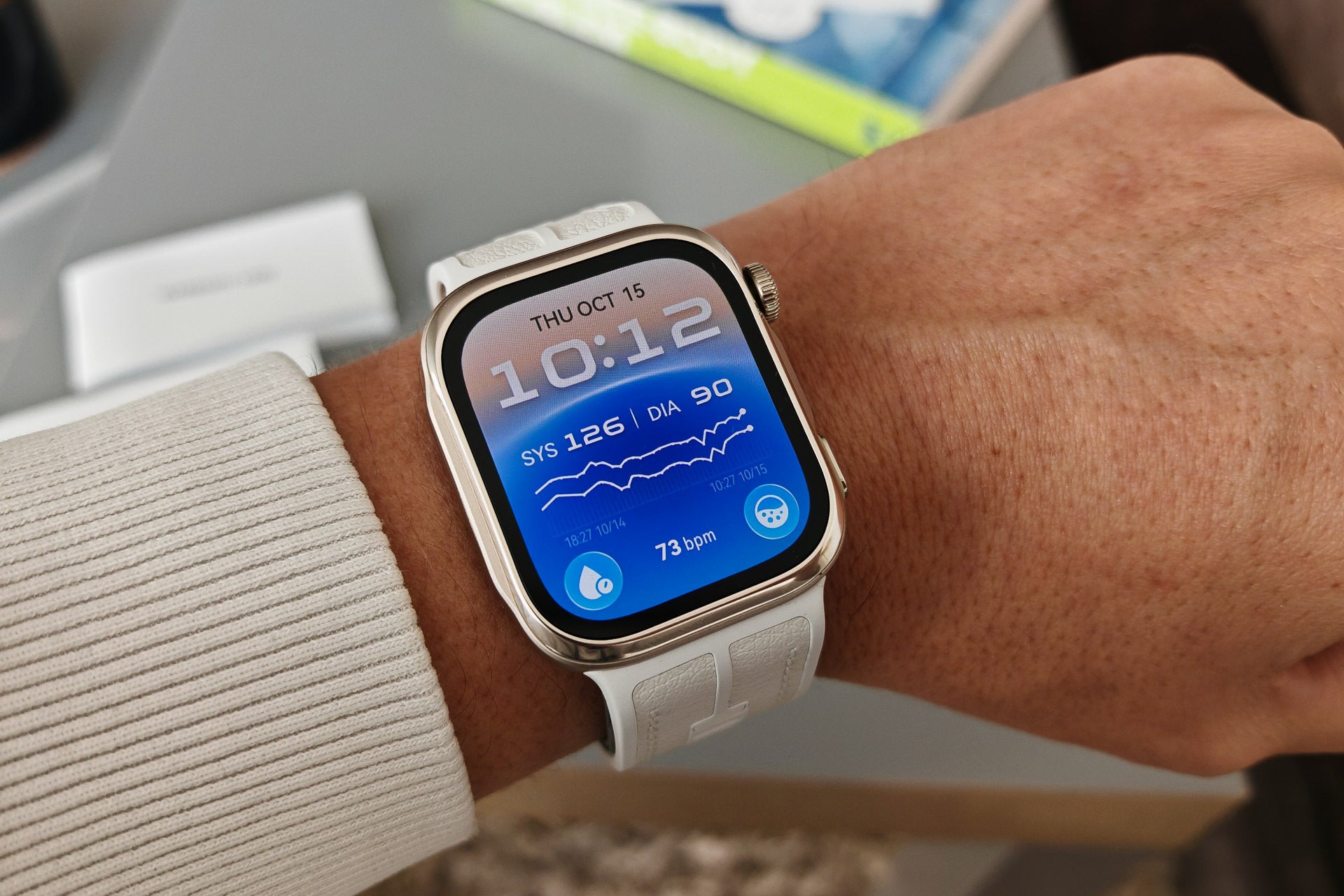
The Huawei Watch D3 is a stylish-looking gadget. | Image by PhoneArena
The design of the Huawei Watch D3 takes a page from the company's Huawei Watch Fit line. That's a compliment, really, because the Watch Fit 4 Pro is still one of my all-time favorite smartwatches. The Watch D3 features the same rectangular body with a similar bump between the rotating crown and the button, housing the microphone.
Granted, there's more heft to the Watch D3, as it has to house an air pump for the inflating cuff as well, but at 11.3 mm it doesn't feel bulky. The watch is also pretty light at 40 grams (without the strap), and the aluminum frame feels quite premium.
The strap is a 22mm proprietary band, featuring an inflating cuff on the inner side. It attaches to the strap via pins that slot into the strap holes. The strap itself uses a traditional buckle mechanism, but in order to adjust it to your wrist size, you need to move the whole mechanism up and down the strap.
Overall, it looks very clean and resembles a traditional watch band. The cream-white version that I got is made from a rubbery material, but there's some faux leather stitched to it. Once you adjust the length, taking off and putting on the Watch D3 is a routine affair.
Overall, it looks very clean and resembles a traditional watch band. The cream-white version that I got is made from a rubbery material, but there's some faux leather stitched to it. Once you adjust the length, taking off and putting on the Watch D3 is a routine affair.
The strap attaches to the body via a quick-release proprietary mechanism. You can't accidentally swap the two parts of the strap, as the one with the cuff features a tiny vent that goes into the air pump.
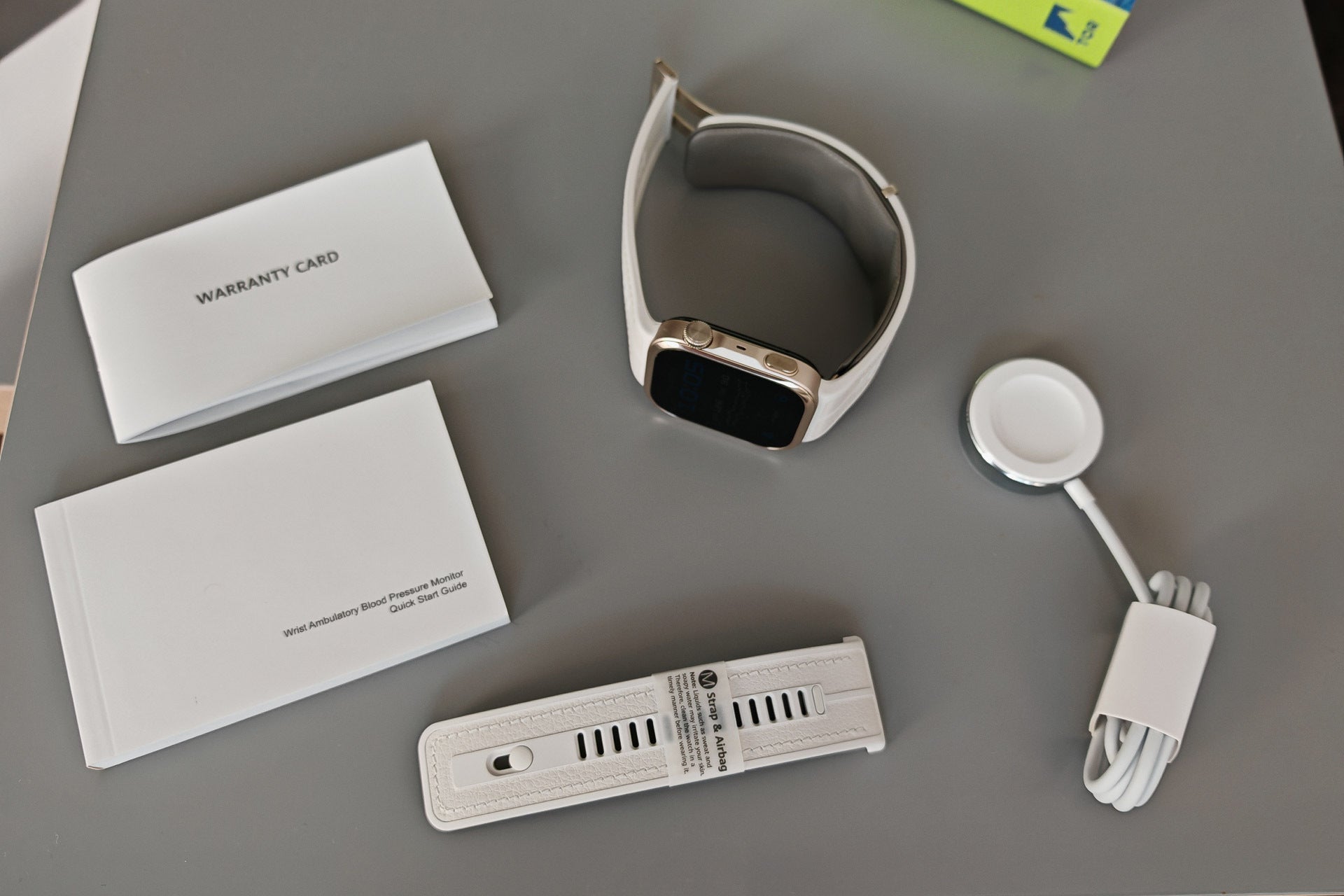
The retail box: the Watch D3 fitted with a strap and cuff (L-size), an additional strap and cuff (M-size), a wireless charging pad, and some paperwork. | Image by PhoneArena
Inside the retail box, you will find the Watch D3 fitted with a strap and cuff (L-size), an additional strap and cuff (M-size), a wireless charging pad, and some paperwork. There's also a big sticker to remind you that the watch is not water-resistant and that you shouldn't shower with it, wash it with soap or detergent, and should avoid moisture in general.
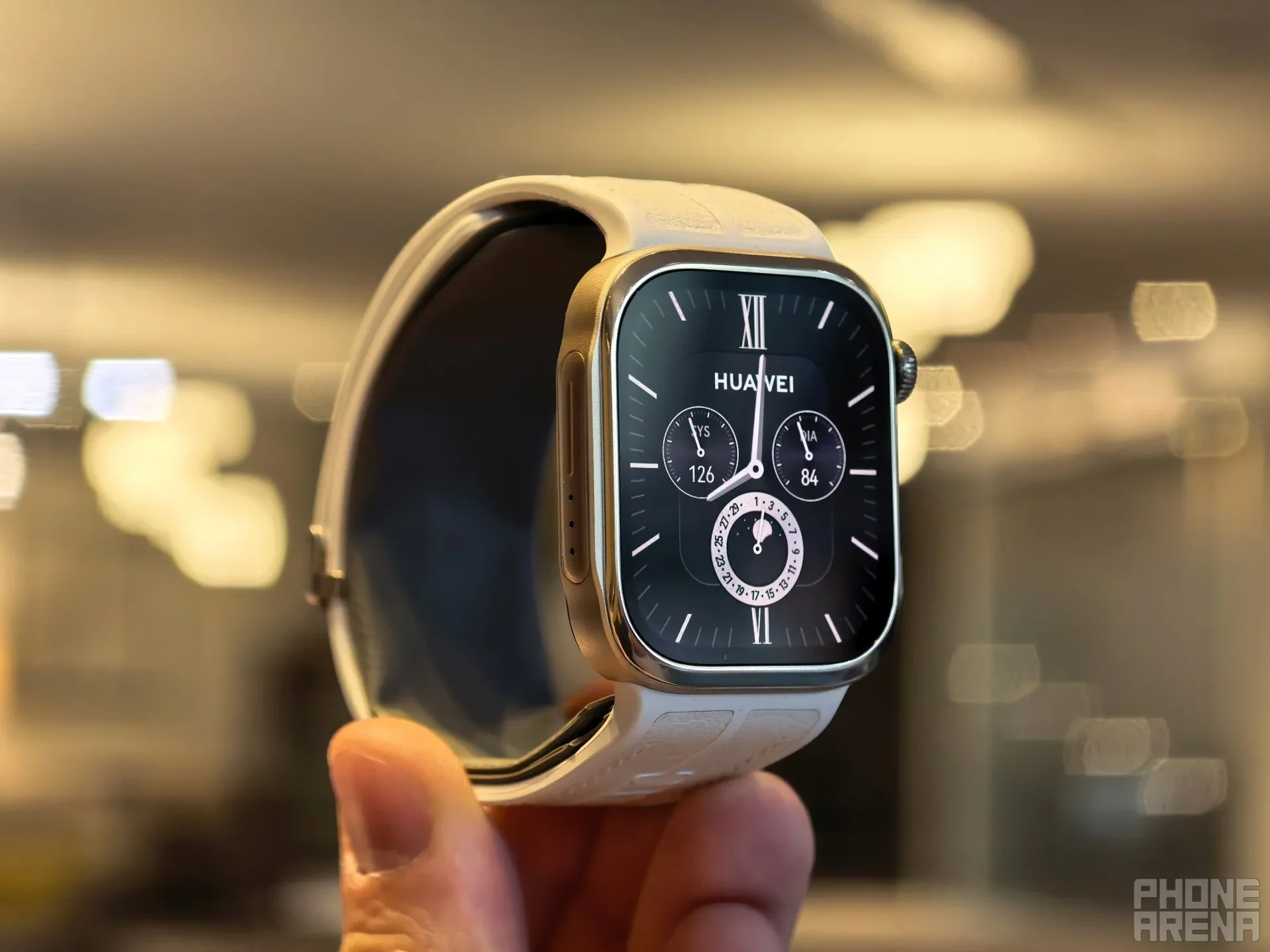
The 1.92-inch display of the Huawei Watch D3 is simply gorgeous! | Image by PhoneArena
The display of the Huawei Watch D3 is simply gorgeous! It's on par with regular flagship smartwatches such as the Galaxy Watch Ultra and the Apple Watch. Huawei claims it can output up to 3,000 nits of peak brightness, and I can attest that the screen remains bright even under direct sunlight.
The display itself is quite big at 1.92 inches, and the resolution of 480 x 408 pixels results in around 328 PPI pixel density. In reality, everything is sharp and clean - it's a top-notch display.
Battery life
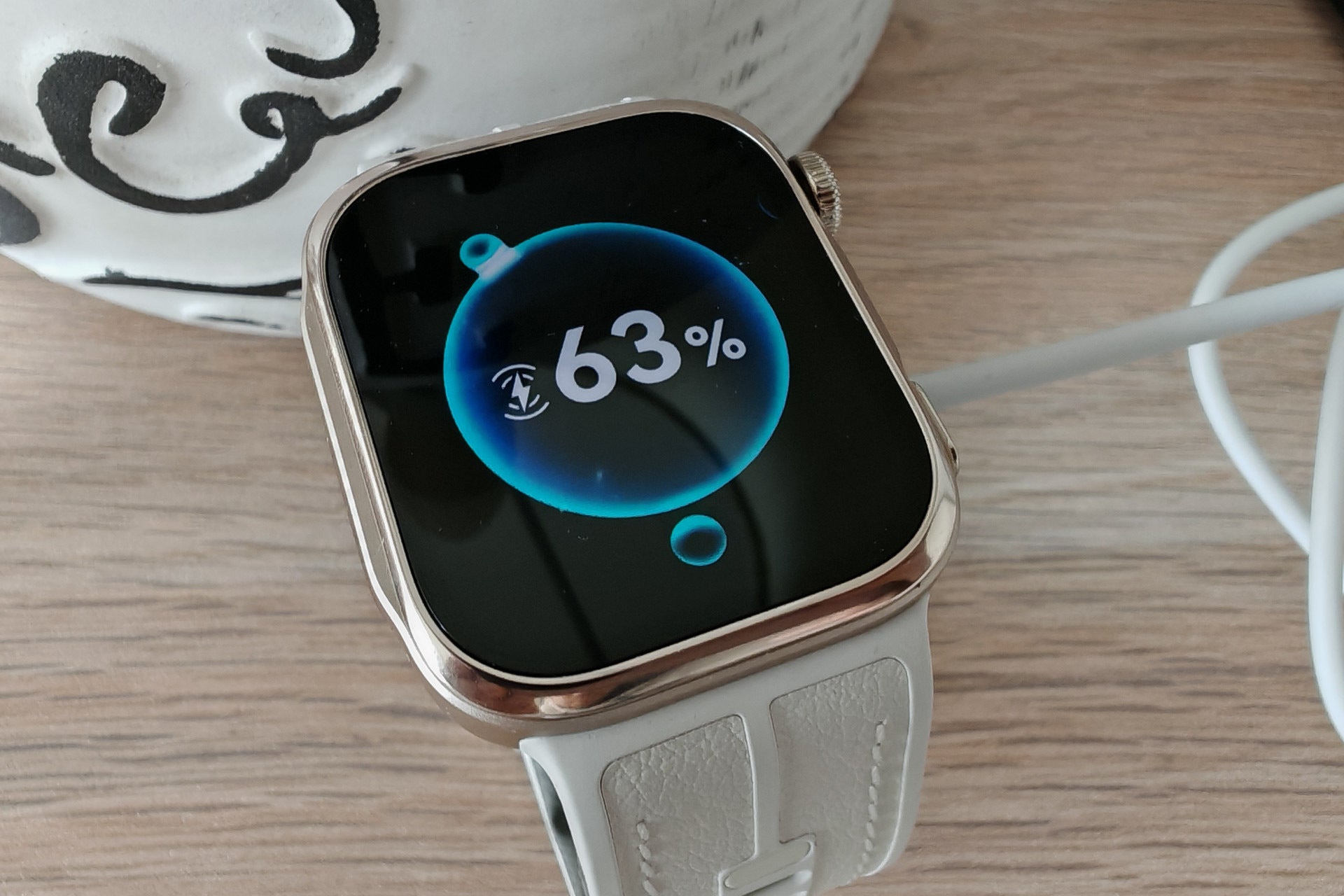
You can get two days on a single charge even if you max-out all the features. | Image by PhoneArena
Huawei didn't disclose the exact battery capacity of the cell inside the Watch D3, but a little digging revealed a 540 mAh cell. That's slightly bigger than the 524 mAh cell in the previous generation and 20% more than the original Huawei Watch D and its 451 mAh cell.
Huawei promises up to 6 days of battery life with typical usage, and the company defines typical as six blood pressure measurements per day, five ECG measurements, 90 minutes of GPS-tracked activities per week, 30 minutes of screen-on time per day, 30 minutes of music, 50 messages, 6 calls, 3 alarms per day, and sleep tracking.
That's pretty light usage, if you ask me, but if you activate the Ambulatory Blood Pressure Monitoring (ABPM) feature, you're looking at around one day on a single charge. This feature measures your blood pressure at short intervals throughout a 24-hour period. So, six days sounds pretty decent all things considered.
Huawei promises up to 6 days of battery life with typical usage, and the company defines typical as six blood pressure measurements per day, five ECG measurements, 90 minutes of GPS-tracked activities per week, 30 minutes of screen-on time per day, 30 minutes of music, 50 messages, 6 calls, 3 alarms per day, and sleep tracking.
That's pretty light usage, if you ask me, but if you activate the Ambulatory Blood Pressure Monitoring (ABPM) feature, you're looking at around one day on a single charge. This feature measures your blood pressure at short intervals throughout a 24-hour period. So, six days sounds pretty decent all things considered.
Of course, I maxed out all the features and measurements on the first day I spent with the watch, and did an ABPM plan as well. I took a couple of calls, received a bunch of notifications, left the Always-on display active, measured every health metric I could, went for a run, slept with the watch, and after 24 hours the battery was at 52%.
So, realistically you can get two full days out of this watch easily, and if you're not a health freak like me, you can stretch that to four or five days even. The Huawei Watch D3 charges from zero to full in a little over an hour, something like 70–75 minutes.
So, realistically you can get two full days out of this watch easily, and if you're not a health freak like me, you can stretch that to four or five days even. The Huawei Watch D3 charges from zero to full in a little over an hour, something like 70–75 minutes.
Blood pressure measurements
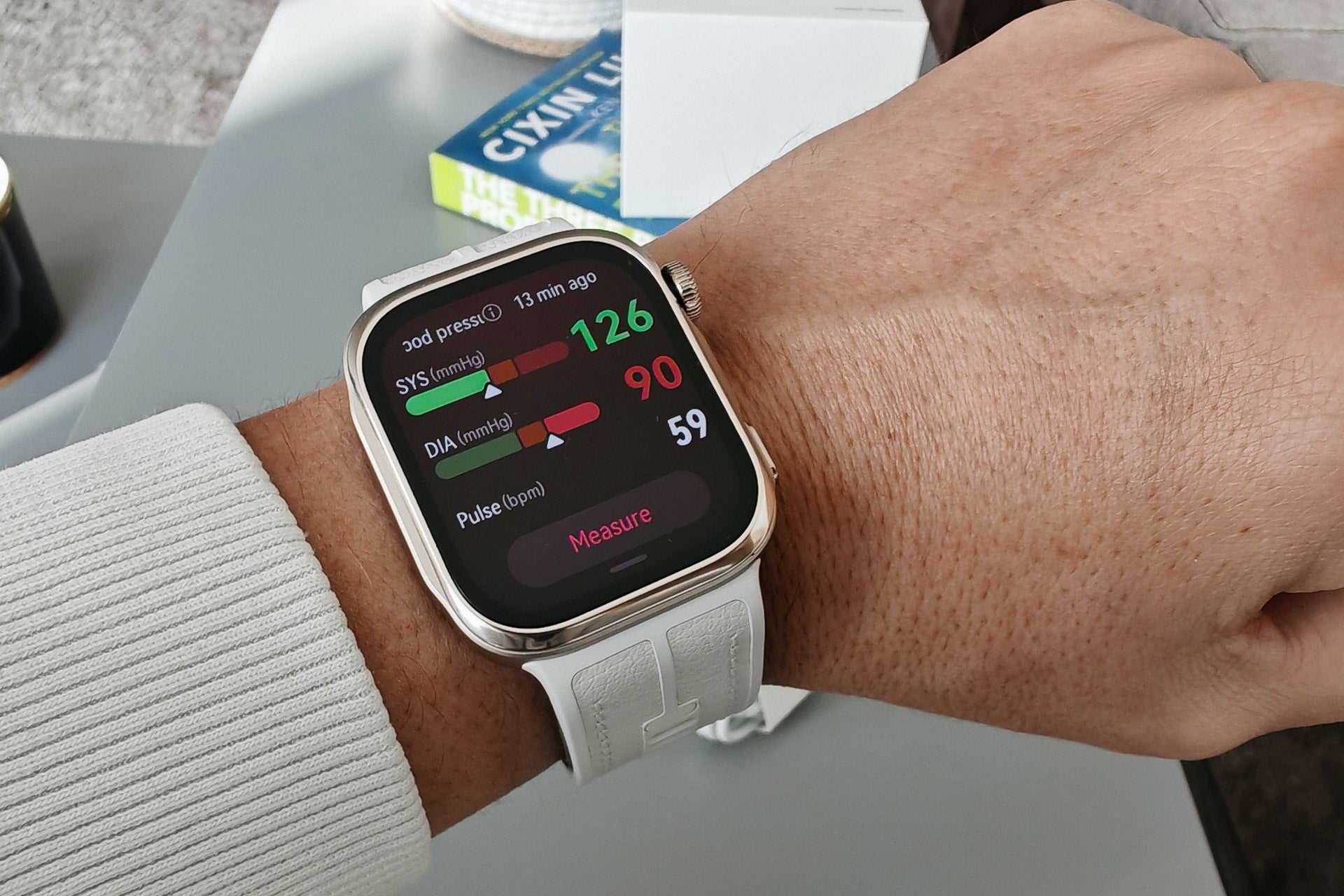
That's where the Huawei Watch D3 shines. | Image by PhoneArena
The bread and butter of the Huawei Watch D3 is the micro-cuff and the air pump system inside the watch. This was quite an innovation back in 2022 when the first Watch D showed up, and it feels really cool even now, four years later.
Earlier this year I was diagnosed with Stage 1 hypertension and advised to watch my blood pressure daily along with making some lifestyle adjustments. So, the Huawei Watch D3 review was a perfect opportunity to see how this gadget fares against a real, medical-grade blood pressure arm cuff.
Earlier this year I was diagnosed with Stage 1 hypertension and advised to watch my blood pressure daily along with making some lifestyle adjustments. So, the Huawei Watch D3 review was a perfect opportunity to see how this gadget fares against a real, medical-grade blood pressure arm cuff.
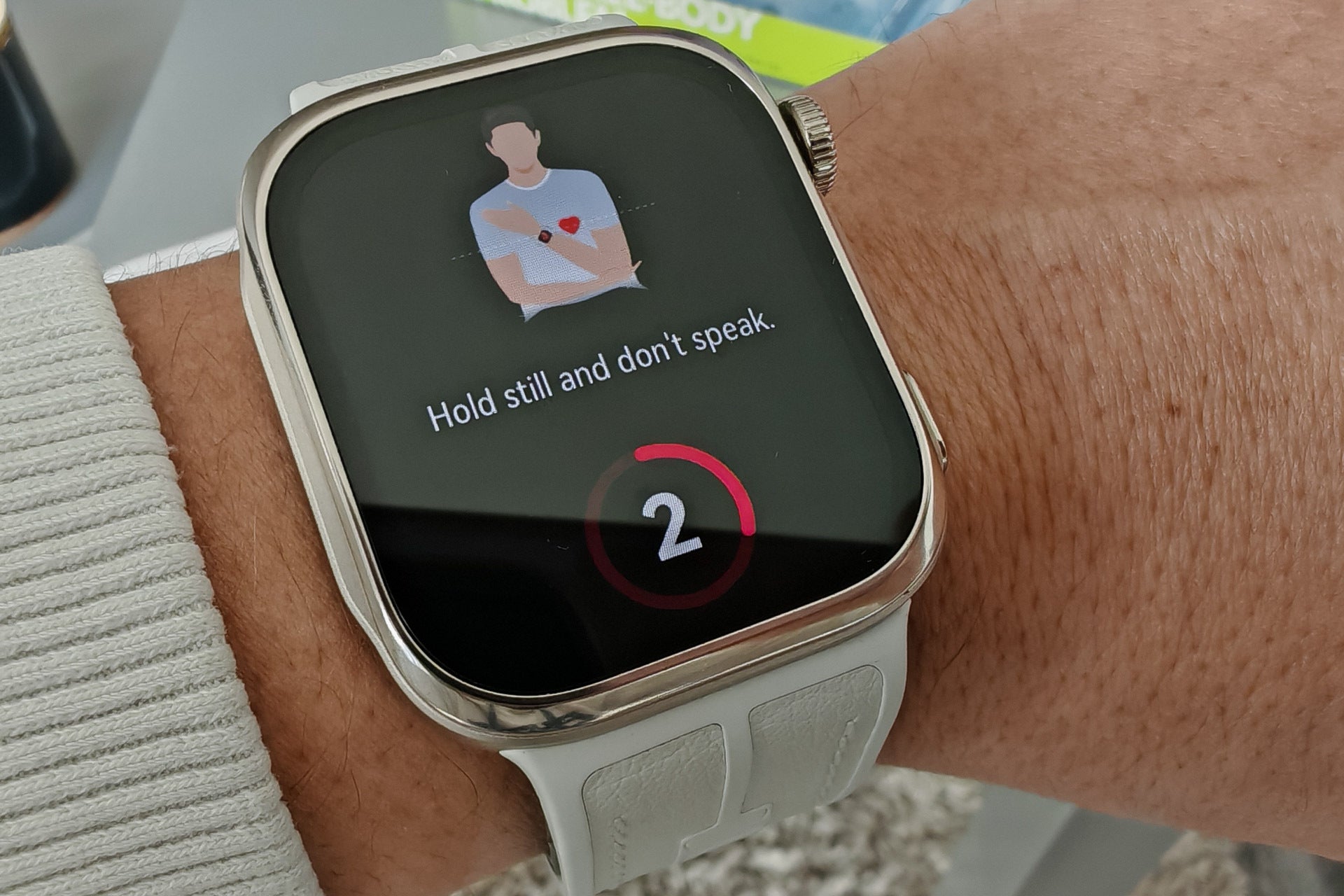
Measuring your blood pressure requires some strict prerequisites for maximum accuracy. | Image by PhoneArena
Measuring your blood pressure accurately requires some prerequisites, even when using a highly accurate medical-grade arm cuff. You need to be seated with your back straight, not moving, not talking, and the blood pressure monitor needs to be at the level of your heart.
These rules are even more important when you use a wrist monitor, such as the Huawei Watch D3. I tested the watch for a week against my own arm cuff and found that if all the above requirements are met, the Huawei Watch D3 sits within the ±5 mm Hg error range against my personal arm cuff BP monitor. And that's pretty awesome.
These rules are even more important when you use a wrist monitor, such as the Huawei Watch D3. I tested the watch for a week against my own arm cuff and found that if all the above requirements are met, the Huawei Watch D3 sits within the ±5 mm Hg error range against my personal arm cuff BP monitor. And that's pretty awesome.
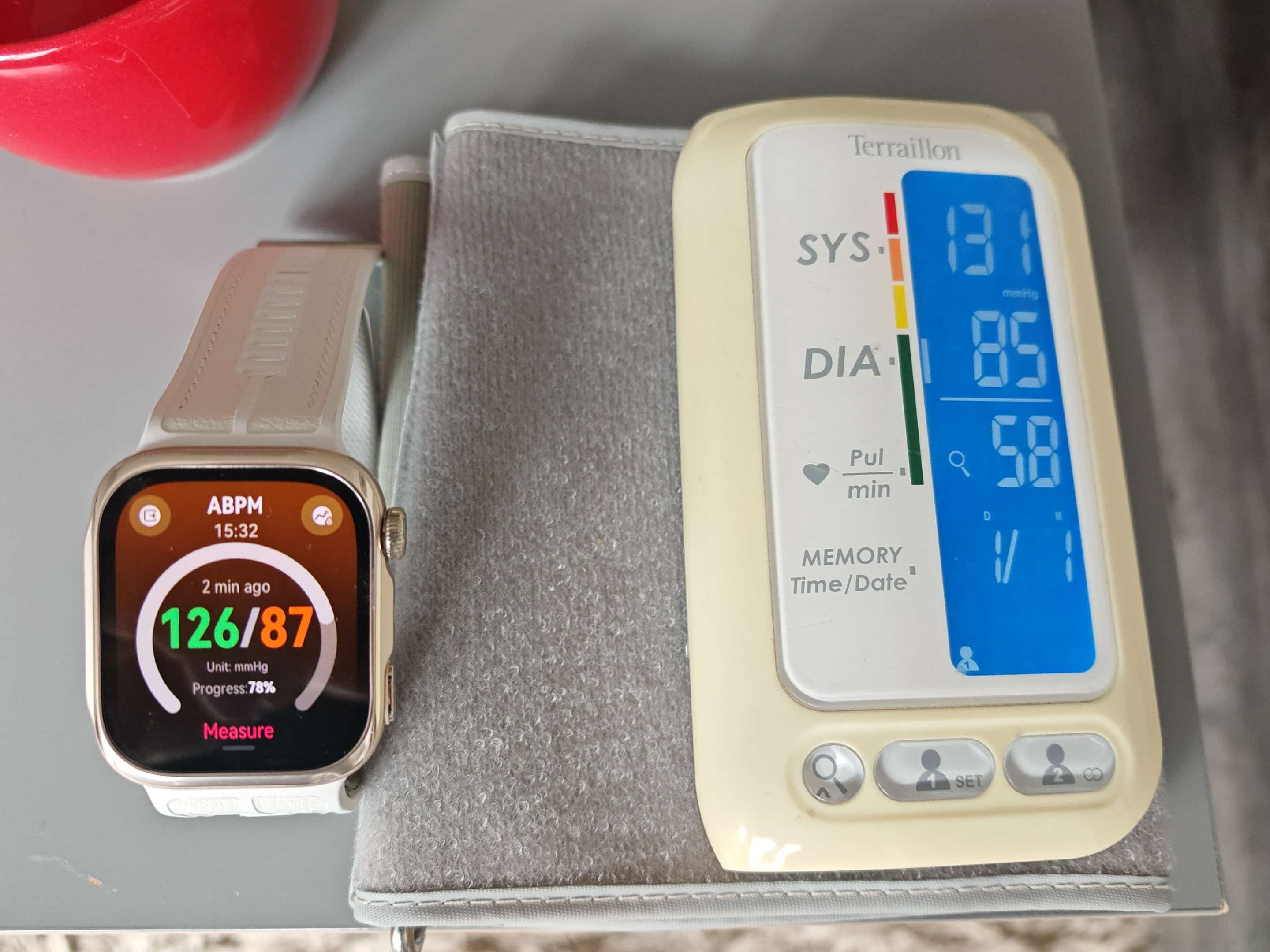
The Watch D3 was consistently inside the +-5 mm Hg range against my big arm cuff blood pressure monitor. | Image by PhoneArena
However, things get more complicated when you activate Ambulatory Blood Pressure Monitoring. You can choose whether the watch decides to inflate the cuff automatically throughout the day or nudge you to make a measurement.
First, your wrist gets squeezed a couple of times during the night, and for light sleepers this could be a problem. One of the nights I wore the Huawei Watch D3, I dreamt about being arrested and put into handcuffs. I assume this dream was triggered by the Watch D3 tightening around my wrist.
The second problem is that even if you don't notice the measurements, you're inevitably going to move around and make them less accurate. But with that said, if you use the blood pressure monitor manually and follow the guidance, you're going to get pretty accurate results.
For what it's worth, I found the Watch D3 tended to underestimate my systolic pressure and overestimate my diastolic blood pressure.
Last but not least, when activated, the air pump inside the Watch D3 produces a high-pitched sound. Initially, I thought it was my tinnitus, only to find that the watch was responsible for the sound. It's not very loud or particularly unpleasant, but you should be aware of this little detail.
Sleep and sports tracking
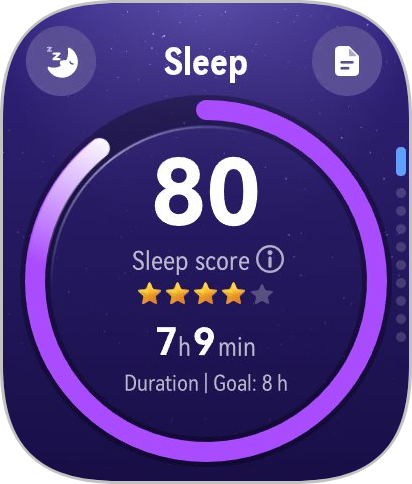
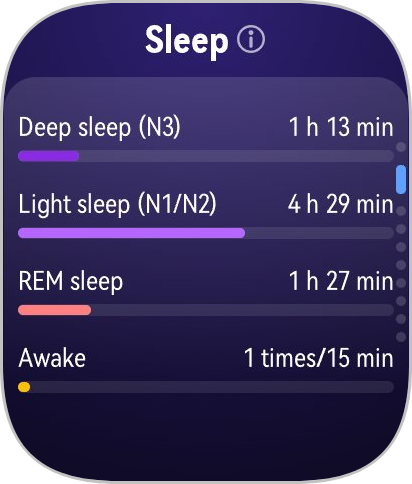
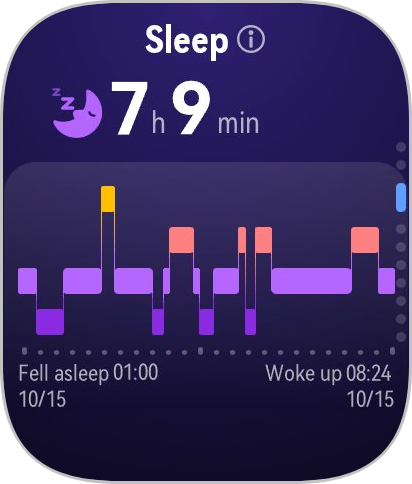
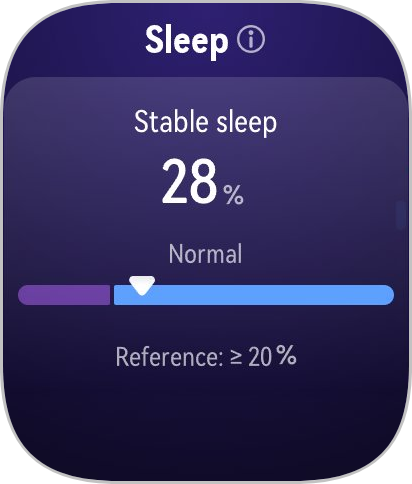
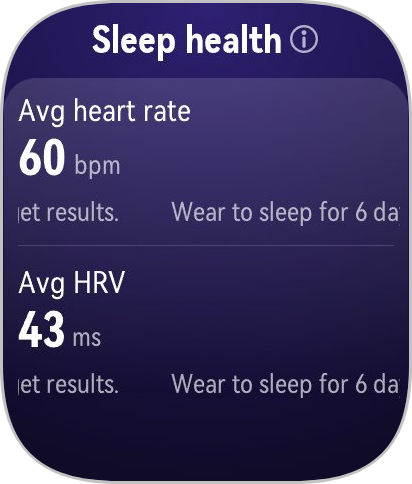
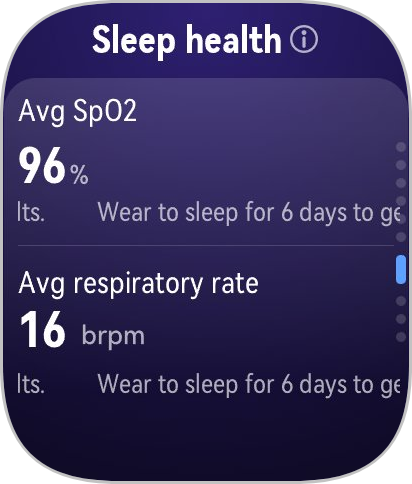
The Huawei Watch D3 is a full-fledged sports watch. I won't get into too much detail about the sports and sleep tracking—you can check out my Huawei Watch 6 review, as both watches share very similar fitness tracking hardware and software.
It features more than 100 sports modes, including running, cycling, swimming, skiing, and hiking, alongside niche options like ballet, esports, laser tag, and fishing.
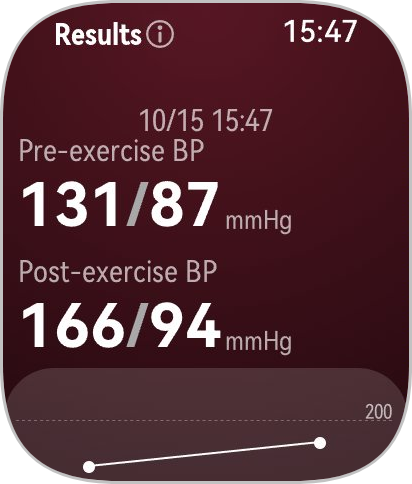
One cool feature this watch has to offer is pre- and post-exercise blood pressure measurements. It's a useful metric to see how certain activities affect your blood pressure, especially if you already have a blood pressure-related medical condition. A simple 800 m run, no warmup, totally cold turkey, elevated my BP to 166/94 (up from 131/87).
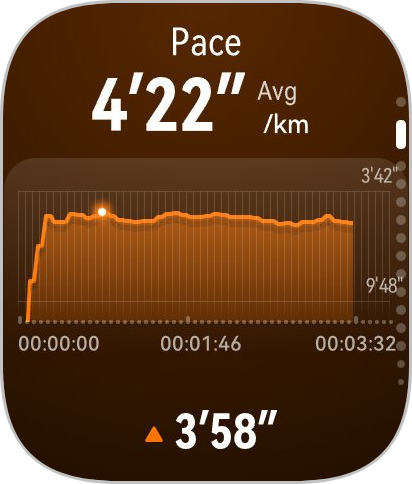
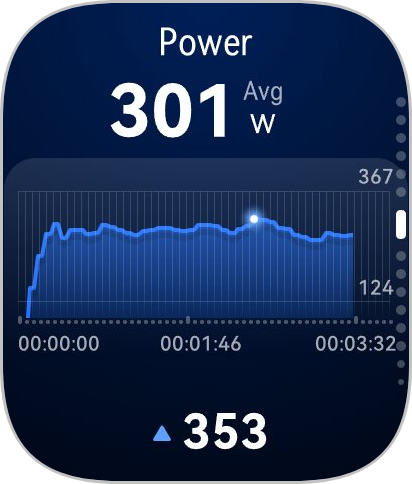
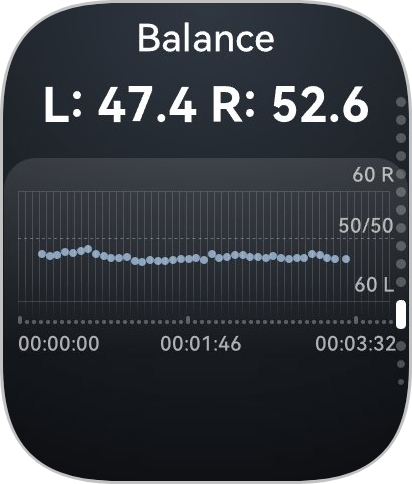
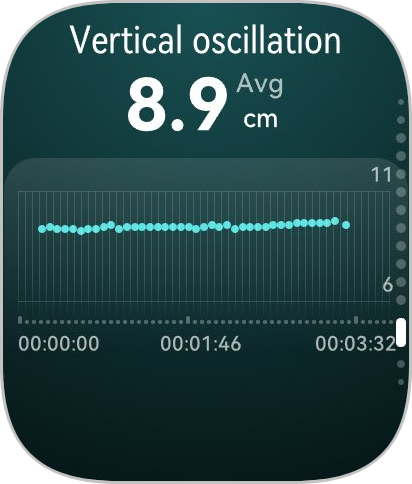
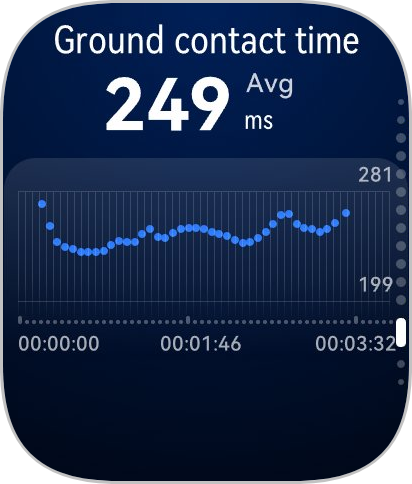
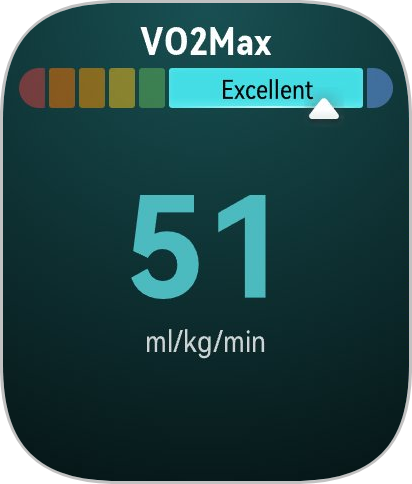
Running with this watch takes full advantage of Huawei's advanced running metrics, by the way, such as power, balance, vertical oscillation, ground contact time, and VO2Max.
Sleep tracking is pretty standard. You get sleep stages (light, deep, REM) and wake-up times, along with an overall score of your sleep quality out of 100. There are recommendations to help you tackle issues, such as breathing exercises you can do before bed and suggestions for when to go to sleep based on your typical fall-asleep time.
Other features
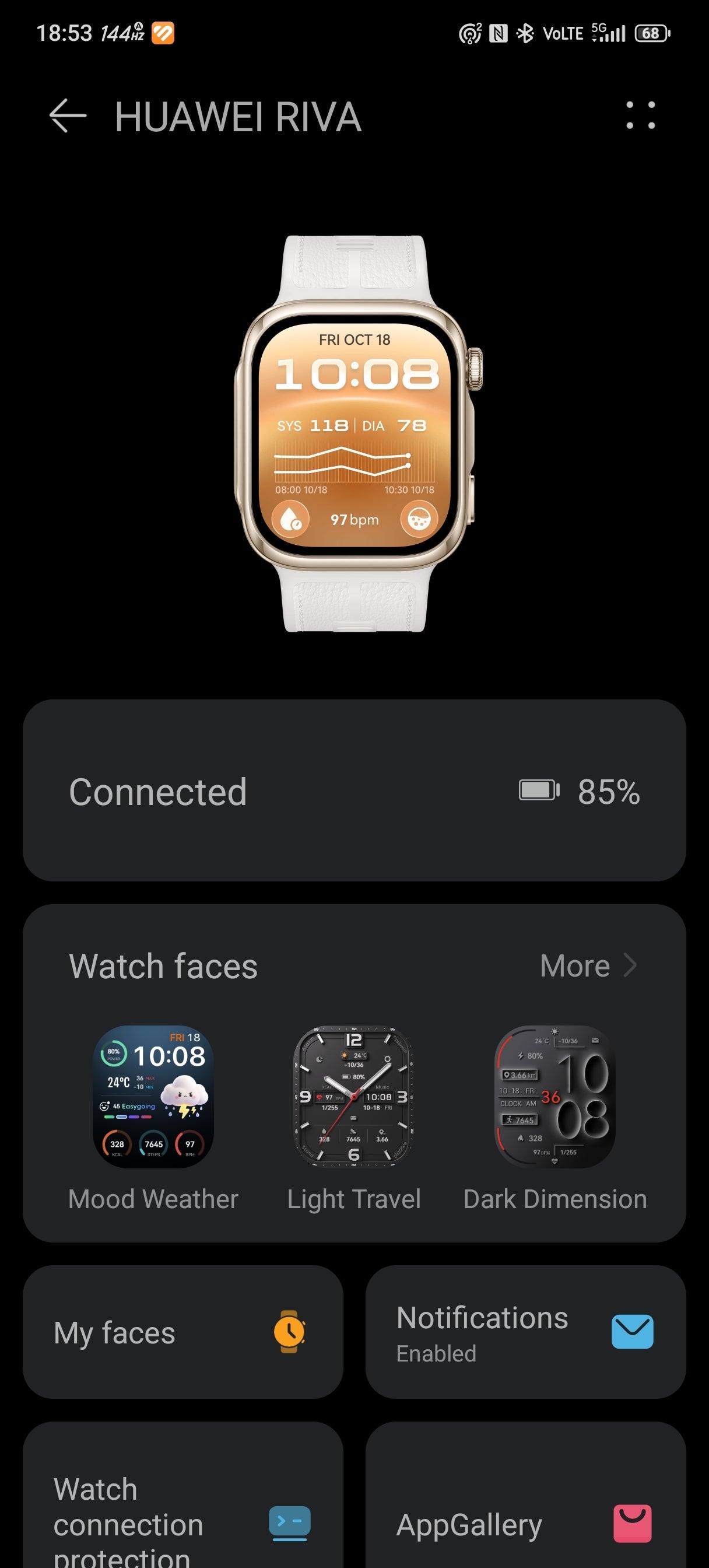
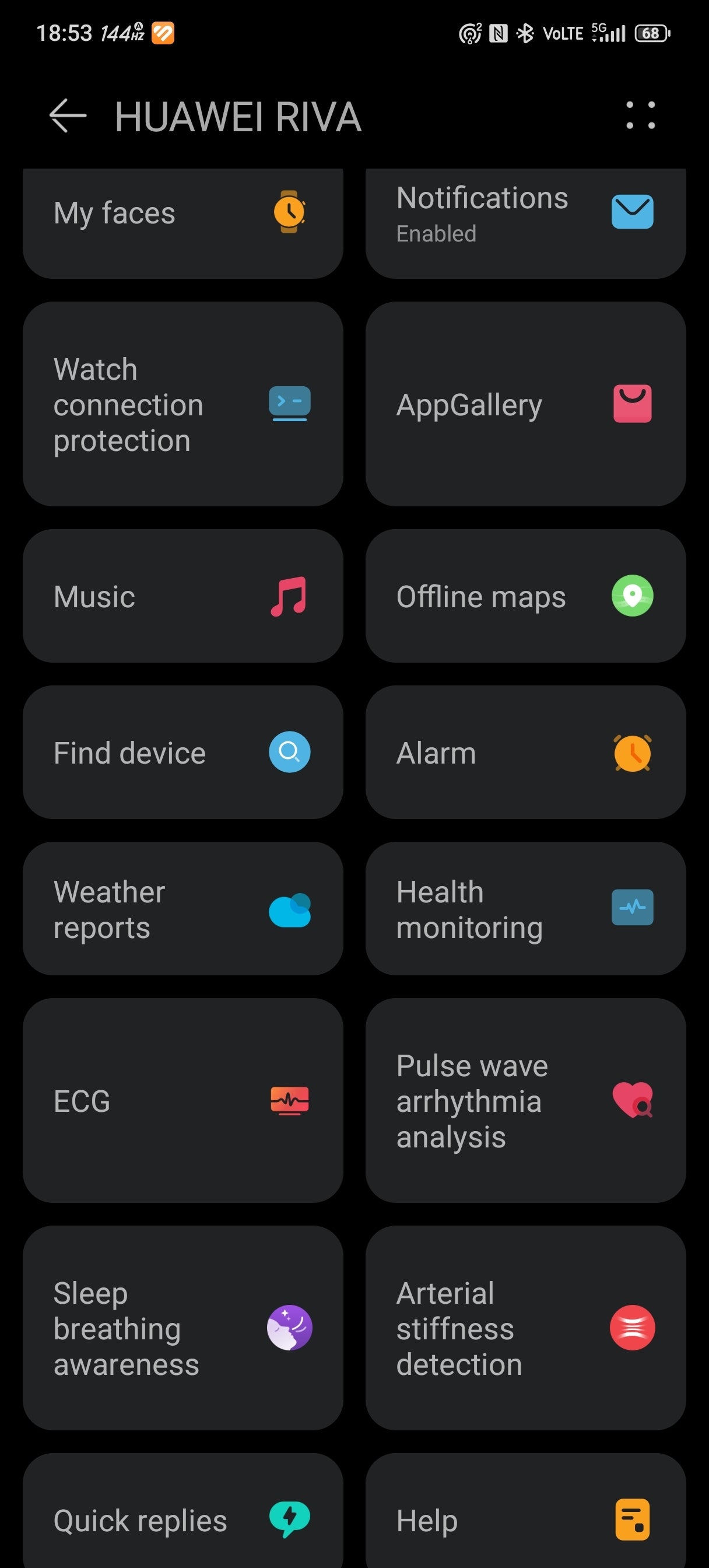
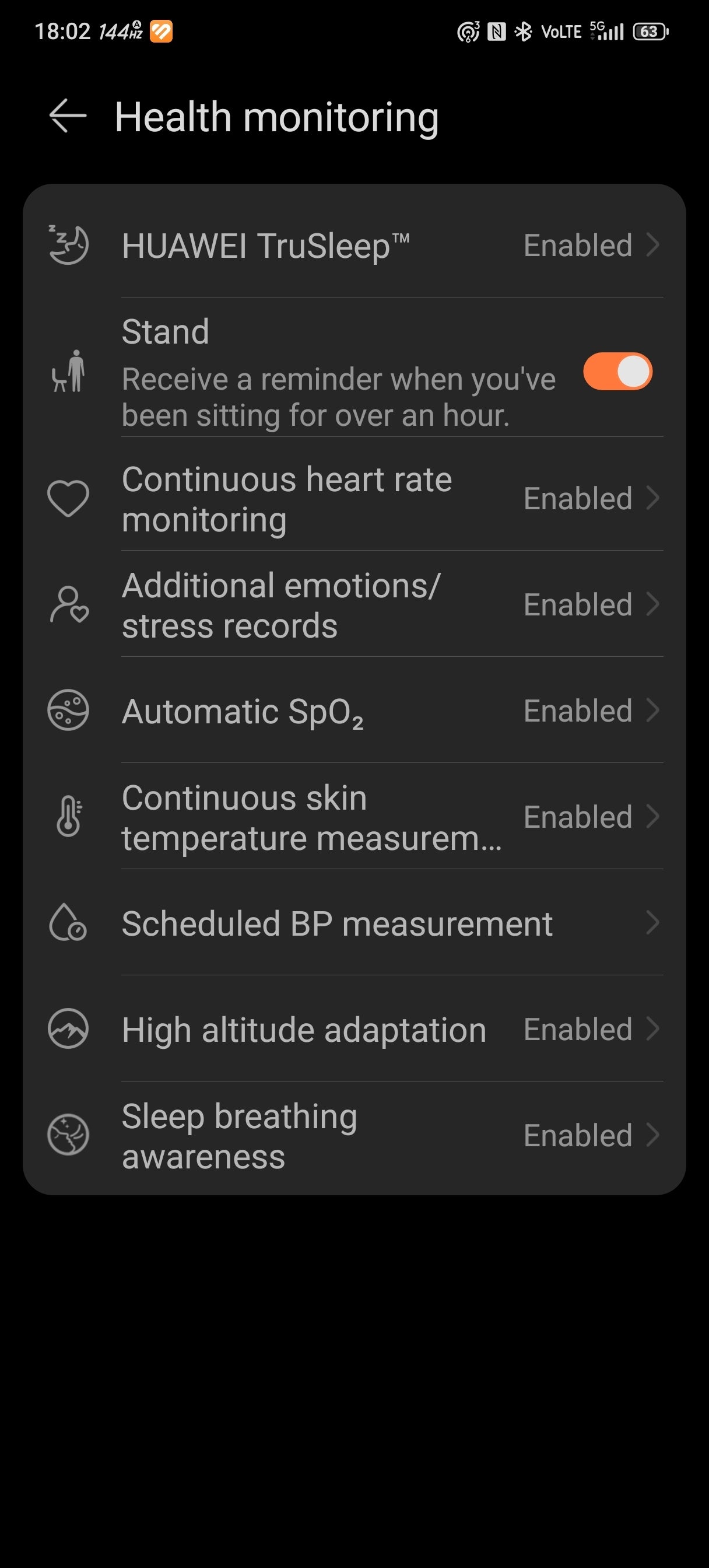
The Huawei Watch D3 comes with most of the bells and whistles other Huawei wearables have. There's a skin temperature sensor, a barometer, the watch can take your ECG, evaluate your arterial stiffness, warn you of pulse wave arrhythmia, and there's even a high-altitude adaptation feature.
There's an NFC chip inside and you can make contactless payments with it, but that depends on your region and support from banks and POS operators. You can also take calls using the watch, as there's a built-in microphone and speaker. The quality is decent, albeit not on par with Huawei's other smartwatches from the number and GT lines.
What is missing
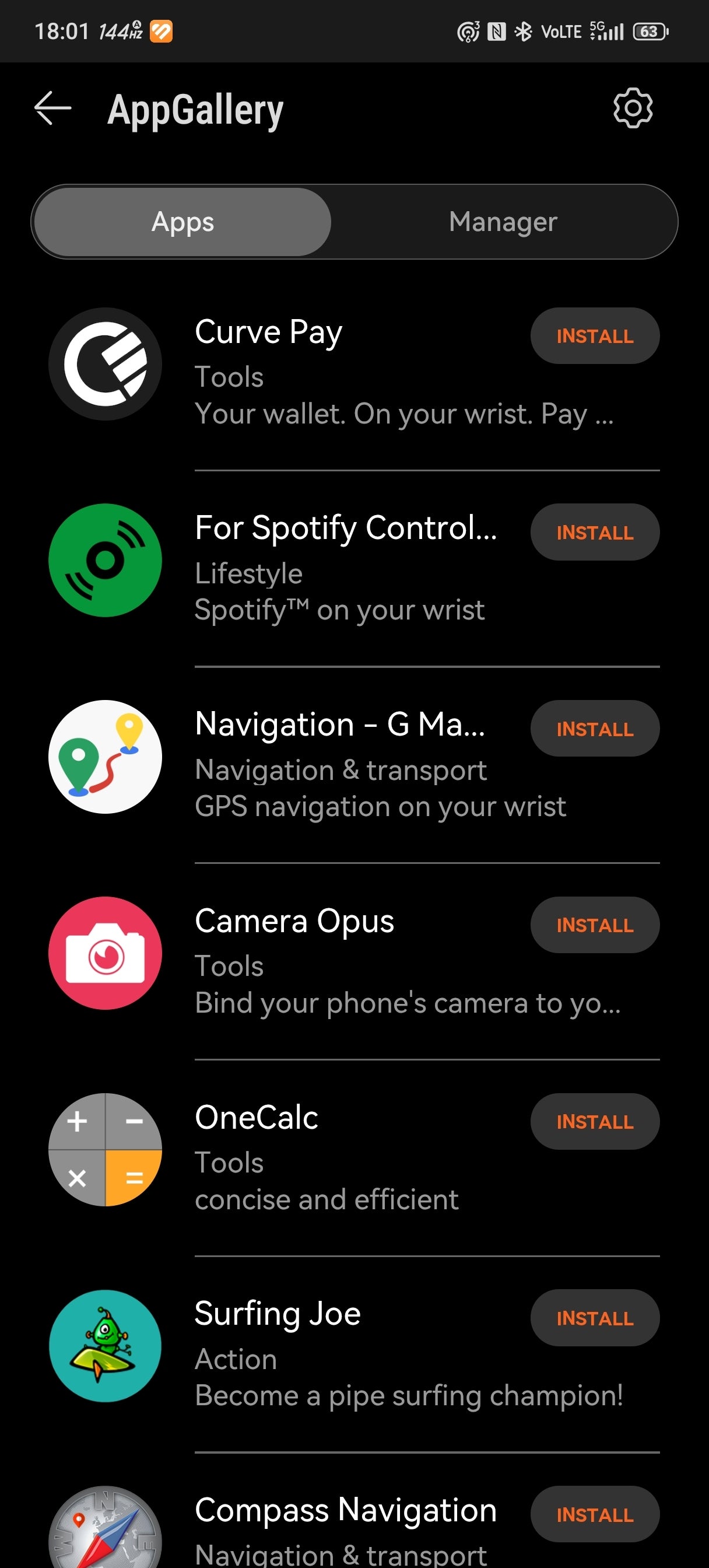
There aren't many things that are missing from the Huawei Watch D3 in terms of basic smartwatch and health features. When it comes to third-party app support — the Achilles' heel of Huawei wearables and the Harmony OS ecosystem outside China — things haven't changed much.
You can add third-party apps via the Huawei Health app and Huawei AppGallery, but the options are pretty limited both in number and in variety.
There's no cellular connectivity on this model — that's reserved for the main Huawei Watch number series — and there's no Wi-Fi either. The Watch D3 also lacks the advanced aquatic sensors from the GT series, as well as the novel G-force measurement and turn detection.
There's no cellular connectivity on this model — that's reserved for the main Huawei Watch number series — and there's no Wi-Fi either. The Watch D3 also lacks the advanced aquatic sensors from the GT series, as well as the novel G-force measurement and turn detection.
Should you buy it?
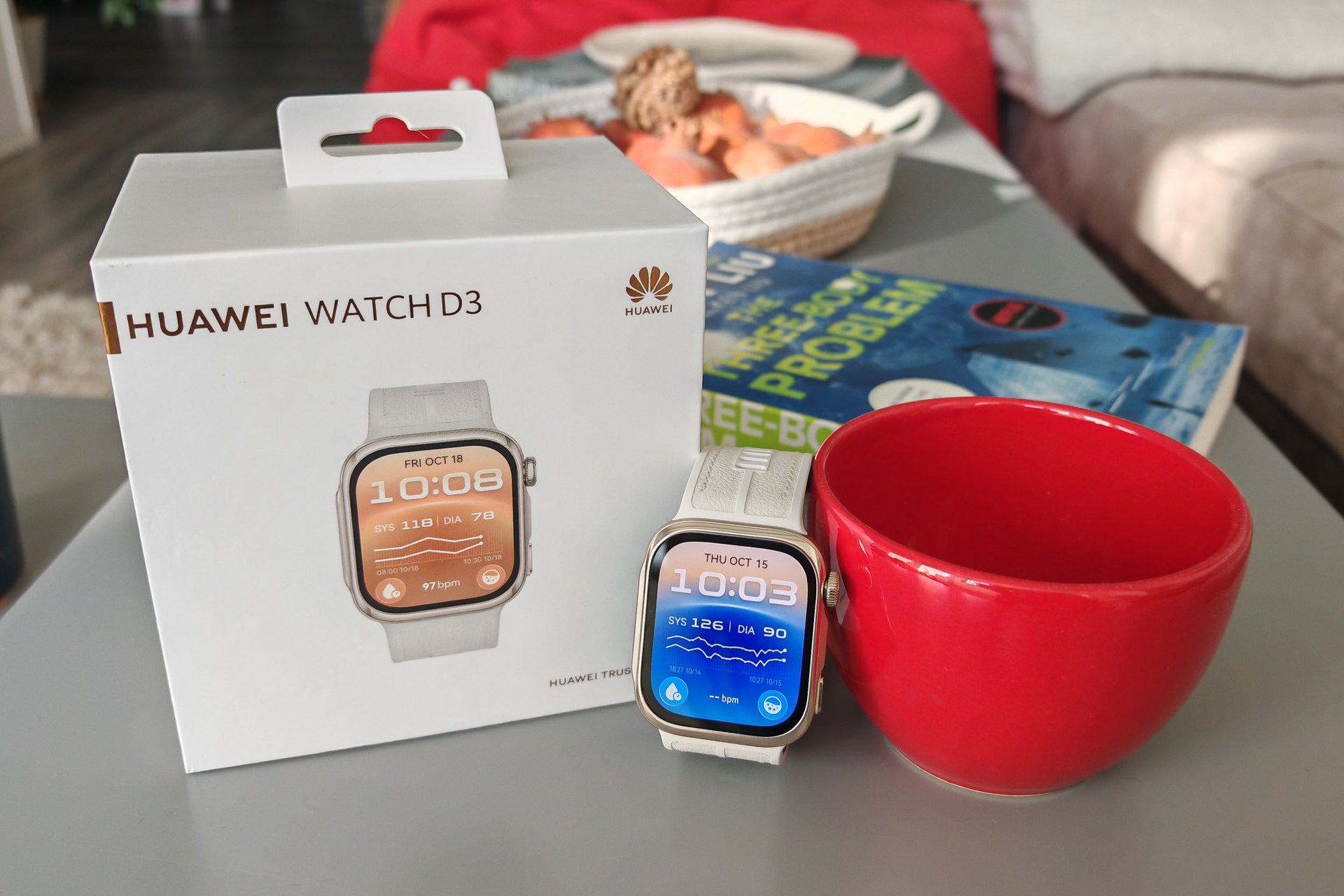
For people suffering from high blood pressure, the Huawei Watch D3 is a must. | Image by PhoneArena
At the end of the day, the Huawei Watch D3 remains a pretty niche device — which is a bit self-contradictory, given the fact that an estimated 1.4 billion people worldwide live with hypertension. That's 33% of the adult population worldwide aged 30–79, or 1 in every 3 people.
The Huawei Watch D3 is a great smartwatch, even if we don't take the CE-MDR-approved blood pressure monitoring into account. It has a great screen, it's lightweight and comfortable, and it can track a lot of activities and health metrics.
When you add the blood pressure monitoring feature on top, it becomes essential for people who suffer from hypertension. There are some caveats, however. You need to follow the instructions for BP measurements strictly and opt for manual measurements to achieve the most accurate results.
The watch starts at £400 in the United Kingdom and around €450 in European markets, so it's not the cheapest option out there. But on the other hand, it's one of the few medical-grade, cuff-based blood pressure monitoring smartwatches on the market right now.
The Huawei Watch D3 is a great smartwatch, even if we don't take the CE-MDR-approved blood pressure monitoring into account. It has a great screen, it's lightweight and comfortable, and it can track a lot of activities and health metrics.
When you add the blood pressure monitoring feature on top, it becomes essential for people who suffer from hypertension. There are some caveats, however. You need to follow the instructions for BP measurements strictly and opt for manual measurements to achieve the most accurate results.
As a regular smartwatch, this device gets a solid 8 out of 10. As a medical tool to keep an eye on your blood pressure, it's a 10 out of 10.


Popular stories



Latest News


Things that are NOT allowed:
To help keep our community safe and free from spam, we apply temporary limits to newly created accounts: