Fridays are for fun, but the latest rumor about the smartphone industry is not fun at all.
It's about the impact that an unreleased Apple phone—the iPhone 20, that is—would potentially have on the Android industry. Which is another way of saying: on virtually all phones out there.
What Digital Chat Station is saying
There's a popular tipster in the digital space by the nickname of Digital Chat Station. He, she or they—nobody exactly knows if it's a person or a team behind the account—is among the most credible tipsters nowadays.
Digital Chat Station, or DCS, often shares insightful information about upcoming phones and phone trends. The leaks are typically about exotic brands like Xiaomi, Huawei, Honor, Oppo or OnePlus (RIP!), but DCS always has a lot to say about iPhones, too.
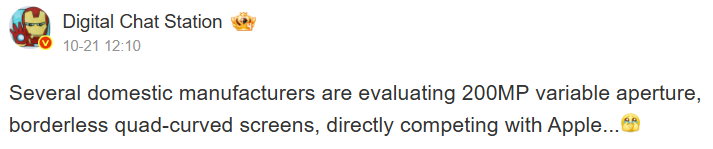
Hope this one doesn't turn out to be true. | Image by Weibo account of DCS
Per DCS' latest information, "Several domestic manufacturers are evaluating 200MP variable aperture, borderless quad-curved screens, directly competing with Apple"; by "domestic", DCS means many of the aforementioned Chinese brands.
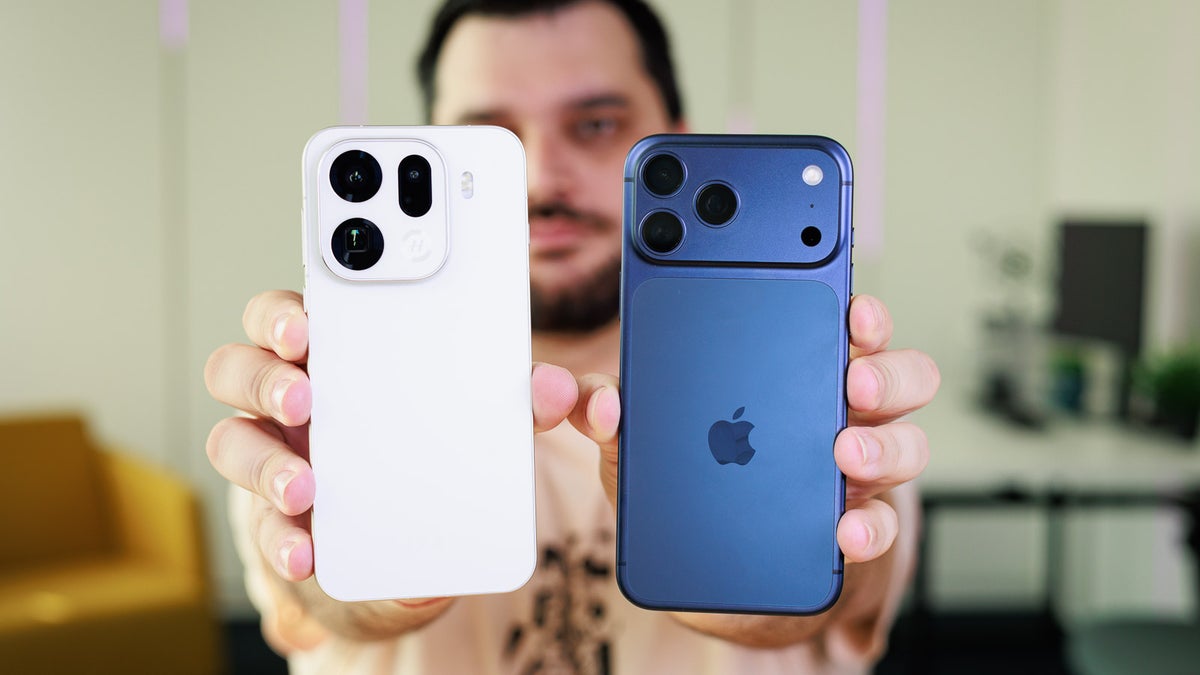
And by "directly competing with Apple", I assume, DCS means the iPhone 20. That's going to be Apple's anniversary job: Steve Jobs changed the world back in 2007. We can't expect the same revolution to take place, but it's safe to say that Apple will be investing heavily in the iPhone 20.
Recommended For You
Influence, inspiration or imitation?
I'm firmly on team Android, but even I can't deny Apple's profound impact on the phone industry.
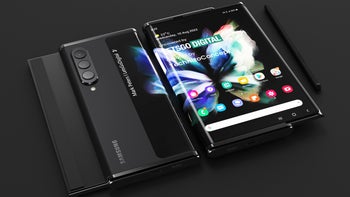
Sure, we can talk for hours about how "Actually, Android did it first!" but Cupertino is clearly better at popularizing a given feature or design. That's why many phones today desperately want to look like an iPhone. That's why mere hours after the iPhone Duo's announcement, somebody went and copied its folding animation (the cover screen blurs into the inner display as the phone unfolds). And so on.
But there are some places where Android makers need not follow Apple in suit.
Back to quad-curved display panels?
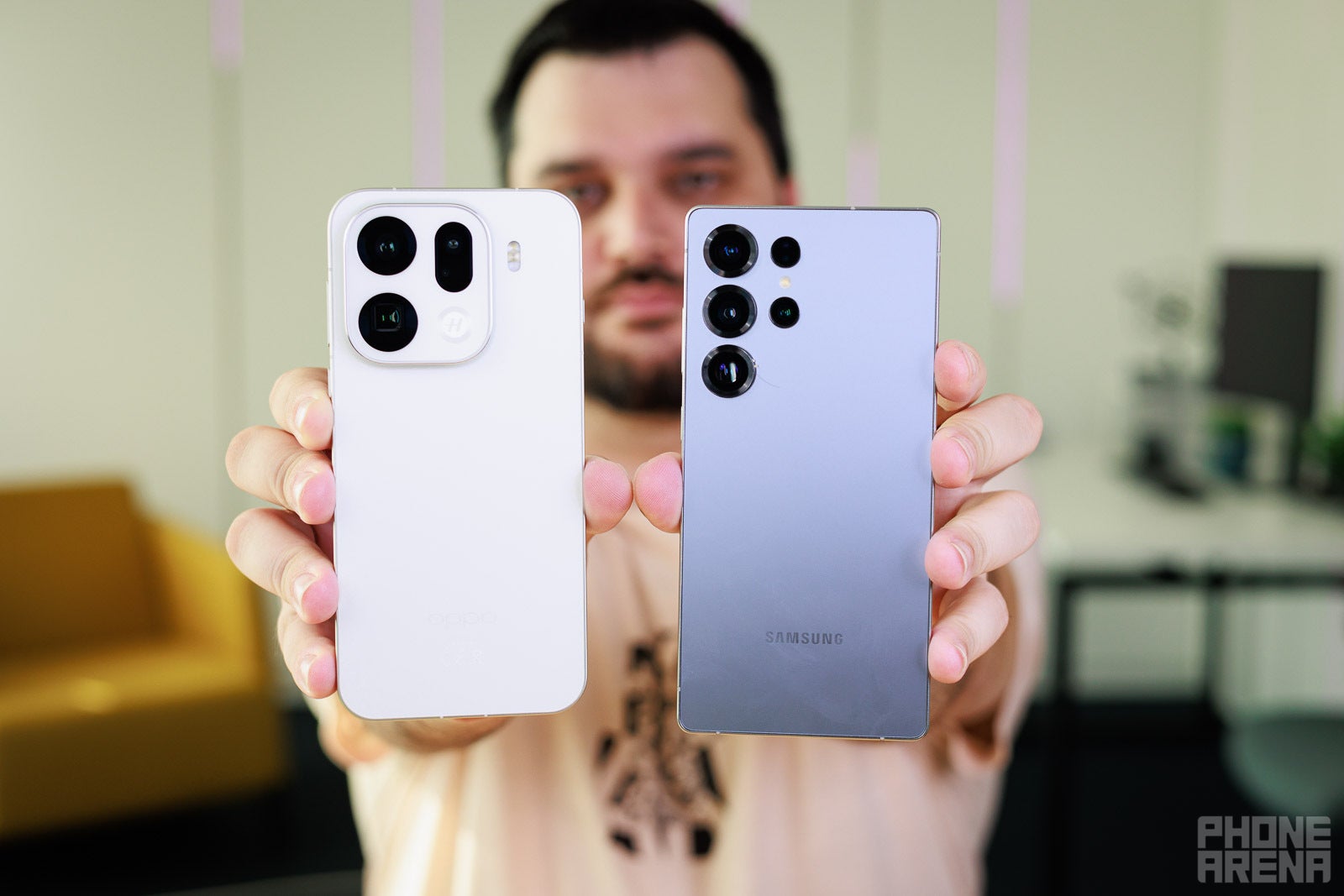
Android makers should look the other way. | Image by PhoneArena
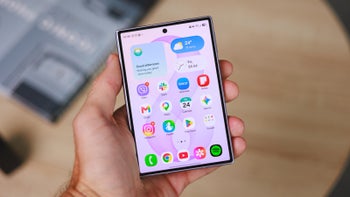
There are plenty of rumors hinting that the iPhone 20 (or the iPhone 20 Pro Max?) would incorporate a quad-curved display instead of the nice, flat panel we're used to. I was suspecting that some Android OEMs would immediately copy that design idea, but DCS' latest leak means that we'll probably be seeing many more such phones in 2027… and likely in 2028 and beyond.
I may be a minority here—or maybe not?—but I'm so done with quad-curved panels. Yes, they look outstanding, but the actual user experience isn't a superb one for me. Accidental touching on the edges (despite software optimizations) is very real, display protectors never fully stick (especially at the corners) and I think it isn't worth it.
The iPhone 20 may adopt it because it creates the illusion of a bigger, bezel-less almost, screen. We've been dreaming about this for many years, but I think current-day bezels on flat displays are thin enough. What's more, it's all about the psychological moment: we adapt. Sure, everytime I go back to my good ol' Pixel 3a to check something, I'm shocked by its thick bezels. Shortly after, I don't notice anything odd.
Variable apertures: yeah, no
The other thing that DCS forecasts is about the possibility of Android makers installing a variable aperture on their future phones. This, I'm sure, would apply only to flagships. I'm an avid mobile photography fan and I've never ever said, "Gee, if only I could close my phone's aperture a bit more". It's about physics.
A variable aperture sounds impressive on a spec sheet, but that's it. On a traditional camera, changing the aperture can help control how much light reaches the sensor and how much of the scene stays in focus. Sometimes, you want a portrait with a blurred background; sometimes, you want the sharpest possible landscape. But these are dedicated cameras with big sensors.
On a phone, the tiny sensors (yes, even 1-inch sensors are tiny compared to APS-C sensors, let alone full frame) already provide plenty of depth of field, meaning most of the scene tends to remain sharp.
If you want that creamy background blur for portraits, computational photography can already simulate it quite convincingly. Closing the aperture also reduces the amount of light reaching the sensor, potentially forcing the phone to use a slower shutter speed or higher ISO in darker conditions. Sure, variable aperture can be useful in specific situations, particularly when shooting in bright sunlight or trying to keep a close-up subject sharp, but I doubt it deserves the attention it gets.
I'd much rather see manufacturers invest in larger sensors and better telephoto cameras!
Live and let live
Back to the iPhone 20: Android manufacturers really should let Apple do its thing without treating every rumored design choice as a blueprint for their own phones. Inspiration is fine, competition is healthy, but blindly copying features doesn't automatically make a product better.
If Apple goes for a quad-curved display, that doesn't mean we all need to suffer. If it introduces a variable aperture, Android brands should first ask whether we'd genuinely benefit from it.
Sebastian is one of PhoneArena’s senior opinionators. A veteran news writer with almost 20 years of experience in media and technology, he not only covers all the hot news about Galaxies and iPhones, but often provides hot takes on industry trends. He’s fascinated with camera-focused flagships from the likes of Oppo and Vivo, as well as foldable phones.
A discussion is a place, where people can voice their opinion, no matter if it
is positive, neutral or negative. However, when posting, one must stay true to the topic, and not just share some
random thoughts, which are not directly related to the matter.
Things that are NOT allowed:
Off-topic talk - you must stick to the subject of discussion
Offensive, hate speech - if you want to say something, say it politely
Spam/Advertisements - these posts are deleted
Multiple accounts - one person can have only one account
Impersonations and offensive nicknames - these accounts get banned
To help keep our community safe and free from spam, we apply temporary limits to newly created accounts:
New accounts created within the last 24 hours may experience restrictions on how frequently they can
post or comment.
These limits are in place as a precaution and will automatically lift.
Moderation is done by humans. We try to be as objective as possible and moderate with zero bias. If you think a
post should be moderated - please, report it.
Have a question about the rules or why you have been moderated/limited/banned? Please,
contact us.







Things that are NOT allowed:
To help keep our community safe and free from spam, we apply temporary limits to newly created accounts: