While Apple is working on its first smart glasses, codenamed N50, the competition is moving fast. At the Augmented World Expo 2026 (AWE) in Long Beach, California, Samsung unveiled new RGB OLEDoS (OLED on Silicon) technology for smart glasses.
What's OLED on Silicon?
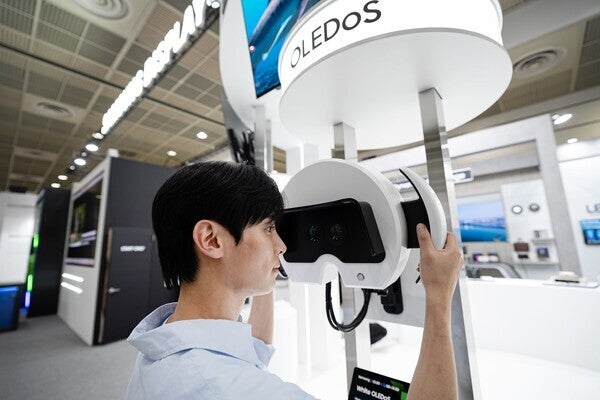
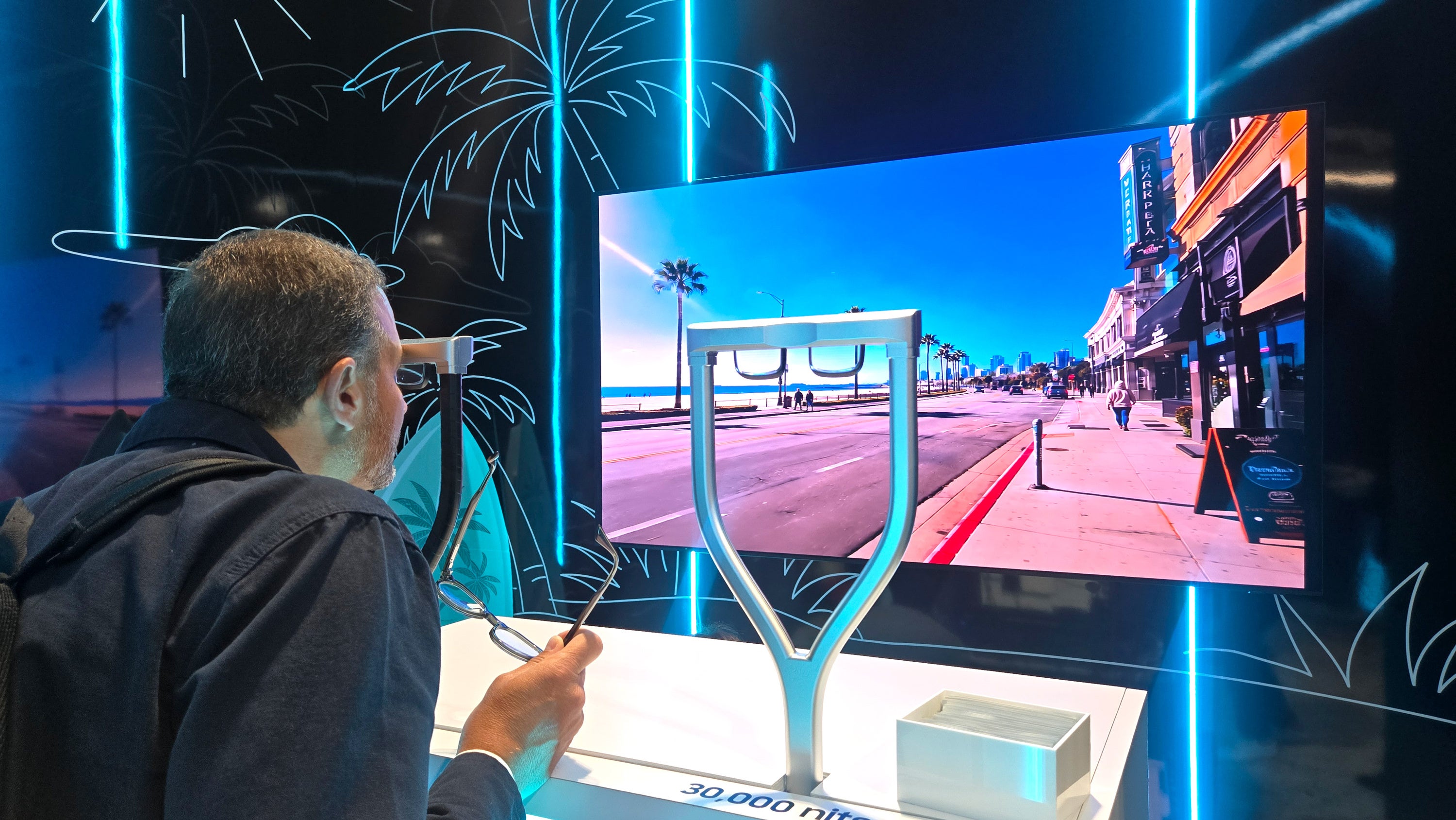
RGB OLEDoS is a tech that offers great luminance and simpler manufacturing processes. | Image by Samsung
RGB OLED on Silicon is the next big thing in microdisplays. The method deposits light-emitting material directly onto a silicon wafer, with individual red, green, and blue subpixels without a color filter.
RGB OLEDoS is composed of a single panel, making the manufacturing process less complex than other technologies and offering significant advantages in mass production and cost competitiveness. Based on our world-class OLED technology and extensive mass-production experience, we will continue developing ultra-high-brightness RGB OLEDoS while focusing on improving production efficiency.
- Samsung Display representative at AWE USA 2026
This allows for very bright and crisp displays with great color reproduction, pixel density, and efficiency. The manufacturing process is also simpler, making the technology perfect for smart glasses and other augmented reality and mixed reality devices.
Samsung showed 1.4-inch prototypes with a brightness of 40,000 nits and a pixel density of 5,000 pixels per inch.
Recommended For You
Unlike white OLEDoS, RGB OLEDoS does not require a color filter, enabling higher light efficiency and longer lifespan. These advantages make it highly suitable for delivering excellent color reproduction and high brightness. This is why RGB OLEDoS is considered an optimal solution for XR devices, which require sharp image quality in compact and lightweight form factors.
- Samsung Display representative at AWE USA 2026
Samsung's first smart glasses?
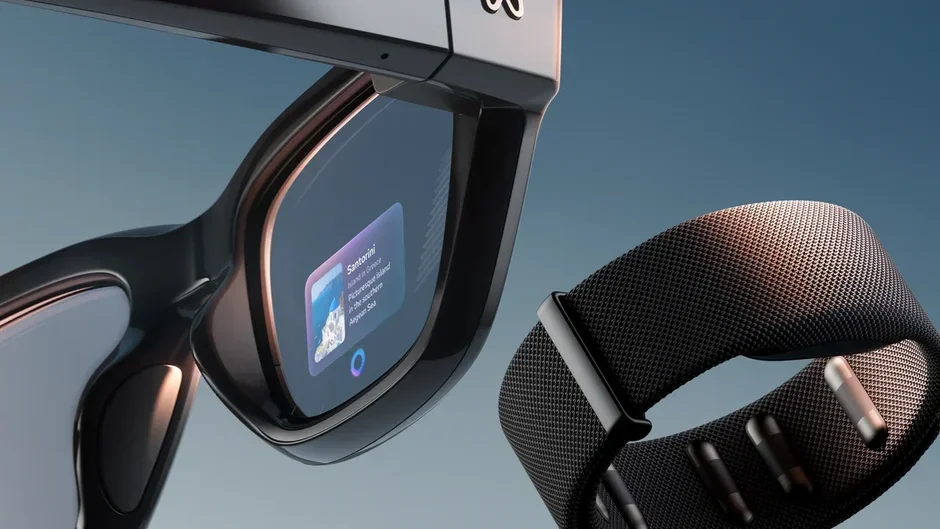
The Samsung AR glasses prototype at the AWE USA 2026. | Image by Samsung
At the expo Samsung showed a pair of prototype glasses, using a tiny 0.62-inch RGB OLEDoS display. The company is working on its own Android XR-powered smart glasses, expected to be officially revealed later this year.
What would make you buy a pair of AR glasses?
49 Votes
Samsung teased features such as real-time translation, navigation, and weather updates on the prototype that the company showed at the AWE. The design resembles the familiar Wayfarer shape that Meta uses for its Ray-Ban Meta smart glasses and could be similar to the market product Samsung is gearing up to unveil.
The rumored Samsung smart glasses, codenamed "Glasses" (not very original, I know), are different from the leaked Samsung "Haean" prototype that allegedly uses microLED technology.
Where's the competition at?
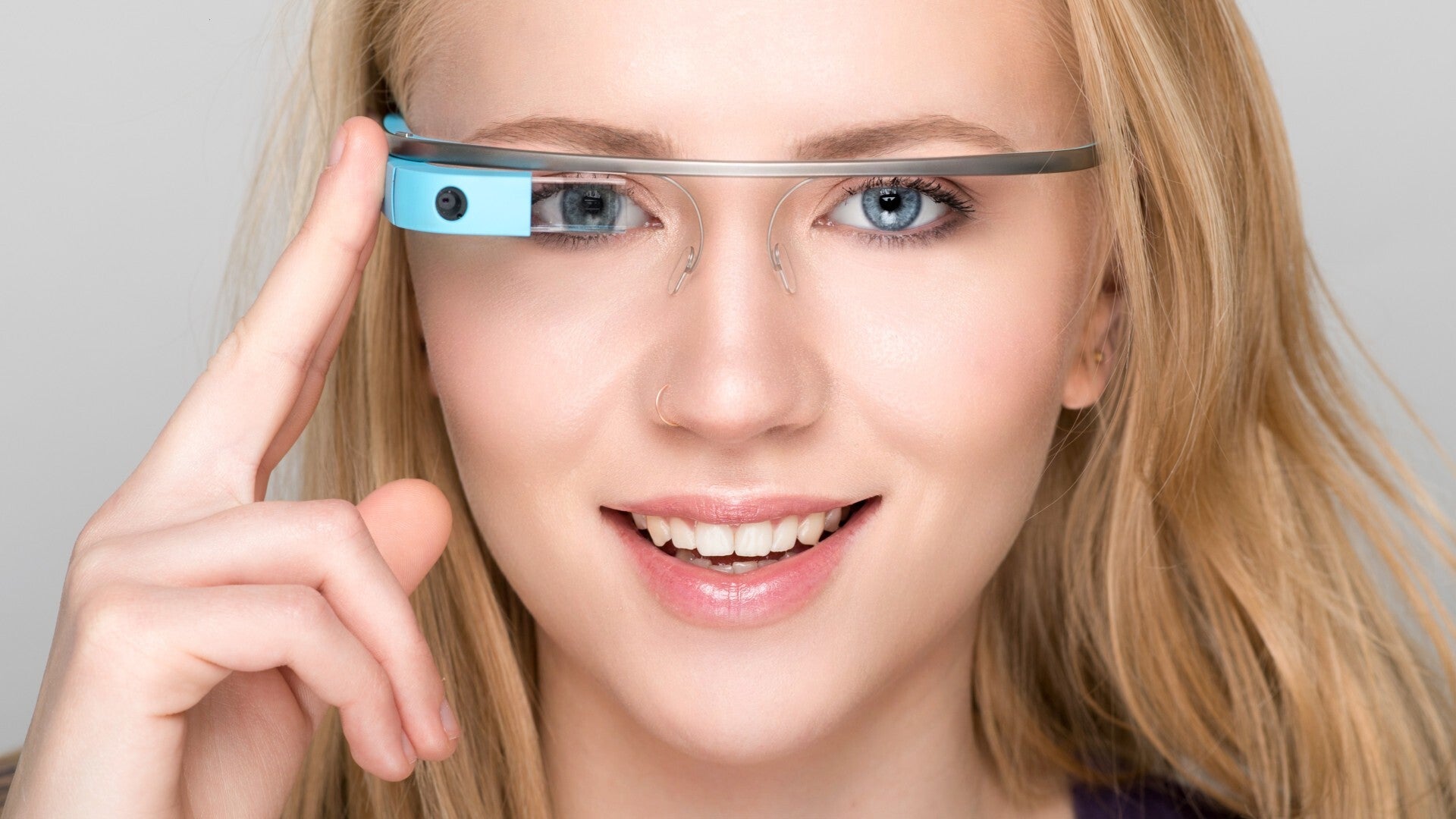
The Ray-Ban Meta smart glasses are facing troubles in light of recent new findings. | Image by Meta
Apple is pretty far behind when it comes to AR tech. The rumored Apple N50 smart glasses are expected to be just an extension to your iPhone with no built-in displays and no real AR functionality.
Meta is Samsung's biggest rival in this, as Google has been jumping on and off this AR train constantly in the past couple of years.
The company teased new AR glasses with real-life translation and other AI features a couple of years ago but then backed off, only to say it's actually working on something AR later on.
So, we don't really know. Samsung is in a good position to take a big chunk of AR market share. Especially in light of the latest controversy surrounding the Ray-Ban Meta smart glasses.
Are we finally on the verge of the promised AR revolution?
Google failed with the original Google Glass, but are we now finally ready for the AR revolution? | Image by Google
We've been waiting for the AR hype to produce something meaningful for years and years. I know I've been waiting. Ever since the first Google Glass prototype (which crashed and burned, as we all know), I've been following the technology up close.
Unlike VR, augmented reality offers one key advantage that could make the technology useful in real life. It doesn't disconnect you from the aforementioned real life in favor of a virtual one. And now it seems that the latest advances in display technology, along with the Android XR platform, could finally enable wider AR adoption.
Galaxy Watch Ultra 2: up to $250 off
$449
99
$699
99
$250 off (36%)
The Galaxy Watch Ultra 2 is a premium wearable with a rugged yet lightweight design and all sorts of high-end features. It's also equipped with an 800mAh battery, offering plenty of battery life on a single charge. Right now, you can get it with a $250 discount, but an eligible device trade-in is required.
Mariyan, a tech enthusiast with a background in Nuclear Physics and Journalism, brings a unique perspective to PhoneArena. His childhood curiosity for gadgets evolved into a professional passion for technology, leading him to the role of Editor-in-Chief at PCWorld Bulgaria before joining PhoneArena. Mariyan's interests range from mainstream Android and iPhone debates to fringe technologies like graphene batteries and nanotechnology. Off-duty, he enjoys playing his electric guitar, practicing Japanese, and revisiting his love for video games and Haruki Murakami's works.
A discussion is a place, where people can voice their opinion, no matter if it
is positive, neutral or negative. However, when posting, one must stay true to the topic, and not just share some
random thoughts, which are not directly related to the matter.
Things that are NOT allowed:
Off-topic talk - you must stick to the subject of discussion
Offensive, hate speech - if you want to say something, say it politely
Spam/Advertisements - these posts are deleted
Multiple accounts - one person can have only one account
Impersonations and offensive nicknames - these accounts get banned
To help keep our community safe and free from spam, we apply temporary limits to newly created accounts:
New accounts created within the last 24 hours may experience restrictions on how frequently they can
post or comment.
These limits are in place as a precaution and will automatically lift.
Moderation is done by humans. We try to be as objective as possible and moderate with zero bias. If you think a
post should be moderated - please, report it.
Have a question about the rules or why you have been moderated/limited/banned? Please,
contact us.






Things that are NOT allowed:
To help keep our community safe and free from spam, we apply temporary limits to newly created accounts: