Scientists have finally cracked the code and uncovered why solid-state batteries fail, ScienceDaily reports. This could bring us close to safe, long-lasting batteries and smartphones that can go for days on a single charge.
The mysterious issue with solid-state batteries
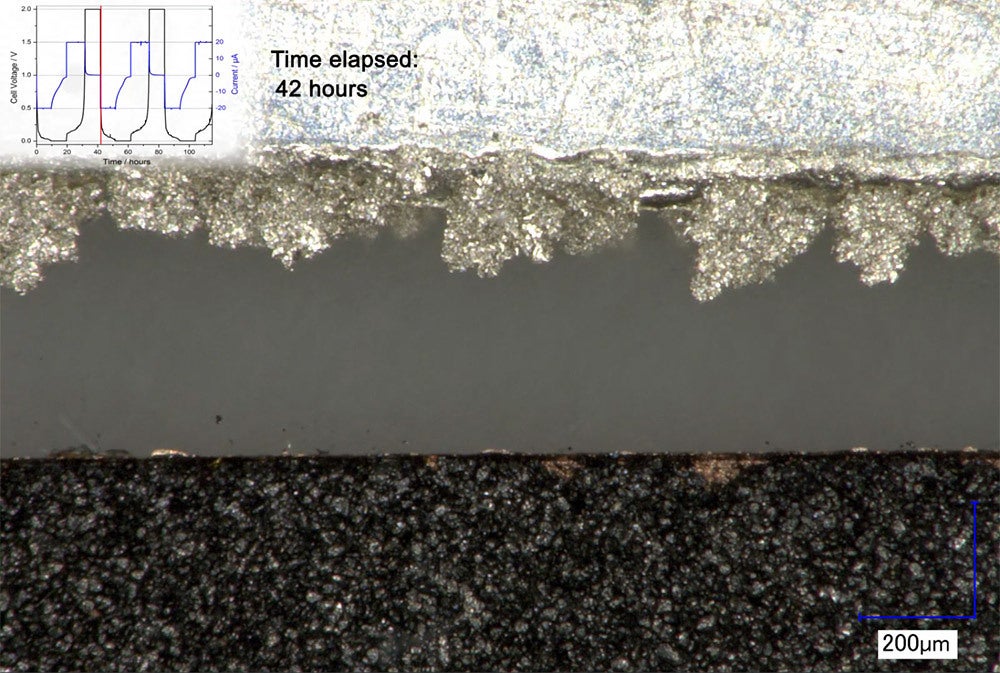
Lithium dendrites form during charging. | Image by EL-CELL
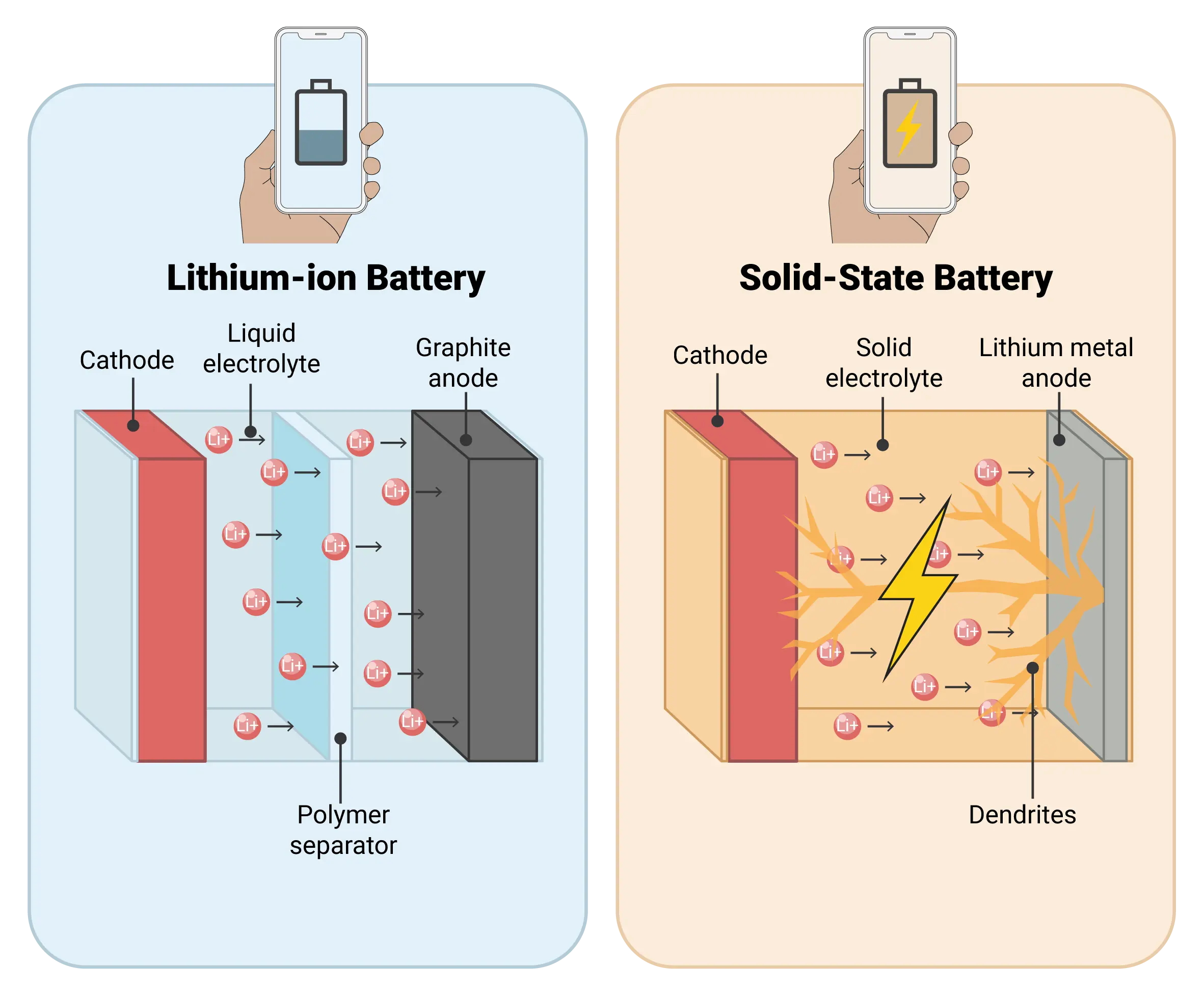
Solid-state batteries use a solid electrolyte between the two electrodes. This design offers many advantages over conventional, liquid-electrolyte lithium-ion batteries, including higher density, faster charging, and a much safer profile.
One small but fatal issue has been stopping the battery revolution and widespread adoption of solid-state batteries. Dendrites.
During charging, small crystal structures, called dendrites, start to grow from the lithium anode. These tree-like structures pierce the solid electrolyte and short-circuit the battery. Scientists have been scratching their heads for years trying to understand how the soft lithium dendrites were able to puncture the solid ceramic electrolyte.
Although the electrodes and the forming dendrites consist of lithium metal, which is soft like a gummy bear, the dendrites are able to penetrate the ceramic electrolyte and lead to a short circuit. How can soft dendrites fracture the stiff solid ceramic? There are two hypotheses: either internal stress is built up inside the dendrites and induces mechanical fracture of the solid electrolyte. Or, electrons leak along the grain boundaries of the solid electrolyte, promoting the formation of lithium nuclei that interconnect later.
- Dr. Yuwei Zhang, first author of the new publication and head of the group
Recommended For You
Now a team at the Max Planck Institute for Sustainable Materials (MPI-SusMat) has found the exact process of how these dendrites kill the solid-state battery. The study is published in the prestigious science journal Nature.
How long should a smartphone battery last on a single charge?
131 Votes
Scientists now know why dendrites kill solid-state batteries
Dendrites can puncture the solid ceramic electrolyte and effectively kill the battery. | Image by Max Planck Institute
The team developed a complex method of sample preparation and materials characterization. They looked closely at the charging solid-state battery in vacuum conditions and at very low temperatures in order to eliminate interference from oxygen, water, and air.
The soft lithium metal is able to penetrate the stiff ceramic electrolyte, like a continuous waterjet that penetrates a rock. We calculated that hydrostatic stress in the dendrite leads to brittle fracture of the solid electrolyte in the end
- Dr. Yuwei Zhang, first author of the new publication and head of the group
The scientists triple-checked their results using various methods such as phase field simulations and electron backscatter diffraction measurements. The results were consistent. We know now how soft lithium dendrites penetrate the ceramic electrolyte in solid-state batteries and practically kill them. Can we do something about it?
How to fix the dendrite problem in solid-state batteries
The team is now looking at potential ways to delay or stop this process. One potential solution is to reinforce the ceramic electrolyte and make it tougher so it can resist cracking.
Another way to tackle this is coating the lithium electrode with protective layers that reduce dendrite formation.
The researchers believe their work can serve as a stepping stone in solving the dendrite problem of solid-state batteries and transform them from a cool concept to real technology powering future smartphones and electric vehicles.
The battery revolution is slowly happening
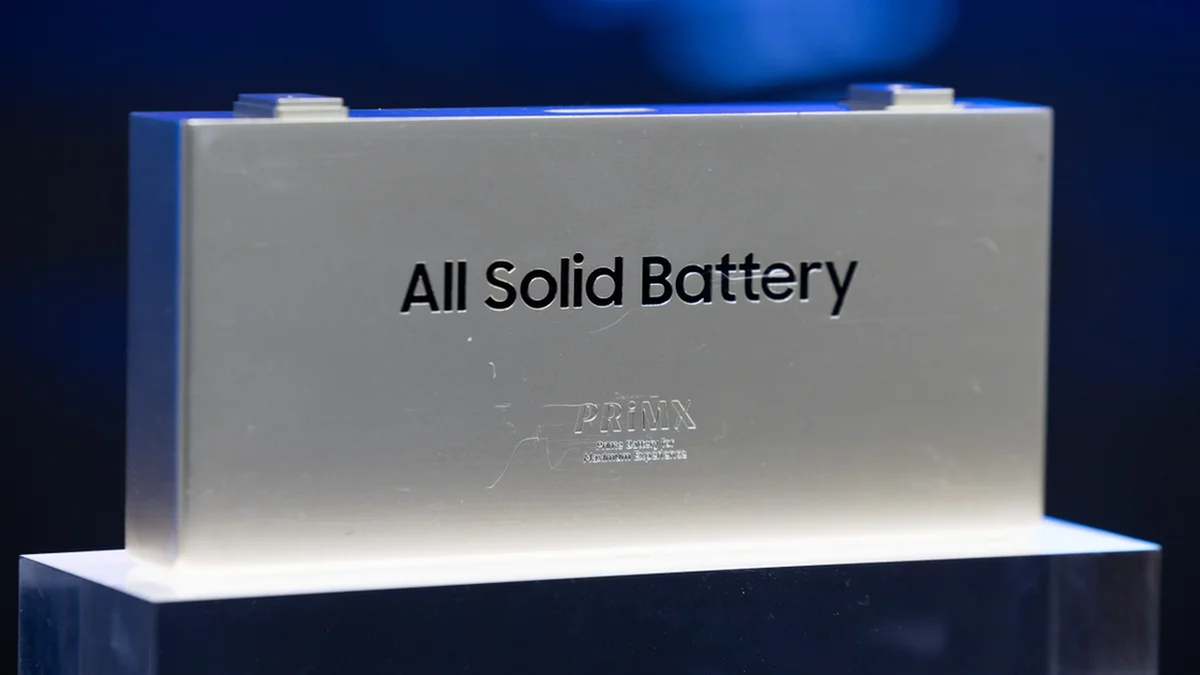
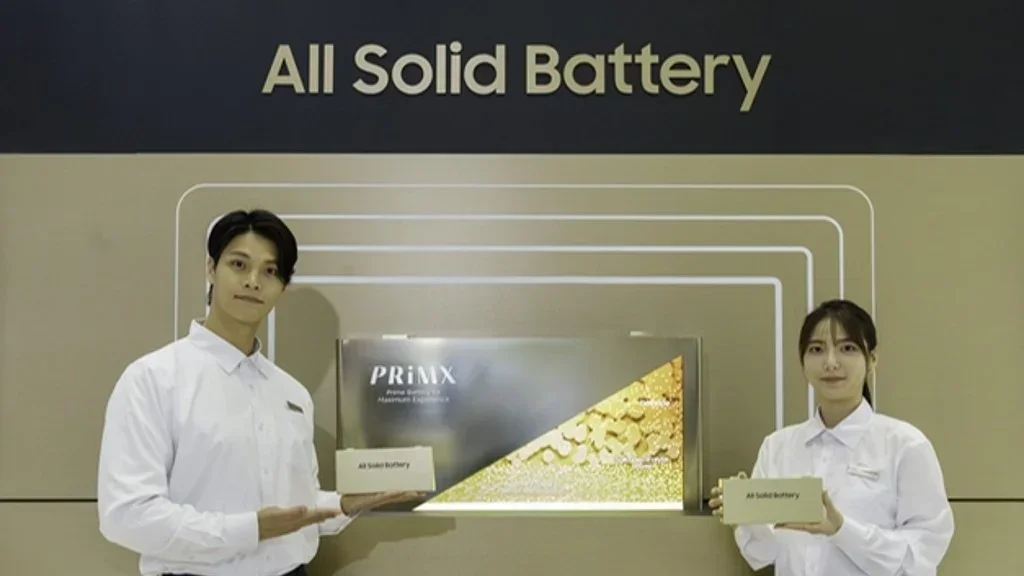
Samsung's all-solid battery | Image by Samsung Electro-Mechanics
Lithium-ion battery tech dates back to the 1960s, and a revolution in the field is long overdue. Several big companies are working on new battery technology, including Samsung.
Samsung SDI, the branch responsible for the batteries inside your Galaxy phone, announced plans to mass-produce all-solid-state batteries by late 2027.
The electric vehicle market is the strongest driver for this revolution in battery tech. As more and more EVs hit the market, the need for a safer, fast-charging and long-lasting battery is bigger than ever.
Mint Mobile is now allowing you to get whichever plan you like for either three, six, or 12 months for just $15/mo. If you go for the six-month unlimited service, for instance, you'll now have to pay just $90 upfront instead of $210.
Mariyan, a tech enthusiast with a background in Nuclear Physics and Journalism, brings a unique perspective to PhoneArena. His childhood curiosity for gadgets evolved into a professional passion for technology, leading him to the role of Editor-in-Chief at PCWorld Bulgaria before joining PhoneArena. Mariyan's interests range from mainstream Android and iPhone debates to fringe technologies like graphene batteries and nanotechnology. Off-duty, he enjoys playing his electric guitar, practicing Japanese, and revisiting his love for video games and Haruki Murakami's works.
A discussion is a place, where people can voice their opinion, no matter if it
is positive, neutral or negative. However, when posting, one must stay true to the topic, and not just share some
random thoughts, which are not directly related to the matter.
Things that are NOT allowed:
Off-topic talk - you must stick to the subject of discussion
Offensive, hate speech - if you want to say something, say it politely
Spam/Advertisements - these posts are deleted
Multiple accounts - one person can have only one account
Impersonations and offensive nicknames - these accounts get banned
To help keep our community safe and free from spam, we apply temporary limits to newly created accounts:
New accounts created within the last 24 hours may experience restrictions on how frequently they can
post or comment.
These limits are in place as a precaution and will automatically lift.
Moderation is done by humans. We try to be as objective as possible and moderate with zero bias. If you think a
post should be moderated - please, report it.
Have a question about the rules or why you have been moderated/limited/banned? Please,
contact us.













Things that are NOT allowed:
To help keep our community safe and free from spam, we apply temporary limits to newly created accounts: