Galaxy S27 Ultra will steamroll competition with the tech Samsung just announced
Galaxy S27 Ultra will be a lot snappier.
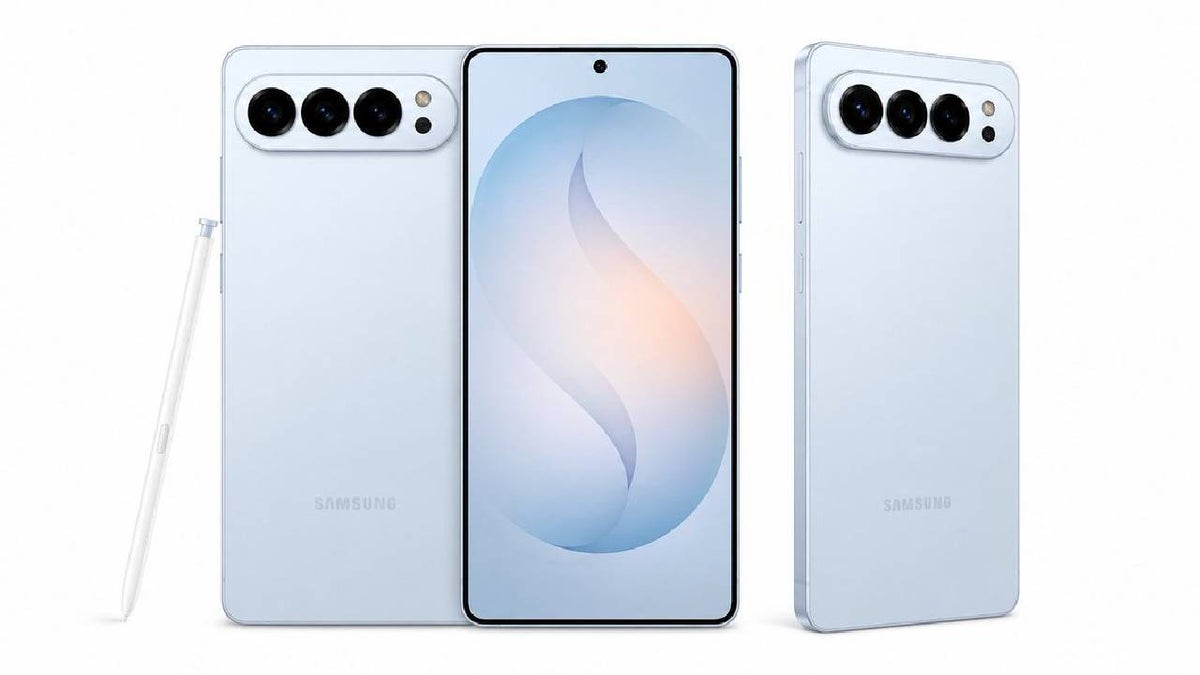
A Galaxy S27 Ultra render. | Image by Sawyer Galox
The upcoming Galaxy S27 series is already set to receive a huge performance bump with the rumored transition from a 3nm to a more advanced 2nm chip. Along with that, the Galaxy S27 Ultra is also rumored to feature a new storage standard, Universal Flash Storage (UFS) 5.0. Samsung today officially announced the solution, priming us for what to expect from the Galaxy S27 Ultra.
The UFS 5.0 solution is geared towards the next-gen on-device AI applications, which seems to be the theme among smartphone manufacturers as they shift focus away from cloud-hosted AI functions.
Samsung's product hits an industry-leading bandwidth of up to 10.8 gigabytes per second (GB/s), which is the maximum rate at which data can be read from or stored in the memory.
To drill down into the specifics, sequential read speeds reach 10.8 GB/s, while sequential writes max out at 9.5 GB/s. That's twice as fast as the read and write speeds offered by the UFS 4.1 standard.
Samsung points out that the rise of generative AI has evolved the role of storage from a simple storage medium to a critical infrastructure.
UFS 5.0 is 40% more power-efficient than Samsung's UFS 4.1 solution, which should help extend the battery life on the likes of the Galaxy S27 Ultra.
UFS 5.0 is also packed in a smaller 7.5mm x 13mm x 0.9mm package, making it 6.7% more compact than its predecessor. This frees up space for other components, such as a larger battery.
Mass production will kick off in the fourth quarter of the year.
Massive bandwidth is crucial for modern apps that read or write large amounts of data to memory. The faster rates mean components such as the CPU, GPU, and AI chips will spend less time waiting for data.
As a result, apps, photos, and videos will be moved through storage more quickly, resulting in a snappier experience for you.
More importantly, latency or delay will be reduced when running on-device AI models.
Even if you don't use AI apps that often or at all, the shift to the new standard from UFS 4.0 will translate to faster app launch times, smoother gameplay, and improved 8K video recording performance.
The Galaxy S27 Pro may also feature this new solution, but everything is up in the air right now.
Breaking speed records
The UFS 5.0 solution is geared towards the next-gen on-device AI applications, which seems to be the theme among smartphone manufacturers as they shift focus away from cloud-hosted AI functions.
To drill down into the specifics, sequential read speeds reach 10.8 GB/s, while sequential writes max out at 9.5 GB/s. That's twice as fast as the read and write speeds offered by the UFS 4.1 standard.
Samsung points out that the rise of generative AI has evolved the role of storage from a simple storage medium to a critical infrastructure.
As we successfully move beyond the development stage of the industry’s first UFS 5.0 solution, Samsung is setting a new standard for storage on the go and will continue to drive innovation for the next-generation mobile platform market.
Jangseok Choi, Samsung Electronics' head of Memory Product Planning, June 2026
More efficient and smaller
UFS 5.0 is 40% more power-efficient than Samsung's UFS 4.1 solution, which should help extend the battery life on the likes of the Galaxy S27 Ultra.
UFS 5.0 is also packed in a smaller 7.5mm x 13mm x 0.9mm package, making it 6.7% more compact than its predecessor. This frees up space for other components, such as a larger battery.
How would this impact your choice between the Ultra and other models?
1374 Votes
It might make S27 Ultra too expensive for me.
49.56%
Anything for 2nm + UFS 5.0 combo.
35.08%
Meh, I am not a power user.
15.36%
Readying devices for new AI use cases
Massive bandwidth is crucial for modern apps that read or write large amounts of data to memory. The faster rates mean components such as the CPU, GPU, and AI chips will spend less time waiting for data.
As a result, apps, photos, and videos will be moved through storage more quickly, resulting in a snappier experience for you.
More importantly, latency or delay will be reduced when running on-device AI models.
An appreciable improvement
Even if you don't use AI apps that often or at all, the shift to the new standard from UFS 4.0 will translate to faster app launch times, smoother gameplay, and improved 8K video recording performance.
The Galaxy S27 Ultra, on the other hand, is very likely to be the first handset to adopt the standard, allowing it to outcompete rivals.


Popular stories





Latest News





Things that are NOT allowed:
To help keep our community safe and free from spam, we apply temporary limits to newly created accounts: