Apple and the European Commission are in talks over the rules that are currently keeping rival iPhone browsers off their own engines. You see, every browser on an iPhone like the iPhone 18 Pro Max (Firefox and Chrome included) runs on Safari's WebKit engine, while on Android phones like the Galaxy S26 Ultra, browsers can use their own engines.
Mozilla, Shopify and 55,000 EU businesses want the Commission to act
On Monday, Mozilla, Shopify and a coalition representing up to 55,000 EU businesses and organizations penned an open letter to the European Commission. The letter asked that the Commission open formal proceedings against Apple and force the company to remove the barriers that block rival browser engines.
We are not asking for new legislation or additional obligations, but for the Commission to enforce the DMA as written and without further delay compel Apple to comply.
Joint letter to the European Commission from Mozilla, Shopify and EU businesses, November 23, 2026
In response, according to a new report, a Commission spokesperson said today that it is in talks with Apple. It is also asking the letter's signers how rival browsers could compete with Safari, since browser competition is a Digital Markets Act (DMA) priority.
For its part, Apple says its rules for rival engines protect users from malicious websites and other security threats. On its developer page, Apple's requirements for browser makers include that they must meet the company's privacy and security standards, as well as commit to fixing vulnerabilities quickly.
Recommended For You
Poll
0 Votes
If Apple let iPhone browsers run their own engines, what would you do?
Why browsers like Firefox can't switch iPhone users to their own engine
For those not familiar, the browser engine is the part under the hood that loads and draws websites. Right now, Firefox and Chrome on iPhone might look different from Safari, but in reality both run on Apple's WebKit engine.
What Mozilla is asking for here is to use its own Gecko engine on iPhone, the one that already powers Firefox on the Mac. Having this ability would allow Mozilla to bring more Firefox features to the iPhone, and by extension, the iPad.
As we previously covered, Apple has allowed other engines in the EU since iOS 17.4 (March 2024), right as the DMA was to take effect. So, Mozilla is technically allowed to proceed. However, in order to do so, Mozilla faces these challenges:
Starting over: Mozilla can't move existing Firefox users to Gecko with a regular app update. So, it would need to create a second Firefox app, and users would have to move bookmarks, passwords and history by hand.
Double maintenance: since this new app running the Gecko engine would only be allowed in the EU, Mozilla would then have to maintain two versions of the browser, one on WebKit and one on Gecko.
Travel uncertainty: Apple hasn't confirmed EU users would continue to get browser updates, security fixes included, after more than 30 days outside the EU have passed.
The letter's main point is that two and a half years later, still no browser maker has switched its EU users off WebKit. The coalition says that although the right exists on paper, it is too costly to use in practice. For now, this issue is only affecting iPhone and iPad users in the EU, as US users aren't covered by the DMA, so every browser there stays on WebKit.
In contrast, Android users don't have this problem. Firefox for Android runs on Mozilla's own engine called GeckoView, since its 2020 rebuild. Chrome, Edge and Brave on Android use Google's Blink instead.
What this unlocks for Android users is the ability to use over 450 extensions, which Mozilla opened to Firefox for Android on December 14, 2023. Those include the uBlock Origin ad blocker, Privacy Badger and Dark Reader.
So if you're on a Galaxy S26 Ultra or a Pixel 11 Pro, this doesn't affect you, as you already have your choice of browsers that, like Firefox, run their own engine. For iPhone owners in the EU, these talks may decide whether that same Firefox ever arrives.
If every iPhone and iPad browser runs on WebKit, I might as well use Safari
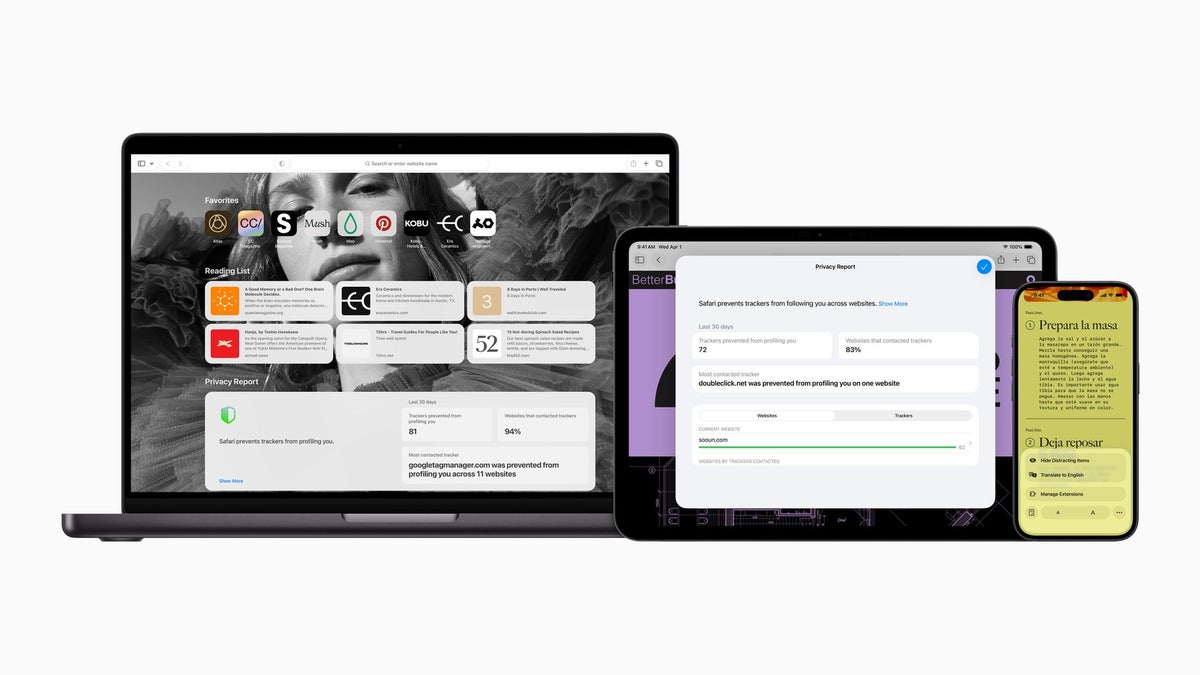
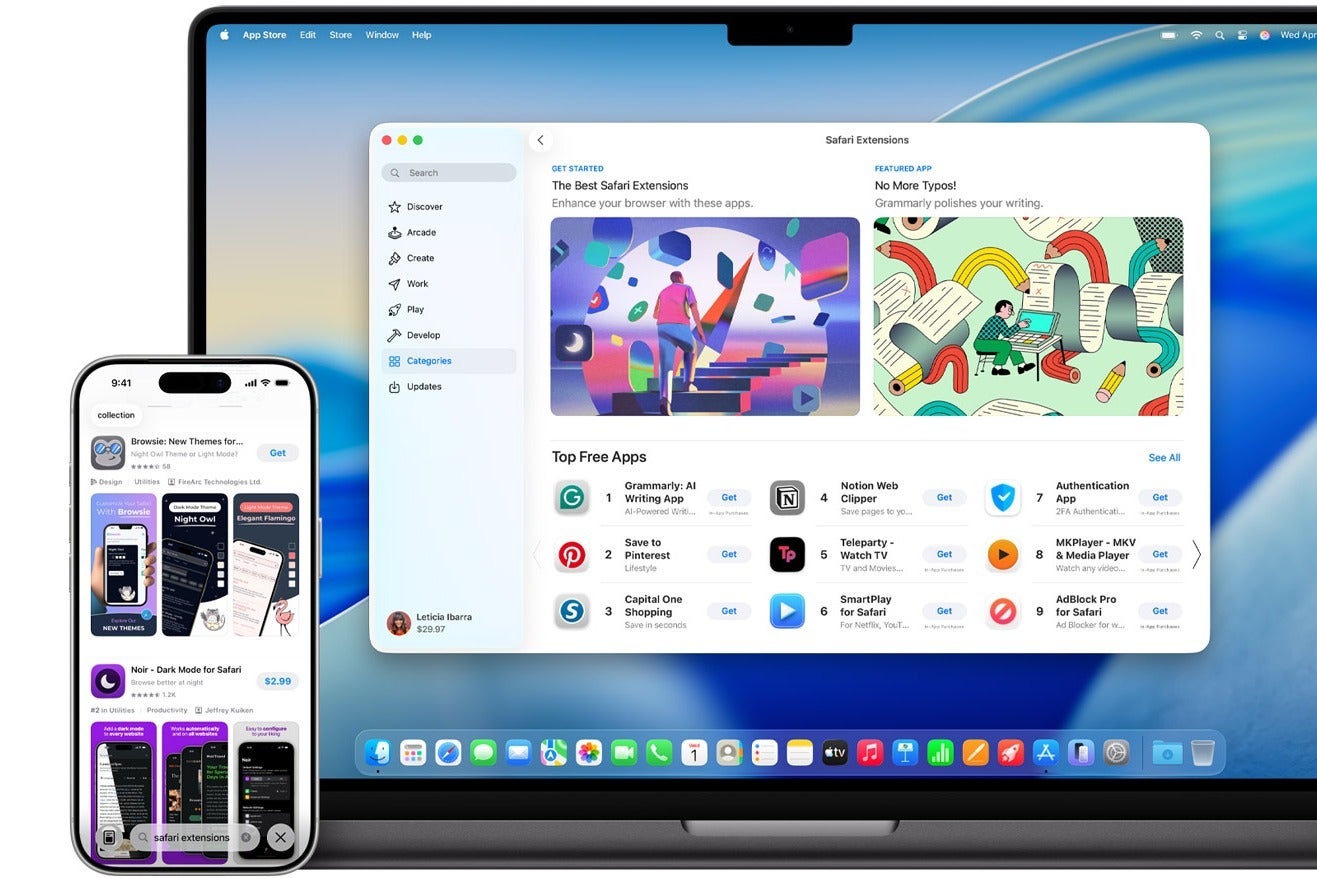
I personally use Safari on my iPhone and iPad. The way I see it, if every browser I install is going to run on WebKit anyway, then there's no point in trying something else. At least with mobile Safari you get to install extensions, as limited as they are.
Safari extensions are one perk of sticking with Apple's own browser. | Image by Apple
If I were a Firefox fan in the EU, I'd keep using the current browser until Apple and the European Commission can come to a resolution. In the US, though, nothing changes, so Safari with extensions is the practical pick.
I do hope that Apple and Mozilla find an update path that keeps Apple's security bar. I'm also hoping that maybe one day, this kind of choice can arrive for US users, but I'm not holding my breath.
More on iPhone browsers and the iPhone 18 Pro Max:
Johanna Romero is a Senior News Writer at PhoneArena, covering mobile technology news across Android, iOS, wearables, and the Google ecosystem she knows best. Drawing on 15 years in IT and tech support from 2007 to 2022, she brings a user-friendly eye for the practical features and lesser-known tricks readers care about. Google named her an official #TeamPixel member in 2022, and she also reviews the latest devices on her YouTube channel, JoJo the Techie.
A discussion is a place, where people can voice their opinion, no matter if it
is positive, neutral or negative. However, when posting, one must stay true to the topic, and not just share some
random thoughts, which are not directly related to the matter.
Things that are NOT allowed:
Off-topic talk - you must stick to the subject of discussion
Offensive, hate speech - if you want to say something, say it politely
Spam/Advertisements - these posts are deleted
Multiple accounts - one person can have only one account
Impersonations and offensive nicknames - these accounts get banned
To help keep our community safe and free from spam, we apply temporary limits to newly created accounts:
New accounts created within the last 24 hours may experience restrictions on how frequently they can
post or comment.
These limits are in place as a precaution and will automatically lift.
Moderation is done by humans. We try to be as objective as possible and moderate with zero bias. If you think a
post should be moderated - please, report it.
Have a question about the rules or why you have been moderated/limited/banned? Please,
contact us.









Things that are NOT allowed:
To help keep our community safe and free from spam, we apply temporary limits to newly created accounts: