The FBI just pulled the plug on a major crypto cash-out operation
Authorities shut down E-Note crypto exchange over a $70M laundering scheme.
We may earn a commission if you make a purchase from the links on this page.

AI-generated image.
Servers seized in international crypto crackdown
Authorities moved in to seize E-Note’s servers and domains after determining the platform had allegedly been used to launder more than $70 million. Investigators believe the money came from ransomware operations and account takeover schemes, then flowed through a global web of so-called “money mules” designed to hide its origins.
As part of the operation, an indictment was unsealed against Mykhalio Petrovich Chudnovets, a 39-year-old Russian national. He has been charged with conspiracy to commit money laundering. Court filings claim Chudnovets began offering laundering services to cybercriminals as far back as 2010 and later built E-Note into the centerpiece of those activities.
Investigators say E-Note allowed criminals to convert illegally obtained cryptocurrency into cash, making it far easier for them to profit from attacks. Law enforcement seized servers, mobile apps, and domains tied to the exchange, including jabb.mn, e-note.com, and e-note.ws.
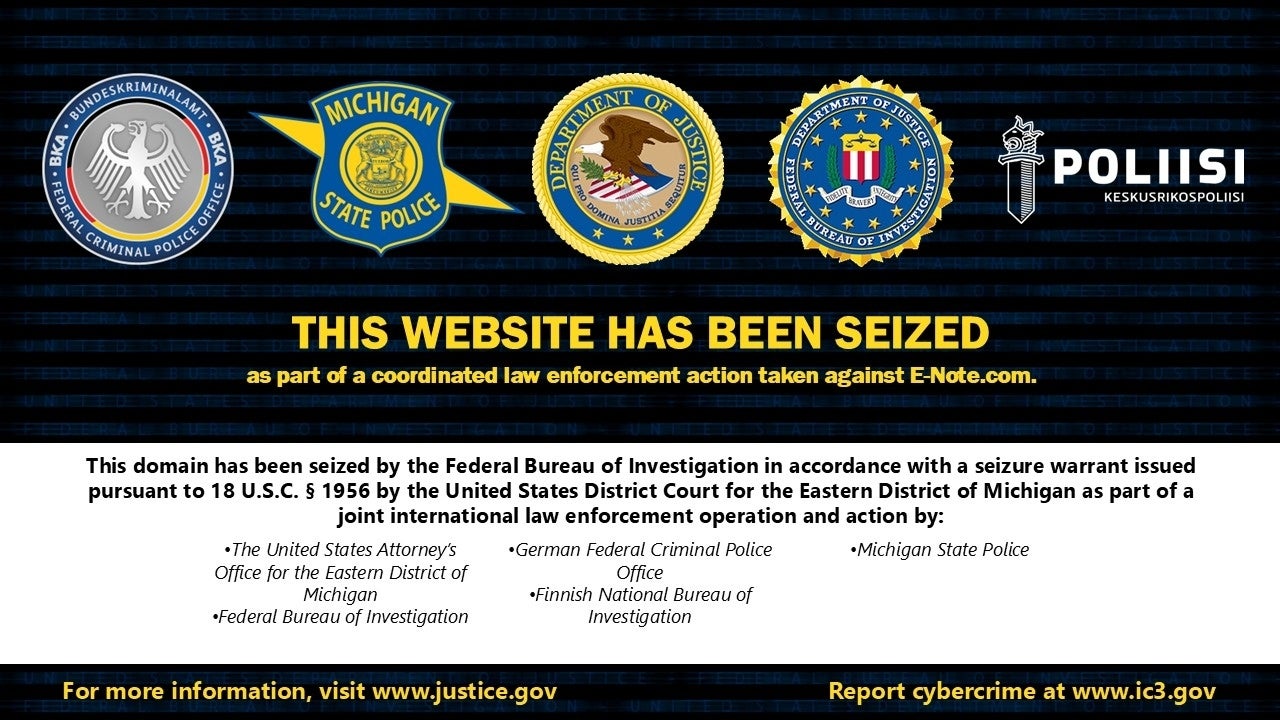
Servers, mobile apps, and domains are shut down. | Image by DOJ
Authorities also gained access to copies of E-Note’s server infrastructure, including customer databases and full transaction histories. That data could now be used to trace additional criminal networks and identify victims. The money laundering charge carries a potential 20-year prison sentence, though no arrest has been announced so far.
A familiar pattern in crypto crime
Crypto-related crimes aren’t new, and E-Note fits a pattern seen before. One well-known example is Bitcoin Fog, once described as the longest-running Bitcoin laundering service, which allegedly processed around $400 million between 2011 and 2021. The E-Note operation appears to follow a similar playbook.
By shutting down services like this, law enforcement makes it far harder – and far more expensive – for cybercriminals to get paid. If attackers can’t easily turn stolen crypto into cash, the payoff drops, and so does the incentive to go after everyday users.
Do you think shutting down exchanges like E-Note actually stops cybercriminals?
5 Votes
Yes, it makes laundering much harder.
40%
Partially, they’ll just move to new platforms.
40%
No, criminals will always find a way.
0%
Not sure, the impact is unclear.
20%
What this means for you
Living online comes with real risks, and cybercrime exposure is higher than ever. While big takedowns like this help, users still need to stay cautious. That means checking whether a company or app is legit before installing it, thinking twice before clicking links, and paying attention to who’s actually sending a message.
Most data and money losses still happen because of rushed decisions or misplaced trust. A little extra skepticism and critical thinking can make a big difference.


Popular stories






Latest News






Things that are NOT allowed:
To help keep our community safe and free from spam, we apply temporary limits to newly created accounts: