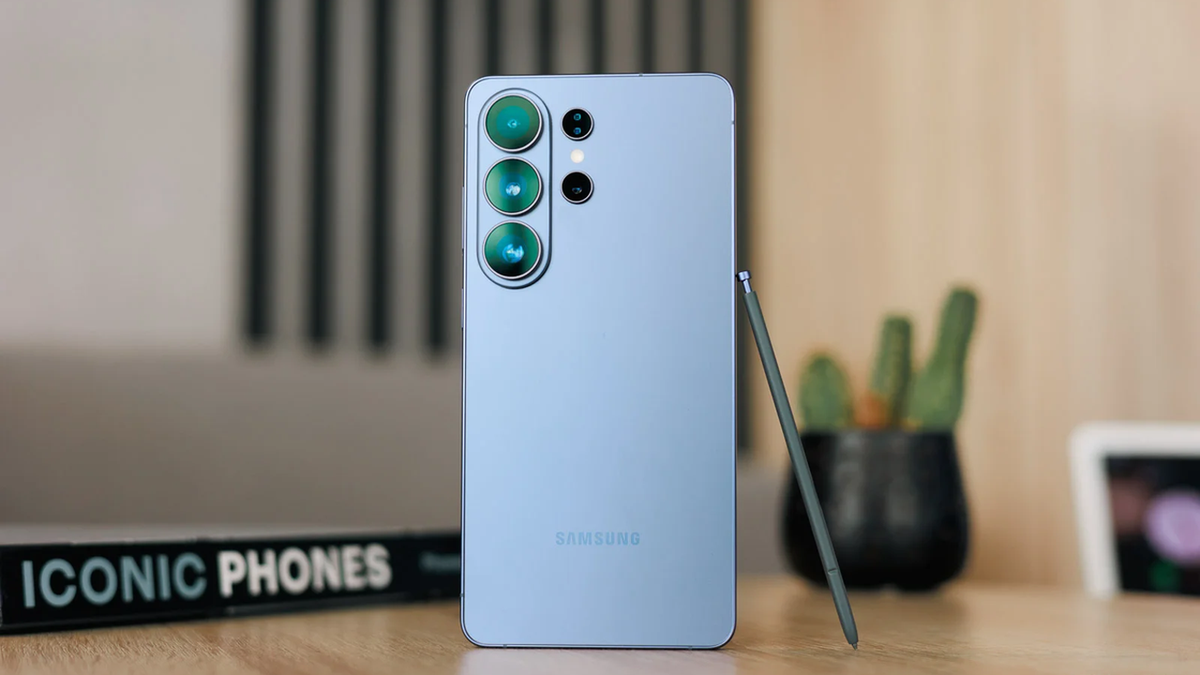
Samsung has officially introduced a new 200 MP camera sensor that could potentially power the main camera of the Galaxy S27 Ultra.
The new piece of silicon is called ISOCELL HPC and comes equipped with a bunch of new technologies that promise to make smartphone photography better.
The Samsung ISOCELL HPC is full of new tech
The new sensor is much more efficient and has one industry's first technology on board. | Image by Samsung Semiconductors
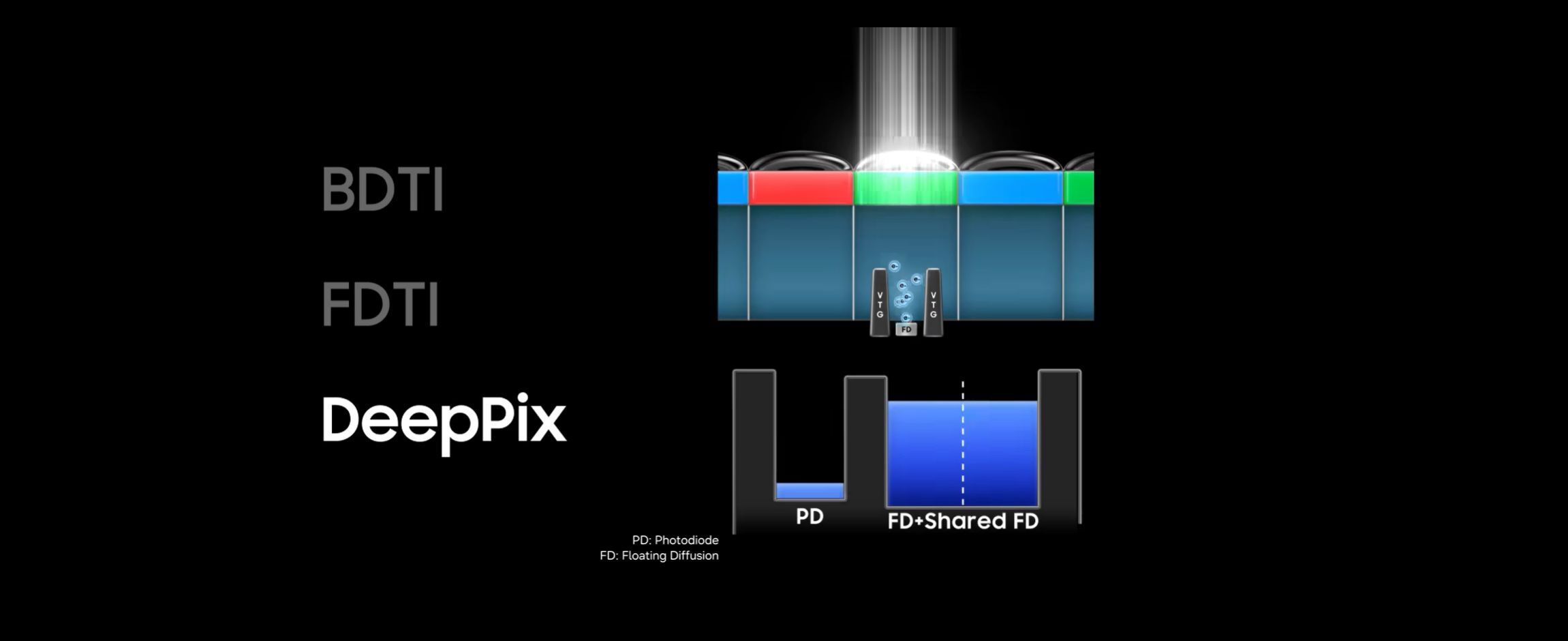
The new ISOCELL HPC sensor is very similar to other high-end ISOCELL models, as it's a 1/1.3-inch sensor with 0.6 μm pixels. What's different is a slew of new technologies that Samsung built in. One such technology is called DeepPix, and Samsung boasts it's industry's first.
Building on the ISOCELL heritage of delivering exceptional 200MP imaging, the new ISOCELL HPC introduces the industry's first DeepPix technology to redefine how light is captured. From richer HDR and lifelike colors to optimized image quality across every zoom level, setting a new benchmark for HDR in ultra-high-resolution mobile imaging.
- Samsung Semiconductors official website
According to Samsung, this new technology at the pixel level offers a 60% boost in photodiode capacity, resulting in cleaner and more precise photos and videos with much better dynamic range and improved detail in shadows and highlights. How does it work?
Will you miss the 3x zoom camera on the Galaxy S27 Ultra?
291 Votes
DeepPix explained
DeepPix offers a 60% boost in photodiode capacity, resulting in photos and videos with much better dynamic range and improved detail. | Image by Samsung Semiconductors
What Samsung labels as the industry's first is a technology that builds upon other Samsung tech on a pixel level. When light hits the pixel of a camera sensor it's focused by a lens into a photodiode. The photodiode converts the photons in the light into an electric signal and sends it to the ISP (image signal processing) unit.
Recommended For You
What happens when the light is too bright is that the photodiode overflows with photons (you can imagine a bucket full of water that's overflowing), and this results in blown highlights and restrictions in dynamic range.
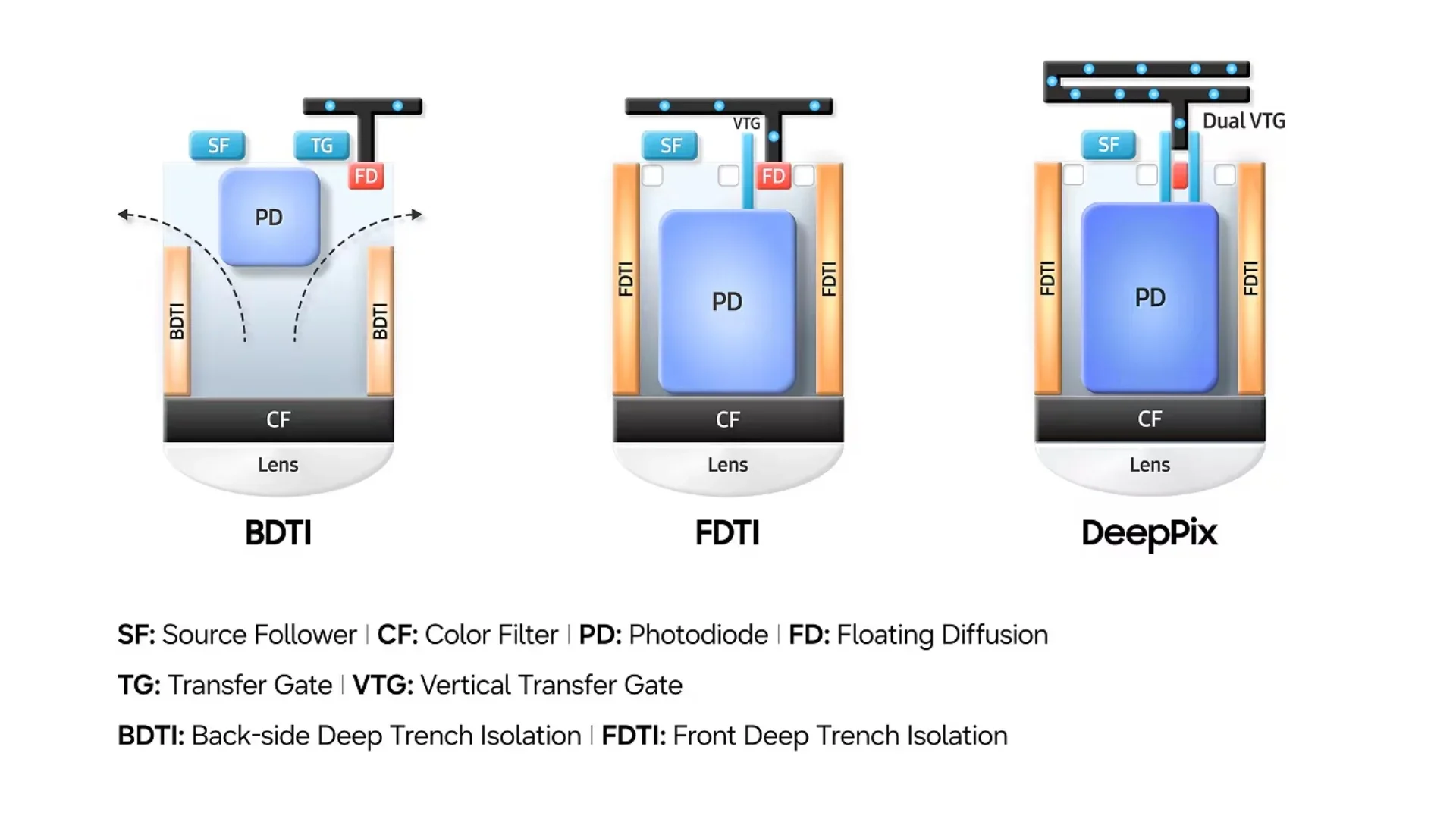
First introduced in ISOCELL HPC, DeepPix is a new pixel architecture that improves photodiode (PD) potential, enables more efficient charge transfer through dual vertical transfer gates (D-VTG), and increases floating diffusion (FD) capacitance through a shared FD structure. Together, these enhancements improve charge handling efficiency at the pixel level and further strengthen the advantages of Samsung's FDTI technology, enabling higher imaging performance without increasing pixel size.
- Samsung Semiconductors official site
There are several workarounds, and Samsung's Floating Diffusion tech is one of those. It's basically an additional "bucket" next to the photodiode aimed at catching overflowing photons and passing a more accurate signal to the ISP.
Previously, Samsung introduced something called Front Deep Trench Isolation, you can think of it as higher "bucket walls" to keep more photons inside the photodiode.
A diagram of the new tech inside the ISOCELL HPC. | Image by Samsung
DeepPix builds upon this, introducing Dual Vertical Transfer Gates. These are additional "walls" around the second Floating Diffusion overflow "bucket" to even further limit signal bleeding.
The effect of all this is a much more efficient sensor without the need to expand the size of the photodiode and the pixel.
Better HDR across wide zoom levels
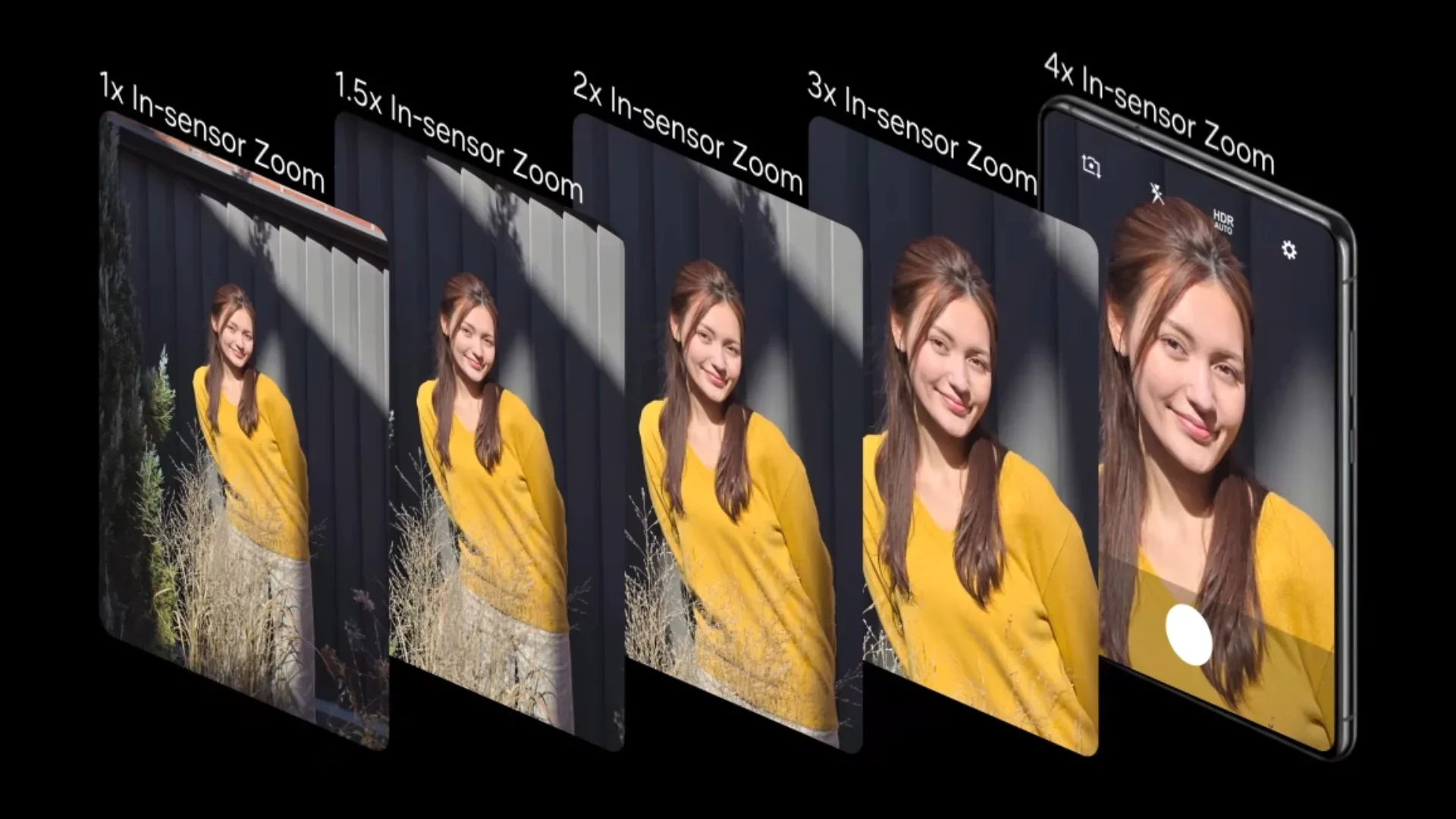
The ISOCELL HPC supports single-frame HDR across 1x, 1.5x, 2x, 3x, and 4x in-sensor zoom levels. | Image by Samsung
The new ISOCELL HPC sensor also supports single-frame HDR across 1x, 1.5x, 2x, 3x, and 4x in-sensor zoom levels. This means when you zoom outside the optical zoom of a smartphone camera, the sensor crops used to "fill the gaps" are HDR treated at more zoom levels.
This could be beneficial for phones that have just one telephoto camera with a high zoom level, and the jump from the main wide camera is bigger, like the upcoming Galaxy S27 Ultra, which is expected to ditch the 3X telephoto and only rely on the big, periscope 5X zoom camera.
The ISOCELL HPS can shoot 7.5 images per second at full 200 MP resolution, 30 fps at 50 MP, and up to 180 fps at 12.5 MP.
But speaking of the Galaxy S27 Ultra, could this sensor be our first glimpse at Samsung's next flagship and its new main camera?
Galaxy S27 Ultra may not get the ISOCELL HPC sensor
The latest rumors point toward the ISOCELL HP6 camera sensor for the upcoming Galaxy S27 Ultra. | Image by PhoneArena
Even though this new ISOCELL sensor might sound like the next big thing, Samsung may choose not to use it in the Galaxy S27 Ultra.
The latest leaks and rumors point toward a different camera sensor — the Samsung ISOCELL HP6 — as a potential candidate for the main cameras of the Galaxy S27 Pro and Galaxy S27 Ultra.
This sensor uses even newer technology to boost dynamic range, light-gathering, and color accuracy while keeping the noise down at the same time. This tech is called LOFIC (Lateral Overflow Integration Capacitor), and Sony already launched one flagship sensor that has it on board — the Sony LYTIA L910.
The ISOCELL HPC is slated for debut in Chinese camera phones
The Xiaomi 15 Ultra has a 1-inch camera sensor and currently sits at the top in our Camera benchmark list. | Image by PhoneArena
The more likely scenario is this new ISOCELL HPC camera sensor finding its way to camera phones from the Far East. Think the next Vivo, Oppo, or Xiaomi flagship phones.
Samsung says that the ISOCELL HPC is already in mass production and will start appearing in relevant smartphone devices in a few months.
Will it be better than the upcoming HP6, the LOFIC-equipped sensor, or the Sony LYTIA L910? Only time will tell, but the battle will be fierce.
And in case you're interested in smartphone camera tech, you might want to check out these:
Mint Mobile is now allowing you to get whichever plan you like for either three, six, or 12 months for just $15/mo. If you go for the six-month unlimited service, for instance, you'll now have to pay just $90 upfront instead of $210.
Mariyan, a tech enthusiast with a background in Nuclear Physics and Journalism, brings a unique perspective to PhoneArena. His childhood curiosity for gadgets evolved into a professional passion for technology, leading him to the role of Editor-in-Chief at PCWorld Bulgaria before joining PhoneArena. Mariyan's interests range from mainstream Android and iPhone debates to fringe technologies like graphene batteries and nanotechnology. Off-duty, he enjoys playing his electric guitar, practicing Japanese, and revisiting his love for video games and Haruki Murakami's works.
A discussion is a place, where people can voice their opinion, no matter if it
is positive, neutral or negative. However, when posting, one must stay true to the topic, and not just share some
random thoughts, which are not directly related to the matter.
Things that are NOT allowed:
Off-topic talk - you must stick to the subject of discussion
Offensive, hate speech - if you want to say something, say it politely
Spam/Advertisements - these posts are deleted
Multiple accounts - one person can have only one account
Impersonations and offensive nicknames - these accounts get banned
To help keep our community safe and free from spam, we apply temporary limits to newly created accounts:
New accounts created within the last 24 hours may experience restrictions on how frequently they can
post or comment.
These limits are in place as a precaution and will automatically lift.
Moderation is done by humans. We try to be as objective as possible and moderate with zero bias. If you think a
post should be moderated - please, report it.
Have a question about the rules or why you have been moderated/limited/banned? Please,
contact us.












Things that are NOT allowed:
To help keep our community safe and free from spam, we apply temporary limits to newly created accounts: