Xiaomi Pad 9 Pro Max undercuts the iPad Pro 13-inch by more than half
Same screen size, bigger battery, and a price that doesn't read like a typo.
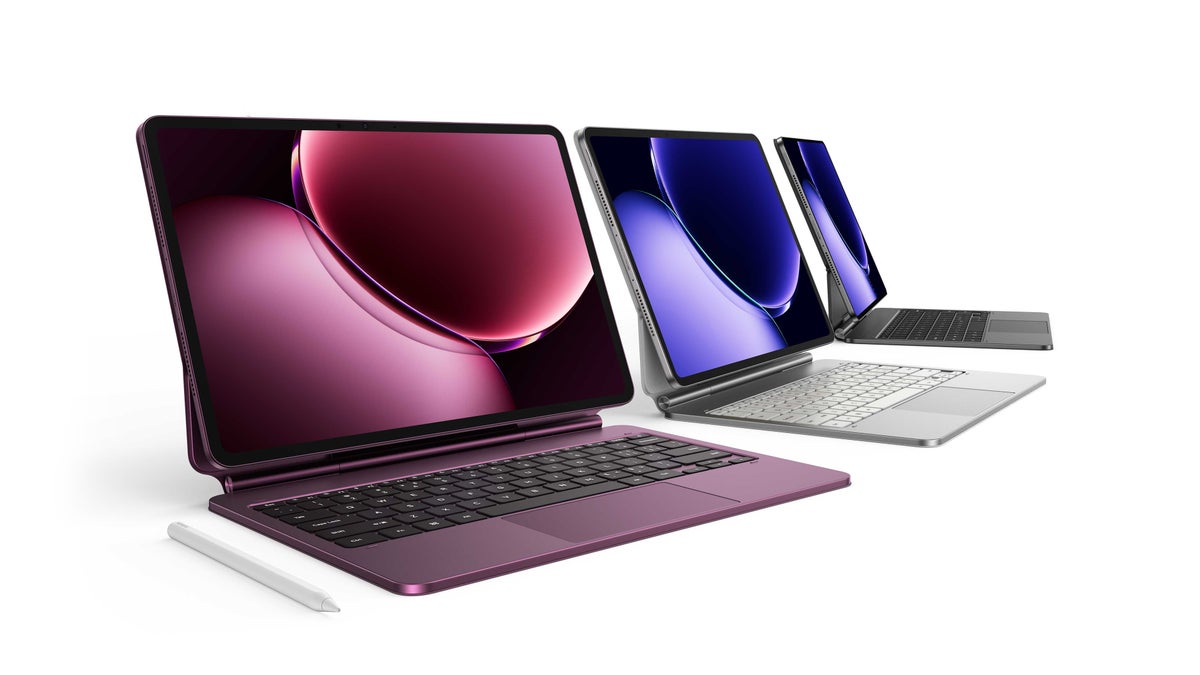
Xiaomi Pad 9 Pro Max in Black, Silver, and Red. | Image by Xiaomi
Xiaomi Pad 9 Pro Max arrived alongside the 18 Fold on September 7, and the price is the part worth sitting with. Xiaomi's 13.3-inch flagship tablet starts at RMB 4,799, roughly half what the iPad Pro 13-inch and the Galaxy Tab S11 Ultra ask, and it runs the same XRING O3 chip as the foldable.
The display is a 13.3-inch 3.4K panel at 3408 by 2272 with a 144Hz refresh rate and up to 1,000 nits, which Xiaomi pairs with a professional original color mode and color matching across its other devices.
Inside is the XRING O3, the same in-house chip that turned heads on Geekbench last month. Xiaomi claims an AnTuTu score above 5.61 million here, along with 54% better CPU multi-core performance and 85% better graphics than its XRING O1 tablets.
The battery is a 12,000mAh cell with 120W HyperCharge, and the tablet adds a 6-mic array, Wi-Fi 7, and DP-in video input over a full-featured USB-C cable.
Starting at RMB 4,799, or roughly $675 at direct conversion, this is a 13.3-inch flagship tablet priced against mid-range Android slates in the US. That is the number to sit with, even though Xiaomi has not announced availability outside China.
Our own specs data puts the Galaxy Tab S11 Ultra at $1,199 with a 14.6-inch screen and an 11,600mAh battery, and the iPad Pro 13-inch at $1,299 with 10,290mAh. So Xiaomi is asking a fraction of either while carrying the largest battery of the three. In our guide to the best tablets we noted that the Tab S11 Ultra's MediaTek chip is a long way from the desktop-grade silicon in the iPad Pro, and XRING O3 is Xiaomi's attempt to close exactly that gap.
If you already own either tablet, nothing here forces a rethink, because you cannot buy this one in the U.S. and iPadOS and One UI both do things HyperOS does not. What it should do is make you question what a 13-inch tablet ought to cost.
DP-in is the feature most worth explaining here, because it turns the tablet into a display for something else. Plug a laptop, console or camera into it with a full-featured USB-C cable and the Pad 9 Pro Max accepts video at up to 3.4K and 120Hz.
That means the screen you bought for reading and drawing doubles as a portable monitor, with no dock and no software layer in between. It is the kind of feature that quietly justifies a big tablet, and it is new for this line.
Pricing runs from RMB 4,799 for 8GB/256GB up to RMB 7,899 for the Red-only Matte Glass version at 16GB/1TB, in Black, Silver and Red.
I keep coming back to that starting price. A 13.3-inch, 144Hz, 12,000mAh tablet for the money most people spend on a mid-range phone is the kind of thing that should make Apple and Samsung uncomfortable, and it would if Xiaomi sold it here.
I'd personally love to see one of these turn up in the US, even at a markup. Until that happens, the Pad 9 Pro Max is mostly a reminder of how much of a flagship tablet's price is the badge on the back.
Xiaomi Pad 9 Pro Max brings a 13.3-inch 144Hz screen and a 12,000mAh battery
The display is a 13.3-inch 3.4K panel at 3408 by 2272 with a 144Hz refresh rate and up to 1,000 nits, which Xiaomi pairs with a professional original color mode and color matching across its other devices.
The Xiaomi Pad 9 Pro Max | Images by Xiaomi
Inside is the XRING O3, the same in-house chip that turned heads on Geekbench last month. Xiaomi claims an AnTuTu score above 5.61 million here, along with 54% better CPU multi-core performance and 85% better graphics than its XRING O1 tablets.
If the Xiaomi Pad 9 Pro Max sold in the US, would you buy one?
99 Votes
Yes, the price and the 12,000mAh battery win me over
63.64%
Only if it matched the iPad Pro for apps
15.15%
No, I'd still pay more for the iPad Pro
8.08%
I don't need a 13-inch tablet at all
13.13%
How the price compares to the iPad Pro and Galaxy Tab S11 Ultra
Starting at RMB 4,799, or roughly $675 at direct conversion, this is a 13.3-inch flagship tablet priced against mid-range Android slates in the US. That is the number to sit with, even though Xiaomi has not announced availability outside China.
Our own specs data puts the Galaxy Tab S11 Ultra at $1,199 with a 14.6-inch screen and an 11,600mAh battery, and the iPad Pro 13-inch at $1,299 with 10,290mAh. So Xiaomi is asking a fraction of either while carrying the largest battery of the three. In our guide to the best tablets we noted that the Tab S11 Ultra's MediaTek chip is a long way from the desktop-grade silicon in the iPad Pro, and XRING O3 is Xiaomi's attempt to close exactly that gap.
More on flagship tablets and Xiaomi's own silicon:
What DP-in actually does for you
DP-in is the feature most worth explaining here, because it turns the tablet into a display for something else. Plug a laptop, console or camera into it with a full-featured USB-C cable and the Pad 9 Pro Max accepts video at up to 3.4K and 120Hz.
Pricing runs from RMB 4,799 for 8GB/256GB up to RMB 7,899 for the Red-only Matte Glass version at 16GB/1TB, in Black, Silver and Red.
The number I keep coming back to
I keep coming back to that starting price. A 13.3-inch, 144Hz, 12,000mAh tablet for the money most people spend on a mid-range phone is the kind of thing that should make Apple and Samsung uncomfortable, and it would if Xiaomi sold it here.
I'd personally love to see one of these turn up in the US, even at a markup. Until that happens, the Pad 9 Pro Max is mostly a reminder of how much of a flagship tablet's price is the badge on the back.
If you want to follow me online:


Popular stories



Latest News



Things that are NOT allowed:
To help keep our community safe and free from spam, we apply temporary limits to newly created accounts: