It was the Oppo Find X10 Pro Max, which has not one, not two, but three 200 MP cameras on its back. And the jolly good news is that the Oppo Find X10 Pro Max, along with the smaller-but-still-potent Oppo Find X10, is stepping out of China for the first time.
And that's… great news.
Recently, prices for phone components (mainly RAM and storage chips) skyrocketed. By "recently" I mean for over a year now. We're living in the RAMpocalypse age. For that reason, there were rumors that some Chinese flagships wouldn't be made at all or wouldn't get a global premiere.
I'm personally glad to see the Find X10 Pro Max and the Find X10 stepping outside their home country. The more brands we have to choose from, the better! Let's hope these won't be the last Chinese flagships that'll go global for the near future.
Stay tuned, there's a pretty important ColorOS announcement, too.
The Oppo Find X10 Pro Max in a nutshell:
6.78-inch LTPO AMOLED display, 1.15mm symmetrical bezels, BT.2020 standard for wide color coverage
Triple 200 MP cameras on its back, 50 MP selfie camera
Dimensity 9600 Pro chipset built on a 2nm node process
16 GB (12 GB in the EU) LPDDR5X RAM, 512 GB UFS 4.1 storage (both are blazing-fast standards)
8,000 mAh silicon-carbon battery (non-EU countries) or 7,150 mAh battery (EU)
80W wired charging speeds, 50W wireless
161.32×76.57×8.40 mm dimensions
IP66, IP68, IP69 dust and water resistance ratings
The Oppo Find X10 in a nutshell:
Recommended For You
6.59-inch LTPO AMOLED display, 0.99mm symmetrical bezels, BT.2020 standard for wide color coverage
200 MP main camera, 200 MP telephoto camera, 50 MP ultra-wide camera on its back, 50 MP selfie camera
Dimensity 9600M chipset built on a 3nm node process
12 GB LPDDR5X RAM, 256 or 512 GB UFS 4.1 storage (both are blazing-fast standards)
8,000 mAh silicon-carbon battery (non-EU countries) or 7,150 mAh battery (EU)
80W wired charging speeds, 50W wireless
156.51×74.29×8.35 mm dimensions
IP66, IP68, IP69 dust and water resistance ratings
What's stopping you from buying a Chinese flagship?
4 Votes
Special cameras for special users
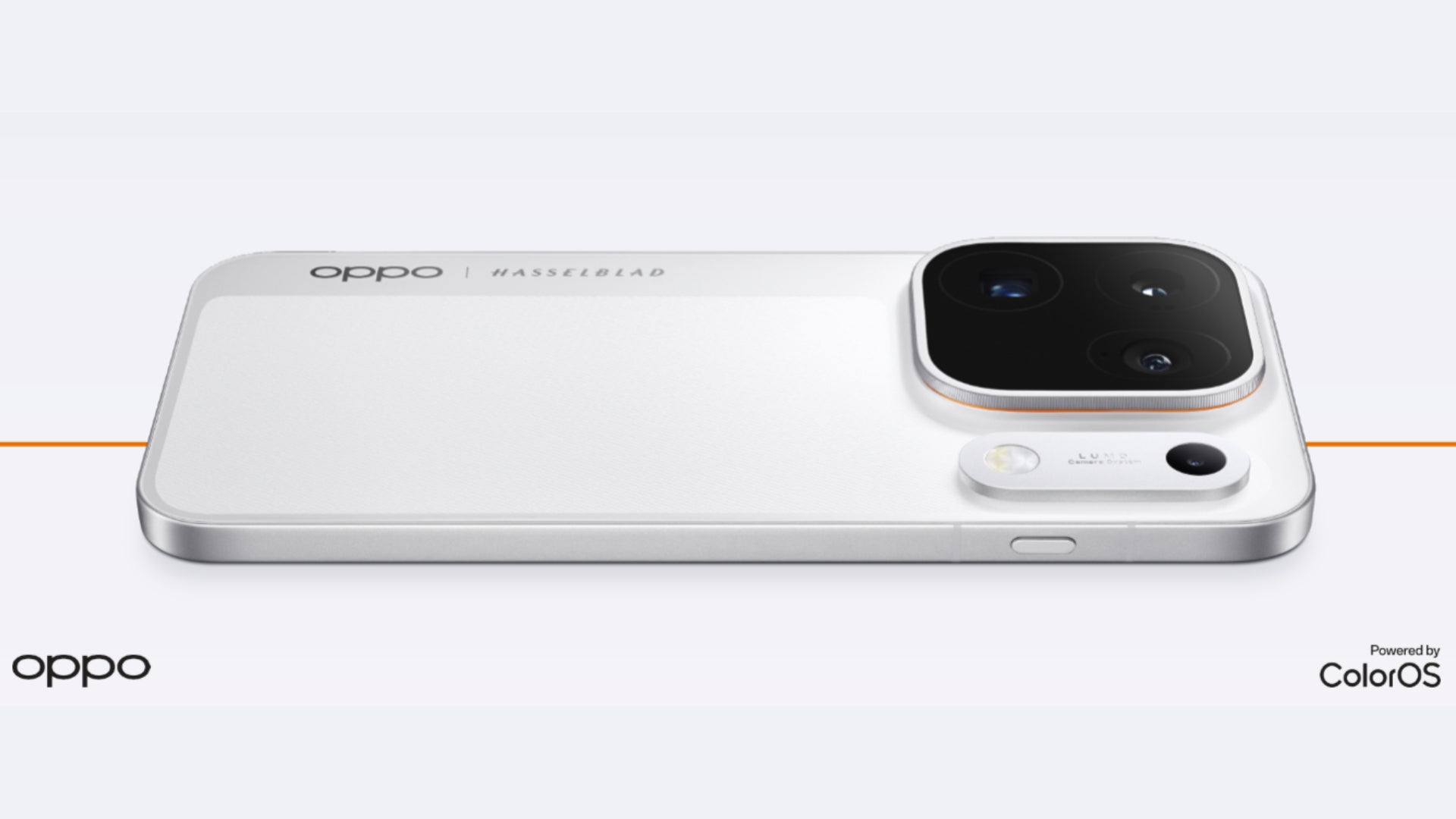
The company isn't pulling punches. | Image by Oppo
Both the Oppo Find X10 Pro Max and the Find X10 are exquisitely built phones with serious power under the hood. They'll handle pretty much anything you throw at them, be it the latest videogame title, 4K editing or resource-demanding multitasking work sessions.
But where these two (and especially the Pro Max model) shine is in the camera department. Oppo has a long-standing partnership with Hasselblad and once again, the legendary photography company is in the mix.
The Find X10 Pro Max is the first phone with three 200 MP cameras on its back. Now, sheer resolution isn't everything when it comes to photo (or video) quality. You should also care about sharpness, color reproduction, dynamic range, aberration-free results, noise and more. But a phone with three 200 MP sensors? That's remarkable nonetheless.
Sensors, apertures and more details #1 (on the Find X10 Pro Max)
The Find X10 Pro Max model is here to stun you. | Image by Oppo
The Find X10 Pro Max utilizes the brand-new 200 MP Samsung ISOCELL HPC sensor for its main camera. The irony is that the ISOCELL HPC sensor probably won't be landing on the Galaxy S27 Ultra next year.
Anyway, the ISOCELL HPC is super large at 1/1.3 inches (almost as big as a 1-inch sensor, which is huge for phones) with 0.6 μm pixels, similar to other high-end ISOCELL sensors. But the HPC silicon offers DeepPix. That's a new pixel-level technology that Samsung says is the industry's first and is designed to improve HDR, color accuracy and image quality across different zoom levels.
According to Samsung, DeepPix increases photodiode capacity by 60%, helping the sensor capture light more effectively. The more light you have, the cleaner your photos and videos will be with more detail in both bright highlights and dark shadows. The main camera (24mm equivalent focal length) on the Find X10 Pro Max is accompanied by a lens with a large f/1.5 aperture and OIS.
Same sensors
Next, we have the 200 MP Samsung ISOCELL HP5 (1/1.56-inch size) sensor on both the ultra-wide and telephoto snappers.
On the ultra-wide (13mm equivalent focal length), it's paired with a lens with an f/2.2 aperture with autofocus and a 4 cm minimum focus distance.
On the dedicated telephoto, the ISOCELL HP5 sensor is paired with a 70mm equivalent focal length lens with an f/2.1 aperture and optical image stabilization. The minimum focus distance here is 10 cm, which will make for great telephoto macro shots, I'm sure.
To top it off, there's a 3.2 MP multispectral True Color Camera—this one is responsible for, as its title suggests, true tones and hues. This is especially handy for sunsets or skin hues when doing portraits.
The front camera packs the 50 MP Samsung ISOCELL JN5 sensor. It's a bit smaller than the rest at 1/2.75 inches, but that's still better than what the Galaxy S26 Ultra (1/3.2-inch, 12 MP) offers.
Sensors, apertures and more details #2 (on the Find X10)
The Find X10 is still an outstanding camera tool, albeit with a slightly different setup than that on the Pro Max model.
The main camera on the Find X10 packs the Samsung ISOCELL HPE sensor. It's still 200 MP, but microscopically smaller at 1/1.4 inches. Its equivalent focal length is 23mm and the aperture is f/1.6 with OIS.
The ultra-wide snapper packs a Samsung ISOCELL JN5 sensor (50MP, 1/2.75 inches, 15mm equivalent focal length) and a lens with a f/2.0 aperture. Yes, with autofocus!
Fret not, because the telephoto (65mm equivalent focal length) offers the 200 MP Samsung ISOCELL HP5 sensor, the same as on the Pro Max model. Here, the aperture is f/2.6.
We get the same True Color Camera (for more accurate colors and hues) and the same 50 MP, ISOCELL JN5 selfie on the front.
But wait, there's more!
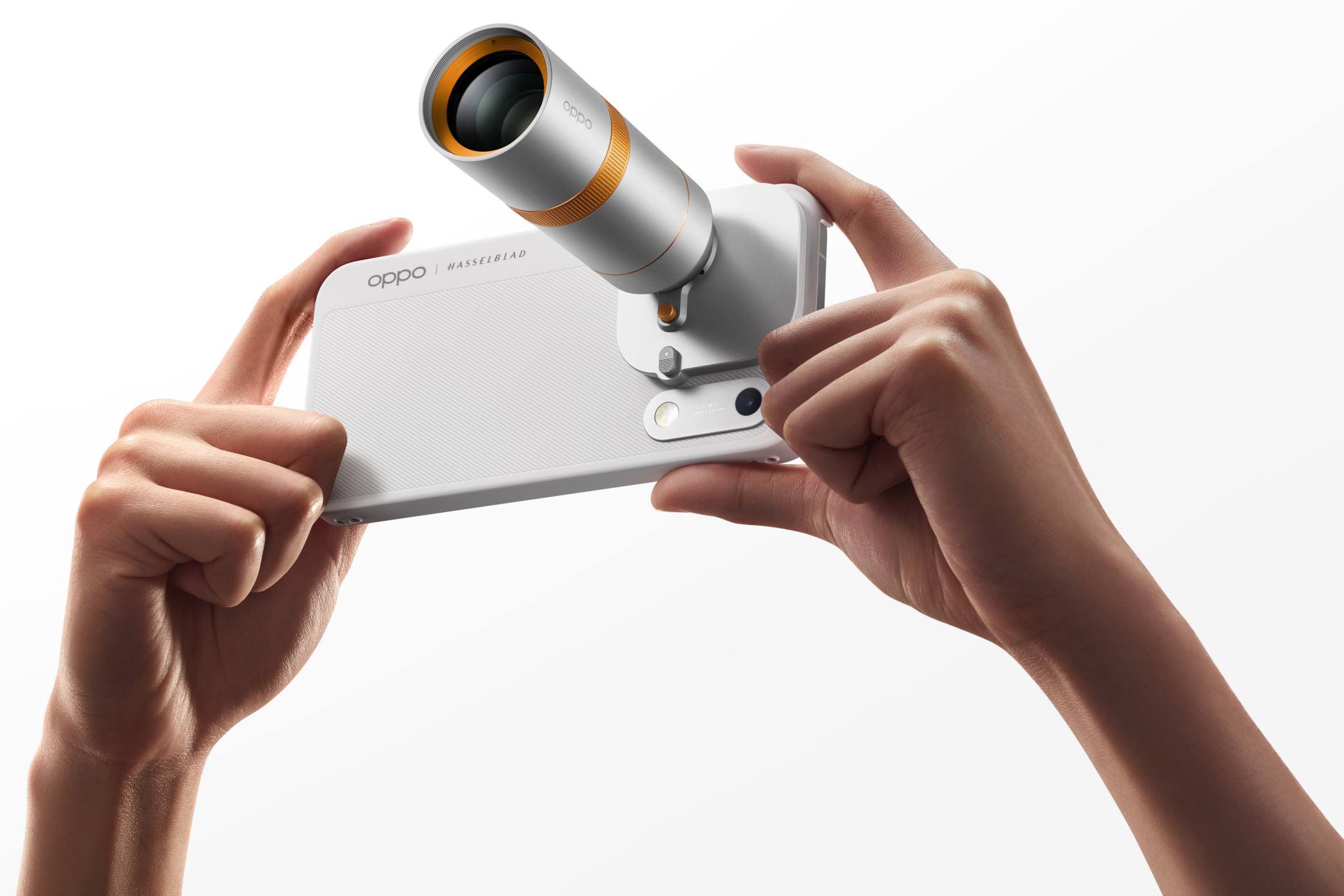
How about a cool teleconverter? | Image by Oppo
If you feel the need for something else, something truly outstanding, you should know that both phones offer external kits for professional work.
The standard Find X10 is the first base-model Find X phone to support Oppo's Hasselblad Teleconverter that has 13 glass elements, including three ED elements to reduce color fringing. Paired with the 200 MP telephoto, it delivers 11x optical zoom, but you could crop your way into 20x without breaking a sweat.
For the Find X10 Pro Max, Oppo has teamed up with Tilta on a KHRONOS Creator Kit designed for mobile video creators. It includes an aluminum case, lens adapters, a compact tripod, an active cooling fan for longer recording sessions and an extra handle for a steadier grip and less camera shake.
Software magic
A sample photo that looks gorgeous. | Image by Oppo
It's not just hardware that one can drool over with the new phones. Oppo has partnered with Blackmagic Design to optimize the Blackmagic Camera app for the Find X10 series, bringing professional video controls (frame rate, shutter angle, white balance and ISO) along with timecode, histograms, audio meters and focus assist. The collaboration also introduces native Dolby Vision recording to the app on Android for the first time, while the Find X10 Pro Max supports Open Gate Capture and O-Log2 for more advanced video workflows.
Speaking of the Find X10 Pro Max's support for the second-generation O-Log2 format, this one enables Log video recording at 4K 60fps, 4K 120fps, and 8K at 30fps. Real-time LUT previews let you see the custom look while recording (either keeping the original Log footage for editing later or applying the selected color grade directly).
The Find X10 Pro Max also supports Open Gate Capture across all three rear cameras, using each sensor's full imaging area to capture 66% more vertical and 25% more horizontal coverage than standard video recording.
The True Color Camera, for its part, combines 24-channel multispectral capture with 5.5 times the dynamic range of the Find X9, which should result in more accurate colors and tones.
Display, battery and chipset goodness
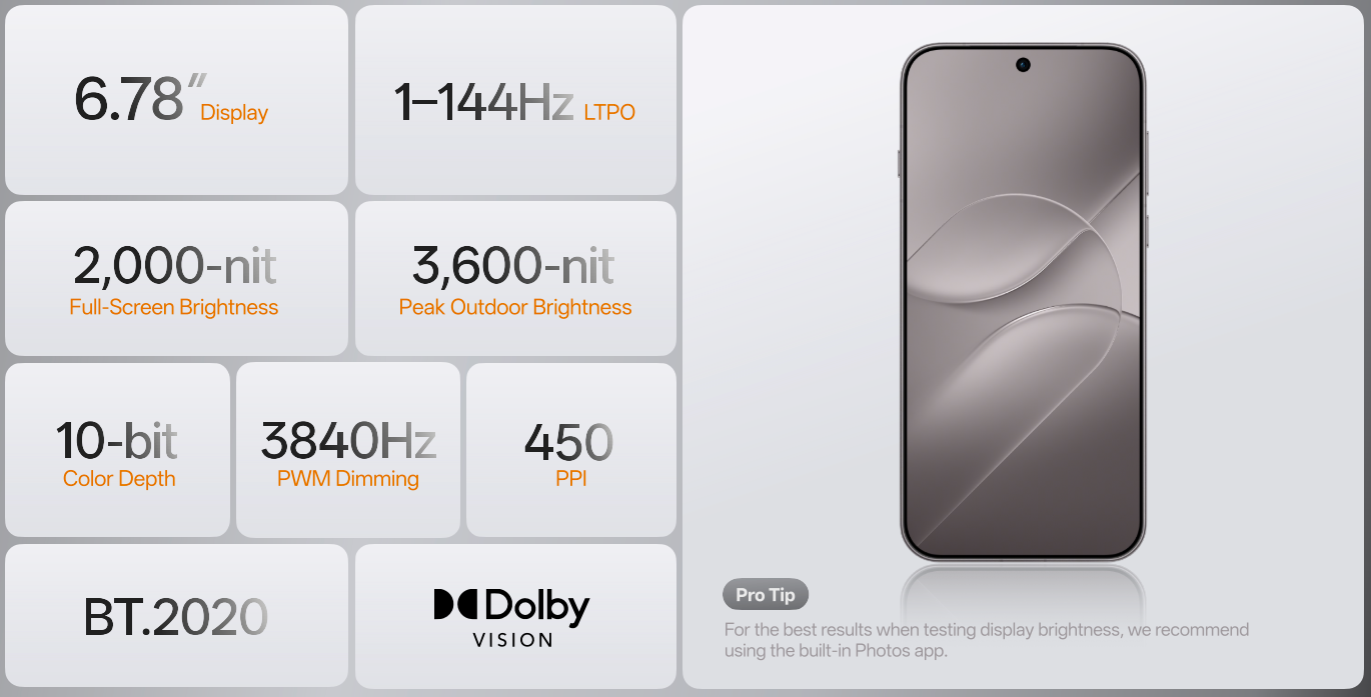
Some display specs for the Pro Max model. | Image by Oppo
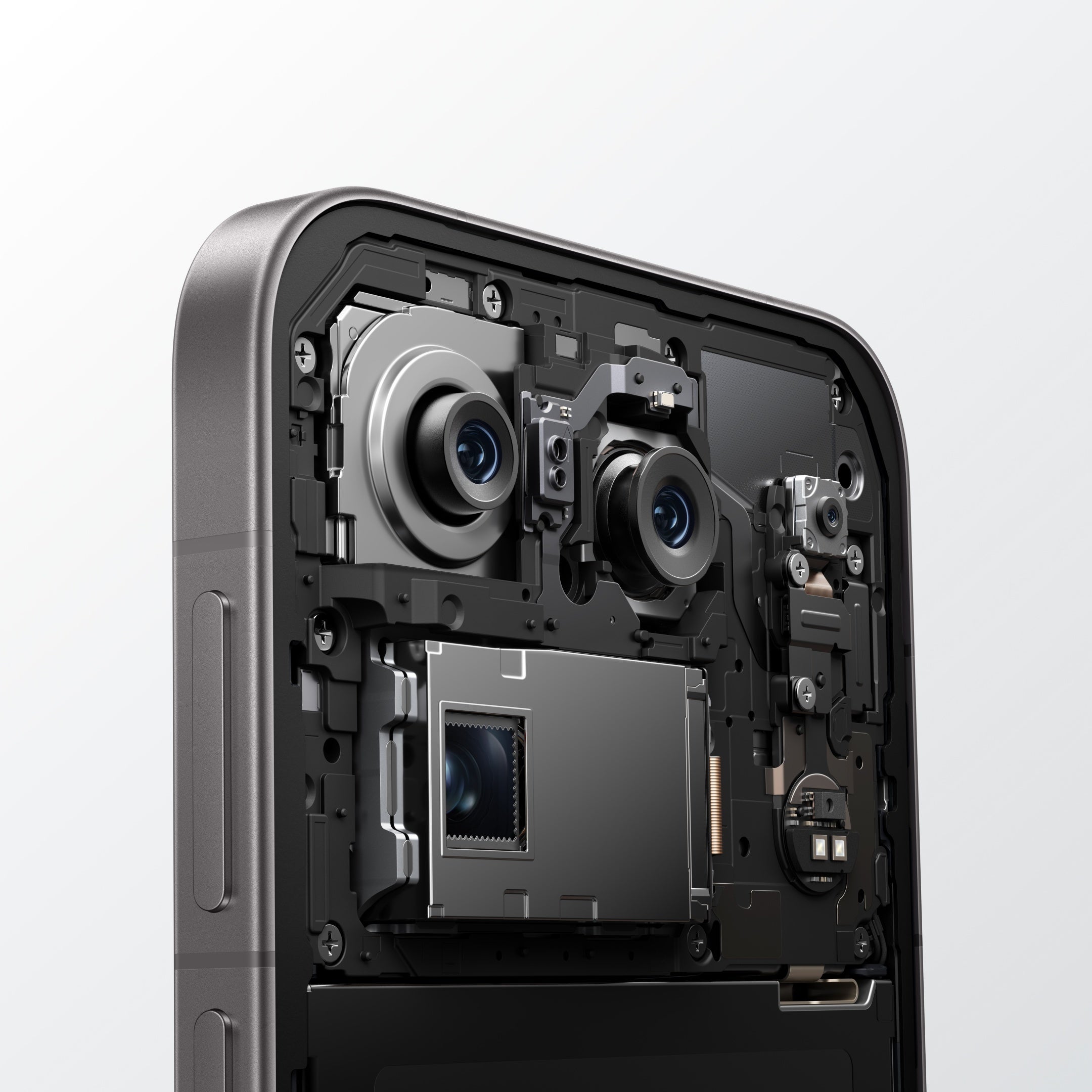
One of the most substantial differences between the two phones is that the Find X10 Pro Max packs the flagship MediaTek Dimensity 9600 Pro chipset. It's accompanied by a large, advanced vapor chamber cooling system, so heavy workloads shouldn't be a problem.
The Dimensity 9600 Pro chipset (the phone's brain, so to speak) is built on a really advanced 2nm node process and features a new all-big-core CPU design. There are two C2-Ultra cores clocked at up to 4.55GHz. Compared with the before, the new chipset promises up to 17% higher single-core performance and up to 15% higher multi-core performance, but over a 60% improvement in multi-core power efficiency.
There's a new GPU for better, more efficient graphics performance and faster ray tracing (one for the gamers).
The Find X10, meanwhile, comes with the 3nm-made MediaTek Dimensity 9600M chipset. This one isn't as advanced as the 9600 Pro, but it once again offers an advanced vapor chamber for cooling.
In terms of display, the Find X10 Pro Max comes with a new-generation 6.78-inch flat display. It's aesthetically pleasing with its symmetrical, narrow (1.15 mm) bezels on all four sides. The refresh rate goes up to 144Hz in some instances and its peak brightness is one of 3,600 nits.
The Find X10 offers the same (but smaller) panel at 6.59 inches. It's flat and it has even thinner symmetrical bezels at 0.99 mm.
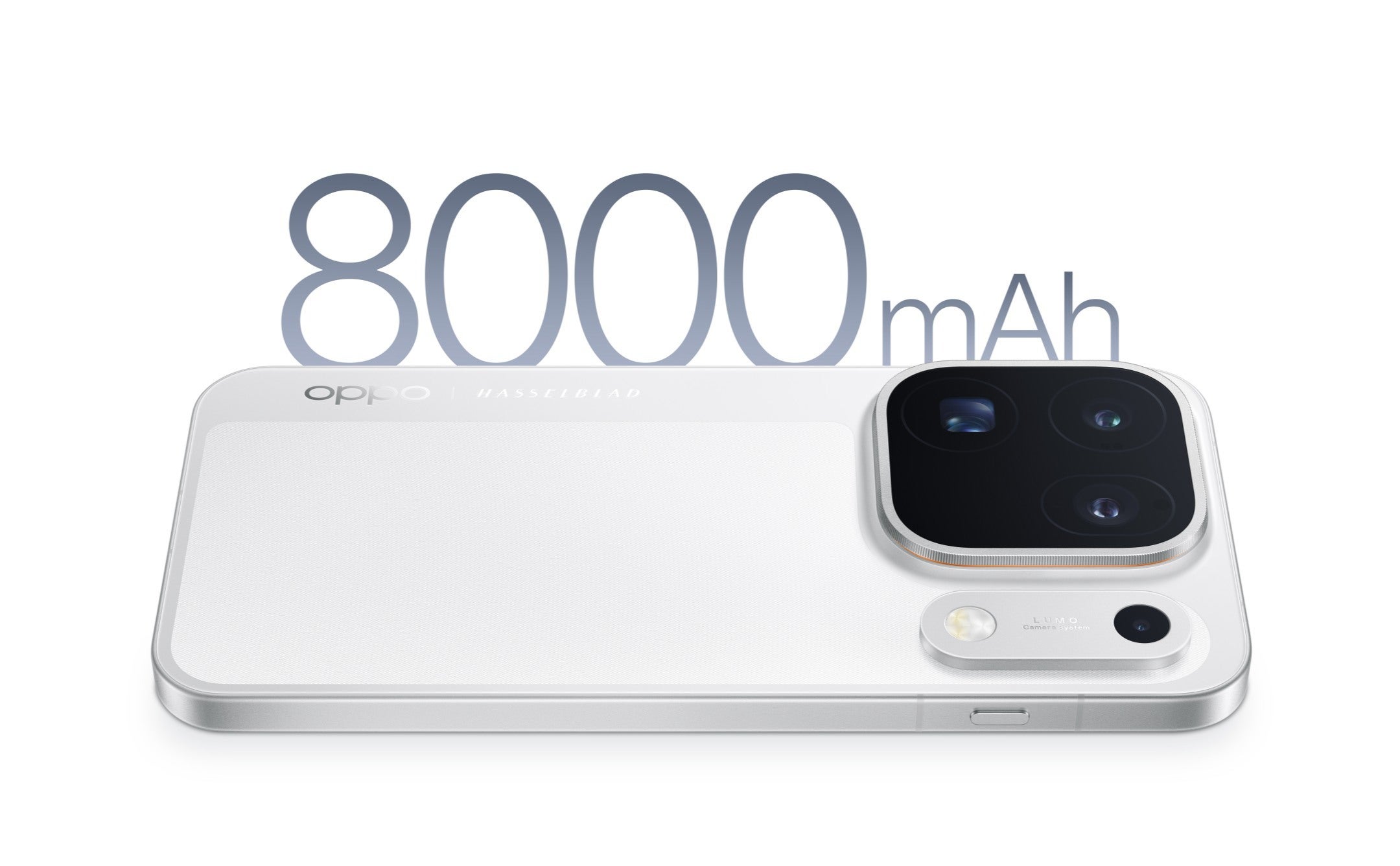
The Pro Max model is a beast. | Image by Oppo
The battery on both phones is one with 8,000 mAh capacity (for non-EU countries) or 7,150 mAh (for EU countries). So, if you're that obsessed with battery life, I suggest you look for a non-EU variant. 850 mAh is not exactly a small difference.
The custom silicon-carbon cell is designed for long-term durability, Oppo claims, and promises 80% health after five years of typical use. 80W wired charging speeds aren't class-leading, but if you're coming from an iPhone or a Galaxy phone, you'll probably be blown away. If you're a fan of wireless charging, the phones support 50W speeds.
The Find X10 Pro Max also offers superb audio, at least on paper, as there are symmetrical dual speakers, which should result in a wider and overall better soundstage. There's a refined X-axis haptic motor (0816C) and USB 3.2 Gen 1 for faster wired data transfer. We're used to doing everything via a cloud, but wired transfers are still a thing today. The faster, the better.
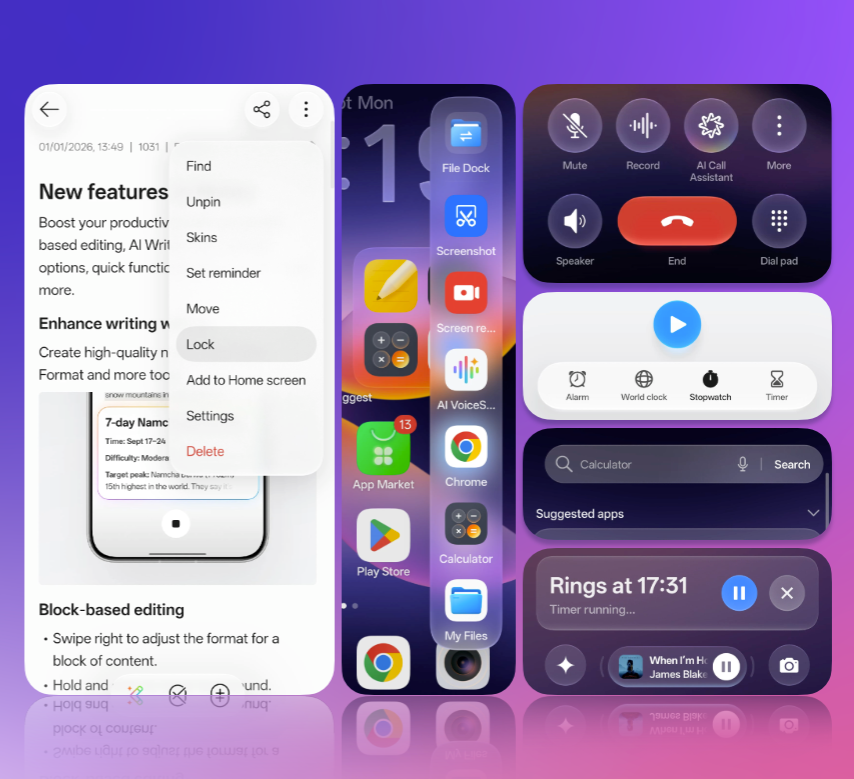
ColorOS 17
It's based on Android 17. | Image by Oppo
ColorOS 17 is based on Android 17 and it's what these phones will offer out of the box. OnePlus owners should also pay attention here, since their phones (running on OxygenOS right now) will also get ColorOS at some point in the near future. The process is bound to start at the end of October, but not all OnePlus models will get it right away. Newer, more popular models will be first.
ColorOS 17 will be "inspired by the natural qualities of light", which is what the industry, including iOS, is focused on currently. You should expect a softer, translucent visual language all over the system. Everything is about clarity and layered transparency. But light will also serve as a visual guide. There'll be diffusions and ripple-like effects when you make interactions with your phone.
Here's a pro tip: when playing a song in Spotify, you can tap Fluid Cloud (Live Alerts) to expand it. Then watch the lighting effect on the progress bar!
Colors, availability and prices
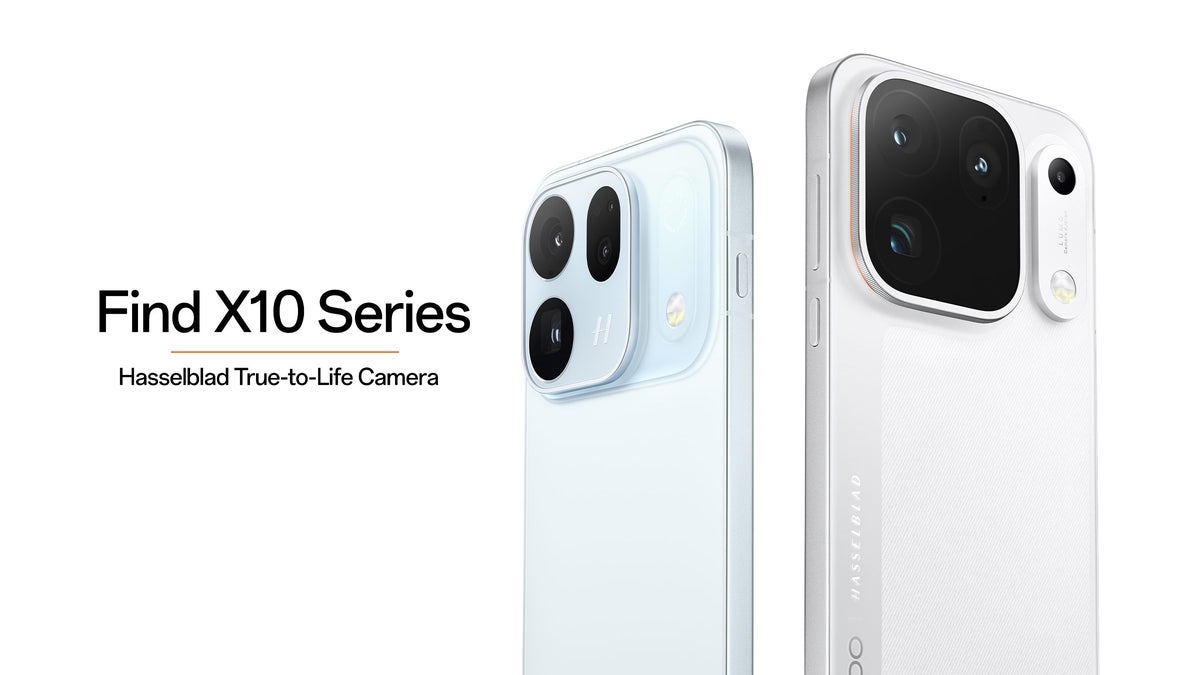
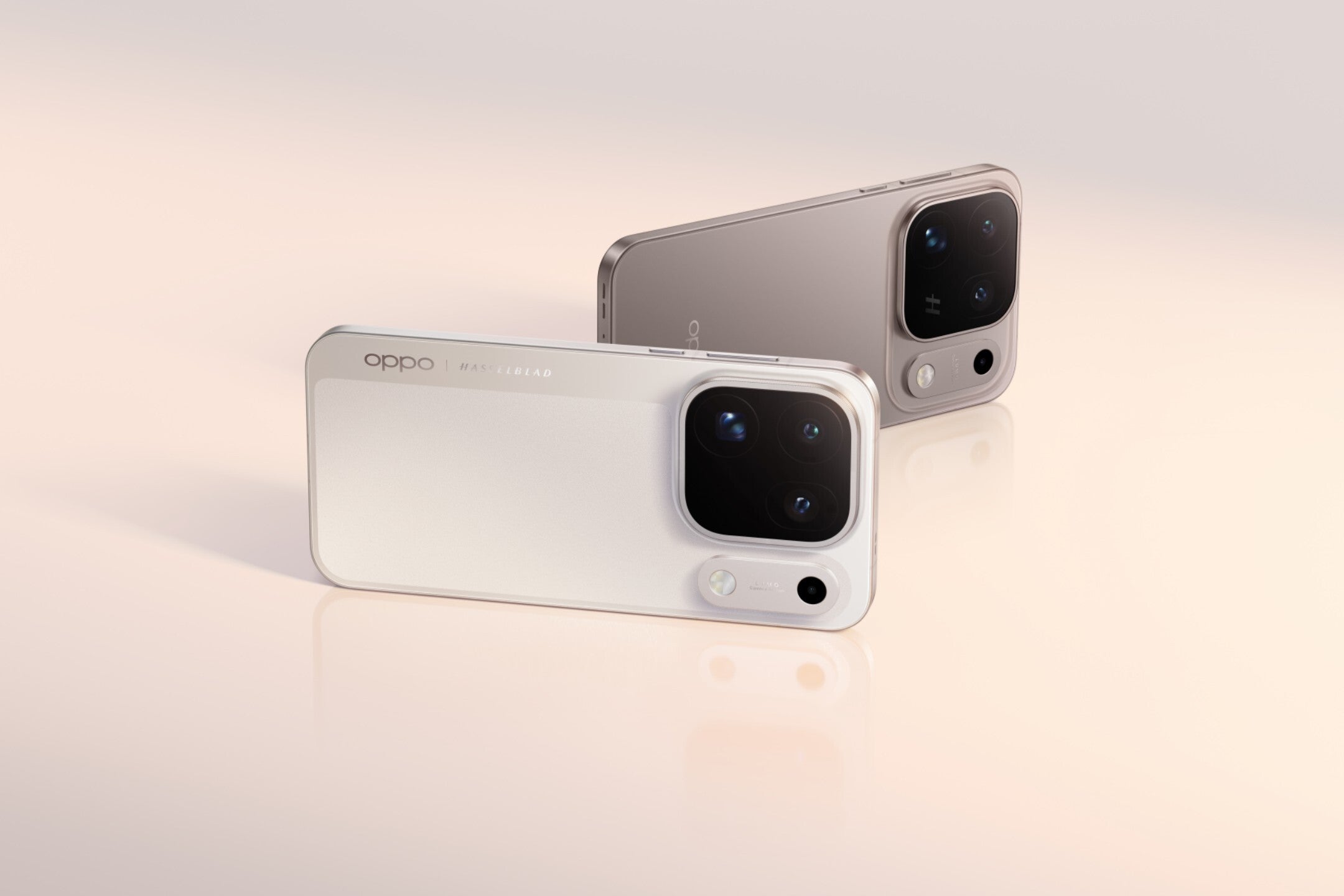
The company is keeping it a bit secret. | Image by Oppo
The Find X10 Pro Max comes in Titanium Grey and Luna White, while the Find X10 offers Glacier Blue, Glow Coral and Mist Grey.
Both phones will be available in some EU and non-EU countries, but Oppo hasn't shared a detailed list yet.
The Oppo Find X10 starts at €1,399 for the 12 GB RAM and 256 storage variant. Meanwhile, the Find X10 Pro Max starts at €1,799 (that's for the 12+512 GB variant). Translated into dollars, this is ~$1,573 and ~$2,023, respectively, when directly converted. Yes, the era of the affordable Chinese flagship is so over.
Keep on reading about the latest and greatest in mobile:
Mint Mobile is celebrating its 10-year anniversary with a special offer on its six-month subscription plans. For a limited time, you can get your preferred tier (6GB, 17GB, 23GB or unlimited) for just $10/mo. That saves you between 50% and 71% on the carrier's mobile plans, making it way easier to recommend.
Sebastian is one of PhoneArena’s senior opinionators. A veteran news writer with almost 20 years of experience in media and technology, he not only covers all the hot news about Galaxies and iPhones, but often provides hot takes on industry trends. He’s fascinated with camera-focused flagships from the likes of Oppo and Vivo, as well as foldable phones.
A discussion is a place, where people can voice their opinion, no matter if it
is positive, neutral or negative. However, when posting, one must stay true to the topic, and not just share some
random thoughts, which are not directly related to the matter.
Things that are NOT allowed:
Off-topic talk - you must stick to the subject of discussion
Offensive, hate speech - if you want to say something, say it politely
Spam/Advertisements - these posts are deleted
Multiple accounts - one person can have only one account
Impersonations and offensive nicknames - these accounts get banned
To help keep our community safe and free from spam, we apply temporary limits to newly created accounts:
New accounts created within the last 24 hours may experience restrictions on how frequently they can
post or comment.
These limits are in place as a precaution and will automatically lift.
Moderation is done by humans. We try to be as objective as possible and moderate with zero bias. If you think a
post should be moderated - please, report it.
Have a question about the rules or why you have been moderated/limited/banned? Please,
contact us.











Things that are NOT allowed:
To help keep our community safe and free from spam, we apply temporary limits to newly created accounts: