SpaceX just put AT&T, T-Mobile and Verizon at ease
SpaceX has gone back to talking about small ground stations.

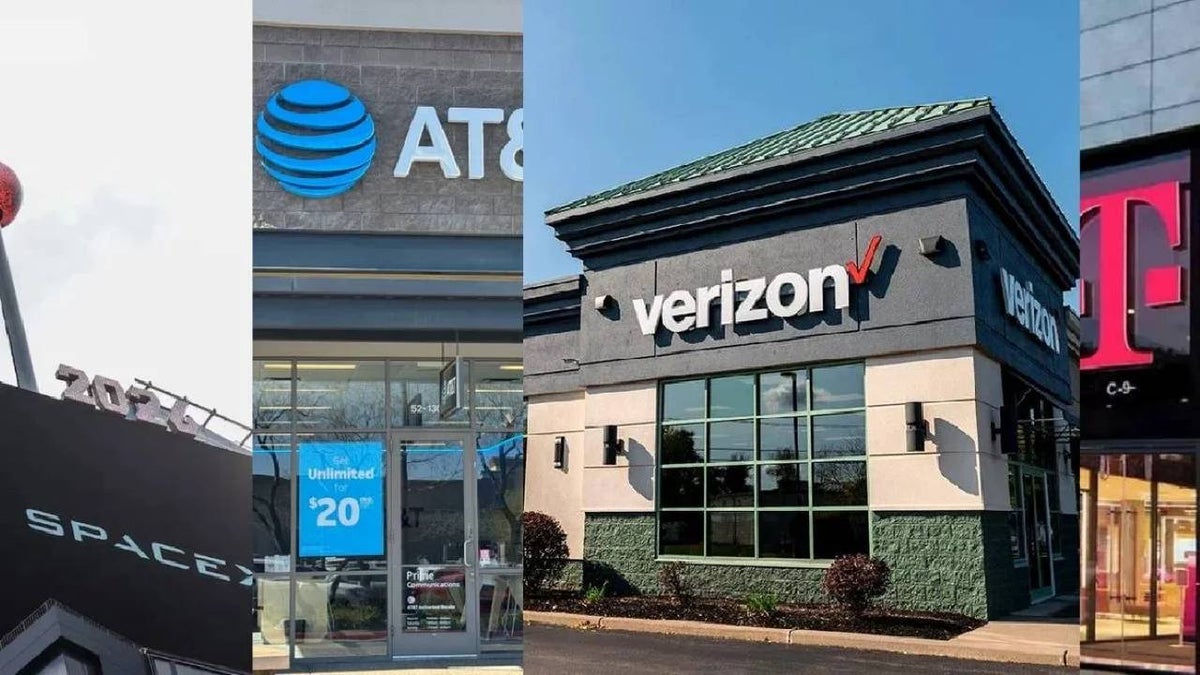
The strategy has shifted again. | Image by PhoneArena
SpaceX may have tweaked its cellular network strategy yet again. While the company initially talked about mounting femtocells on Starlink dishes, it later pivoted toward a near-traditional buildout and was reportedly in talks with tower companies. Now, it looks like SpaceX is returning to its original approach for Starlink Mobile.
During the recent New York Times DealBook Summit, host Andrew Ross Sorkin asked CEO Elon Musk about his plans for a terrestrial phone service.
Musk began by noting that the communication unit helps fund the development of SpaceX's advanced rockets, feeding into his broader vision of making life multi-planetary.
He pointed out that Starlink internet has already brought "high bandwidth, low-cost connectivity" to isolated regions. In many cases, the technology has proven life-saving.
SpaceX now wants to deliver "ubiquitous access" straight to cell phones. Starting next year, the company will begin launching its next-generation V2 Mobile satellites, which boast 40 times the bandwidth of the current constellation.
Musk also addressed concerns about indoor signal penetration, explaining that the 800 megahertz spectrum SpaceX is acquiring will solve the problem. The company plans to bundle small ground stations with Starlink terminals and put them on rooftops.
Instead of relying on massive cell towers, SpaceX will have micro cell sites scattered throughout densely populated areas. The design is ready and will enter production next year.
While satellites can bring connectivity to dead zones, they struggle in crowded places with physical obstacles. Basically, anywhere without a clear line of sight to the sky suffers from poor connectivity.
SpaceX could take the conventional route of building physical infrastructure nationwide, but that would cost billions of dollars and likely stretch well past Musk's two-to-three-year timeline.
By mounting small stations on Starlink dishes, SpaceX can slash costs and speed up deployment. Musk has called the approach "revolutionary." He doesn't think Starlink Mobile will put AT&T, Verizon, or other carriers out of business, but they may lose some revenue.
Musk expects the demand for bandwidth to rise tremendously with the rise of artificial intelligence and robots, so there will be plenty of traffic to go around.
Right now, SpaceX lacks the spectrum needed to run a nationwide terrestrial network. While an upper C-band auction is on the horizon, those airwaves will be costly. They have propagation restrictions and won't be usable until late 2030.
Ultimately, SpaceX will likely rely on a hybrid network, with towers serving densely populated areas, and satellites covering everywhere else.
SpaceX previously revealed that it would integrate cellular radio equipment into Starlink dishes to allow them to broadcast cellular signals to surrounding areas.
SpaceX is striking a noticeably more conciliatory tone, which is a sharp shift from its previous stance of wanting to steal customers from the Big Three. The company appears more focused on enterprise clients than household customers, which aligns with a Besen Group analysis projecting that 70% of revenue will come from businesses.
Connectivity everywhere
During the recent New York Times DealBook Summit, host Andrew Ross Sorkin asked CEO Elon Musk about his plans for a terrestrial phone service.
Well, I think we've got a plan that broadly enables ubiquitous access on Earth, including via cell phone. We'll be launching the SpaceX direct-to-cell version 2 constellation starting next year. That will, I think, have— Forty times the bandwidth of the current direct-to-cell version one.
Elon Musk, SpaceX CEO, November 2026
He pointed out that Starlink internet has already brought "high bandwidth, low-cost connectivity" to isolated regions. In many cases, the technology has proven life-saving.
And that's where, like, the 800 megahertz band that we bought comes into play, where we can establish what are called, you know, micro ground stations, or very small ground stations, and have a network of very small ground stations that are maybe bundled together with Starlink terminals as one of the approaches, or, you know, basically, instead of having these big cell towers all over the place, having a whole bunch of sort of microcell sites that are scattered throughout densely populated areas.
Elon Musk, SpaceX CEO, November 2026
Instead of relying on massive cell towers, SpaceX will have micro cell sites scattered throughout densely populated areas. The design is ready and will enter production next year.
I think next year, which is quite a revolutionary sort of, like, microcell tower thing that you just put on your roof, like a Starlink dish. And it addresses the you know, the problem of reaching people who are in a building.
Elon Musk, SpaceX CEO,
Poll
1 Votes
How should SpaceX go about entering the cellular market?
Overcoming limitations
While satellites can bring connectivity to dead zones, they struggle in crowded places with physical obstacles. Basically, anywhere without a clear line of sight to the sky suffers from poor connectivity.
By mounting small stations on Starlink dishes, SpaceX can slash costs and speed up deployment. Musk has called the approach "revolutionary." He doesn't think Starlink Mobile will put AT&T, Verizon, or other carriers out of business, but they may lose some revenue.
Musk expects the demand for bandwidth to rise tremendously with the rise of artificial intelligence and robots, so there will be plenty of traffic to go around.
I don't think this means, like, you know, AT&T, Verizon, others go out of business or anything. Maybe they'll lose some revenue here, but I actually think that the demand for bandwidth will be tremendous in the future, and that bandwidth will be driven primarily by superintelligence and robots.
Elon Musk, SpaceX CEO, November 2026
Evaluating options
Right now, SpaceX lacks the spectrum needed to run a nationwide terrestrial network. While an upper C-band auction is on the horizon, those airwaves will be costly. They have propagation restrictions and won't be usable until late 2030.
SpaceX previously revealed that it would integrate cellular radio equipment into Starlink dishes to allow them to broadcast cellular signals to surrounding areas.
Harmony
SpaceX is striking a noticeably more conciliatory tone, which is a sharp shift from its previous stance of wanting to steal customers from the Big Three. The company appears more focused on enterprise clients than household customers, which aligns with a Besen Group analysis projecting that 70% of revenue will come from businesses.
What is it going to be?

Popular stories
Latest News


Things that are NOT allowed:
To help keep our community safe and free from spam, we apply temporary limits to newly created accounts: