Looking to unlock more spectrum for Direct-to-Device (D2D) services, the Federal Communications Commission (FCC) sought comments earlier this month on whether opening up the 2500–2690 MHz portion of the 2.5 GHz band to D2D services would be a good idea. Though T-Mobile holds the long-term leases and licenses for most of the spectrum, this band supports a wide range of uses.
The FCC wanted to address any potential concerns about opening up the band for D2D, and T-Mobile is asking it not to even think about it.
T-Mobile warns that sharing the band would degrade its service
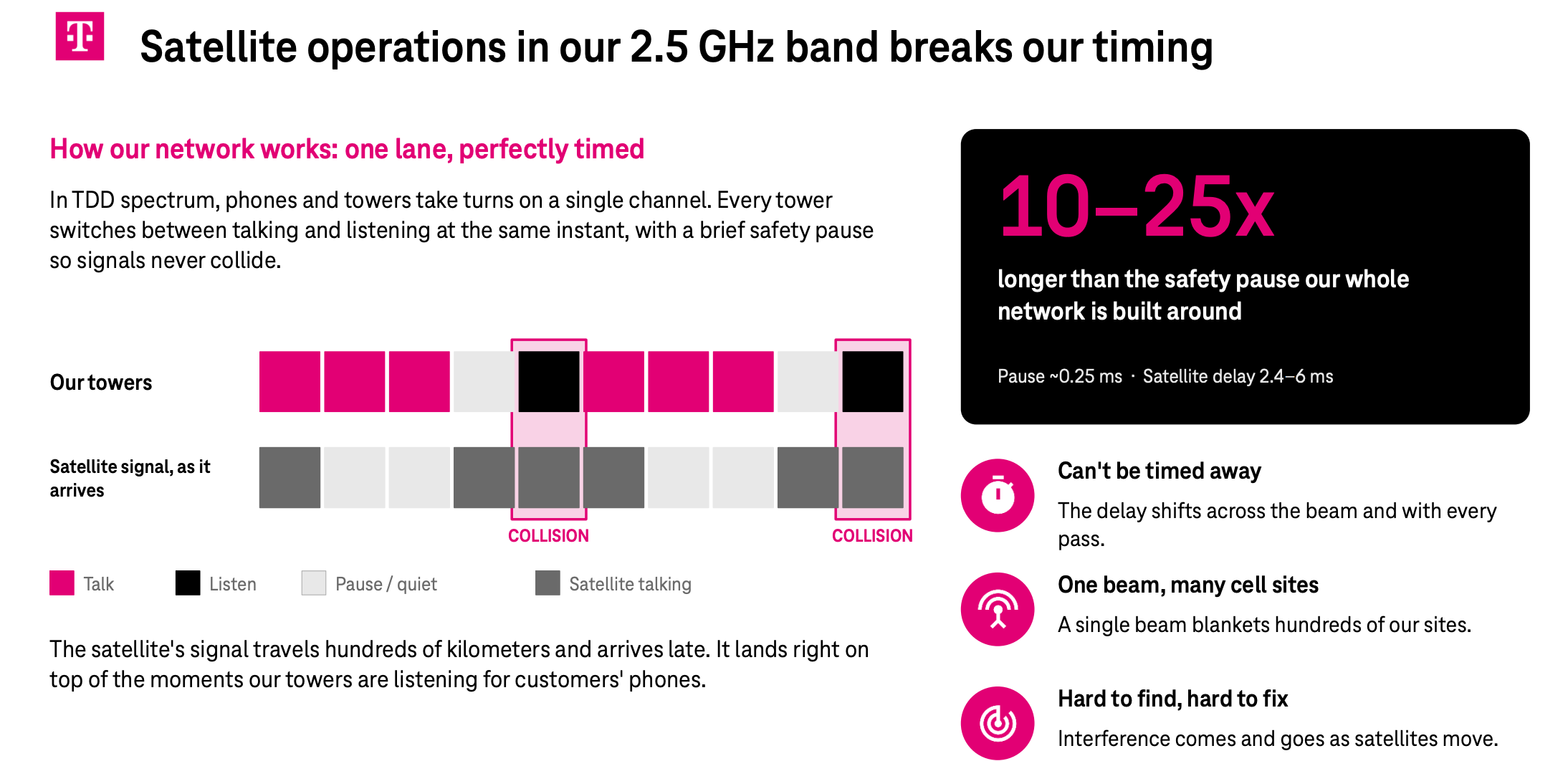
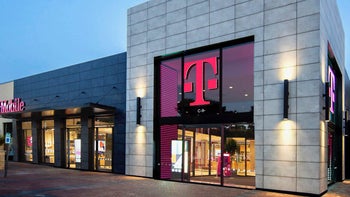
T-Mobile says satellite operations in the 2.5 GHz band would disrupt its operations. | Image by T-Mobile
T-Mobilesays that while it supports innovation, the FCC should leave the 2.5 GHz band (2496-2690 MHz) out its proposals. T-Mobile reminds the Commission that it already excluded the band from the SCS framework due to its complicated configuration. The carrier says that nothing has changed since that decision to warrant a different outcome.
The 2.5 GHz band uses the TDD (Time Division Duplexing) mode, in which a single frequency band is used for uploads and downloads, allowing carriers to use their spectrum efficiently. It is foundational to T-Mobile's Ultra Capacity 5G network.
However, while terrestrial networks can coordinate their signals to prevent collisions, T-Mobile argues that a satellite would struggle to maintain the same rhythm and collide with terrestrial signals, potentially causing dropped or incomplete calls, delayed uploads, and reduced indoor coverage.
Recommended For You
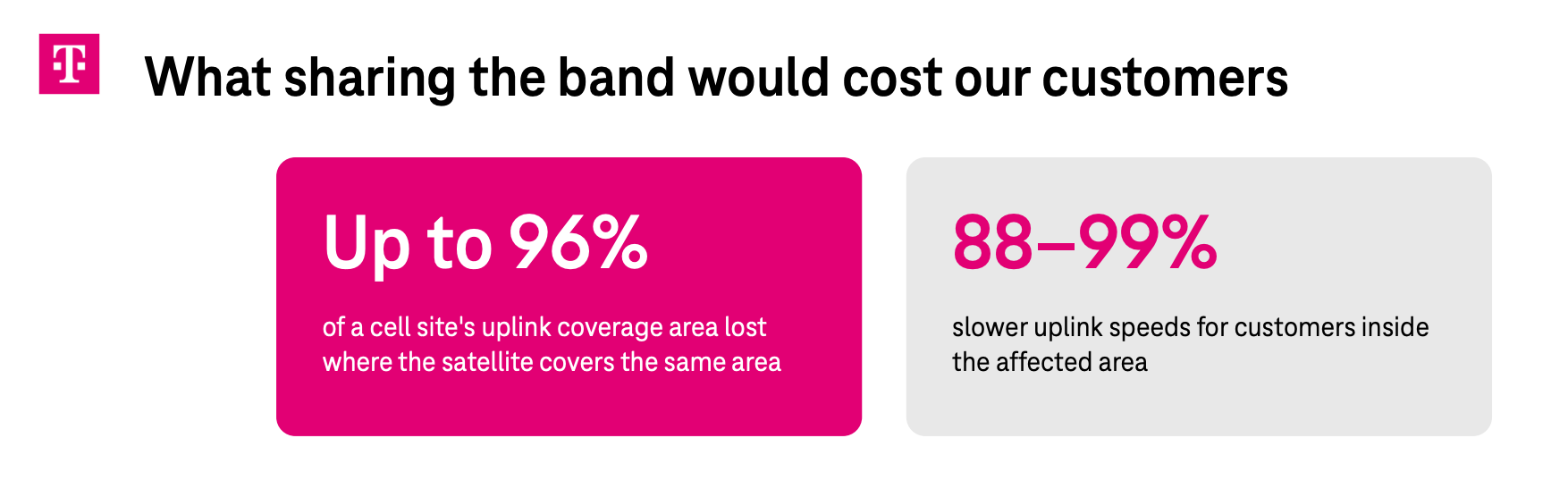
T-Mobile customers would suffer as a result. | Image by T-Mobile
Even if there's harmony between satellite and terrestrial signals within individual markets, there would still be interference. T-Mobile fears that unsynchronized satellite transmissions could reduce its uplink coverage by 60% within six miles of its licensed service area. A 35% loss is estimated even 15 miles from the market boundary.
T-Mobile cautions that coexisting with satellite operations in the band would require restrictive emission limits, custom filters, and a spectral guard band of approximately 20-25 megahertz, reducing the utility of the 2.5 GHz band and rendering 20-25 percent of the spectrum useless in a 100-megahertz block.
Why is T-Mobile doing this?
5 Votes
Recommendations
T-Mobile says that the FCC should allow Supplemental Coverage from Space (SCS) services to use spectrum that employs Frequency Division Duplexing (FDD), which uses different channels for downloads and uploads, making coordination easier.
FDD doesn't automatically protect against interference, even if it provides better isolation. It looks like T-Mobile wants to keep the 2.5 GHz band mostly to itself.
At that time, T-Mobile argued that it held licenses in both the PCS G Block and the adjacent PCS C Block, but it was convinced by SpaceX's demonstrations that adjacent-band operations would be protected.
T-Mobile might be right to be concerned, though. While the previous dispute was about interference with adjacent spectrum, this time it's about sharing spectrum. However, the company was much more conciliatory then than it is now, readily accepting SpaceX's technical argument to roll out D2D texting and gain an edge over rivals.
It's not clear whom the FCC would side with, but if satellite companies prove that they can operate in the band without impacting telecom operators, the FCC would likely open the 2.5 GHz band to them.
Here's why T-Mobile would want to limit SpaceX's access to the band:
Get a free Galaxy A17 with Straight Talk. To claim this deal, you need to pair the phone with activation on a Silver Unlimited Plan or higher. This tier costs $45 per month. Offer valid through 01/10/27 while supplies last online.
Anam Hamid is a computer scientist turned tech journalist who has a keen interest in the tech world, with a particular focus on smartphones and tablets. She has previously written for Android Headlines and has also been a ghostwriter for several tech and car publications. Anam is not a tech hoarder and believes in using her gadgets for as long as possible. She is concerned about smartphone addiction and its impact on future generations, but she also appreciates the convenience that phones have brought into our lives. Anam is excited about technological advancements like folding screens and under-display sensors, and she often wonders about the future of technology. She values the overall experience of a device more than its individual specs and admires companies that deliver durable, high-quality products. In her free time, Anam enjoys reading, scrolling through Reddit and Instagram, and occasionally refreshing her programming skills through tutorials.
A discussion is a place, where people can voice their opinion, no matter if it
is positive, neutral or negative. However, when posting, one must stay true to the topic, and not just share some
random thoughts, which are not directly related to the matter.
Things that are NOT allowed:
Off-topic talk - you must stick to the subject of discussion
Offensive, hate speech - if you want to say something, say it politely
Spam/Advertisements - these posts are deleted
Multiple accounts - one person can have only one account
Impersonations and offensive nicknames - these accounts get banned
To help keep our community safe and free from spam, we apply temporary limits to newly created accounts:
New accounts created within the last 24 hours may experience restrictions on how frequently they can
post or comment.
These limits are in place as a precaution and will automatically lift.
Moderation is done by humans. We try to be as objective as possible and moderate with zero bias. If you think a
post should be moderated - please, report it.
Have a question about the rules or why you have been moderated/limited/banned? Please,
contact us.




Things that are NOT allowed:
To help keep our community safe and free from spam, we apply temporary limits to newly created accounts: