AT&T, T-Mobile, and Verizon tumble after rumored SpaceX move
SpaceX wants to lease cell sites for Starlink Mobile.
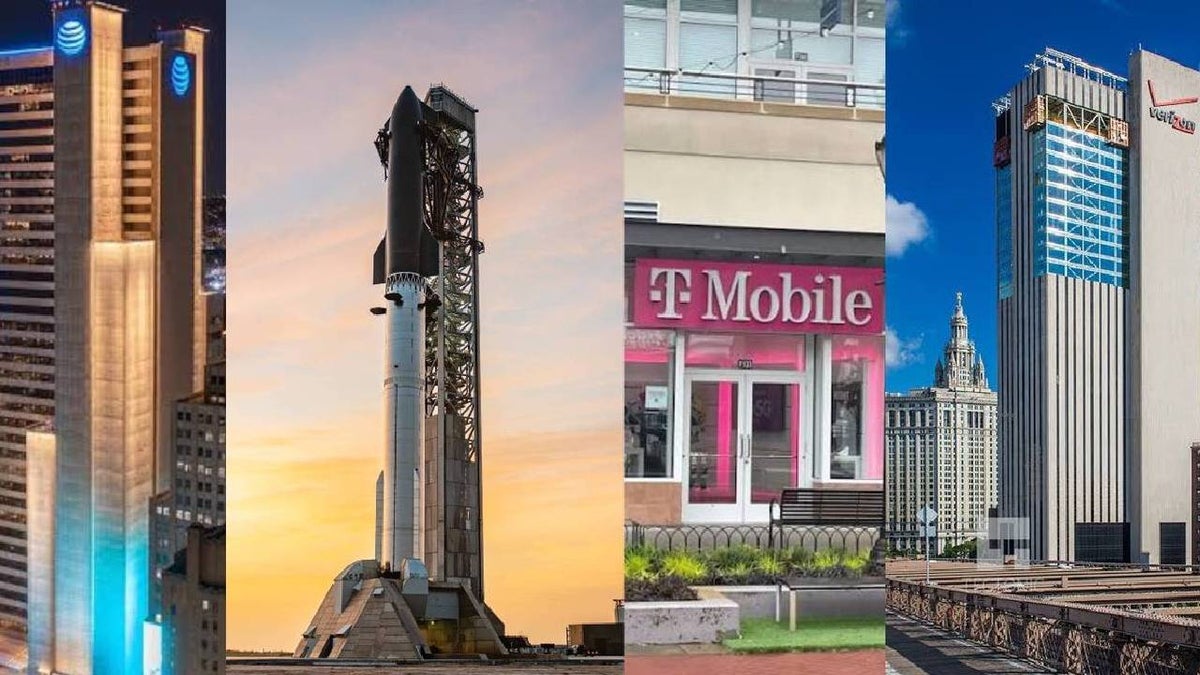
The fourth carrier is taking shape. | Image by PhoneArena
SpaceX is on a roll. After recently scooping up three AWS-3 licenses from Tristar, the company is reportedly in talks to lease space at 80,000 cell sites for Starlink Mobile. The company reiterated its vision of a hybrid mobile network during its Q3 earnings call.
SpaceX intends to have access to at least 80,000 cell sites across the US, per Bloomberg. The company is believed to be negotiating with Crown Castle, one of the largest owners of cellular towers.
Crown Castle CEO Chris Hillabrant didn't outright shoot down the rumor when asked if he was discussing leases with satellite operators. He didn't confirm that the company is in talks with SpaceX, though he did call SpaceX's purchase of low-band spectrum a "huge milestone" for providing mobile coverage.
The total value of the tower deals with SpaceX could amount to billions. Telecom operators place antennas on towers to transmit signals. Instead of owning and maintaining tower sites, they usually rent space for equipment. The same structures are often shared by multiple carriers.
So far, SpaceX has been purchasing spectrum and planning the launches of its more capable next-gen V2 satellites. Tower sites are an important part of the equation, as satellites cannot reliably beam connectivity everywhere. SpaceX would need terrestrial components in densely populated areas to ensure signals reach indoors.
Even though President Gwynne Shotwell says that 85%-93% of mobile connectivity is carried over Wi-Fi, that still doesn't mean that integrating femtocells into Starlink dishes would be enough. Telecom analyst Dean Bubley points out that the figure doesn't reflect real-world smartphone use outside the home. Wi-Fi networks generally require passwords, and their coverage is inconsistent.
Bernstein analysts saw the purchase of 14 MHz of low-band spectrum in the 800 MHz band from Grain Management as a sign that SpaceX would lease space on towers. Since low-band spectrum travels farther, it reduces the number of cell sites SpaceX needs. Crown Castle, American Tower, and SBA Communications all rose after that announcement, while AT&T, T-Mobile, and Verizon took a beating.
After the latest Bloomberg's report, AT&T, T-Mobile, and Verizon all slid around 5%.
The Big Three have settled into an oligopolistic structure with little incentive to disrupt the market or compete on price. Starlink Mobile might revive the competitive spirit.
Marching ahead
SpaceX intends to have access to at least 80,000 cell sites across the US, per Bloomberg. The company is believed to be negotiating with Crown Castle, one of the largest owners of cellular towers.
Crown Castle CEO Chris Hillabrant didn't outright shoot down the rumor when asked if he was discussing leases with satellite operators. He didn't confirm that the company is in talks with SpaceX, though he did call SpaceX's purchase of low-band spectrum a "huge milestone" for providing mobile coverage.
You can assume that we’re talking to all parties
Chris Hillabrant , Crown Castle CEO, October 2026
Why does the US need a fourth carrier?
5 Votes
One more piece of the puzzle
So far, SpaceX has been purchasing spectrum and planning the launches of its more capable next-gen V2 satellites. Tower sites are an important part of the equation, as satellites cannot reliably beam connectivity everywhere. SpaceX would need terrestrial components in densely populated areas to ensure signals reach indoors.
The explicit Wi-Fi reference is important, but still misses critical details about authentication and federation. Shotwell's reference to 85–93% Wi-Fi usage deserves scrutiny. While it is true at a top level, it does not describe real-world smartphone use outside the home, where Wi-Fi often needs cumbersome captive portals and passwords - and millions of different administrators.
Dean Bubley, telecom analyst, October 2026
Many saw this coming
Bernstein analysts saw the purchase of 14 MHz of low-band spectrum in the 800 MHz band from Grain Management as a sign that SpaceX would lease space on towers. Since low-band spectrum travels farther, it reduces the number of cell sites SpaceX needs. Crown Castle, American Tower, and SBA Communications all rose after that announcement, while AT&T, T-Mobile, and Verizon took a beating.
The fourth carrier
The Big Three have settled into an oligopolistic structure with little incentive to disrupt the market or compete on price. Starlink Mobile might revive the competitive spirit.


Popular stories


Latest News


Things that are NOT allowed:
To help keep our community safe and free from spam, we apply temporary limits to newly created accounts: