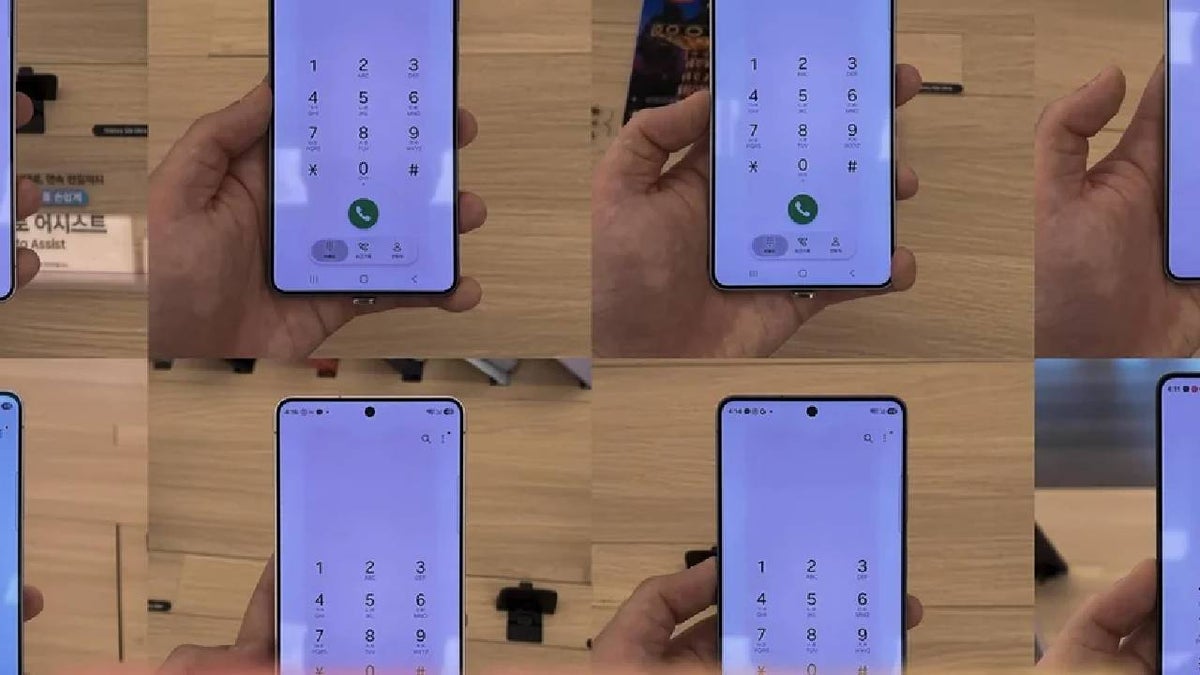
Samsung just can't seem to get past the red tint issue plaguing some Galaxy S26 Ultra models. Back in July, some owners began complaining that their handsets were developing a red tinge after two to three months of use. Fast forward two months, and Samsung has still not been able to completely fix the problem.
From a tinted display...
Samsung launched an investigation into the issue in July as complaints piled up. While users suspected that it was tied to the pixel-level Privacy Display tech, Samsung insisted it was a display calibration glitch. The company advised users in South Korea to visit an official service center for immediate recalibration, while everyone else was told to wait for a software update.
I am this close to returning my S26 Ultra...why is the display quality so bad?!
I always thought Samsung's had the best displays. It was one of the main reasons why I chose this phone. But I've been so disappointed.
aliward_96, Reddit user, August 2026
The company started rolling out a fix on August 26. Though it has yet to reach everyone as updates are usually staggered, preliminary reports suggest that it has proven to be ineffective.
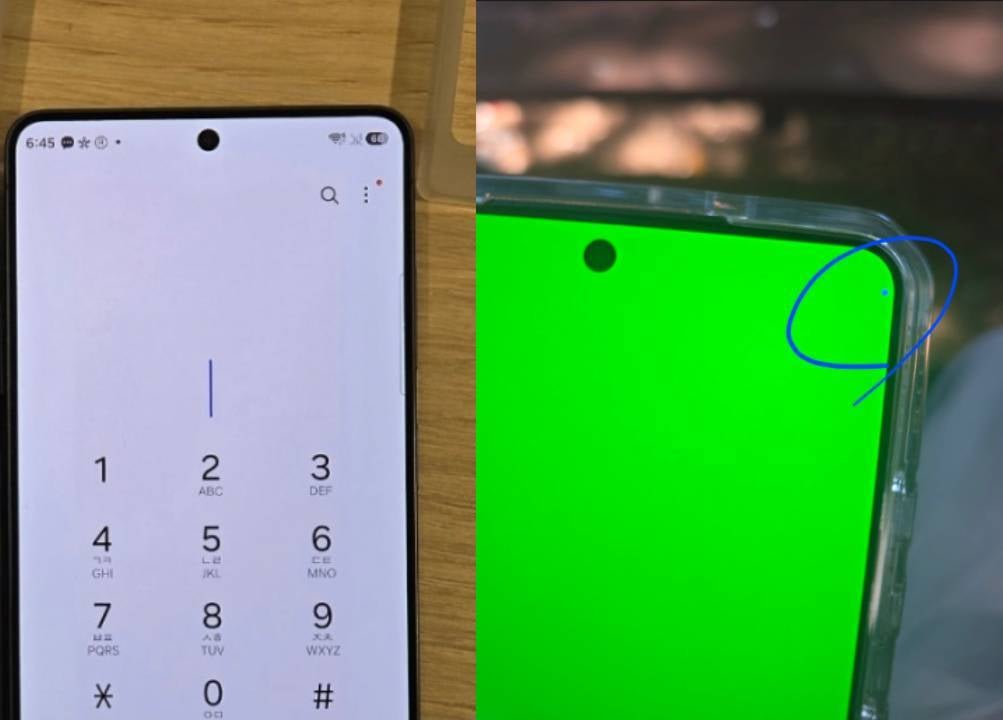
The color optimization patch was designed to fix an error in the OLED screen's R, G, and B pixel values that caused the color red to be overblown in some areas. South Korean outlet Newswayreports that while the update eliminated the reddish hue for some, it has introduced colored dots along the edges of the screen. Some users say that the top and bottom edges are still red.
Recommended For You
Even customers who brought their phones into service centers are reporting dots.
Samsung says that if the update doesn't eliminate the problem, customers should try tweaking the display color setting or visit a service center.
If your Galaxy device screen colors look different, darker than usual, or tinted unexpectedly, certain display or accessibility features may be enabled. Features such as Adaptive color tone, color correction, Extra dim, and Eye comfort shield can affect screen color and brightness.
Samsung
What would you do if your brand new S26 Ultra developed this problem?
398 Votes
If Samsung manages to fix it, it's not a problem.
62.56%
Swear off Samsung.
29.9%
I can't fault Samsung for being innovative.
7.54%
What's going on?
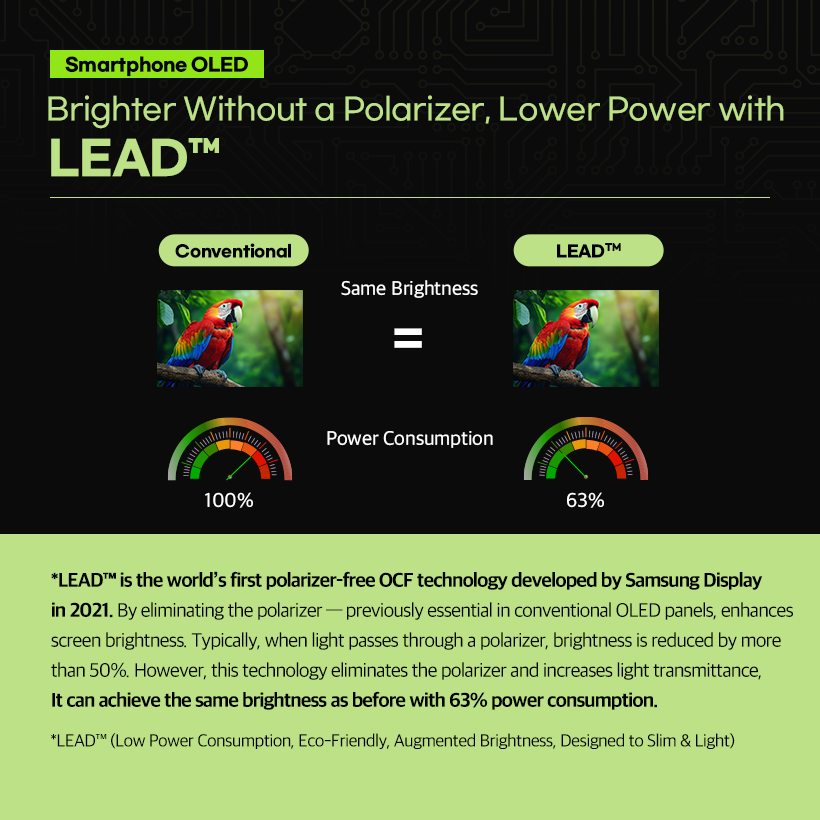
New technologies appear to have thrown off the display. | Image by Samsung
The Galaxy S26 Ultra uses the Flex Magic Pixel tech to block viewing from an angle and safeguard privacy. The tech is integrated into the screen hardware and controls how pixels disperse light.
The company redesigned the Black Matrix, which separates RGB subpixels and prevents colors from mixing, by developing a multi-layer, light-blocking structure. This was combined with a polarizer-free OLED technology called LEAD, which enhances screen brightness.
It's believed that the changes in the display structure altered the characteristics of the blue pixels, impacting the screen color. The LEAD tech, which removed the polarizer, could also be contributing to the instability.
Other theories
There are a few unverified theories floating around on the internet. Apparently, the adhesive used inside the display didn't fully harden during the manufacturing process, and its exposure to UV light caused a reaction.
Supporting this theory is the fact that units shipped after the red tint issue came to light don't seem to have the issue, suggesting Samsung quietly remedied the problem.
The only silver lining here is that the problem mostly seems limited to the initial batch meant for South Korea, where Samsung is offering free display replacements as a last resort.
Free Galaxy A17 5G with Straight Talk
Get a free Galaxy A17 with Straight Talk. To claim this deal, you need to pair the phone with activation on a Silver Unlimited Plan or higher. This tier costs $45 per month. Offer valid through 01/10/27 while supplies last online.
Anam Hamid is a computer scientist turned tech journalist who has a keen interest in the tech world, with a particular focus on smartphones and tablets. She has previously written for Android Headlines and has also been a ghostwriter for several tech and car publications. Anam is not a tech hoarder and believes in using her gadgets for as long as possible. She is concerned about smartphone addiction and its impact on future generations, but she also appreciates the convenience that phones have brought into our lives. Anam is excited about technological advancements like folding screens and under-display sensors, and she often wonders about the future of technology. She values the overall experience of a device more than its individual specs and admires companies that deliver durable, high-quality products. In her free time, Anam enjoys reading, scrolling through Reddit and Instagram, and occasionally refreshing her programming skills through tutorials.
A discussion is a place, where people can voice their opinion, no matter if it
is positive, neutral or negative. However, when posting, one must stay true to the topic, and not just share some
random thoughts, which are not directly related to the matter.
Things that are NOT allowed:
Off-topic talk - you must stick to the subject of discussion
Offensive, hate speech - if you want to say something, say it politely
Spam/Advertisements - these posts are deleted
Multiple accounts - one person can have only one account
Impersonations and offensive nicknames - these accounts get banned
To help keep our community safe and free from spam, we apply temporary limits to newly created accounts:
New accounts created within the last 24 hours may experience restrictions on how frequently they can
post or comment.
These limits are in place as a precaution and will automatically lift.
Moderation is done by humans. We try to be as objective as possible and moderate with zero bias. If you think a
post should be moderated - please, report it.
Have a question about the rules or why you have been moderated/limited/banned? Please,
contact us.




Things that are NOT allowed:
To help keep our community safe and free from spam, we apply temporary limits to newly created accounts: