AT&T, T-Mobile, and Verizon's grip on the industry strengthens
Verizon is purchasing Carolina West Wireless.
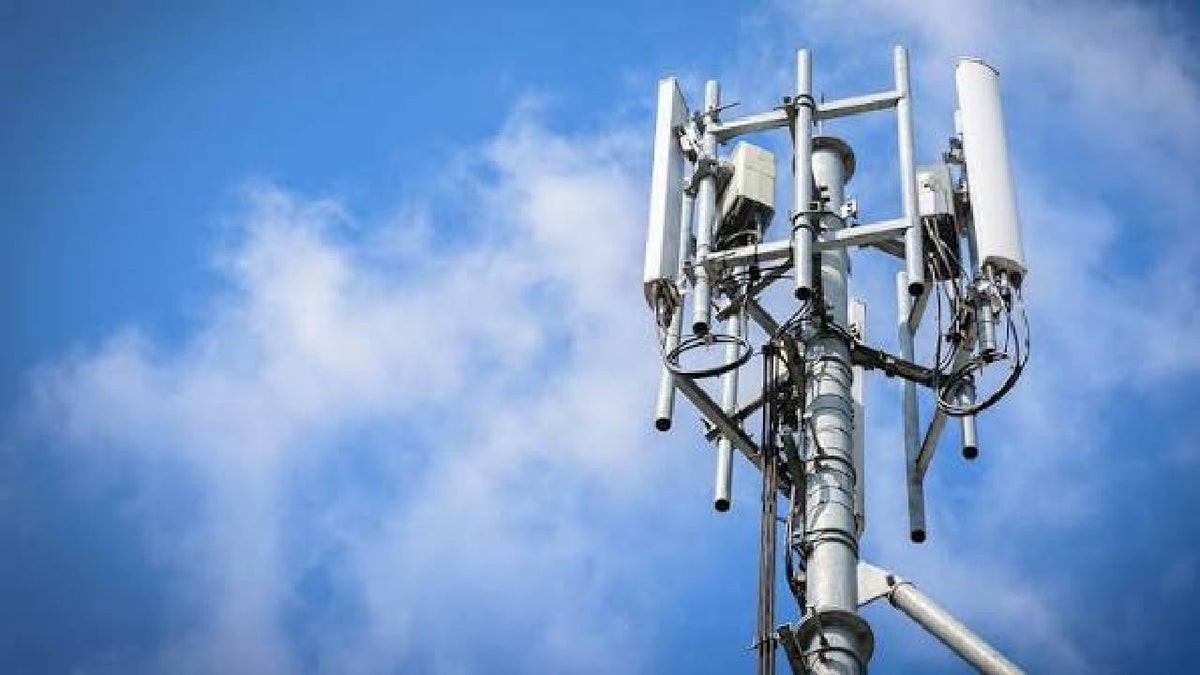
Another regional carrier shuts down. | Image by Verizon
If anyone needed more proof that AT&T, T-Mobile, and Verizon dominate the market, another rural carrier is throwing in the towel. Carolina West Wireless (CWW), a small regional carrier based in North Carolina, is bowing out of the business.
Founded in 1991, the 35-year-old carrier has been owned by Skyline Telephony and Surry Telephone, and has operated across 11 counties in western North Carolina.
Lately, though, the company has found it increasingly difficult to compete in a rapidly evolving market. Its challenges will be compounded by the arrival of 6G, which requires massive investment, scale, and infrastructure.
That's why the company has decided to transition its network to Verizon and discontinue its wireless services.
Customers' accounts won't be automatically migrated to Verizon. That's because even though CWW has sold its assets to the company, the choice of which network to switch to is entirely up to the subscribers.
However, CWW would like subscribers to choose Verizon, stationing the latter's reps at its retail locations, and giving out $150 Mastercard gift cards to those who move to Verizon before July 30.
Service will be discontinued on September 30, so customers are advised to switch before that to avoid interruptions.
Apart from CWW postpaid customers, Bark Mobile prepaid and Clearstream fixed wireless internet customers will also be impacted.
What makes CWW's exit notable is that it was one of the few remaining regional carriers with its own network and spectrum. It had partnerships with other carriers to provide national coverage.
CWW launched when a group of Incumbent Local Exchange Carriers (ILECs) decided to pool their resources to create a regional carrier.
Its history with Verizon goes back to 2011, when Verizon provided LTE equipment and spectrum to couple with CWW's tower and backhaul assets, bringing LTE to both companies' subscribers in northwestern North Carolina.
CWW had been struggling for some time due to a decline in federal subsidies. A number of its cell sites were funded by Universal Service Fund (USF) support, but a reduction of 80% in funding made it difficult to maintain the towers.
Meanwhile, the national carriers have been increasing their rural coverage, depriving the likes of CWW of roaming revenue. Previously, CWW was the only game in town for roughly 60% of its coverage area. That figure fell to 30% in 2024.
As of 2015, the company had 70,000 customers, but recent figures are unknown.
Verizon swooping in to absorb CWW has many benefits. According to Jeff Moore, principal of Wave7 Research, Verizon gains rights-of-way associated with CWW-owned towers, which will improve Verizon's coverage in the region. CCW customers will have access to more benefits by switching to a national carrier.
However, CWW's exit, which comes a year after T-Mobile's purchase of UScellular, means competition is shrinking.
Perhaps it's finally time for SpaceX to enter the market as the fourth carrier.
Calling it quits
Founded in 1991, the 35-year-old carrier has been owned by Skyline Telephony and Surry Telephone, and has operated across 11 counties in western North Carolina.
That's why the company has decided to transition its network to Verizon and discontinue its wireless services.
After careful consideration, the decision has been made to transition our wireless network to Verizon and discontinue our wireless services. While this decision was not made lightly, it reflects a clear priority: ensuring that our customers and communities continue to have access to the very best connectivity – both now and for years to come.
Carolina West Wireless (CWW), June 2026
Customer support
Customers' accounts won't be automatically migrated to Verizon. That's because even though CWW has sold its assets to the company, the choice of which network to switch to is entirely up to the subscribers.
Service will be discontinued on September 30, so customers are advised to switch before that to avoid interruptions.
Apart from CWW postpaid customers, Bark Mobile prepaid and Clearstream fixed wireless internet customers will also be impacted.
How do you feel about CWW's exit?
70 Votes
FCC should have saved it.
14.29%
It was fighting a losing battle.
70%
We need SpaceX.
15.71%
Tough times
What makes CWW's exit notable is that it was one of the few remaining regional carriers with its own network and spectrum. It had partnerships with other carriers to provide national coverage.
CWW launched when a group of Incumbent Local Exchange Carriers (ILECs) decided to pool their resources to create a regional carrier.
CWW had been struggling for some time due to a decline in federal subsidies. A number of its cell sites were funded by Universal Service Fund (USF) support, but a reduction of 80% in funding made it difficult to maintain the towers.
Meanwhile, the national carriers have been increasing their rural coverage, depriving the likes of CWW of roaming revenue. Previously, CWW was the only game in town for roughly 60% of its coverage area. That figure fell to 30% in 2024.
As of 2015, the company had 70,000 customers, but recent figures are unknown.
A mixed bag
Verizon swooping in to absorb CWW has many benefits. According to Jeff Moore, principal of Wave7 Research, Verizon gains rights-of-way associated with CWW-owned towers, which will improve Verizon's coverage in the region. CCW customers will have access to more benefits by switching to a national carrier.
Perhaps it's finally time for SpaceX to enter the market as the fourth carrier.


Popular stories



Latest News






Things that are NOT allowed:
To help keep our community safe and free from spam, we apply temporary limits to newly created accounts: