AT&T hasn't given up on its Open RAN initiatives, quite the contrary: Ma Bell is steadily progressing in that direction.
Rob Soni (VP – RAN Technology, AT&T) says in a new blog post that more than half of AT&T's network traffic is already being carried on open-capable hardware (which is designed to support open architectures in the future)
RAN advancements
Everything is getting more advanced. | Image by AT&T
If you keep a close eye on the topic, you've surely heard of Open RAN (Open Radio Access Network) already. That's the industry approach that breaks apart the traditional and tightly integrated equipment stack used in cellular networks. Companies like Ericsson, Nokia and Huawei sell end-to-end RAN systems where radios, basebands and software are optimized to work together but are largely proprietary.
Doesn't sound too flexible, right? That's where Open RAN comes in – radio equipment can come from vendor X, baseband processing can be made by vendor Y, while software apps – by vendor Z.
This isn't all about flexibility, though: there can be made arguments about competition, innovation and cost effectiveness. That last part is critical.
That's why AT&T has completed more than 50% of their radio replacement ("swap") program. This is physically replacing legacy cell site radios with newer hardware that supports open interfaces and cloud-native architectures.
Recommended For You
We've successfully completed an Open RAN call on our commercial network using Ericsson basebands and 1Finity radios and we're the first CSP globally to deploy a third-party rApp to optimize our live production network.
– Rob Soni, VP – RAN Technology, AT&T, March 2026
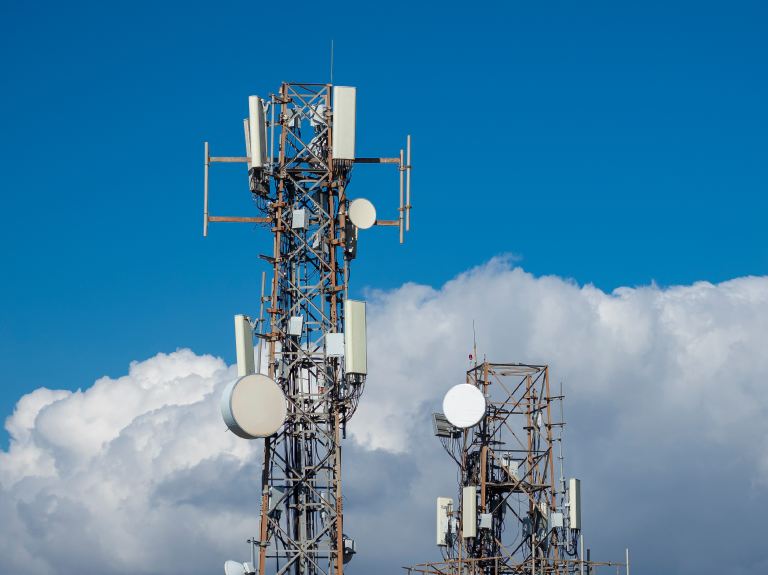
Another key factor is Cloud RAN. This shifts network processing away from hardware at each cell tower and into centralized data centers that run software instead. Thus, networks are made more flexible and easier to update. It also helps AT&T automate operations and use AI to improve performance more quickly.
AT&T is already live with Cloud RAN in two cities and the company is "on track to complete system integrations and start scaling by the end of first quarter".
Have you noticed a change in AT&T's network?
43 Votes
Yes, it's getting better.
30.23%
Nothing has changed in the last year or so.
41.86%
It's getting worse...
27.91%
More than hardware
Beyond hardware, AT&T is building the software layer needed to run a more programmable network. It is rolling out Ericsson's Intelligent Automation Platform, which includes cloud orchestration tools and the RAN Intelligent Controller, a system that allows the network to be managed and optimized through software instead of fixed settings.
So, AT&T is upgrading equipment, adding cloud-based processing, and layering in automation and AI at the same time. Which should mean that subscribers could see real-world improvements in speed, reliability and efficiency.
Get iPhone 18 Pro with Visible, get $480 off!
$719
/mo
$1199
$480 off (40%)
On the Visible+ Pro plan, you get access to 5G Ultra Wideband data on Verizon's fastest network. Along with unlimited roaming across Mexico and Canada, 2 days of Global Pass per month, 3x hotspot speeds, 4K streaming, and Smartwatch service.
Sebastian is one of PhoneArena’s senior opinionators. A veteran news writer with almost 20 years of experience in media and technology, he not only covers all the hot news about Galaxies and iPhones, but often provides hot takes on industry trends. He’s fascinated with camera-focused flagships from the likes of Oppo and Vivo, as well as foldable phones.
A discussion is a place, where people can voice their opinion, no matter if it
is positive, neutral or negative. However, when posting, one must stay true to the topic, and not just share some
random thoughts, which are not directly related to the matter.
Things that are NOT allowed:
Off-topic talk - you must stick to the subject of discussion
Offensive, hate speech - if you want to say something, say it politely
Spam/Advertisements - these posts are deleted
Multiple accounts - one person can have only one account
Impersonations and offensive nicknames - these accounts get banned
To help keep our community safe and free from spam, we apply temporary limits to newly created accounts:
New accounts created within the last 24 hours may experience restrictions on how frequently they can
post or comment.
These limits are in place as a precaution and will automatically lift.
Moderation is done by humans. We try to be as objective as possible and moderate with zero bias. If you think a
post should be moderated - please, report it.
Have a question about the rules or why you have been moderated/limited/banned? Please,
contact us.












Things that are NOT allowed:
To help keep our community safe and free from spam, we apply temporary limits to newly created accounts: