AT&T's "secret sauce" may allow it to shut down its obsolete copper network in California
California and the CPUC are in a battle with AT&T over the carrier's ancient copper phone network.
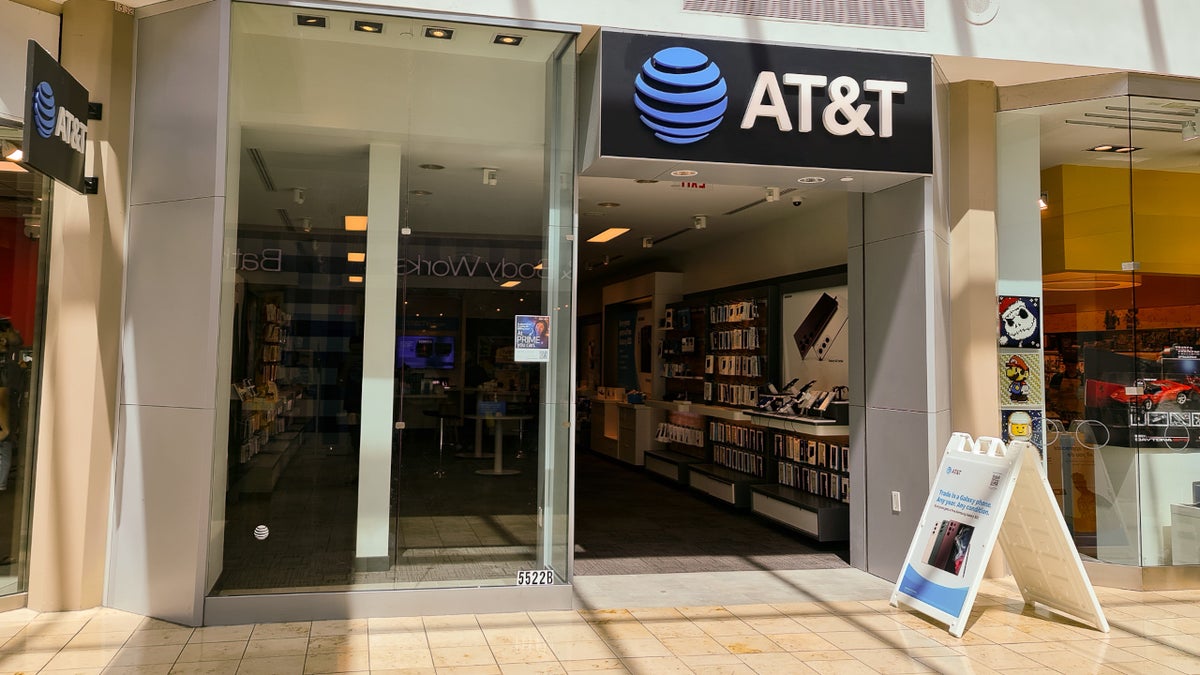
AT&T in wild battle over California copper networks. | Image by PhoneArena
Last month we told you that California requires AT&T to spend $1 billion annually to provide an outdated copper wire telephone network in the state. This is not money that AT&T wants to spend considering the obsolete network is barely used. As a result, AT&T filed a lawsuit against the California Public Utilities Commission (CPUC) and the state attorney general in an attempt to get the state to allow AT&T to stop offering its wireline service to potential customers in its territory.
Besides suing California and the CPUC, AT&T petitioned the FCC
In addition to filing the suit, AT&T submitted a petition with the Federal Communications Commission (FCC) asking the federal regulator to declare that California cannot enforce its rules and that AT&T should be allowed to stop providing service to 199,000 phone customers. In the filing, AT&T wrote, "in California, the aging, fragile, and expensive copper lines are still there, frozen in time by California regulations enacted by prior generations for the benefit of prior generations."
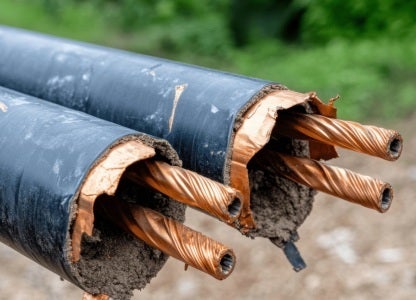
AT&T's obsolete copper wire network is the target of thieves in California.| Image by AT&T
For its part, California says that it is allowing AT&T to replace copper wiring with modern technology such as fiber. However, AT&T maintains that the state is demanding that AT&T use the old copper wiring. The carrier told the FCC in a separate filing that "California requires AT&T to continue offering POTS [Plain Old Telephone Service] throughout its territory."
AT&T has not shown, however, that the indoor mobile voice coverage in the affected areas—as opposed to the outdoor coverage—is sufficient to render wireless service an adequate substitute for AT&T’s wireline residential and business services.
State of California
State regulators accuse AT&T of lying to the FCC
Reports on Wednesday say that state regulators are accusing AT&T of lying to the FCC in an attempt to get rid of its old copper network without offering an acceptable replacement. In a filing made on June 15 by the state of California and the California Public Utilities Commission, the state and the regulators wrote, "AT&T asserts that California seeks to prohibit or hinder wireline carriers from discontinuing copper facilities and investing in fiber. Indeed, AT&T has been making this argument for years. It is not and has never been true."
What should the FCC do?
31 Votes
Allow AT&T to shutdown its copper phone networks
22.58%
Allow AT&T to replace its copper phone lines with wireless
32.26%
Force AT&T to serve certain customers using copper
22.58%
Something else
22.58%
California told the FCC that in 2008 the CPUC declined to add rules that would prevent carriers from replacing copper wires with fiber. In the decision, California and CPUC said that allowing such a rule to exist would "discourage and delay fiber systems from being built in California, contrary to clear state legislative direction to bring affordable and widespread high quality communications services to all Californians."
Various coverage maps failed to prove that AT&T's wireless service could sufficiently replace its copper network
The state says that AT&T's goal is to replace copper networks in California with wireless service in areas where replacing copper with fiber would not be profitable enough. The state claims that AT&T's wireless service is not a sufficient replacement for wired phone service.
AT&T failed to prove that its wireless service had enough coverage to adequately replace its copper wire service. First, AT&T showed the state the FCC’s National Broadband Map to claim that its wireless coverage could replace landlines. But as California noted, this map "displays broadband, not voice, coverage."
So AT&T next tried the FCC’s Mobile LTE Coverage Map since it displays voice coverage. However, a disclaimer pointed out that the map "depicts the coverage a customer can expect to receive when outdoors and stationary." As a result, this map "is not meant to reflect where service is available when a user is indoors." Remember, AT&T needs to replace a copper wired network used by landline phones that are used indoors.
The carrier tried to use its own coverage map to prove to California that its wireless service can do the job of replacing the copper-powered landlines. But the state found a disclaimer on the wireless provider's website that says the map shows approximate outdoor coverage and "is not meant to reflect where service is available when a user is indoors."
California notes that buildings and walls can obstruct wireless signals. The state added that, "mobile service provider maps cannot reliably determine that a wireless service is an adequate replacement for a wireline service without further proof of indoor coverage."
AT&T may have a secret sauce
California says that AT&T's wireless technology doesn't meet FCC requirements to be an adequate replacement for landline. The state wants the FCC to demand that AT&T "confirm with a high level of certainty that mobile coverage will be available to affected customers indoors, not simply outdoors."
However, AT&T may have the upper hand here considering that under the regulatory agency's Chairman, Brendan Carr, the FCC already issued an order making it easier for carriers to stop using copper networks. And state laws that conflict with the FCC's authorizations can be preempted. That surely would lead California to sue the FCC.


Popular stories





Latest News





Things that are NOT allowed:
To help keep our community safe and free from spam, we apply temporary limits to newly created accounts: