Why you can't bypass AT&T, T-Mobile, and Verizon when leasing an iPhone
Even with Klarna as a financial backer, Apple won't let you lease an iPhone unless you are with a Big Three carrier.
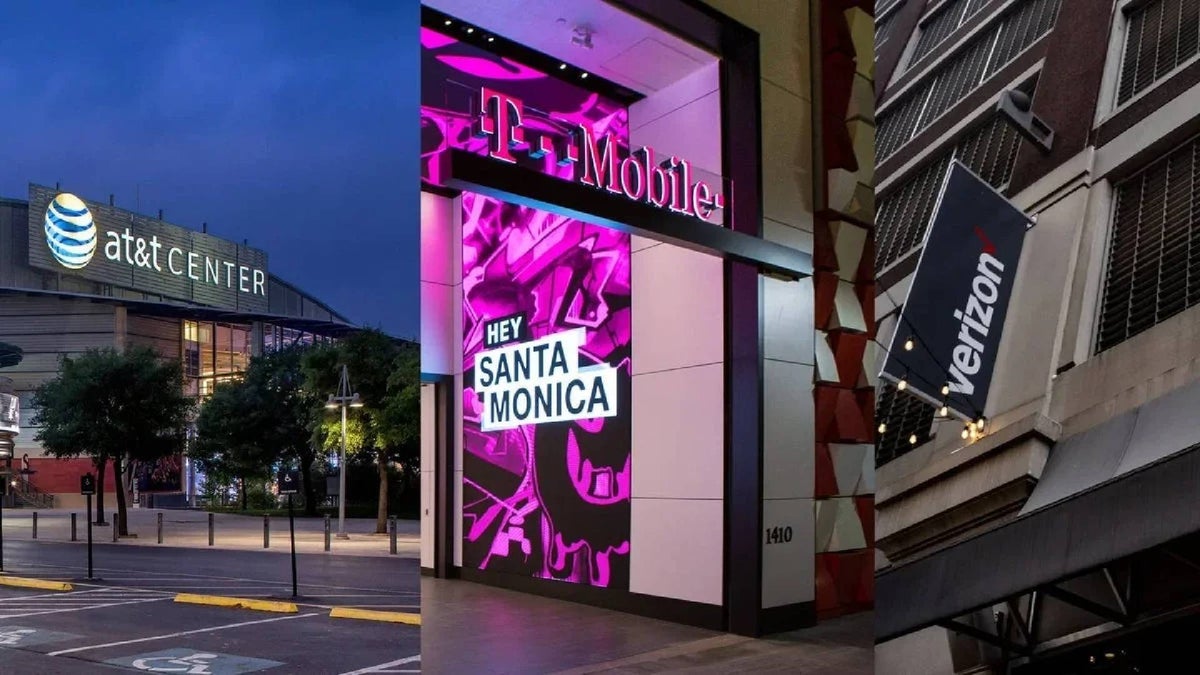
Apple has its reasons | Image by PhoneArena
When Apple introduced its new leasing program, I thought it might finally be consumers' ticket to getting a new iPhone without carrier reliance. I was wrong.
To be eligible for Apple Upgrade, you need an account with AT&T, T-Mobile, or Verizon. Apple has partnered with financial technology company Klarna to launch the program, so the role of the Big Three carriers might seem unwarranted. A former Apple employee just cleared up the mystery.
A Daring Fireball reader who was formerly part of Apple's carrier team has explained why an AT&T, T-Mobile, or Verizon account is mandatory. Each of these carriers pays Apple hundreds of millions of dollars to get promotions and preferential treatment, such as exclusivity for the Apple Upgrade program.
Apple seems to be sidelining Mobile Virtual Network Operators (MVNOs) to increase the value of the package it offers to the Big Three. The move also sets the expectation that any future budget carrier partner will have to play by Apple's rules.
Two main reasons
A Daring Fireball reader who was formerly part of Apple's carrier team has explained why an AT&T, T-Mobile, or Verizon account is mandatory. Each of these carriers pays Apple hundreds of millions of dollars to get promotions and preferential treatment, such as exclusivity for the Apple Upgrade program.
In response to your question on why Apple would only offer iPhone on the “Big 3” for the new Upgrade Program: Every year, the Carrier Teams at Apple negotiate a deal/program (hundreds of millions of dollars) with each of those Big 3. In return for those dollars, Apple will make concessions exactly like this (or similar.)
A former Apple employee, August 2026
The second reason is that the major providers run rigorous checks on postpaid customers. Making it mandatory to go through them insulates Apple from financial risk.
A former retail employee who left Apple in 2019 noted that fraud surged when carrier financing launched in stores. Scammers used stolen identities to finance flagship iPhones. Though the activation requirement was something of a deterrent, carriers had to bear losses amounting to millions of dollars. They have gotten better at detecting and preventing fraud since then.
As bad as it was with the activation requirement, it would be way worse without it. I believe it’s gotten a lot better, and the carriers have more advanced systems in place to detect and deter this behavior now. But ultimately, the carriers ate the cost for millions of dollars in devices they never got paid for.
A former Apple employee, August 2026
How does the carrier requirement influence your view of Apple Upgrade?
111 Votes
Makes it useless.
45.95%
Makes me hesitate.
22.52%
Doesn't matter.
31.53%
Is theft really the issue?
The theft threat is the primary reason the Federal Communications Commission backed away from imposing a uniform unlocking policy.
Yet AT&T and T-Mobile still fight fraud despite locking phones. Besides, carriers can also use IMEI blacklisting to block stolen phones from connecting to a cellular network.
It can also be argued that stopping criminal rings should be left to law enforcement agencies.
Back to square one
The appeal of Apple Upgrade is that you can get your hands on a new iPhone every year. With carrier financing, the minimum wait is two to three years, and you are also required to be on the most expensive plans to finance the latest devices.
No escaping the system
The upcoming iPhone 18 Pro could see a price hike of up to $300 . This means buying a device upfront won't be an option for everyone. In that light, the carrier requirement is a small compromise for anyone used to upgrading every year.
Read more about the Big Three's influence:
- The FCC came close to imposing a shorter unlocking period
- It eventually backed off
- SpaceX is calling out the behavior


Popular stories

Latest News

Things that are NOT allowed:
To help keep our community safe and free from spam, we apply temporary limits to newly created accounts: