Samsung Galaxy Z Flip 8 vs Motorola Razr Ultra (2026): first look
OK, the Galaxy Z Flip 8 is a sleek, glass and aluminum jewel. But the Moto Razr Ultra (2026) is such a good competitor!
We may earn a commission if you make a purchase from the links on this page.
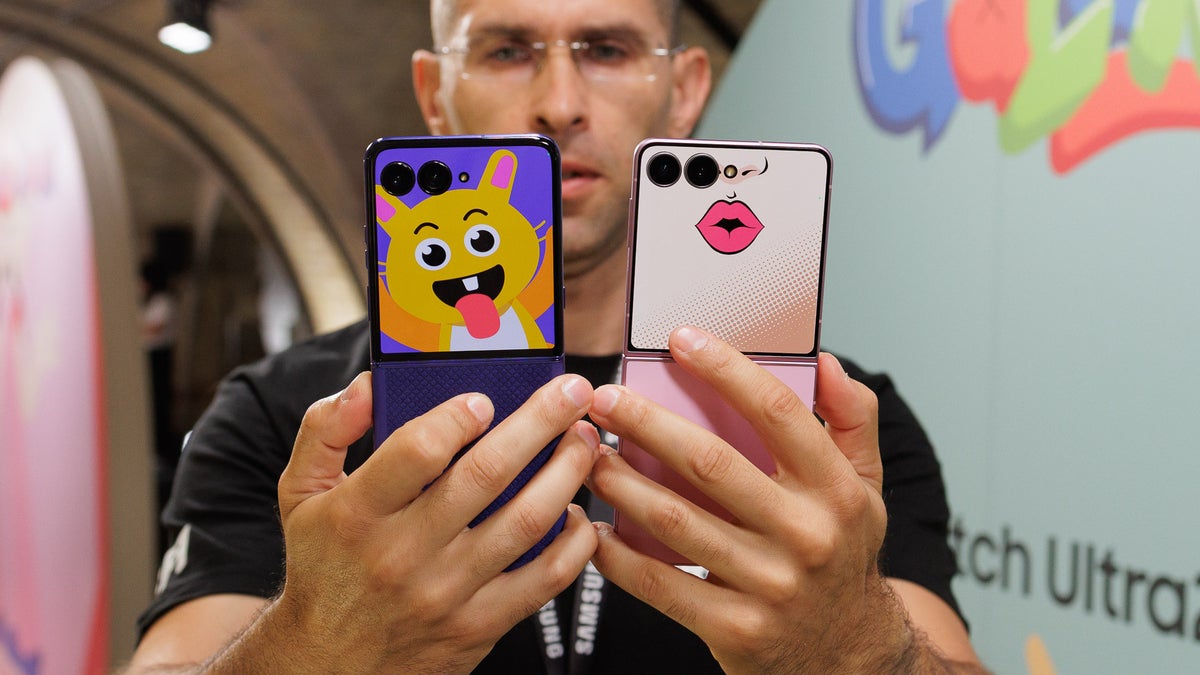
The Flip wars! | Image by PhoneArena
Samsung just released its newest and slightly upgraded Galaxy Z Flip 8. Keeping it modern and still figuring out what to do with the cover screen (the Flex Screen), Samsung found a way to make the new Flip feel fresh, despite it lacking big hardware upgrades. But hey, the Z Flip 7 was already a gem, how do you improve upon that?
Well, while I am not sure how, Samsung definitely needs to find ways to constantly innovate here. The Motorola Razr units are coming out each year and Moto hasn't been shying away from the premium category. Excellent finishes, excellent screens, and a pretty sound architecture make the Razr Ultra (2026) a competitor to be reckoned with.
The Galaxy Z Flip 8 is still fresh, still a way to go until it reaches our benchmarks lab. But now that we got to touch it, here are our first impressions:
Samsung Galaxy Z Flip 8 vs Motorola Razr Ultra (2026) differences:
| Samsung Galaxy Z Flip 8 | Motorola Razr Ultra (2026) |
|---|---|
| Edge-to-edge 4.1" cover screen with even thinner bezels | Edge-to-edge 4-inch cover screen |
| Slightly smaller 6.9" main screen with 120Hz | 7-inch main screen with 165Hz refresh rate |
| Exynos 2500 processor | Snapdragon 8 Elite chip |
| 12GB of RAM across models | 16GB of RAM |
| Prices start from $1,100 for 256GB version | Prices from $1,499 for 512GB |
| Samsung DeX | - |
| Longer software update support, 7 years | Only 3 years of software updates (4 years security) |
Table of Contents:
Also read:
- Motorola Razr Ultra (2026) Review
Design and Size
Samsung is fixing up little quirks
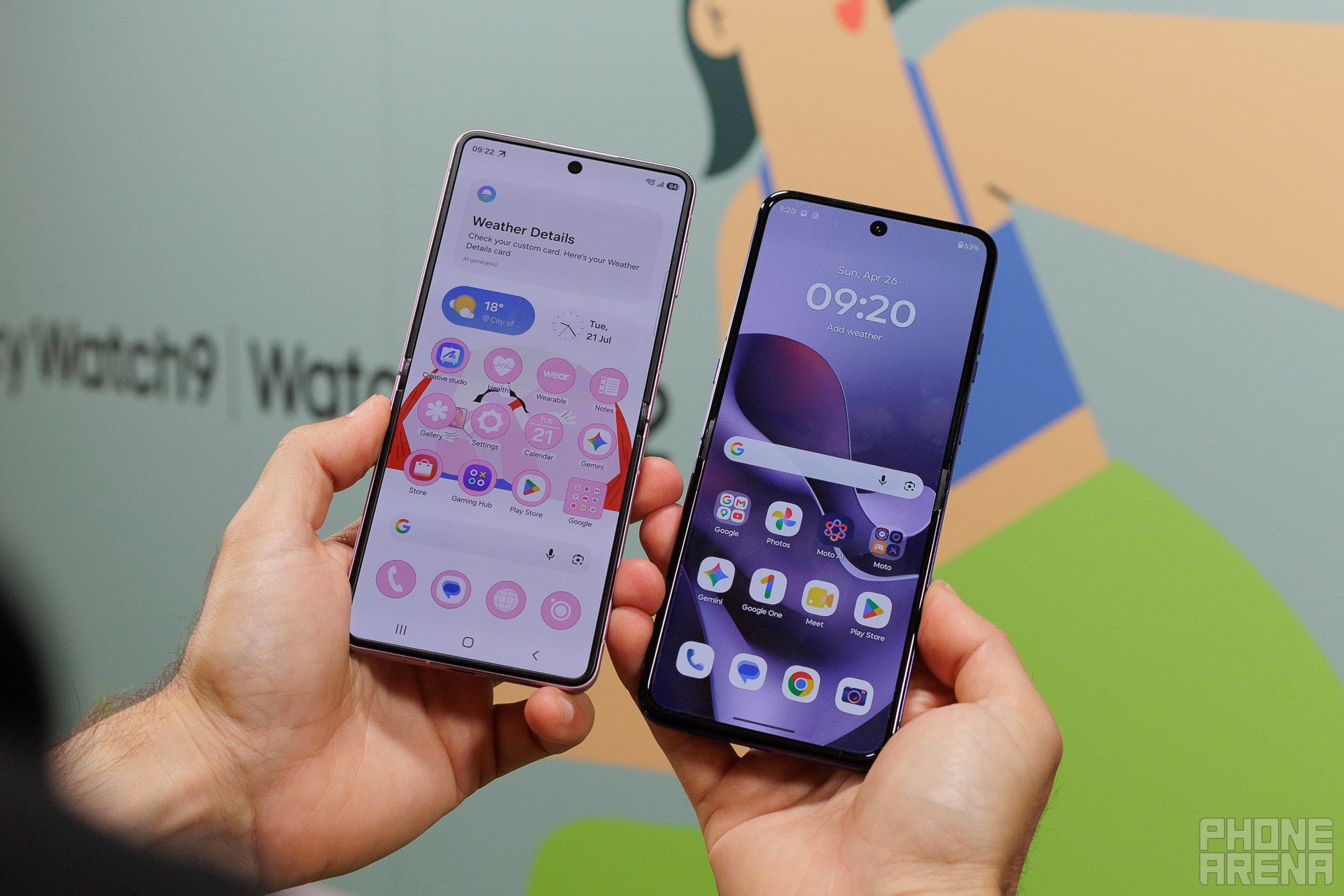
Pretty close! | Image by PhoneArena
The Galaxy Z Flip 7 and Z Fold 7 were great new designs that had one little issue — it was a bit hard to pry apart their separate flaps in order to unfold them. Some users even went as far as to install small pieces of grip tape on the edges of their devices.
The Z Flip 8 successfully addresses that by adding a small bevel around the frame of the device. When closed, said bevel acts as a guiding channel that allows you to slip a finger in and force it open.
The Motorola Razr models don't have this problem because they typically come with rounded sides, that are easy to pry apart.
Razr was first to make an edge-to-edge external screen, and used Android's adaptability to simply run a full Android UI on it. Whatever app you want to run — the cover screen can run it.
Samsung first tried a bunch of experiments with proprietary widgets and tickers for the external display. But, since the Z Flip 7 last year, it also makes a full, edge-to-edge screen. By default, however, the Flex Screen still wants you to use it as an information hub with different widget layouts. You can dive in and force it to be a fully functional Android UI with Good Lock — Samsung's official modding app for power users —, if you wanted that.
Samsung's hinge again feels sturdier and more precise than the one on the Razr. The Motorola opens and closes with a very soft, springy action. And it allows for less angles in semi-open state. The Galaxy Z Flip 7 allows for a wider angle of adjustment and snaps with more precision, both on the open and the close.
In terms of buttons, Motorola went over the top this year. There's an extra key on the left that's only an AI button, used to call up Moto AI. You can't re-map it. And yes, the power button still calls up Gemini, too, so you will find this redundant. Samsung learned its lesson long ago with the Bixby key, which is why the Z Flip 8 has a clean layour with just volume and power buttons.
Display Differences
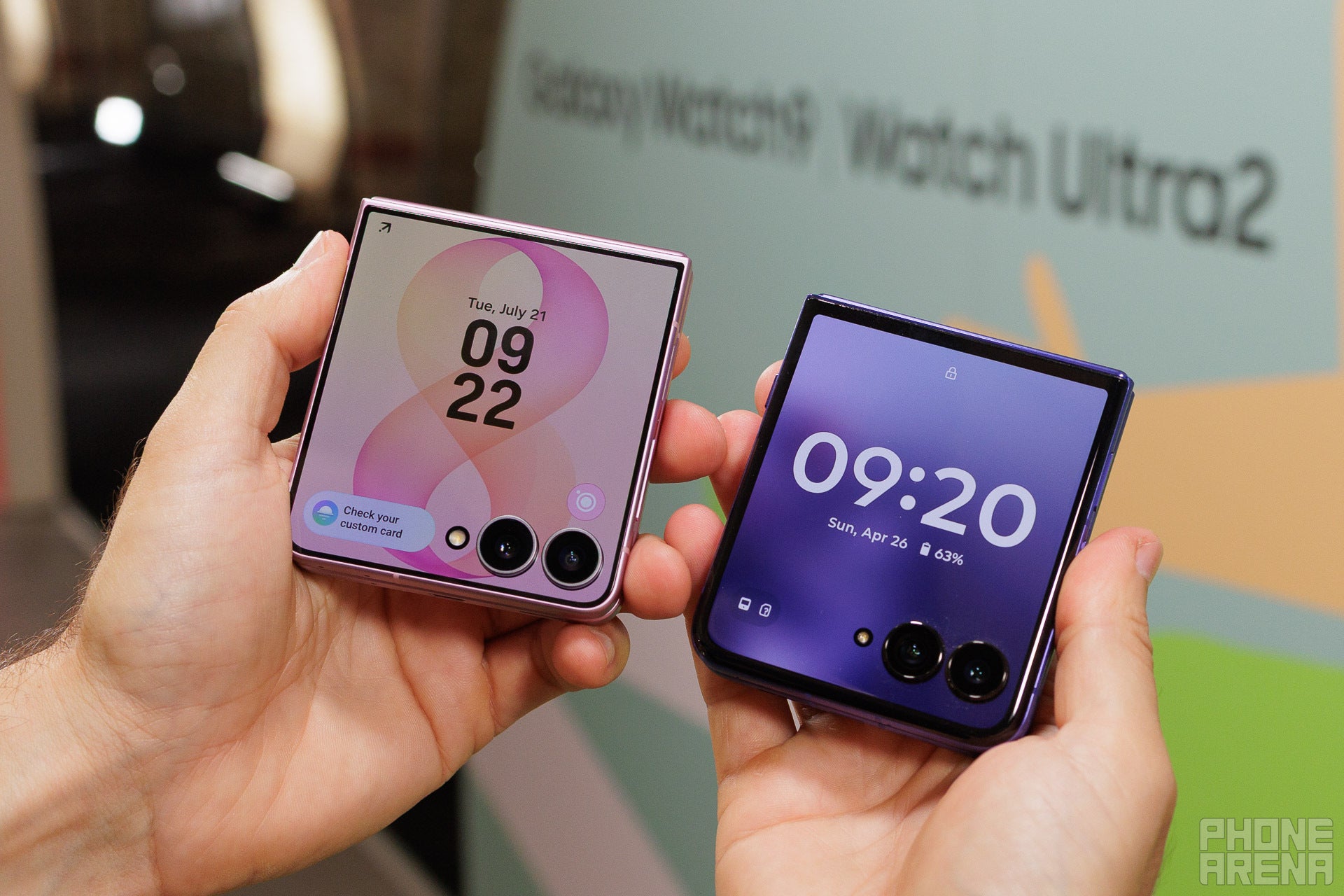
Edge-to-edge cover screens | Image by PhoneArena
The Samsung has slightly thinner bezels here, with a 4.1" cover screen, where the Moto is rounded off at 4". Minor difference, nothing to write home about.
On the main display side, the Motorola recoups that difference with a 7-inch diagonal vs 6.9" on the Samsung. Now, for bragging rights, the Razr Fold (2026) also offers up to 165 Hz refresh rate. The Galaxy Z Flip 7 caps at 120 Hz. I dare argue one can't see the difference in regular phone operation, but the numbers are there.
As for the crease down the middle, Samsung has done a great job at minimizing it. It's still there, but less prominent than the Moto Razr Fold crease. Which in itself isn't that bad, but hey, we are counting nits here.
As for biometrics, both phones rely on a traditional fingerprint reader embedded in the power button on the side. Nothing to note here — both are accurate and fast.
Performance and Software
The first 2nm chip!
Samsung has decided to power its Z Flip series with its own homemade Exynos chips. The big news this year is that the Exynos 2600 that hums inside the Galaxy Z Flip 8 is the first mobile processor built on a 2 nm process. More power, more efficiency, more heat which Samsung says it handled gracefully.
Motorola bets on the outsourced Qualcomm chips, with a Snapdragon 8 Elite Gen 5 powering the Razr Ultra (2026). And yeah, it flies.
Good note to make, the Razr Ultra (2026) comes in one memory option — 512 GB, with 16 GB of RAM. That's it. The Z Flip 7 will be available in 256 GB and 512 GB, but both tiers have 12 GB of RAM.
As for software, the AI race is going strong and Samsung is determined to be in the lead. The new Galaxy AI features in One UI 9 double down on the "agentic" functionality — having the phone's AI reach across multiple apps to perform tasks. Samsung says you can achieve more with the Z Flip 8 without even unfolding the phone — just ask it to do things. Reserve a table for lunch. Find a specific picture. So on.
Now Nudge has also been updated to be more proactive and serve you more relevant information at a glance — either on the Flex Sceen or as you open up the phone.
Motorola, on the other hand, is behind on the AI race. It has an integraded Moto AI, which has a couple of note-taking and summary functions. But for any demanding tasks, it directly diverts your request to Perplexity or Microsoft Copilot. Making it even more... perplexing why that phone has its own AI button.
Fir the software experience, Samsung's One UI 9 is still that heavy, feature-rich, customizable skin over Android 17. And the Z Flip 9 will be receiving new OS versions for the next 7 years. The Moto Razr Ultra (2026) has a cleaner Android experience, typical for Motorola. But only a 3 build update promise, and 4 years of security patches.
Camera
Same setup
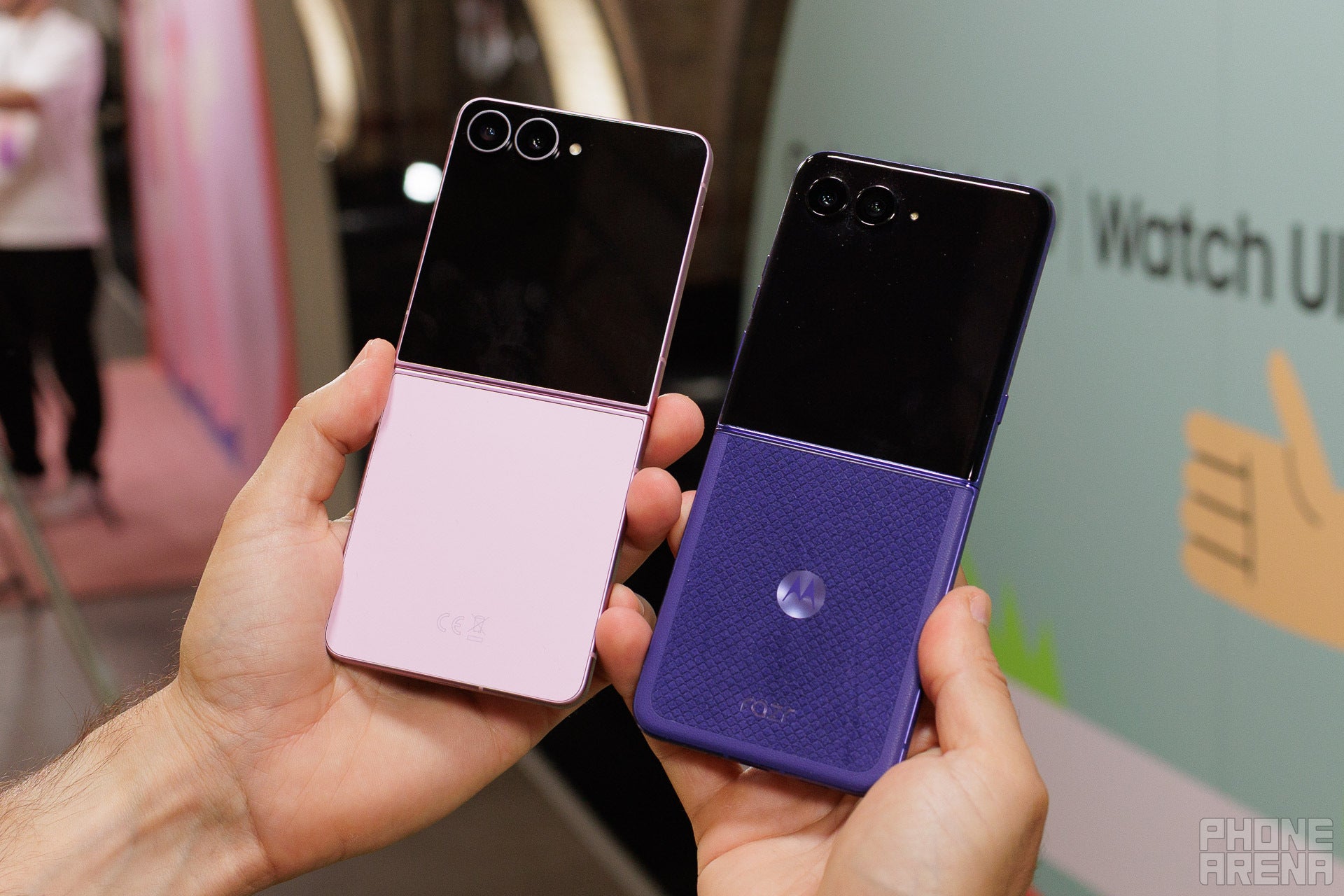
Dual cams on both | Image by PhoneArena
Flip phones aren't meant to be amazing camera phones. They have to be thin and light and appealing. But still, manufacturers try to do what they can to alleviate that feeling of compromise you may have looming over you.
And, so far, Samsung has been doing a better job in this field. Its post-processing is finely tuned, and the AI editing features you have after taking the picture are... not only richer, they are just there. And there's the Super Steady mode for video, which is quite magical and... well, super steady. Motorola has some gaining up to do here.
But that's all speaking from past experience. We have yet to spend the time with the Galaxy Z Flip 8, stay tuned to this space for the full samples comparison when we are done clicking the shutters.
For the raw specs, the Samsung Galaxy Z Flip 8 has a 50 MP main camera, 12 MP ultra-wide camera, and then a 10 MP snapper on the front. The Moto Razr Ultra (2026) has a 50 MP main, 50 MP ultra-wide, and 50 MP selfie camera. Interesting numbers, we are curious to look for quality differences in those ultra-wide and selfie cameras.
Battery Life and Charging
Motorola running laps
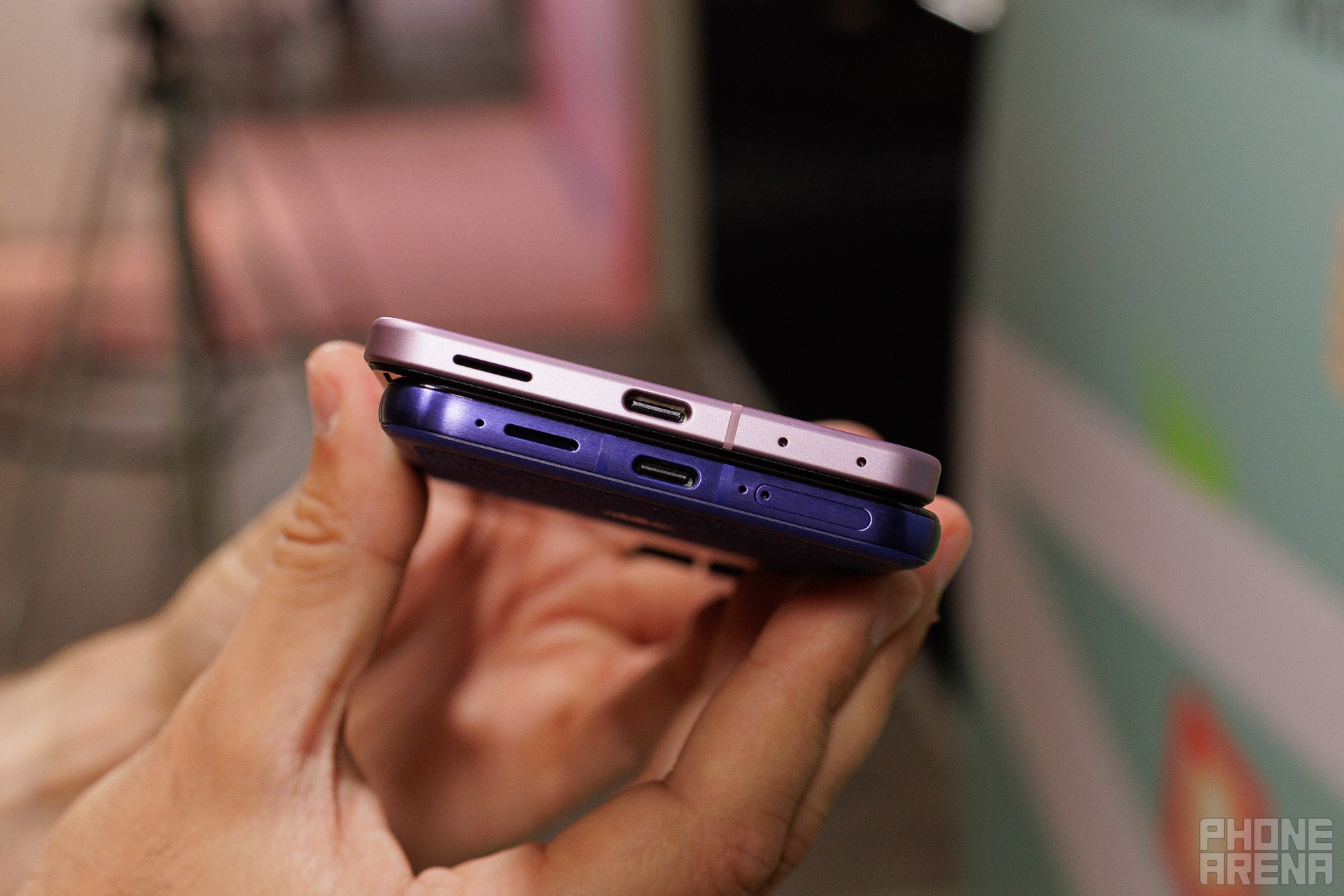
Moto has the faster charging | Image by PhoneArena
Motorola somehow managed to fit a large 4,700 mAh battery in that tiny foldable. Meanwhile, Samsung is still betting on the safe-and-tested 4,300 mAh cell that was also in last year's Z Flip 7.
Now, it's worth noting that the 2nm Exynos 2600 may be more energy efficient than its predecessor.
But what Samsung can't beat is Motorola's turbo charging — 68 W on the wire and 30 W wireless, provided you have a compatible wireless charging. The Z Flip 8 still sticks to 25 W wired and 15 W wireless. Not terrible, but definitely outrun by the competition. Both offer reverse wireless charging at 5 W.
Specs Comparison
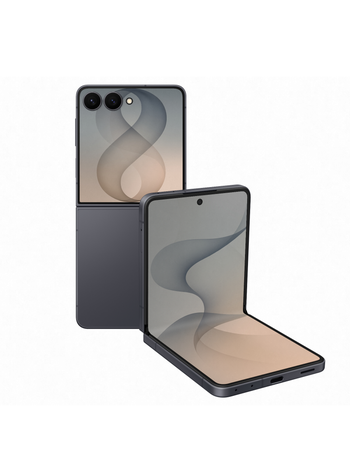
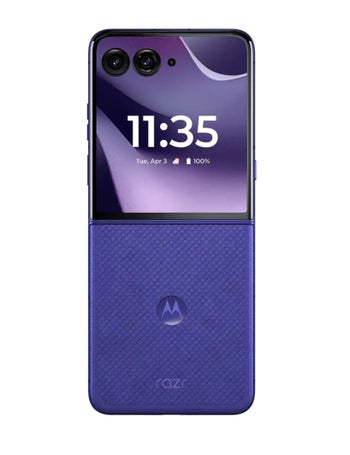
And here is an overview of the Galaxy Z Flip 8 vs Motorola Rarz Ultra (2026) specs:
|
|
| Samsung Galaxy Z Flip 8 | Motorola Razr Ultra (2026) |
| Dimensions | |
|---|---|
| 166.9 x 75.4 x 6.1 mm (~8.05 mm with camera bump) | 171.48 × 73.99 × 7.19 mm (~8.99 mm with camera bump) |
| Weight | |
| 180.0 g | 199.0 g |
| Size | |
|---|---|
| 6.9-inch | 7.0-inch |
| Type | |
| Dynamic AMOLED, 120Hz | AMOLED, 165Hz |
| System chip | |
|---|---|
| Samsung Exynos 2600 S5E9965 (2 nm) | Snapdragon 8 Elite SM8750-AC (3 nm) |
| Memory | |
| 12GB (LPDDR5X)/256GB (UFS 4.0) 12GB/512GB |
16GB (LPDDR5X)/512GB (UFS 4.0) |
| OS | |
| Android (17), up to 7 OS updates | Android (16), up to 3 OS updates |
| Type | |
|---|---|
| 4300 mAh | 5000 mAh |
| Charge speed | |
| Wired: 25.0W Wireless: 15.0W |
Wired: 68.0W Wireless: 30.0W |
| Main camera | |
|---|---|
| 50 MP (OIS, PDAF) Sensor name: Samsung ISOCELL GN3 Aperture size: F1.8 Focal length: 23 mm Sensor size: 1/1.57" Pixel size: 1.0 μm | 50 MP (OIS, PDAF) Aperture size: F1.8 Focal length: 24 mm Sensor size: 1/1.56" Pixel size: 1.0 μm |
| Second camera | |
| 12 MP (Ultra-wide) Sensor name: Samsung S5K3LU Aperture size: F2.2 Focal Length: 13 mm Sensor size: 1/3.2" Pixel size: 1.12 μm |
50 MP (Ultra-wide, PDAF) Aperture size: F2.0 Focal Length: 12 mm Sensor size: 1/2.93" Pixel size: 0.6 μm |
| Front | |
| 10 MP | 50 MP |
See the full
Samsung Galaxy Z Flip 8 vs Motorola Razr Ultra (2026) specs comparison
or compare them to other phones using our
Phone Comparison tool
Summary
Motorola's Razr Ultra definitely has its selling points. It offers fun and premium finishes. Its take on the software is much lighter and closer to stock Android. And it's just a "different" option when you don't want to be stuck in the mainstream "Samsung or Apple?" loop.
But Samsung has been hard at work innovating and improving its foldables. We can't waive the Z Flip 8 away as a "marketing hero" — the phone has the hardware chops and the software to boost it beyond.
We do want to torture-test that Exynos chip and to check out the camera performance. Thus far, the Z Flip 8 is looking like a good 2026 clamshell contender.
Since a lot of the experience with these phones involves the hinge feel, I would recommend trying them out in a store if possible. If camera is a priority, I'd also lean towards the Samsung. But if the classy looks of the Razr Ultra are hard to ignore — I wouldn't blame you for picking one of those up!
Either way, full tests pending!


Related Content



Popular stories


Latest News

Things that are NOT allowed:
To help keep our community safe and free from spam, we apply temporary limits to newly created accounts: