Samsung Galaxy Buds 4 Pro vs Galaxy Buds 3 Pro: the upgrade we wanted?
Are the Galaxy Buds 4 Pro a true-to-heart improvement?
We may earn a commission if you make a purchase from the links on this page.
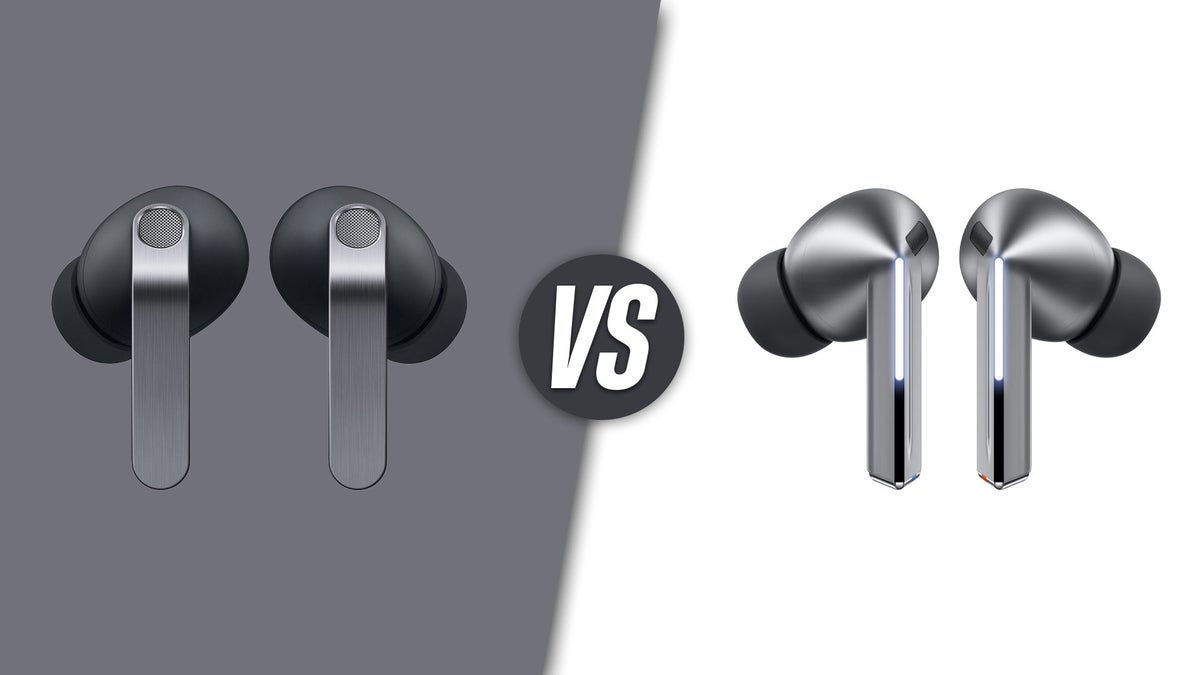
No more glowsticks | Image by Samsung
Samsung’s Galaxy Buds 4 Pro were just announced and, on paper, it looks like Samsung has addressed a lot of pain points.
New design, new fit, promises of a new sound, and possibly multi-connectivity across your Android devices.
Here’s what we know and how they will compare to the old Galaxy Buds 3 Pro:
Table of contents:
The Galaxy Buds 4 Pro are, again, buds with stems — unlike older models like the Buds 2 that were stemless. However, the new design is refined to look more tech-y and elegant, compared to the tacky plastic with glowing LED that was controversial on the Galaxy Buds 3 Pro.
Now, the Buds 4 Pro have a flat stem, covered by a layer of brushed metal on the outside. The stems are still used to control audio — pinch for multimedia control and swipe for volume levels, just like on the Buds 3 Pro. There’s an added tactile groove to make it easier to find the exact pinch area by hand.
Overall, the new model looks slightly smaller, more elegant, and definitely shows higher build quality. The plastic Galaxy Buds 3 Pro with their misaligned seals instantly look inferior.
Samsung says it used more than 100 million ear scan data points and 10,000 virtual simulations to find the perfect fit for the Galaxy Buds 4 Pro. That’s music to my ears, as I do have trouble keeping most earbuds in. And while the Buds 3 Pro were comfortable, they did have a tendency to slip out of my ears specifically.
The fit of the Galaxy Buds 4 Pro is pretty good so far. They do lock in and don’t fall out. Even if I purposefully knock one slightly off position. They do apply slight pressure to the back of my ears, though, so I will be careful to watch for ear fatigue. In fairness, the AirPods Pro 3 also apply some pressure, but I was able to wear those for hours on end — hoping to get the same from the Galaxies.
The charging case design is now horizontal, made to lay flat instead of you having to insert the buds in vertically, like it was on the Galaxy Buds 3 Pro. And, unlike the previous model, the Buds 4 Pro are not facing away from each other in the new case, which was honestly a baffling design decision on the 3 series. Ultimately, getting the new buds from the case and inside your ears should take much less fiddling (and drops).
The lid is still transparent, which looks nice for sure, but still raises concerns about how it’s going to look after the plastic accumulates some scratches.
While the buds themselves have IP57 ratings — meaning they can keep bigger dust particles out, and can survive a dip in a puddle — the cases themselves do not.
Samsung did say it is aware of how important sound quality is for users looking to buy new earbuds. Which is why the Galaxy Buds 4 Pro sound system was reworked again.
It’s still a two-way speaker system with a dynamic woofer and planar tweeter. The woofer has grown a bit — to 11 mm, from 10.5 mm on the Buds 3 Pro. But the planar tweeter has shrunk to 5.5 mm from 6.1 mm.
That’s not necessarily a bad thing, as acoustics and tuning still play a huge role. In fact, even the dual-driver spec shouldn’t wow you by itself until you get to hear the actual result.
The Galaxy Buds 3 Pro did have the tendency to have a boosted bass, carved-out mids, and a sibilance in the highs that wasn’t harsh per se, but still hard to dial out without killing the earbuds’ clarity or excitedness.
The Galaxy Buds 4 Pro sound instantly better. The bass isn’t tamed, but it’s slightly more focused, reducing the feeling of “spillover” that makes music a bit mushy. The presence in the highs is extended but also not as harsh as on the Buds 3 Pro. This, combined with the superior fit, makes me pick the Buds 4 Pro over the older model every time I reach towards the earphones table.
The Galaxy Buds 4 Pro come with a new Adaptive ANC 2.0. Instead of using a few pre-set algorithms, like the Adaptive ANC in the Buds 3 Pro, it will actively monitor your environmental noises and tune itself to attack the specific frequencies it needs to.
In fairness, both buds have pretty good noise cancelation. I do feel like it’s a bit deeper on the Buds 4 Pro. But, again, that could also be the improved fit providing a better mechanical isolation to begin with.
Otherwise, both sets come with Adaptive EQ, which monitors earbud placement and ear shape to fine-tune the frequency response. I tested it by knocking the buds out of position, and I did indeed hear them auto-adjust their bass. It seemed more dramatic on the Buds 4 Pro.
The Galaxy Wearable app still has a custom EQ for you to fine-tune to your needs for both these models.
If you are rocking a Samsung phone, you will get to enjoy the Samsung Seamless Codec, for a 24-bit, 96 kHz sound quality. For any other phones, both these buds support AAC, and I dare argue that few people will be able to hear a difference.
The Galaxy Buds 4 Pro now support dual-band Bluetooth for voice calls, if you have them paired to a Samsung phone. It should be able to beam clearer voice, covering frequencies all the way up to 16 kHz. That’s higher than you even need to go, which is typically 10 kHz. It should make your voice clearer with better representation of sounds like “s”, “f”, “th”, et cetera.
For non-Samsung phones, it still supports LC3, which is leaps better than the old SBC codec for calls.
To be fair, the Galaxy Buds 3 Pro also already supported LC3, so it’d be interesting to test how much of an improvement the new dual-band Bluetooth transmission is.
As for the hardware, both of these Pro models are equipped with high signal-to-noise ratio microphones, to assist the software noise reduction from the very source.
Nod and shake — taking a page off the AirPods’ book, the Galaxy Buds 4 Pro will now be able to accept or reject calls via a head nod or shake, respectively. It is currently unknown if this will be added to the Buds 3 Pro via an update.
What the Buds 3 Pro did have, though, was voice commands, such as “next song”, “volume up”, et cetera. These were surprisingly handy while carrying two bags of groceries and I see no reason they wouldn’t also be on the Buds 4 Pro.
Dual AI support — on the Galaxy Buds 4 Pro, you will be able to call up both Gemini and Bixby by just uttering the assistant’s name. No need to select one or the other in settings. Worth noting, that feature will be off by default, so your buds won’t be actively listening for AI prompts straight from the box.
Live Interpreter — this feature is present on the Galaxy Buds 3 Pro and is coming to the Buds 4 Pro. It actively translates 22 languages, whether it be a real-world conversation or a phone call. They do need a Galaxy phone to process the translations, though.
The Galaxy Buds 4 Pro come with Bluetooth 6.1, which is brand-new — introduced in May of 2025. It’s more of a “behind the scenes” update that improves device handshake stability and offloads work from the processor to keep things running smoothly. BT 6 before it was focused on improving spatial audio and energy efficiency.
But it also has privacy updates that’d make it harder for malicious actors to track your Bluetooth devices, all the while it improves the speed and responsiveness of “SmartThings Find” features.
Ironically, the Galaxy Buds 4 Pro case does not have an embedded speaker to make that “Find My” process easier.
The Galaxy Buds 3 Pro are on the Bluetooth 5.4 standard, which still can’t be called “old”, at the rate at which wireless audio is moving. It’s still a dominant high-end standard, and some new earbuds don’t even launch with 5.4.
It’s worth noting that both of these models don’t support the LDAC codec. While AAC is a perfectly good option for energy-efficiency and sound quality, some users swear by their LDAC. However, if you do own a Samsung phone, you should be happy with the Samsung Seamless Codec with 24-bit, 96 kHz audio.
Samsung is trying to walk a fine line between creating its own ecosystem but also not looking to offend a market that is now much more interested in “open” devices that don’t lock you in.
The Galaxy Buds 3 Pro did not have Bluetooth multipoint, which is more or less an industry standard nowadays. That’s the tech that allows you to connect to two devices simultaneously, and not need to fiddle with Bluetooth settings when you want to swap from your phone to your laptop.
They did feature seamless connectivity if all your devices happened to be Samsung-made — like Apple and its AirPods.
But there was also a secret feature — any Android phone with the Galaxy Wearable app on it and your Samsung account logged in could seamlessly swap to them. Well, it did require you to open the app and tap on the earbuds, but it’s still infinitely more convenient than swapping Bluetooth pairings.
The Galaxy Buds 4 Pro also have this feature, and this time Samsung seems to be putting a little bit more emphasis on it. Just to make sure it’s not a secret.
The in-bud batteries on the Buds 4 Pro have grown to 61 mAh from 53 mAh, but battery life specs have not changed. Despite the new Bluetooth standard used, too.
So, for both of these models Samsung says: 6 hours from the buds with ANC on, 7 hours with it off. With the case, it's 26 hours total with ANC on, 30 hours with it off.
Right now, things are looking up for the Buds 4 Pro. I have been wearing them for a full day with minimal ear fatigue, and I haven't touched the custom EQ yet. I know I am not reaching for the Galaxy Buds 3 Pro over these...
If you like your Buds 3 Pro and have adjusted your EQ just right, they are still a fine pair of earbuds. There's technically no rush to upgrade, though it'd be nice. And for new shoppers — I recommend the new Galaxy Buds 4 Pro model.
New design, new fit, promises of a new sound, and possibly multi-connectivity across your Android devices.
Here’s what we know and how they will compare to the old Galaxy Buds 3 Pro:
Table of contents:
Galaxy Buds 4 Pro vs Galaxy Buds 3 Pro specs:
| Galaxy Buds 4 Pro | Galaxy Buds 3 Pro | |
|---|---|---|
| Color options | Black, White, Pink Gold | Black, Silver |
| Audio | Dual driver: 11 mm woofer 5.5 mm planar tweeter | Dual driver: 10.5 mm 6.1 mm planar tweeter |
| Codecs | SSC, SSC UHQ, AAC SBC, LC3 | SSC, SSC UHQ, AAC SBC, LC3 |
| Connectivity | Bluetooth 6.1 Auto-switch (Samsung account) | Bluetooth 5.4 Auto-switch (Samsung account) |
| Battery life | ANC On: Buds - 6 hours With case - 26 hours ANC Off: Buds - 7 hours With case - 30 hours | ANC On: Buds - 6 hours With case - 26 hours ANC Off: Buds - 7 hours With case - 30 hours |
| Ingress protection | IP57 | IP57 |
Galaxy Buds 4 Pro vs Galaxy Buds 3 Pro design
The Galaxy Buds 4 Pro are, again, buds with stems — unlike older models like the Buds 2 that were stemless. However, the new design is refined to look more tech-y and elegant, compared to the tacky plastic with glowing LED that was controversial on the Galaxy Buds 3 Pro.
Overall, the new model looks slightly smaller, more elegant, and definitely shows higher build quality. The plastic Galaxy Buds 3 Pro with their misaligned seals instantly look inferior.
Samsung says it used more than 100 million ear scan data points and 10,000 virtual simulations to find the perfect fit for the Galaxy Buds 4 Pro. That’s music to my ears, as I do have trouble keeping most earbuds in. And while the Buds 3 Pro were comfortable, they did have a tendency to slip out of my ears specifically.
The charging case design is now horizontal, made to lay flat instead of you having to insert the buds in vertically, like it was on the Galaxy Buds 3 Pro. And, unlike the previous model, the Buds 4 Pro are not facing away from each other in the new case, which was honestly a baffling design decision on the 3 series. Ultimately, getting the new buds from the case and inside your ears should take much less fiddling (and drops).
While the buds themselves have IP57 ratings — meaning they can keep bigger dust particles out, and can survive a dip in a puddle — the cases themselves do not.
Galaxy Buds 4 Pro vs Galaxy Buds 3 Pro Sound and ANC
Samsung did say it is aware of how important sound quality is for users looking to buy new earbuds. Which is why the Galaxy Buds 4 Pro sound system was reworked again.
It’s still a two-way speaker system with a dynamic woofer and planar tweeter. The woofer has grown a bit — to 11 mm, from 10.5 mm on the Buds 3 Pro. But the planar tweeter has shrunk to 5.5 mm from 6.1 mm.
That’s not necessarily a bad thing, as acoustics and tuning still play a huge role. In fact, even the dual-driver spec shouldn’t wow you by itself until you get to hear the actual result.
The Galaxy Buds 4 Pro sound instantly better. The bass isn’t tamed, but it’s slightly more focused, reducing the feeling of “spillover” that makes music a bit mushy. The presence in the highs is extended but also not as harsh as on the Buds 3 Pro. This, combined with the superior fit, makes me pick the Buds 4 Pro over the older model every time I reach towards the earphones table.
Otherwise, both sets come with Adaptive EQ, which monitors earbud placement and ear shape to fine-tune the frequency response. I tested it by knocking the buds out of position, and I did indeed hear them auto-adjust their bass. It seemed more dramatic on the Buds 4 Pro.
The Galaxy Wearable app still has a custom EQ for you to fine-tune to your needs for both these models.
If you are rocking a Samsung phone, you will get to enjoy the Samsung Seamless Codec, for a 24-bit, 96 kHz sound quality. For any other phones, both these buds support AAC, and I dare argue that few people will be able to hear a difference.
Voice calls
The Galaxy Buds 4 Pro now support dual-band Bluetooth for voice calls, if you have them paired to a Samsung phone. It should be able to beam clearer voice, covering frequencies all the way up to 16 kHz. That’s higher than you even need to go, which is typically 10 kHz. It should make your voice clearer with better representation of sounds like “s”, “f”, “th”, et cetera.
To be fair, the Galaxy Buds 3 Pro also already supported LC3, so it’d be interesting to test how much of an improvement the new dual-band Bluetooth transmission is.
As for the hardware, both of these Pro models are equipped with high signal-to-noise ratio microphones, to assist the software noise reduction from the very source.
Special features
Nod and shake — taking a page off the AirPods’ book, the Galaxy Buds 4 Pro will now be able to accept or reject calls via a head nod or shake, respectively. It is currently unknown if this will be added to the Buds 3 Pro via an update.
What the Buds 3 Pro did have, though, was voice commands, such as “next song”, “volume up”, et cetera. These were surprisingly handy while carrying two bags of groceries and I see no reason they wouldn’t also be on the Buds 4 Pro.
Live Interpreter — this feature is present on the Galaxy Buds 3 Pro and is coming to the Buds 4 Pro. It actively translates 22 languages, whether it be a real-world conversation or a phone call. They do need a Galaxy phone to process the translations, though.
Galaxy Buds 4 Pro vs Galaxy Buds 3 Pro connectivity
The Galaxy Buds 4 Pro come with Bluetooth 6.1, which is brand-new — introduced in May of 2025. It’s more of a “behind the scenes” update that improves device handshake stability and offloads work from the processor to keep things running smoothly. BT 6 before it was focused on improving spatial audio and energy efficiency.
But it also has privacy updates that’d make it harder for malicious actors to track your Bluetooth devices, all the while it improves the speed and responsiveness of “SmartThings Find” features.
The Galaxy Buds 3 Pro are on the Bluetooth 5.4 standard, which still can’t be called “old”, at the rate at which wireless audio is moving. It’s still a dominant high-end standard, and some new earbuds don’t even launch with 5.4.
It’s worth noting that both of these models don’t support the LDAC codec. While AAC is a perfectly good option for energy-efficiency and sound quality, some users swear by their LDAC. However, if you do own a Samsung phone, you should be happy with the Samsung Seamless Codec with 24-bit, 96 kHz audio.
Multi-device
Samsung is trying to walk a fine line between creating its own ecosystem but also not looking to offend a market that is now much more interested in “open” devices that don’t lock you in.
The Galaxy Buds 3 Pro did not have Bluetooth multipoint, which is more or less an industry standard nowadays. That’s the tech that allows you to connect to two devices simultaneously, and not need to fiddle with Bluetooth settings when you want to swap from your phone to your laptop.
But there was also a secret feature — any Android phone with the Galaxy Wearable app on it and your Samsung account logged in could seamlessly swap to them. Well, it did require you to open the app and tap on the earbuds, but it’s still infinitely more convenient than swapping Bluetooth pairings.
The Galaxy Buds 4 Pro also have this feature, and this time Samsung seems to be putting a little bit more emphasis on it. Just to make sure it’s not a secret.
Galaxy Buds 4 Pro vs Galaxy Buds 3 Pro battery life
The in-bud batteries on the Buds 4 Pro have grown to 61 mAh from 53 mAh, but battery life specs have not changed. Despite the new Bluetooth standard used, too.
So, for both of these models Samsung says: 6 hours from the buds with ANC on, 7 hours with it off. With the case, it's 26 hours total with ANC on, 30 hours with it off.
Galaxy Buds 4 Pro vs Galaxy Buds 3 Pro: should you upgrade?
Right now, things are looking up for the Buds 4 Pro. I have been wearing them for a full day with minimal ear fatigue, and I haven't touched the custom EQ yet. I know I am not reaching for the Galaxy Buds 3 Pro over these...


Popular stories
Latest News

Things that are NOT allowed:
To help keep our community safe and free from spam, we apply temporary limits to newly created accounts: