2030 is approaching faster than we realize and with it comes the next big chapter in wireless service: 6G. We, the end users, are always hyped about the new (higher) speeds, the lower latency promises and the connectivity possibilities that 6G would unlock for us. But there is another question sitting somewhere at the back of our minds: "Well, how expensive would that be?"
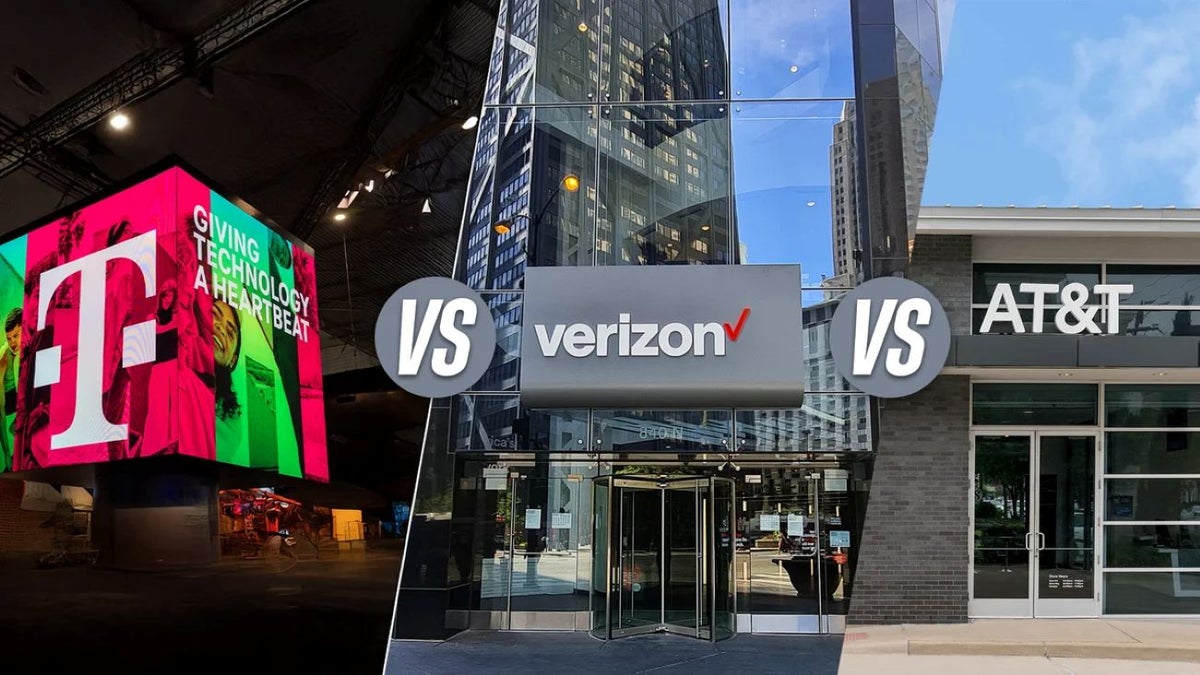
If AT&T, Verizon and T-Mobile had to build entirely new networks for 6G, the answer could be uncomfortable. The billions required for new spectrum, radios and other infrastructure would have to be recovered somehow and you know that you're part of that "somehow".
OK, carriers would absorb some of the cost, but customers would ultimately feel it through higher prices.
Fortunately, 6G doesn't necessarily have to mean starting from scratch.
6G could reuse more of today's 5G network
6G will be big in cities for sure. | Image by Verizon
One of the technologies that are being discussed for 6G is called multi-RAT spectrum sharing, or MRSS. The basic idea behind it is simple; instead of dedicating a piece of spectrum exclusively to either 5G or 6G, an operator could allow the two technologies to share it.
That matters because the spectrum being considered for 6G isn't equally useful everywhere. Higher-frequency signals can offer enormous capacity and impressive speeds, but they generally don't travel as far or penetrate obstacles as effectively as lower-frequency signals. Hence, this makes higher-frequency signals useful in dense areas like big cities, but far less attractive for nationwide coverage.
Recommended For You
For carriers like T-Mobile, Verizon and AT&T, this would be a problem. If 6G relies heavily on new, higher-frequency spectrum, they would need to deploy a huge amount of additional equipment to make it useful outside metropolitan areas.
The MRSS way
Rather than ripping out existing 5G equipment and replacing it with an entirely new 6G network, carriers could potentially reuse some of the radios and spectrum they already have. 5G could coexist with 6G and I'm sure that'll be the way, at least in the first few years.
The Big 3 have already spent enormous amounts of money building their 5G networks. T-Mobile has invested heavily in its 2.5GHz mid-band network, while Verizon has poured billions into its C-band deployment.
No collateral damage for me, thank you
The wireless industry already tried something similar with dynamic spectrum sharing, or DSS, which allowed 4G and 5G to use the same spectrum. The technology developed a poor reputation because sharing resources could come with performance compromises.
That is precisely what operators don't want to repeat with 6G. If your 5G connection becomes slower or less reliable because your carrier is making room for 6G, the upgrade isn't much of an upgrade for you and me.
Making it work together
Another challenge is also whether equipment from different vendors can work together efficiently. Still, the direction is interesting. Ideally, the future of 6G will make today's network work alongside tomorrow's technology.
And if AT&T, Verizon and T-Mobile can do that successfully, 6G might be a lot less expensive, and that's always good news.
The latest news, insights and updates on wireless service:
Mint Mobile is now allowing you to get whichever plan you like for either three, six, or 12 months for just $15/mo. If you go for the six-month unlimited service, for instance, you'll now have to pay just $90 upfront instead of $210.
Sebastian is one of PhoneArena’s senior opinionators. A veteran news writer with almost 20 years of experience in media and technology, he not only covers all the hot news about Galaxies and iPhones, but often provides hot takes on industry trends. He’s fascinated with camera-focused flagships from the likes of Oppo and Vivo, as well as foldable phones.
A discussion is a place, where people can voice their opinion, no matter if it
is positive, neutral or negative. However, when posting, one must stay true to the topic, and not just share some
random thoughts, which are not directly related to the matter.
Things that are NOT allowed:
Off-topic talk - you must stick to the subject of discussion
Offensive, hate speech - if you want to say something, say it politely
Spam/Advertisements - these posts are deleted
Multiple accounts - one person can have only one account
Impersonations and offensive nicknames - these accounts get banned
To help keep our community safe and free from spam, we apply temporary limits to newly created accounts:
New accounts created within the last 24 hours may experience restrictions on how frequently they can
post or comment.
These limits are in place as a precaution and will automatically lift.
Moderation is done by humans. We try to be as objective as possible and moderate with zero bias. If you think a
post should be moderated - please, report it.
Have a question about the rules or why you have been moderated/limited/banned? Please,
contact us.







Things that are NOT allowed:
To help keep our community safe and free from spam, we apply temporary limits to newly created accounts: