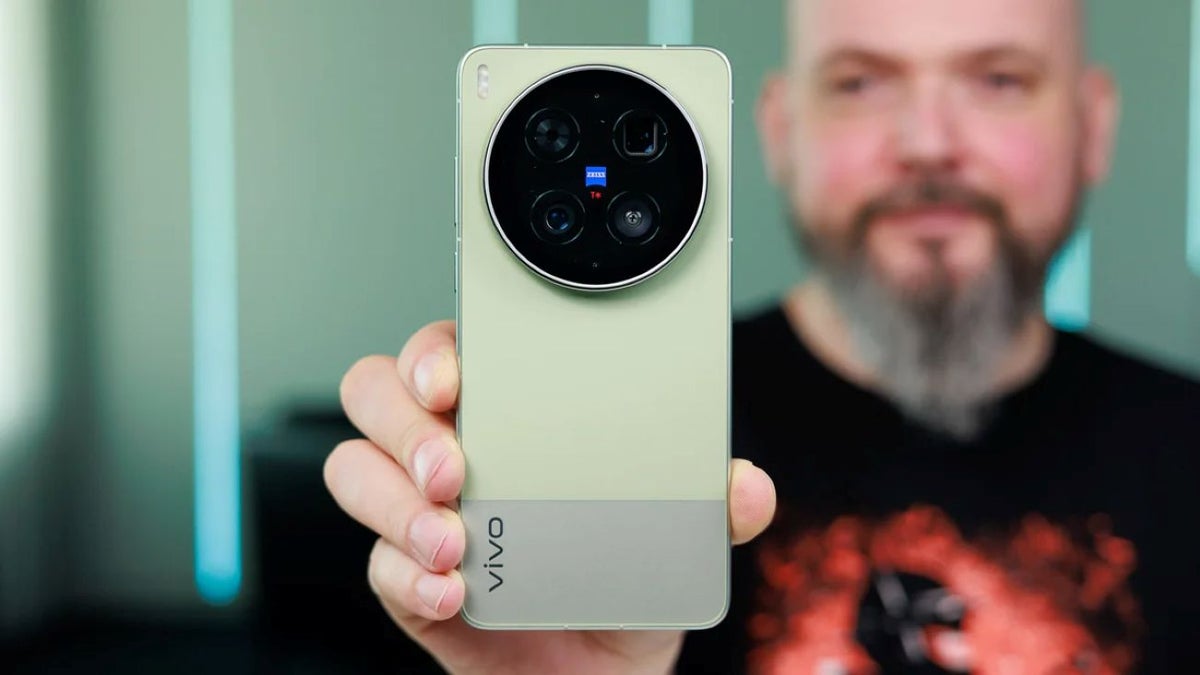
The upcoming Vivo X500 series is the living proof that camera technology is still paramount for all flagships out there. Artificial intelligence may be the buzzword of the day, but when people pay four-figure sums of money, they want something truly outstanding in terms of hardware.
Software tricks are nice, especially for mobile photography: budget-friendly phones like the Pixel's a series phones can pull off some incredible photos thanks to algorithms and computational photography. But they can't match proper flagships with large sensors and great light intake.
Dynamic range to the max
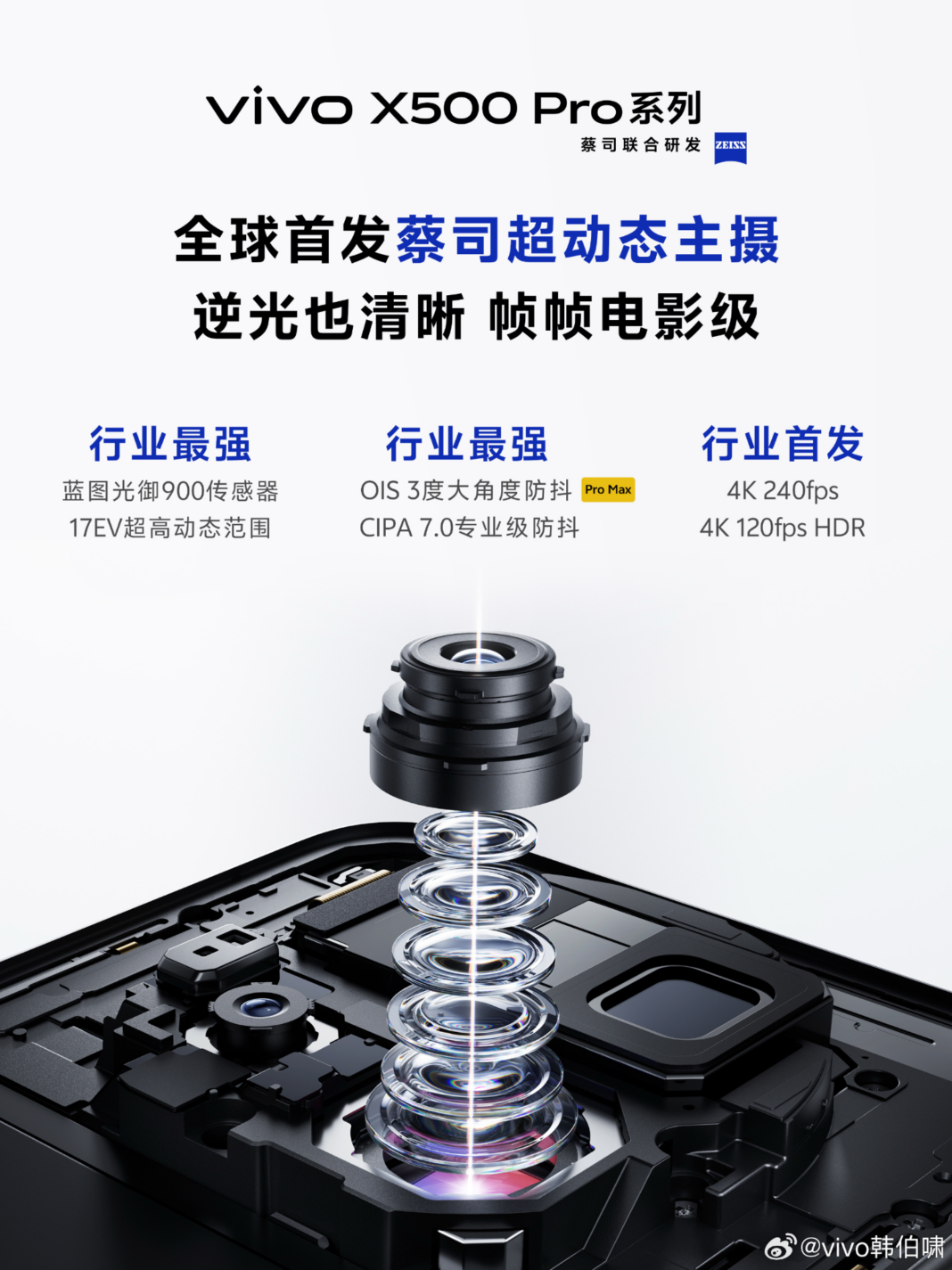
A Chinese poster about the upcoming X500 series. | Image by PhoneArena
Per the latest reports, Vivo has a new sensor for the X500 series—which are the exact models that'll get it is still unknown, but pro photographers will surely wait for the high-end variant (it could be called an Ultra, or perhaps not, time will tell).
The new sensor is dubbed either "BluePrint Guangy 900" or "Bluetooth 900", and I hope there's a third moniker somewhere in store, since neither of these sounds impressive.
It's important what this sensor would be able to do. If we take Vivo's word for granted, this would be the mobile camera sensor with the widest dynamic range in the industry.
This new sensor is partially co-developed with Sony. Vivo says it comes with a 50 MP resolution, which may sound dramatically less than the 200 MP resolution standard many phones have already adopted, but don't let numbers fool you. 50 MP is still plenty.
Recommended For You
The physical size of the new sensor is 1/1.28-inches, which is also impressive. That's not as big as the 1-inch type sensors even older flagships had, but it's still huge compared to what the vast majority of other handsets offer.
The sensor is claimed to be able to deliver up to 17 stops of dynamic range, which Vivo brags is the highest in the industry.
A sensor with a higher dynamic range can preserve more detail in both bright highlights and dark shadows, helping photos look more natural instead of blowing out skies or turning darker areas into black blobs. 17 stops of dynamic range sounds crazy, but we'll need to test this one.
Where would you prefer to have the selife camera on your phone?
64 Votes
It should be in the middle
46.88%
In the corner is okay
9.38%
Both options can work for me
28.13%
I'd prefer not to have a selfie camera
15.63%
Big for video
While you don't need the widest dynamic range for still photography, it's quite different for video shooting. I guess the Vivo X500 series will be especially great for clips and short movies with its 4K, 240fps slow-motion recording support and 4K 120fps HDR video with direct HDR output.
What happened to the X400 series?
Vivo's moving from X300 straight to X500 because it deliberately wants to avoid usage of the number four in X400. That's linked to the so-called tetraphobia, since "four" sounds a bit similar to "death" in the Far East.
It's like our Friday 13 superstition—some don't pay attention, but many definitely do.
That's why we also didn't get the OnePlus 14: the company moved from the OnePlus 13 to the OnePlus 15. Sadly, OnePlus is leaving the US and the EU markets, which means that Americans will be left with the iPhone and Galaxy.
Since both Apple and Samsung charge roughly the same, it's best to buy their products at a discount. Like the popular Galaxy A57 that drops $100 at Amazon.
I can't wait to see how the Vivo X500 models will perform against the iPhone 18 Pro, which is now at the door. To end on a sad note, I don't expect the X500 to land in the US of A officially. Aficionados will have to deal with overseas stores, tracking numbers and customs.
Trade in your old phone for cash at ecoATM!
Recycle your used phone and get instant cash. Find out how at ecoATM!
Sebastian is one of PhoneArena’s senior opinionators. A veteran news writer with almost 20 years of experience in media and technology, he not only covers all the hot news about Galaxies and iPhones, but often provides hot takes on industry trends. He’s fascinated with camera-focused flagships from the likes of Oppo and Vivo, as well as foldable phones.
A discussion is a place, where people can voice their opinion, no matter if it
is positive, neutral or negative. However, when posting, one must stay true to the topic, and not just share some
random thoughts, which are not directly related to the matter.
Things that are NOT allowed:
Off-topic talk - you must stick to the subject of discussion
Offensive, hate speech - if you want to say something, say it politely
Spam/Advertisements - these posts are deleted
Multiple accounts - one person can have only one account
Impersonations and offensive nicknames - these accounts get banned
To help keep our community safe and free from spam, we apply temporary limits to newly created accounts:
New accounts created within the last 24 hours may experience restrictions on how frequently they can
post or comment.
These limits are in place as a precaution and will automatically lift.
Moderation is done by humans. We try to be as objective as possible and moderate with zero bias. If you think a
post should be moderated - please, report it.
Have a question about the rules or why you have been moderated/limited/banned? Please,
contact us.








Things that are NOT allowed:
To help keep our community safe and free from spam, we apply temporary limits to newly created accounts: