Editorials · Reviewer Insight
I love Google's software, but the Pixel 11 proves hardware is still a blind spot
Google's strength is software, so why should I buy its new Pixel hardware?
This article may contain personal views and opinion from the author.
We may earn a commission if you make a purchase from the links on this page.
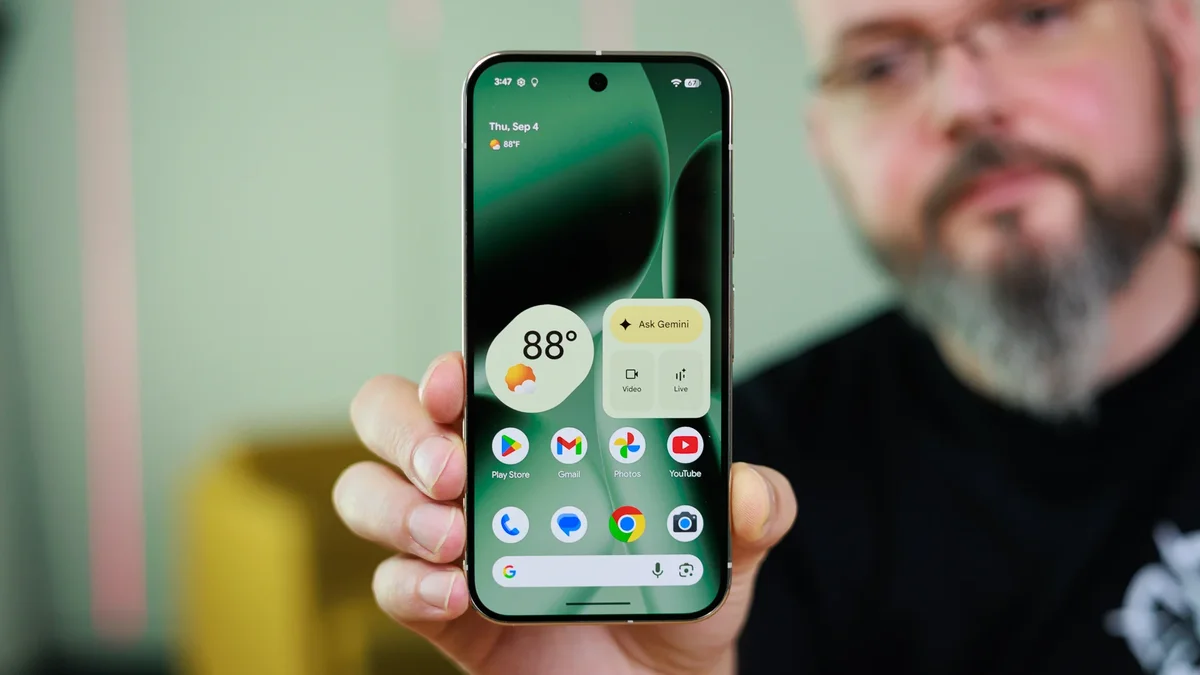
Could awesome software save not-so-flagship hardware? | Image by PhoneArena
It was just the other day that Google finally announced its newest Pixel 11 lineup, and the writing on the wall is clear: it's yet another device that won't stray away from the established formula that Google has been relying on for years. This means marginal intergenerational upgrades, little changes from most previous Pixel phones, and absolutely no straying away from the beaten path.
Unfortunately for Google, that path leads to an abrupt cliff and the Pixel is oh-so-close to tumbling down.
The Pixel hardware is severely lagging behind the competition in terms of performance, and judging from some preliminary Geekbench results that are flying around the wider Android blogosphere, Google is actually downgrading the Tensor lineup with each generation.
Google excels at software and its hardware reflects that
Let's be real: Google is, and will always be, a technological giant that has mastered software. Not a hardware but a software company first and foremost.
It was never a proper hardware company like Samsung or Apple, and despite the trove of hardware it has released over the past two and a half decades, Google still can't give us the proper Galaxy/iPhone killer we've craved for so long.
It's always one thing or another that fumbles Pixel flagships: from the lackluster quality control with many previous Pixel generations to the unimpressive performance of Google's Tensor chip in the past few releases.
While the Pixel 11 still hasn't technically launched, it has already succeeded to etablish itself as a potential fluke. Identical design, almost identical hardware, less RAM, and a higher price tag make this one a device that's easy not to recommend. Just get a Pixel 9 Pro or a Pixel 10 Pro.
Almost S-tier software (almost)
At the same time, Google's software is definitely A-tier. Aside from developing the Android platform, Google's Pixel interface is one of the cleanest and most functional around.
And, what's more important to me, it's the only one along with One UI that still maintains a certain uniqueness and doesn't go out of its way aping Apple's iOS aesthetics, which is exactly what the mass of phones hailing from China do on the regular. Just check out how the latest interfaces of Oppo, Vivo, and Xiaomi look, and you will be forgiven for mistaking them for early design prototypes of what the annual iOS flavor should look like. As someone who used to be clinically pro-Apple, that's not a compliment.
From a functionality perspective, the couple of most recent Android updates have been great with all awesomeness and mostly no fluff. And while I'm not what you'd call an AI proponent, the Gemini Intelligence functionalities introduced along with Android 17 have been quite promising. Android 17 's app bubbles feature is also pretty great, especially on a foldable phone.
The main issue with the Pixel software
The only drawback? The bugs.
I think anyone who has used a Pixel phone has their own anecdotal experience of what bugs plague their day-to-day lives, and I'm no different. A recurring theme with me was the wildly inconsistent battery life with previous Pixels I've used. One day, the phone would power through the day and finish it with 50% or more battery, other days I'd have to top it up in the early afternoon after a gremlin stole away my battery juice.
Bugs and issues aren't isolated to the Pixel lineup, every manufacturer and every phone is prone to throwing in an issue here or there. With the Pixel, there's a sort of a stigma that the software would more likely treat you to a bug rather than deliver an issue-free experience. The community seems to be a bit more vocal than others, with each issue being paraded out in the open rather than largely ignored.
Another minor problem I have with the Pixel is that it's not One UI.
Samsung's latest interface is similarly outstanding but delivers better customization, personalization, and is a bit more fun to me. No matter how awesome "stock" Android on the Pixels is, I still wish it had its own Good Lock alternative or was more customizable, ultimately making me yearn to use One UI.


Popular stories

Latest News
![Another batch of Galaxy S26 series users in the US are getting a nice surprise today [UPDATED]](https://m-cdn.phonearena.com/images/article/183643-wide-two_350/Another-batch-of-Galaxy-S26-series-users-in-the-US-are-getting-a-nice-surprise-today-UPDATED.webp)
Things that are NOT allowed:
To help keep our community safe and free from spam, we apply temporary limits to newly created accounts: