Samsung Galaxy S6 edge vs Google Nexus 6

Introduction
It’s almost hard to believe that it’s been already months since the Google Nexus 6 officially launched, and in that time frame, it’s also equally as mind-boggling that many flagship phones are still not running the latest version of the platform – Android 5.0 Lollipop. Bestowed with the Nexus moniker, naturally, the Nexus 6 from Motorola is one to showcase the latest and greatest there is to offer with the platform. At the same time, it’s also not one to be overlooked because it’s riddled with some astounding specs.
At the end of the day, there can only be one phone to stand tall, rise above its rival. It’s old versus new, big versus small, and stock versus custom, so which one of these two venerable smartphones will have the guts and glory to reign supreme?
Design
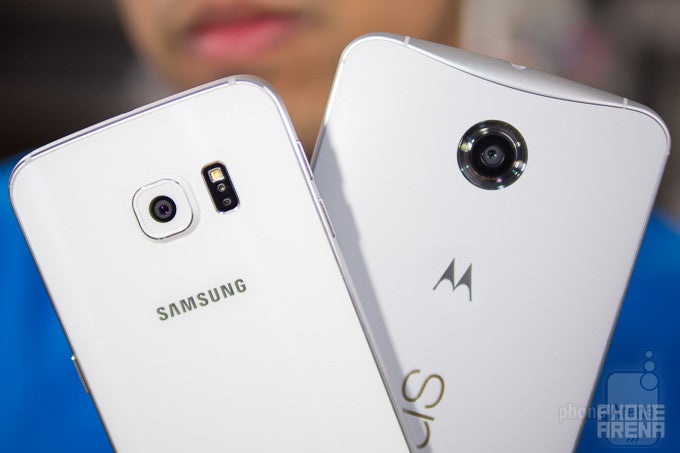
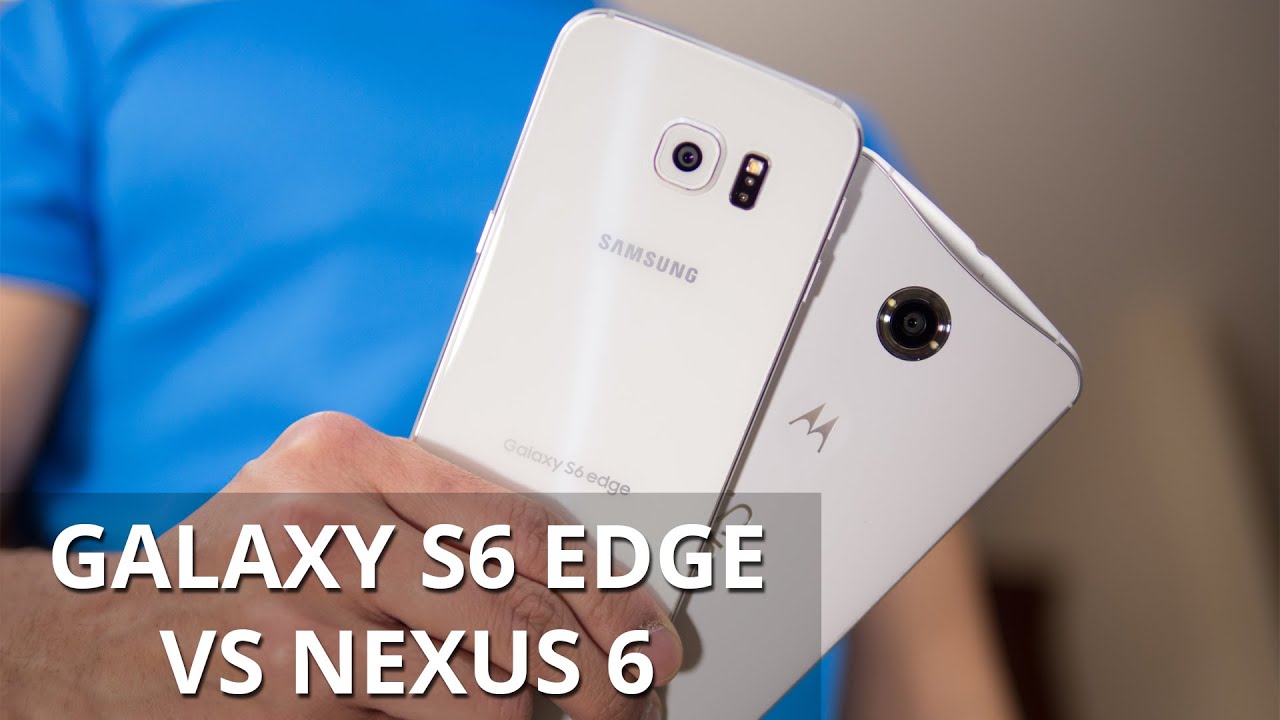
Size is certainly something we can’t overlook between them, but the more premium and unique aesthetic of the Galaxy S6 edge allows it to stand apart from the Nexus 6’s contemporary look.
Staring at them longingly, there’s no denying that the two are just two very differently designed phones – crafted to appeal to certain demographics more than other. In terms of aesthetics and appeal, we’d give the Samsung Galaxy S6 the nods on achieving more glances and looks from bystanders, mainly because it has the luxurious qualities that cater to a wider audience.
Impressively enough, even with its compact stature, Samsung is able to stuff several other goodies into its already tight package – like an improved finger print sensor, wireless charging, IR blaster, and heart rate senor. Meanwhile, the Nexus 6 also boasts wireless charging, in addition to dual front-firing speakers, but that’s all. For having so much real estate to work with, you’d imagine that Motorola would’ve been able to crap a few extra stuff in the process. Guess not.

5.59 x 2.76 x 0.28 inches
142.1 x 70.1 x 7 mm
4.66 oz (132 g)

6.27 x 3.27 x 0.4 inches
159.26 x 82.98 x 10.06 mm
6.49 oz (184 g)

5.59 x 2.76 x 0.28 inches
142.1 x 70.1 x 7 mm
4.66 oz (132 g)

6.27 x 3.27 x 0.4 inches
159.26 x 82.98 x 10.06 mm
6.49 oz (184 g)
See the full Samsung Galaxy S6 edge vs Google Nexus 6 size comparison or compare them to other phones using our Size Comparison tool.
Display
Quad-HD goodness is in tow here, but there’s something cooler about a dual-curved display – more so when it delivers outstanding qualities.
In being true pioneers in the space, it’s wonderful to know that the two handsets tip the scales with their quad-HD resolution displays – something we feel that’s necessary to stand head-above-water over the rest of the high-end crop. For the Galaxy S6 edge, it’s fashioned with an incredibly sharp 5.1-inch 1440 x 2560 Super AMOLED dual-curved display, which achieves a higher pixel density count of 577 ppi. The figures alone paint something exquisite with the Galaxy S6 edge, but we can’t neglect the same level of attention paid to the Nexus 6’s 6-inch 1440 x 2560 AMOLED display – one that still pulls in a respectable 493 ppi pixel density.
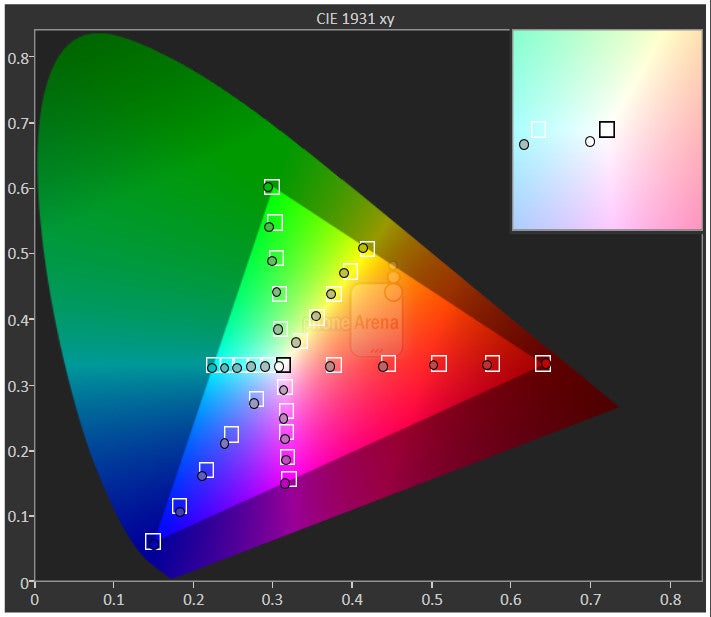
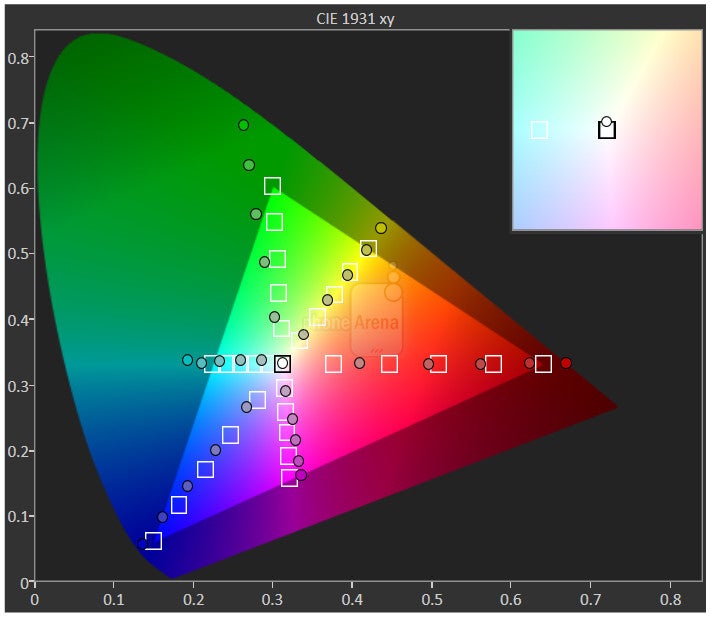
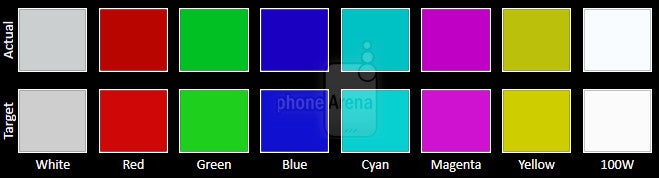
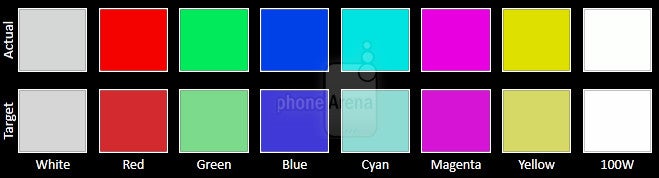
Even though they both rely on AMOLED technology, the S6 edge’s Super AMOLED panel produces higher quality results. To be fair, however, we have to applaud both companies for getting the displays to very close to that ideal color temperature reference value of 6500K – giving them a very neutral tone, neither too warm, nor too cold. Still, the S6 edge’s screen drives away with its stronger brightness output of 553 nits, versus the Nexus 6’s poor mark of 270 nits. Naturally, the vast discrepancy between the two becomes apparent outdoors when viewing the displays under the gaze of the sun. The Nexus 6’s display is just unviewable.
And lastly, we can’t forget to mention the added functionality brought on by the dual-curved display of the S6 edge. From being able to access some of our favorite contacts from the lock and home screen, to the cool visualizing pattern when we receive incoming calls from our favorite contacts, and the notification tickers that bring info to one of its edges, the dual-curved display adds to the phone’s arsenal, but as we’ve detailed already, it’s most profound for the aesthetics.


Interface and Functionality
TouchWiz receives a new, more toned down redesign, but it’s still more cluttered and heavier than stock Lollipop.
While Samsung's Galaxy S devices have always shipped with nothing less than the best available at the time in terms of hardware, we've often found ourselves wishing it did more on the software side. Its proprietary TouchWiz layout has often proved sluggish and less responsive than what some competitors had to offer – a sight that the Samsung faithful only tolerated because of the smorgasbord of extra features the platform gave them access to. With the Galaxy S6, however, the company has finally come to sense, and has carried out a number of software optimizations that make the Galaxy S6's software both easier to understand and faster than ever before.
The TouchWiz UI on the Galaxy S6 edge
Despite the overhaul of TouchWiz, it still can’t beat out the Nexus 6’s vanilla Android 5.0 Lollipop experience. Who doesn’t like stock Android? From a visually standpoint, Material Design was born from Google’s vision, adding bright and poppy colors through various layers of the platform. At the same time, the pure nature of the experience extends into the minimalist look it’s sporting.
UI of the Google Nexus 6
Unlike TouchWiz, which is rich with secondary features, stock Lollipop is far more straightforward and to the point with its approach. No, we don’t get any enhanced multi-tasking experiences like with TouchWiz, but when things run oh so fluidly, the Recent Apps menu is still effective enough for moving in-and-out of various apps. And then there’s the multi-user feature of stock Lollipop, which strangely has been omitted with TouchWiz – albeit, there are Private and Easy modes that replace it. Still, stock Android 5.0 Lollipop’s multi-user feature is an invaluable tool that provides more organization, allowing folks to have separate accounts to anyone using the phone.
Processor and Memory
Month of usage, the Nexus 6 is still fluid with its performance. For now, the Galaxy S6 edge delivers the same punch, but who knows how it’ll handle months down the road.
Maybe it’s just the software optimizations and tweaks of stock Lollipop that help things move so swimmingly on the Nexus 6, but even now after several months of usage, the Nexus 6 rarely shows any signs of slowdown or lag with its performance. Under the hood, it’s endowed with a last-generation quad-core 2.7GHz Qualcomm Snapdragon 805 SoC, coupled with an equally beefy 3GB or RAM and the Adreno 420 GPU.
Meanwhile, if we’re to look strictly at their benchmark performances, it’s quite obvious that the new Exynos chip is far exceeding the older Snapdragon 805. Gaming, too, is superior with the Galaxy S6 edge, as the benchmark scores show, but in all practical sense, the Nexus 6 is still equipped in handling all sorts demanding gaming titles.
Internet and Connectivity
Smooth browsing is what we've been getting with each and every flagship for the past few years, and Samsung's and Motorola's offerings don't fail to deliver just that. Courtesy of their powerful internals, both devices handle even asset-heavy pages with ease and don't struggle when navigating through them. That said, whereas both devices rely on Chrome for your browsing needs, Samsung's Galaxy S6 edge comes with its own default solution that is an equally great performer.
Web browsing with the Samsung Galaxy S6 edge
Honestly, the only thing separating the experience is the vast size disparity between their displays. With the Nexus 6, naturally, we’re presented with extra real estate that enables pages to be visualized in their entirety – requiring less scrolling or pinch zooming in the process.
On the connectivity front, you'll hardly find much to complain about, regardless of whether you go for the Galaxy S6 edge or the Nexus 6. Both devices offer support for a wide array of LTE bands, 5GHz Wi-Fi, Bluetooth 4.1, NFC, and DLNA. Still, the Galaxy S6 edge pulls ahead because of its infrared blaster for control over home electronics, and Samsung Pay – the company's new mobile payments solution that works hand-in-hand with the handset's NFC chip.
Camera
There’s no problem with either when snapping photos outdoors when the sun is around, but the S6 edge takes the gold in low light.
The 13 MP camera on the Nexus 6 features an f/2.0 aperture lens, optical image stabilization, dual-LED flash ring, 2-megapixel front camera, and up to UHD 4K video recording. The Galaxy S6 edge answers back with an equally impressive 1/2.6”, 16-megapixel rear camera, which comes with a wider-than-before f/1.9 aperture lens and an optical stabilization gizmo attached to it – with the same UHD 4K recording as its rival.
Camera interface of the Samsung Galaxy S6 edge
Camera UI of the Google Nexus 6
Outdoors, both handsets take pretty decent photos, even in not so ideal lighting conditions. Details are abundant, allowing us some elbow room to crop photos later on without losing too much, but what’s notably different about them is how the Nexus 6 seems to cast an overly warm, yellowish hue over the scene, but it manages to slightly do a smidgen better than the Galaxy S6 edge with dynamic range – where the exposure is balanced throughout the scene. They’re minor, subtle things that may win over some folks, but don’t count out the Galaxy S6 edge because it’s better at dealing with close-ups and scenery shots too.
Where there’s a big separation between the two is in the low lighting performance of the Galaxy S6 edge, which is a clear step up over its rival. Not only are shots taken by the S6 edge brighter, enabling details to be drawn out, but it’s also sharper looking with significantly less noise. Too many times, the Nexus 6 produces under-exposed shots that hide any details – while also appearing generally duller tone and quality.
Sample images
Likewise, it’s the Galaxy S6 edge that pulls ahead in terms of video recording quality. As we’ve mentioned, both are equipped with UHD 4K recording, in addition to the usual 1080p. What’s most prevalent is how much better the Galaxy S6 edge is in adjusting focus on the fly – it’s smoother for one, whereas it’s slower with the Nexus 6.
Sample Videos
Multimedia
Bold and beautiful, their AMOLED-based displays glow immaculately, but the generous real estate of the Nexus 6 makes it more ideal.
Both galleries offer grid thumbnail views, and allow for rich picture editing from within the apps, as well as sport plenty of sharing options. Best of all, there are enough fun editing tools at their disposal to further enhance the look of photos.
Video playback is excellent on both handset, too, as they support quite a handful of video codecs out of the box. Watching videos isn’t an issue with either of them, thanks in part to their sharp displays, but we have an extra layer of multi-tasking with the S6 edge’s experience – videos can essentially be played in their own windows, which can be placed on top of whatever we’re doing. Then again, some folks will find the Nexus 6 to be more ideal for the situation, thanks in part to its larger screen and dual front-firing speakers.
When it comes to the music players, they come preloaded with the usual Google Play Music app – though, Samsung offers its own TouchWiz music player as well. Yes, we’ll certainly say that the TouchWiz music player is a good alternative, but it’s pretty reserved looking. For only a single speaker, the Galaxy S6 edge is able to muster up 75.4 dB of audio power, which is a miniscule difference from the Nexus 6’s tally of 75 dB. Between them, we prefer the audio coming out of the Nexus 6, as the Galaxy S6 edge’s quality is thin and subdued.
Music players
Call Quality
Battery
A big phone requires a big battery, so it makes perfect sense for the Nexus 6 to carry a beefy 3220 mAh one inside of its body – whereas with the smaller sized Galaxy S6 edge, it’s only packing along a 2600 mAh battery. In running our custom script for our battery benchmark test, it reveals that the Galaxy S6 edge is slightly longer-lasting. It puts up a mark of 8 hours and 11 minutes, which is marginally better than the Nexus 6’s respectable tally of 7 hours and 53 minutes. However, we have to note that we tested the Galaxy S6 edge has run the test with its display set at 180 nits of brightness, as opposed to the usual 200 nits, since it’s unable to reach that mark when its brightness is manually set, even to the highest setting.
What’s nice, though, is that both handsets are pretty efficient at charging. The Galaxy S6 edge needs only 83 minutes to get back to full strength, while the Nexus 6 isn’t too far off at 98 minutes. Even better, they both offer the convenience of wireless charging.
Conclusion
Whichever phone you end up choosing, just know that it’s going to cost you quite a handful to buy – whether it’s outright or with a contract. Luckily, the pricing structure for the Nexus 6 is pretty uniform whichever outlet you end up going with. So if we’re to look at it from an outright level, you’ll need to fork over a beastly $699.99 to snag the Google Nexus 6. In contrast, depending on where you go, the Galaxy S6 edge will fetch you roughly between $699.99 and $814.99.
Simply, there’s no denying the reality that the Galaxy S6 edge is just one expensive smartphone – though, its overall performance is indicative of its hefty cost. You’ll pay an exorbitant amount for the phone, but what you get in return is a premium looking, compact sized smartphone that runs highly in all key categories. In addition, the cool aesthetic achieved by its dual-curved display is undoubtedly a sight to behold in itself. It’s just, you know, so gorgeous and beautiful looking.
Well, if you take fancy in phablet sized things, then it’s a no-brainer decision to go with the Google Nexus 6. Specs-wise, it’s able to pull its weight in comparison to Sammy’s new toy, but what makes the Nexus 6 so grand is the fact that it’s one of the showcase devices for the platform, meaning it’ll receive updates to Android a lot sooner than the Galaxy S6 edge, which will take Sammy some time to optimize to mesh well with its own custom experience.
All told, it’s a win-win whatever phone you end up going with. One might have the upper hand in specific areas, but at the end of the day, they perform swimmingly enough is all the key areas to make them smartphones you won’t be disappointed in buying.
Samsung Galaxy S6 edge
Pros
- Faster chipset
- Lighter, thinner, more compact
- Cooler looking aesthetic with its dual-curved display
- Excellent camera
Google Nexus 6
Pros
- Stock Android 5.0 Lollipop experience
- Larger sized screen
- Will receive software updates faster
- Perfect for watching videos

Popular stories




Latest News


Things that are NOT allowed:
To help keep our community safe and free from spam, we apply temporary limits to newly created accounts: