Oppo Find 7a Review
Introduction
It's been over a year since we first came across the Oppo Find 5 – the company's flagship that really put the otherwise obscure company at the time on the map – but here we are, with the Find series successor in the Find 7a. In fact, Oppo has two otherwise identical flagships up for grabs – the Find 7, and the Find 7a that we have at hand.
The more affordable version, the 7a is the slightly less powerful model of the two. It's got a typical 1080x1920 pixel resolution display instead of a QHD (1440x2560) resolution one, and it makes use of slightly less potent components in the processor, memory and batter departments. At $499, this makes the Find 7a $100 cheaper.
Yet, despite its relative inferiority to its higher-powered sibling, the Find 7a still is every bit a desirable flagship. But is it more desirable than what the competition has to offer? Let's take a look.
In the box:
- 4.5A wall charger with support for VOOC rapid charging
- microUSB cable
- Earphones
Design
The Find 7a is a looker! Thankfully, that didn't come at the cost of proper ergonomics – it is very comfortable to hold.
If nothing else, Oppo has always striked us as a company that is very conscious of design, down to the finer details. With the Find 7a, the company reinforces that feeling – we have clear-cut lines and an overall simplistic design that certainly appeals to the eye. Frankly, and despite failing to mount a challenge against aluminum-clad phone like HTC's One, the Find 7a definitely begs no questions – its high-end beginnings are obvious even to passersby.
So what material, then, is responsible for the corpus of the 7a? Unsurprisingly, it's made of polycarbonate, though the chrome ornaments seen with the frame, the buttons on the side, and even the camera ring, do add to the overall beautiful and sturdy construction of the phone. The plastic rear shell has an intricate mesh texture to it, helping with the grip. Overall ergonomics are pretty decent, too, considering the size of the phone (6.01 x 2.95 x 0.36 inches (152.6 x 75 x 9.2mm). When put side-by-side with the 5.7-inch Galaxy Note 3, for example, the Find 7a proves slightly taller, but noticeably narrower. That said, the Find 7a is notably larger than the Galaxy S5 and HTC One M8.
At the front, you have medium-sized bezels, with a set of capacitive navigation keys and an inconspicuous rainbow-shaped LED notification light on the bottom. Looking at the 7a sideways, we have the power button on the left, while the volume rocker took to the right side of the frame. Unfortunately, these are rather flush with the surface, and offer minimal travel. Worse yet, it feels like they're a little sticky.

6.01 x 2.95 x 0.36 inches
152.6 x 75 x 9.2 mm
6.00 oz (170 g)

5.95 x 3.12 x 0.33 inches
151.2 x 79.2 x 8.3 mm
5.93 oz (168 g)

5.76 x 2.78 x 0.37 inches
146.36 x 70.6 x 9.35 mm
5.64 oz (160 g)

5.59 x 2.85 x 0.32 inches
142 x 72.5 x 8.1 mm
5.11 oz (145 g)

6.01 x 2.95 x 0.36 inches
152.6 x 75 x 9.2 mm
6.00 oz (170 g)

5.95 x 3.12 x 0.33 inches
151.2 x 79.2 x 8.3 mm
5.93 oz (168 g)

5.76 x 2.78 x 0.37 inches
146.36 x 70.6 x 9.35 mm
5.64 oz (160 g)

5.59 x 2.85 x 0.32 inches
142 x 72.5 x 8.1 mm
5.11 oz (145 g)
Compare these and other phones using our Size Comparison tool.
Display
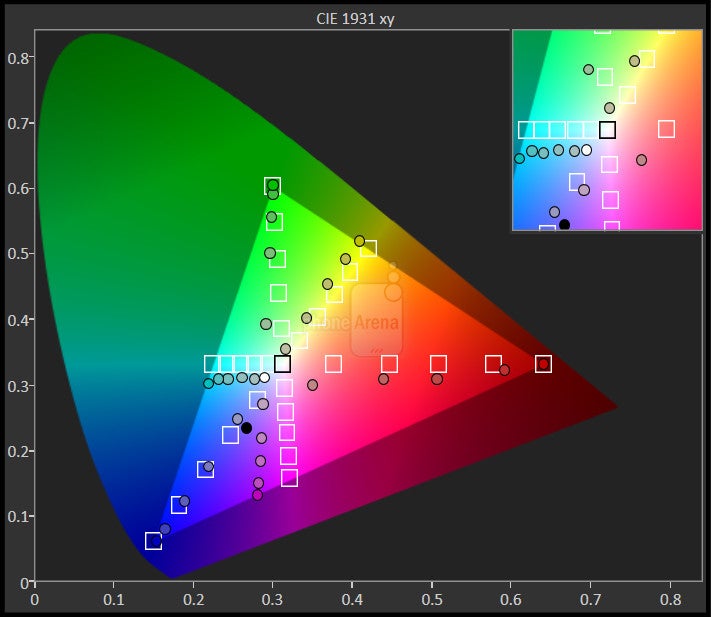
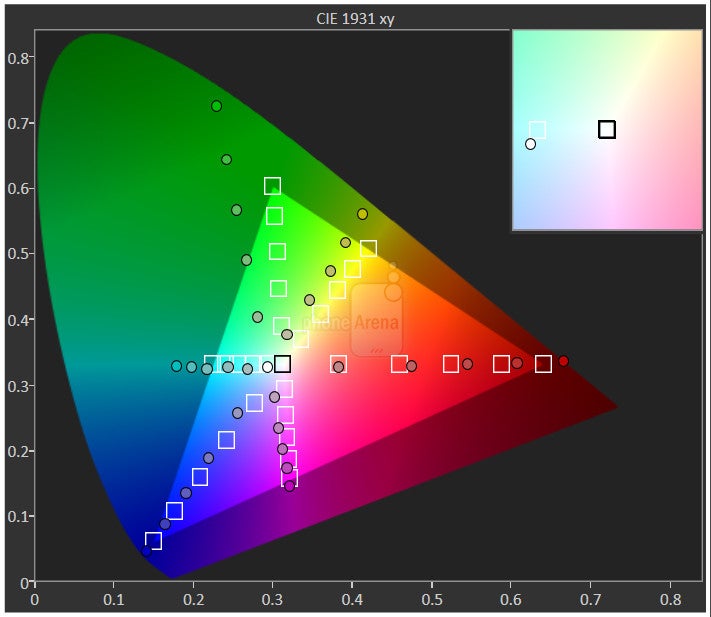
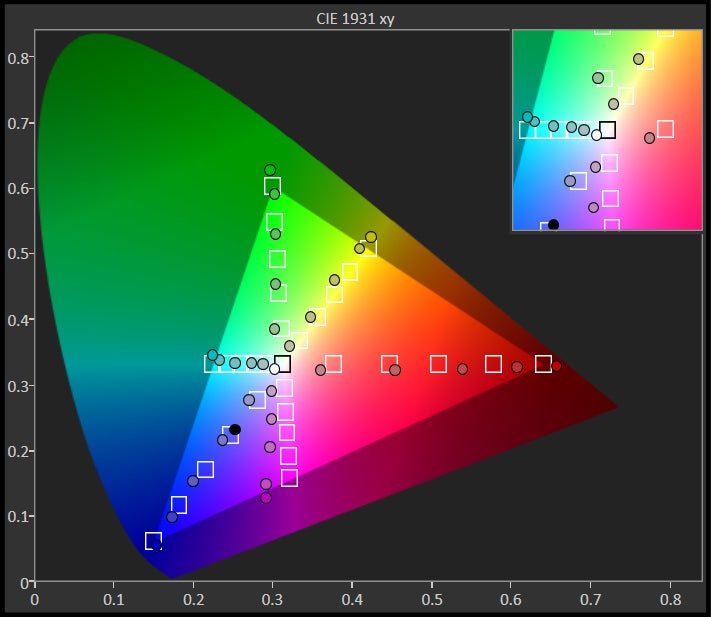
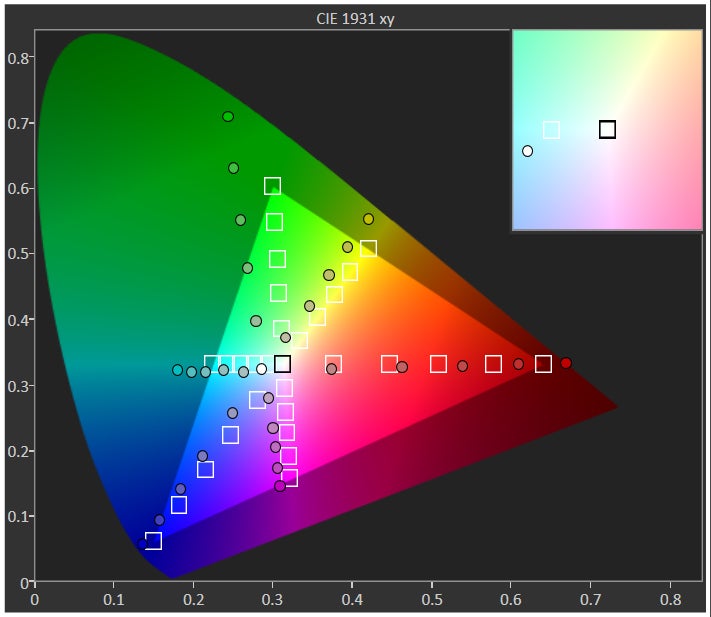
The display is a small defeat for Oppo – the color temperature is too cold, and we couldn't make out the screen easily with the sun over our shoulder.
Oppo has chosen one of JDI's displays for the Find 7a – a 5.5-inch IPS panel with a resolution of 1080x1920 pixels, or a density of 401 ppi. This ensures a crisp viewing experience, but a trained eye will quickly notice discrepancies in some areas.
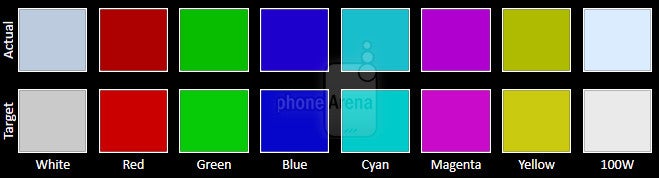
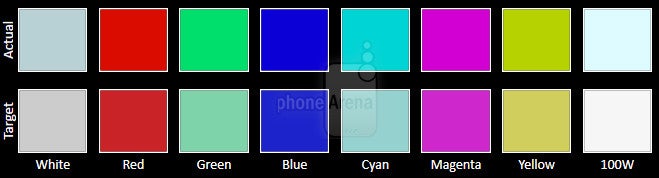
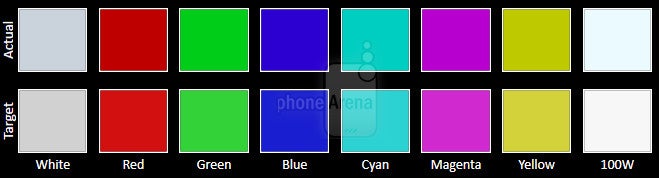
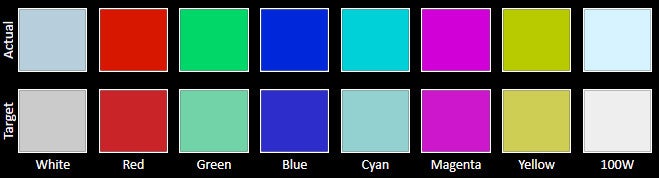
For starters, the display on the 7a, at 9531K, is very cold, so whites are not white at all, and even differing shades of gray are blue-ish. Due to the sub-optimal gamma (2.4), colors rendered by the screen are noticeably less-luminant than the actual target colors. Indeed, specific colors like green, are consistently incorrect, lacking a natural spread when it comes to the different shades of the color. Nevertheless, it's imperative to understand that these discrepancies are not extreme, and the Find 7a's screen is actually nice looking overall.
The screen's otherwise decent maximum brightness of 455 nits actually doesn't mean much when outdoors with the sun shining over your shoulder. In those scenarios, the reflective glass on top proved rather too reflective, and making out the UI was rather hard.




Interface and functionality
Double-tap-to-wake is a must for this form factor, and the Find 7a has it! It's also packing a skinned, but ultimately simplistic and user-friendly mod on Android.
Powering the Find 7a software-wise is Oppo's ColorOS, on top of of Android 4.3 Jelly Bean. We felt like ColorOS strikes a fine balance between offering extra functionality and keeping things simple and accessible. On the whole, ColorOS differentiates itself from your average Android handset in three main ways. Considering the size of the device, we're definitely happy to see that Oppo is joining up with manufacturers like LG by offering double-tap-to-wake type functionality to the 7a – simply tapping the screen twice will both wake and put the screen to sleep.
We also dig Oppo's inclusion of gestures. Two of those come by default, and can be drawn directly on the screen when it's locked – a shortcut to the camera (draw an “O”) and one for the flashlight (draw a “V”). You can create your own gestures and define their behavior (i.e. open a specific app, or directly call your mom), but these won't work if the screen is off. Instead, you'll have to swipe the top left side of the status bar to open the so-called gesture panel, which kind of defeats the idea of quick access.
The third and last more interesting feature of the 7a is its access to the very extensive treasure troves of themes available right through a built-in app. So you can change the look and style of both your home and lock screens – for example, you can easily transform the Find 7a to look alike stock Android. Of course, the settings menus and built-in Oppo apps will only see a change in icons – everything else will look as the manufacturer initially intended it.
Speaking of those, ColorOS leaves no stone unturned. Essential apps like the Dialer, Contacts, Calendar, Messages, and E-mail, all have seen intervention from Oppo, but we, again, like their simplistic, down-to-the-point, but modern look and standard functioning. Of course, Oppo hasn't missed the opportunity to add some extra apps, and most of these are actually useful. For example, we found that the built-in Guest mode is one of the better implementations of the functionality: you essentially can get two unlock patterns working simultaneously – one for you, and one for your children. In the same vein, we found the pre-loaded App encryption app handy – it essentially allows you to lock certain apps, like the Gallery, where you may have sensitive content. Last, but not least, the Permission Monitor app allows you to keep track of which apps are making use of what kind of data and functionality on your phone. What's more, you can deny certain privileges on a per-app basis.
Processor and memory
It's simple: the Find 7a offers more power than you'll know what to do with.
The Oppo Find 7a finished in the top 5 of our best performers when it came to synthetic benchmarks, and that's not surprising in the slightest. Packing a monstrous, 2.3GHz quad-core Snapdragon 801 chip and 2GB of RAM, neither apps, nor games, can manage the feat of pressuring the silicone inside. The Find 7a powers through everything, from the basics, like navigating around the UI, through heavy gaming titles almost with a smirk.
You'll find 16GB of storage on board with the 7a, but you do have the option to expand through a microSD card for up to 128GB more.
Internet and connectivity
Wonderfully connected.
With such a beastly processor ticking underneath the Find 7a's exterior, it should be no surprise to hear that browsing on Oppo's new device is a frills-free experience. The phone loads even heavier pages quickly, and navigating even full-sized websites is a breeze thanks to the responsive nature of the built-in Chrome browser.
As can be expected, the 7a also offers a sizable cache of connectivity options. There's Bluetooth 4.0, NFC, 5GHz Wi-Fi, and A-GPS, along with FDD-LTE with support for bands 1, 3, 7, and 20.
Camera
The 13-megapixel camera on the Oppo Find 7a is Big League stuff.
As soon as we managed to unbox the Find 7a, we went outside straight away, with the idea of putting the 13-megapixel rear camera through its paces. The rear camera on the 7a comes with a wider-than-average, f/2.0 aperture, a dual LED flash config, and a 1/3.06'' sensor (which is about the average for today's smartphone) .
Looking at the software first, we definitely appreciate the simplistic nature of the camera UI, which is ergonomically spaced out. This is not the most functional camera of all, but it has a few notable tricks up its sleeve. Namely, you get the usual shooting modes, like Panorama (which is quirky, and offers average results) and HDR, but also extras, such as Slow shutter, which is great for working out artsy-looking night shots; HD picture, which creates massive, 50MP snaps; and lastly – a RAW mode, which outputs shots in a .dng format for easy post-processing.
Now, HD picture surely caught your attention, so let's talk about it first. The way it works is very simple – you point towards your object, click the shutter button, and then wait for about 5 seconds for the snap to be processed. And just like that, you get a 50MP image with greater detail. So what's going on here? Well, the Find 7a takes 10 normal 13-megapixel snaps, and then stitches them together and interpolates the resulting still (i.e. resizes it). The results are not always exemplary, and errors do happen (you can see the stitching in some parts of the snap). Still, the detail improvement is there, when compared to the usual stills mode. You would not use it for every picture, as it is slower, but it is handy.
Speaking of 'usual' stills, Oppo has learned from its past mistakes (we're thinking of you, N1!), and the software has been tweaked to judge different scenarios much better – for one, exposure is consistently set properly, and photos are realistically bright (or dark). Moreover, colors are pleasant-looking, but also correct at the same time, and digital noise is kept at check with great success. Fine detail, even when looking at 100% crops, is discernible, so we're definitely liking what we're seeing here on the whole.
In fact, the sensor on the 7a proved itself capable even in low-light scenarios, including in complete darkness where the powerful dual LEDs illuminate the scene very well. Unlike many competing flagship cameras, the one we have here doesn't produce palpably cold results, and that's a considerable plus, even though fine detail is lacking at times. Shutter speed does go down considerably, though, so sudden movements may cause blur. Lastly, and before we move onto video capture, we've got to note that the Find 7a's 5-megapixel front-facing cam also produces some pretty sharp results.
Sample Images
Alright, so video capture. Like any self-respecting 2014 flagship, in addition to the now baseline 1080p resolution clips, the Find 7a can also shoot 4K video, along with 720p slow-mos. There's also an HDR video mode, though that one isn't worth your time – you trade a significant chunk of quality for a more dynamic clip. The rest however, all produce very acceptable clips, with sufficiently high frame rates at all times, and an abundance of detail.
Sample Videos
Multimedia
A crisp, 5.5-inch display and powerful speaker. What more do you need?
In charge of your multimedia needs are proprietary Oppo apps such as music and video players, both of which are exceedingly simplistic in nature. In all honesty, they remind of a better-looking version of the usual stock Android representatives, and many will probably like that. Obviously, watching clips off YouTube, or even the occasional TV show is not an exercise in futility, thanks to that large and crisp display and powerful speaker on the rear.
As for the Gallery, the same kind of deal applies here. It's also relatively basic, but no as bare as the rest. For example, you have features like a built-in collage editor, which quickly stitches together several snaps of your choosing together.
Call quality
Voices are properly transmitted and more than loud enough.
Both the microphone and the in-ear speaker on the Oppo Find 7a proved most capable in our testing. For its part, the microphone transmitted our voices pleasantly to the other side, with minimal distortions, which were only noticeable when we raised our voices. That wasn't needed however, as the other side was hearing us very loudly already. As for the in-ear speaker, it's similarly top-notch. Voices' timbers were properly carried over to the other side, and you and your caller both will know who's on the other end instantaneously.
Battery life
You just gotta try the Rapid Charger.
Keeping the lights on is a 2800 mAh Li-Po battery, which offers over a day of heavy usage. Unfortunately, the Find 7a doesn't quite handle pro-longed standby periods as well as some others, and drops about 10 to 15% charge during the night. Thankfully, this issue is offset by the inclusion of what Oppo is calling the Rapid Charger.
The Rapid Charger is a larger-than-average wall charger, which outputs 4.5A of current (instead of 1A to 1.5A), and is able to very rapidly charge the battery. From our own testing, the Find 7a gains 1% of charge every 30 seconds. In fact, in one instance, we managed to replenish the whopping 56% of charge in just 23 minutes, which is really impressive.
Conclusion
The Find 7a truly has it all – an attractive and ergonomic body, massive performance muscle, and a worthy flagship camera. And best of all? It comes carrying the relatively affordable price tag of $499 unlocked.
That's a significant discount when compared with flagship phablets like the Note 3 (~ $699), or even the HTC One max (~ $599). As importantly, the Find 7a is not spectator -- it actually manages to successfully spar with the big boys. Even the all-new Galaxy S5 (~ $649) is not out of its league, though Samsung's new flagship comes with a better camera and beastly battery longevity. The HTC One M8 is also notably more expensive (~ $639), but comes with a full-blown aluminum unibody and a set of front-facing speakers to be reckoned with.
In any case, the Find 7a is very likely Oppo's greatest achievement to date, and one that we definitely feel deserves a spot on the world stage.
Software version: 1.2.0i


Popular stories

Latest News

Things that are NOT allowed:
To help keep our community safe and free from spam, we apply temporary limits to newly created accounts: