Apple iPhone 6 vs Apple iPhone 5s
Introduction
We've asked for it, and Apple has delivered. Two iPhone generations ago, the iPhone 5 brought a modest bump in screen size, pushing the diagonal from 3.5" to 4.0". The same exact display area was kept by the 2013 flagship as well, the iPhone 5s. 4 inches were still doing the job well in most use cases, but being surrounded by a plethora of large-screen smartphones, many an iPhone user wished they could get in on the act. Well, now they can, as Apple has just launched the iPhone 6, and this time, Cupertino is introducing a significantly larger panel – one that measures 4.7 inches in diagonal.
Design
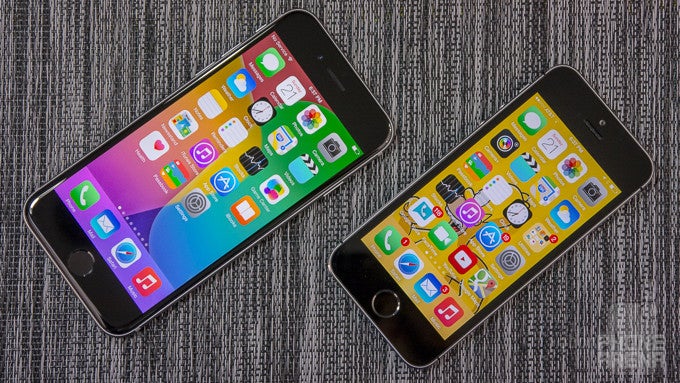
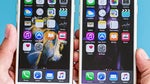
It's chamfered edges vs rounded corners in this 'old' vs 'new' design comparison
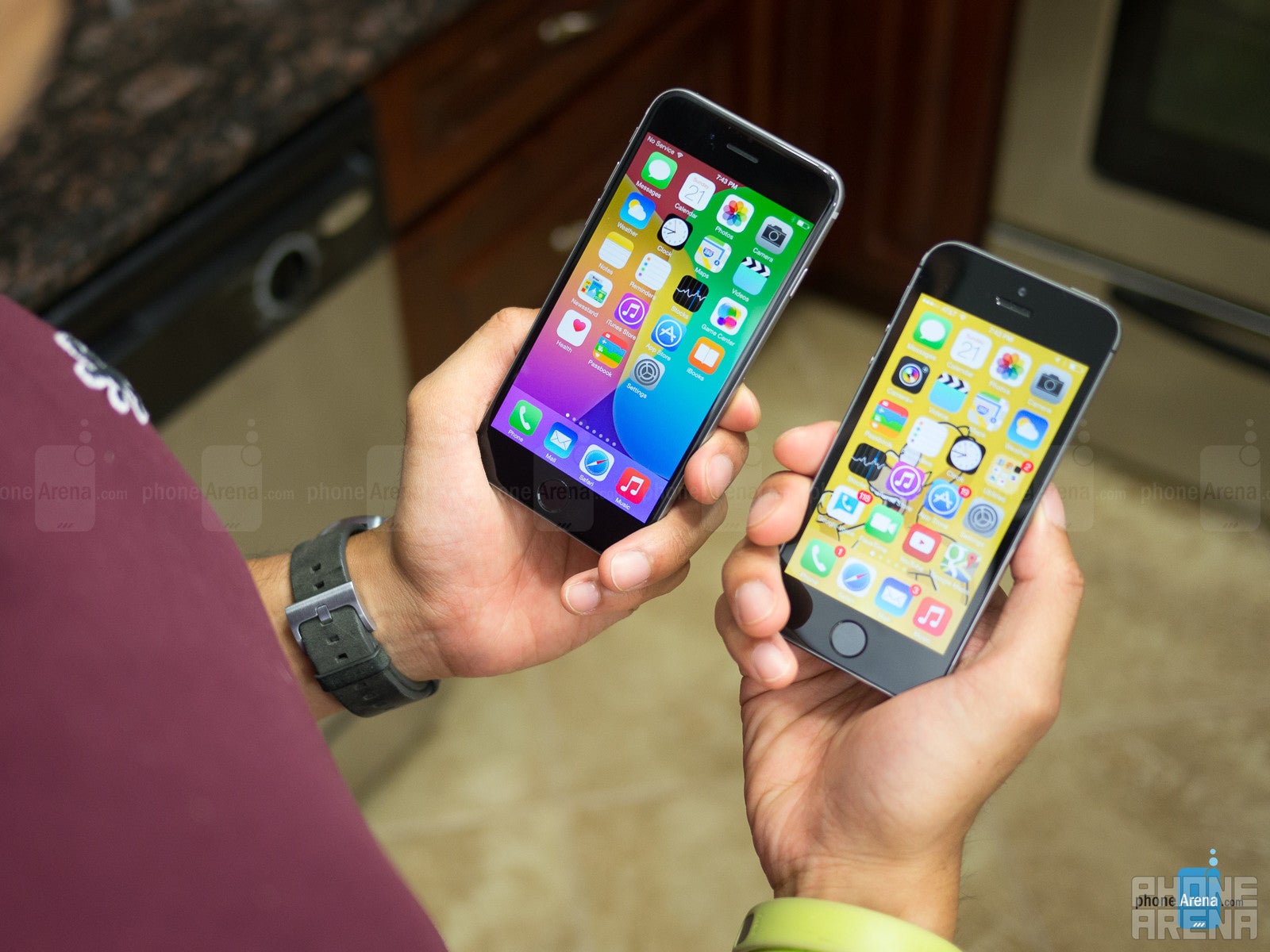
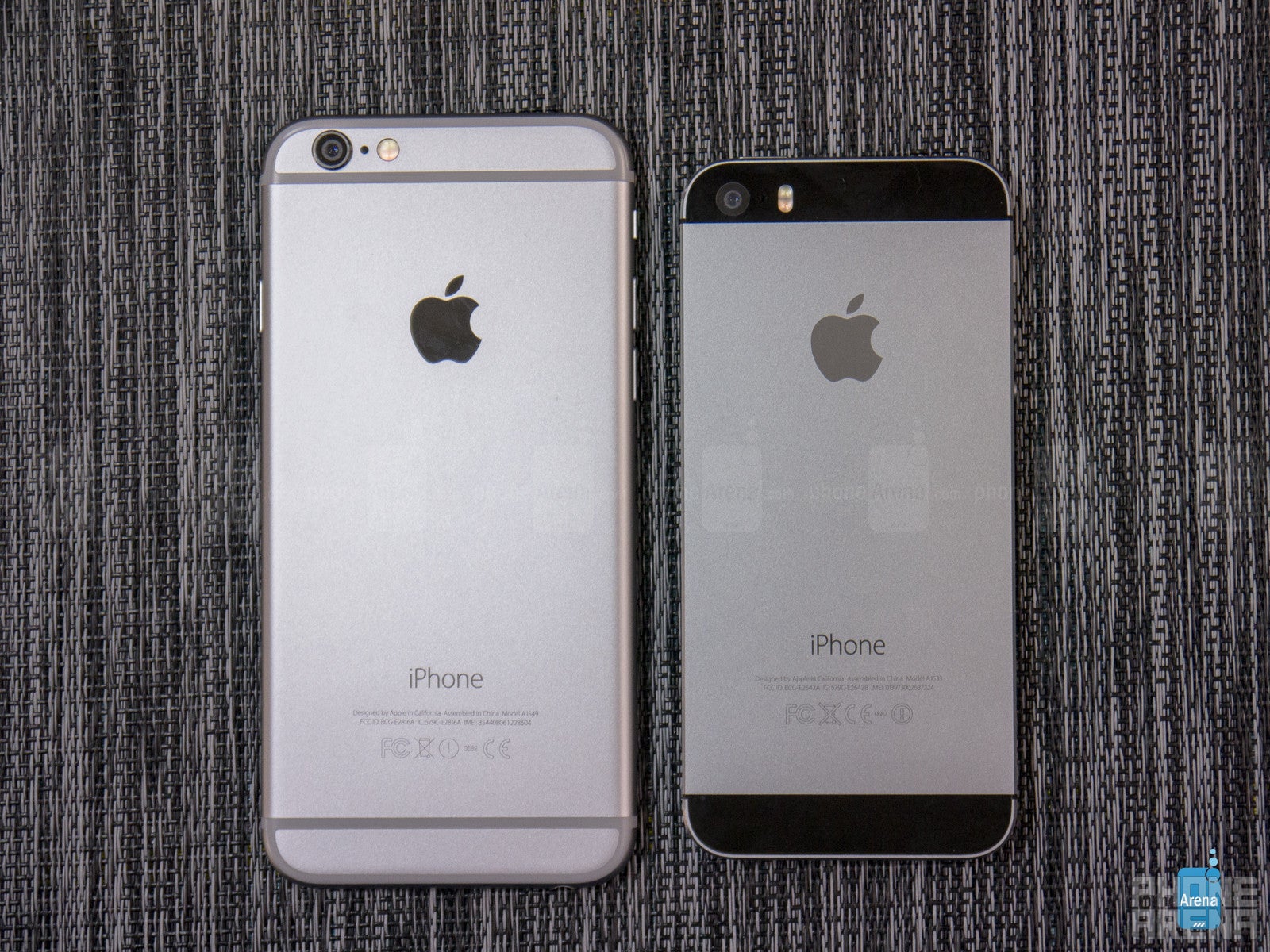
The iPhone 6 isn't just a bigger 5s, it brings a new design that changes how the phone looks and feels significantly. While the metal frame surrounding the 5s was flat and had these sharp edges, the one used by the iPhone 6 is rounded, giving the new phone rather different appearance and character. Also, gone are the small glass pieces that were present on the back side of the iPhone 5s. Instead, its successor goes for an all-metal back (a la HTC One), with some black antenna lines near the top and bottom ends ornamenting its look. This new design of the back is by no means bad, although most people don't seem to be in love with it. Meanwhile, the signature front appearance of the phone has been largely kept intact, with a new detail here being the slight curve of the front glass, adding to the overall rounded nature of the iPhone 6.
So, the new iPhone is bigger. While the iPhone 5s sits well in most hand sizes (with the exception of extra-large ones), switching to an iPhone 6 may initially feel slightly inconvenient, especially if you haven't used a big smartphone before. The larger size is something that one quickly gets used to though, since the iPhone 6 and its 4.7” screen don't come off as overwhelmingly big. We could say that the new iPhone is extremely close to the sweet spot between screen size and overall dimensions. So, yeah, after just a few days, or maybe even hours, using the iPhone 6 will feel pretty natural, and not that much more uncomfortable, compared to its smaller predecessor. The razor-thin profile of the iPhone 6 definitely helps in this regard.
Aside from that, both models have their 3.5 mm audio and Lightning ports situated on their bottom ends, so no changes in accessibility there. Meanwhile, the Nano SIM card slot also has the same positioning on both handsets – on the right hand side, and yes, both will require you to use a SIM card ejector tool, or a clip, in order to open it.
Overall, we can only say good things about the designs of the iPhone 6 and iPhone 5s, as they are both beautiful and extremely premium. The appearance of Apple's last-year flagship is probably a bit stricter in comparison, as its shapes are sharper, and it avoids “design frivolities,” such as the iPhone 6's antenna lines or the protruding camera, but on the whole, these are still minor details to consider the iPhone 6's design any less premium than that of its predecessor.

5.44 x 2.64 x 0.27 inches
138.1 x 67 x 6.9 mm
4.55 oz (129 g)

4.87 x 2.31 x 0.3 inches
123.8 x 58.6 x 7.6 mm
3.95 oz (112 g)

5.44 x 2.64 x 0.27 inches
138.1 x 67 x 6.9 mm
4.55 oz (129 g)

4.87 x 2.31 x 0.3 inches
123.8 x 58.6 x 7.6 mm
3.95 oz (112 g)
See the full Apple iPhone 6 vs Apple iPhone 5 size comparison or compare them to other phones using our Size Comparison tool.
Display
From 4” to 4.7”: Apple manages to increase the size of its mobile displays without serious compromises in screen quality
Now, this is where the iPhone 6 shows that it's a radical departure from what Apple has been doing with the iPhone line thus far. Flaunting a sizable, 4.7” display, the iPhone 6 openly recognizes the fact that the general consumer has gotten ready for, and is expressing willingness to use a big screen on a mobile. Thankfully, though, Apple has also increased resolution along with size, so the new display will deliver exactly the same pixel density as before – 326 ppi. For the record, the iPhone 6 has a resolution of 750 x 1334 pixels, while the iPhone 5s' resolution is 640 x 1136 pixels. And, since the new, 750p resolution of the iPhone 6 crosses the 720p mark, this has allowed Apple to call the new screen “Retina HD display”.
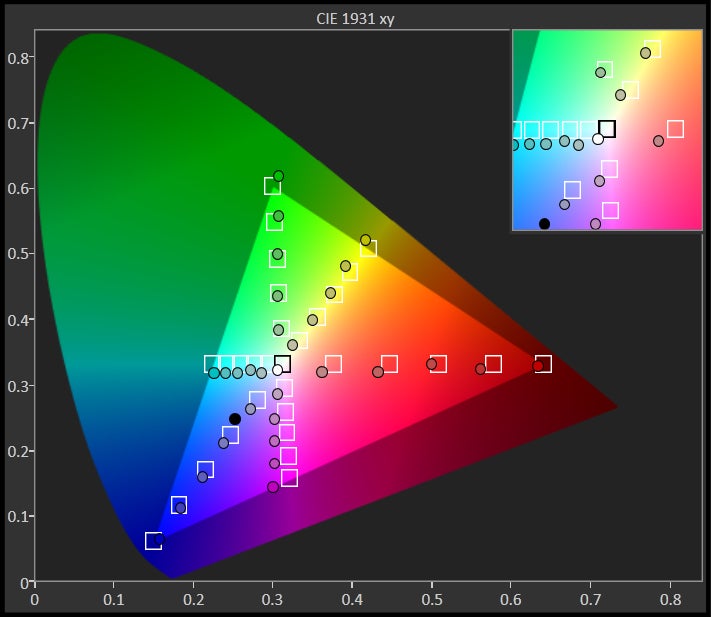
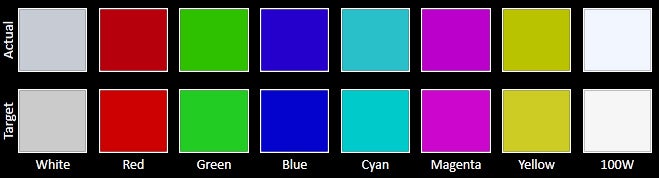
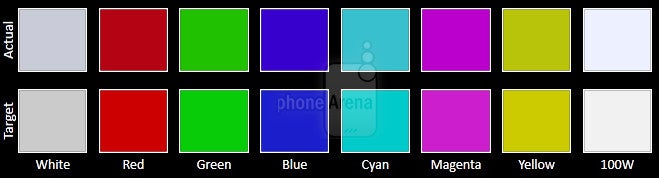
For those looking at the Delta E values (which stand for average 'color error'), those are ever so slightly higher on the iPhone 6, as you can see in the table below, but they are still considered in the safe zone.



Interface and Functionality
iOS 8 in its finest – running perfectly on both handsets, but no Apple Pay goodies on the iPhone 5s
Now, we won't be going into great depths with regards to the interface and functionality parts, simply because both the iPhone 5s and iPhone 6 run the same exact software – iOS 8. However, if you want to get some more in-depth information about iOS 8 and how it works on Apple's finest, just read our iPhone 6 review, and iOS 8 review. However, we will be sure to focus on any differences in the user experience one might encounter on both devices, though those are mostly minor.
The iOS 8 UI of the Apple iPhone 6
UI of the Apple iPhone 5s
There are some functional differences present in the iPhone 6 Plus, which let iOS 8 take advantage of its bigger screen – for example, there are additional options when certain apps are viewed in landscape mode, but those optimizations aren't available in the iPhone 6, so, as we said, you're actually getting an experience that's almost identical with that in the iPhone 5s.
Perhaps the biggest and most important functional difference coming with the iPhone 6 is its NFC antenna – and not just that, but it's ability to use this technology with the upcoming Apple Pay wireless payment system. Naturally, that's a huge advantage that the iPhone 5s lacks, but still, that doesn't mean that you won't be able to get Apple Pay support, should you stick with the iPhone 5s. However, you'll have to get an Apple Watch, once those start shipping sometime in early 2015, and this way, you'll be able to use the iPhone 5s + Watch combo in order to get support for Apple Pay. If the Apple Watch isn't your thing, though, and you're really into that Apple Pay stuff, going for the iPhone 6 remains your only option.
One other functional difference in the iPhone 6 is the addition of a barometer, which measures relative elevation – this data can be used in the Health app or other fitness-centric applications.
Being a year newer, the iPhone 6 has the advantage of using the latest mobile chipset by Apple – the A8. It comes with a 64-bit CPU of the dual-core kind, clocked at 1.4 GHz. Meanwhile, the dedicated graphics chip is the PowerVR GX6650. You can expect both of these components to outclass what's in the iPhone 5s and its A7 chip. In short, the A7 has a 1.3 GHz dual-core processor (64-bit as well), and the PowerVR G6430 GPU. Indeed, we're sure that the iPhone 6 has the upper hand when it comes to pure processing power, although it has to be noted that the iPhone 5s' internals are still to be considered top-notch.
Performance-wise, we're glad to see that iOS 8 runs perfectly on both handsets. Regardless if you're just browsing through the platform's cheerful menus, or executing some more resource-demanding tasks, both the 6 and the 5s will treat you to the iOS experience in its finest.
While Apple hasn't revealed the amount of RAM inside the new iPhone 6, tear-downs have suggested that the amount is the same as in the iPhone 5s – 1GB RAM. This may not seem much, but it's perfectly sufficient to make these phones run in a stable and snappy manner.
Last but not least, the storage options of the iPhone 6 are slightly different than those of the 5s. While Apple's last year flagship could have 16, 32, or 64 GB of internal space, the iPhone 6 offers the following variants: 16, 64, and 128 GB, so the company's latest smartphone will let you store even more content on it, should you opt for the largest capacity.
The iPhone 6 features a new, slightly faster LTE radio, which is a good thing for data-heavy users in the US. It's an LTE Cat. 4 radio that is promised to be capable of reaching the whopping 150 Mbit/s down, and 50 Mbit/s up. In comparison, the iPhone 5s is theoretically capable of reaching up to 100 Mbit/s, which is, naturally, still mighty fast. At the end of the day, your carrier's network and LTE coverage will also play a key role in what cellular speeds you'll be getting on your iPhone. Actually, your data speeds will depend much more on that, rather than the theoretical capabilities of the LTE radio. Of course, there's no need to panic if there isn't LTE network coverage near you, because both iPhones also support HSPA. The iPhone 5s can go up to 42.2 Mbit/s down and 5.76 Mbit/s up on an HSPA+ network, while the exact speeds for the iPhone 6 haven't been revealed yet, but we'd wager they are the same.
Software-wise, there's the latest Safari browser pre-loaded on both the iPhone 6 and 5s. Needless to say, it's a state-of-the-art mobile browser that will load webpages very quickly on both handsets, but we'd say the iPhone 6 delivers the slightly better browsing experience, courtesy of its significantly bigger screen. Naturally, the bigger panel will make reading and viewing web content a bit easier for your eyes, and a bit more entertaining for your mind. It's not a world of difference, but having the bigger screen (with the same pixel density) sure is nice.
Processor and Memory
The A8 is revving things up with a faster dual-core processor and better GPU, but the A7 still packs quite a punch
Being a year newer, the iPhone 6 has the advantage of using the latest mobile chipset by Apple – the A8. It comes with a 64-bit CPU of the dual-core kind, clocked at 1.4 GHz. Meanwhile, the dedicated graphics chip is the PowerVR GX6650. You can expect both of these components to outclass what's in the iPhone 5s and its A7 chip. In short, the A7 has a 1.3 GHz dual-core processor (64-bit as well), and the PowerVR G6430 GPU. Indeed, we're sure that the iPhone 6 has the upper hand when it comes to pure processing power, although it has to be noted that the iPhone 5s' internals are still to be considered top-notch.
While Apple hasn't revealed the amount of RAM inside the new iPhone 6, tear-downs have suggested that the amount is the same as in the iPhone 5s – 1GB RAM. This may not seem much, but it's perfectly sufficient to make these phones run in a stable and snappy manner.
Last but not least, the storage options of the iPhone 6 are slightly different than those of the 5s. While Apple's last year flagship could have 16, 32, or 64 GB of internal space, the iPhone 6 offers the following variants: 16, 64, and 128 GB, so the company's latest smartphone will let you store even more content on it, should you opt for the largest capacity.
Internet and Connectivity
The bigger screen of the iPhone 6 does make a difference when reading or browsing through web content
The iPhone 6 features a new, slightly faster LTE radio, which is a good thing for data-heavy users in the US. It's an LTE Cat. 4 radio that is promised to be capable of reaching the whopping 150 Mbit/s down, and 50 Mbit/s up. In comparison, the iPhone 5s is theoretically capable of reaching up to 100 Mbit/s, which is, naturally, still mighty fast. At the end of the day, your carrier's network and LTE coverage will also play a key role in what cellular speeds you'll be getting on your iPhone. Actually, your data speeds will depend much more on that, rather than the theoretical capabilities of the LTE radio. Of course, there's no need to panic if there isn't LTE network coverage near you, because both iPhones also support HSPA. The iPhone 5s can go up to 42.2 Mbit/s down and 5.76 Mbit/s up on an HSPA+ network, while the exact speeds for the iPhone 6 haven't been revealed yet, but we'd wager they are the same.
Web browsing on the iPhone 6
Surfing the web on the iPhone 5s
Software-wise, there's the latest Safari browser pre-loaded on both the iPhone 6 and 5s. Needless to say, it's a state-of-the-art mobile browser that will load webpages very quickly on both handsets, but we'd say the iPhone 6 delivers the slightly better browsing experience, courtesy of its significantly bigger screen. Naturally, the bigger panel will make reading and viewing web content a bit easier for your eyes, and a bit more entertaining for your mind. It's not a world of difference, but having the bigger screen (with the same pixel density) sure is nice.
Camera
Surprisingly small improvements in photo-taking, and a great new video stabilization feature
Over the years, the iPhone's ease of use, as well as its ability to deliver lovely results in a remarkably wide range of scenarios, have managed to turn it into one of the world's most popular cameras. While the iOS camera app has always been extremely simple and straightforward (which is part of what has made it so popular), with iOS 8, Apple is trying to add a bit more depth to the iPhone's camera software. To be more specific, you can now manually-tweak exposure right after you've touch-focused on a certain spot. It's an ingenious solution that will surely come in handy for many users. Hardware-wise, Apple has said that the camera sensor has been re-engineered, although the specs have remained mostly the same, at 8 megapixels and an F2.2 aperture.
The camera app of the iPhone 6
Camera interface of the Apple iPhone 5s
One are where the iPhone 6 improves upon its predecessor is the focusing method. The new 8 MP camera features what Apple calls 'Focus Pixels' – a flashy name for a technology that's already available – phase detection. The Galaxy S5 was the first smartphone to introduce phase detection autofocus to the world of smartphones, and it's now joined by the iPhone 6. What phase detection does for you is that it allows the camera to focus in a quicker and more reliable manner, especially when you're taking pictures in darker environments. Not that the 5s is slow, quite the contrary, but the iPhone 6 takes things even further. To prove that, we've put both handsets through our 'Camera speed' test, and have found that the performance improvements are really noticeable. The time the iPhone 6 needs to take a picture is about 1.9 seconds, while the 5s needs 3 seconds. Similar improvements are in place for HDR photos as well: 2 seconds for the iPhone 6, and 3.5 seconds for the 5s. See how these figures compare to the competition in the Camera Speed table below!
Although we were a bit disappointed by the lack of substantial improvement when it comes to outdoor, daylight photos, we do appreciate the upgrade in low-light scenarios. The iPhone 6 doesn't magically make things brighter and more detailed, but it does manage to preserve a very similar level of detail, all the while lowering noise levels, which is always a good thing. Night photos are still super-low on the details front, as night photos from phones have always been, but at least they are less grainy with the new iPhone.
Sample images
Not much has changed with the 1080p video quality. The footage is still great for a smartphone, but the major improvement here is called Cinematic Video Stabilization. While the video captured with the iPhone 5s exhibits each and every motion or shake of the cameraman's hand, footage from the iPhone 6 appears super-stable and fluid. It's a great upgrade to the device's video capture capabilities. What's more, recorded sound seems to be just a tad cleared with the iPhone 6.
One additional advantage of the new iPhone camera is its ability to produce slow-motion video at 240 FPS. The iPhone 5s can also do slow-motion footage, but only at 120 FPS, making it slightly less flashy. Perhaps more importantly, though, the iPhone 6's supports continuous auto-focus while shooting video, whereas the 5s uses touch-to-focus.
Sample Videos
Multimedia
Multimedia is where the iPhone 6's 4.7” screen leaves its biggest mark
Well, do we even need to say that the iPhone 6 is the much better device to enjoy most types of media, thanks to its bigger screen? This is an asset that's instrumental to the way people enjoy content, and it's almost a given that the bigger the screen of a mobile device, the better. Or at least that's when it comes to things like games and video playback. The iPhone 5s' display still makes content look very pretty, but the larger size of the iPhone 6 makes everything better and more comfortable to view. This is one area where the 4.7” display really adds a lot of value.
Meanwhile, the speaker of the iPhone 6 isn't that much different than the one already in place with the iPhone 5s. Tones emitted by it are loud and decently sounding, so it's definitely among the more capable ones out there. Still, having stereo speakers flanking the screen would have been lovelier, especially when Apple already has those thick top and bottom bezels. As always, the EarPod headphones coming with the iPhone are lovely to wear and listen to. Nothing new to mention here – just that both handsets will deliver some nicely sounding tunes through their earphones.
Call quality
The new thing here is the Wi-Fi calling abilities of the iPhone 6 – it's able to utilize hotspots in order to improve call handling and quality, and in a seamless way at that, but the thing is that this feature is carrier-dependent, so it'll need time before it gets widely available. In the US, T-Mobile is currently the only carrier to support it.
Battery life
Official statistics back these observations up, with 3G talk time going from 10.4 hours in the 5s to 14 hours in the 6, and stand-by going from 10 hours in the 5s to 10.4 hours in the 6. Once again – not that big of a change, but still slightly better than before. Well, we guess having an ultra-slim metal phone requires some trade-offs.
Conclusion
It's clear that if you're on the lookout for a new smartphone now, the iPhone 6 will be a much better investment, seeing that you'll be getting a phone that improves on the 5s' experience in almost every way, with the exception of one-handed comfort. Naturally, the smaller handset will be easier to handle and use, but there's obviously a lot to gain from having a larger screen. That is why many users will be willing to sacrifice a bit of comfort for a significantly larger diagonal. Plus, the new iPhone 6 is not really pushing things too far.
Still, in terms of technical differences, we've seen that, save for some not-so-important features, the iPhone 5s is by no means underpowered. It can do the same things as the iPhone 6, and in many cases, it does them equally well. These facts should make current iPhone 5s owners really question whether they need to upgrade to the 6. Yes, the bigger screen is a great feature, but it doesn't improve things so dramatically.
If you're doing a lot on your phone, like really using a lot of features and consuming significant amounts of content on a day to day basis, then getting the iPhone 6 will certainly be worth it – it does make things easier to look at, and it adds some lovely new things such as built-in support for Apple Pay, 240 FPS slow-motion capture and Cinematic Video Stabilization. If you're just fine the way you are now with the 5s, and you don't feel like you could get so much more out of your mobile device (meaning you aren't that impressed by what the iPhone 6 brings to table), then in this particular case, upgrading should probably wait for another year, when the amount of new features, and the reasons for an upgrade will get more, and harder to resist.



Popular stories
![Verizon denies SpaceX is buying it [UPDATED]](https://m-cdn.phonearena.com/images/article/182254-wide-two_350/Verizon-denies-SpaceX-is-buying-it-UPDATED.webp)
Latest News
Things that are NOT allowed:
To help keep our community safe and free from spam, we apply temporary limits to newly created accounts: