A deeper look at Cortex A50: 64-bit ARMv8 CPU cores running at up to 3GHz on phones and tablets in 2014

Share:
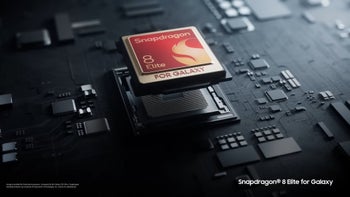
The Cortex A50 initally comes in two versions conveniently called LITTLE and big, technically represented by the Cortex A53 (LITTLE) and Cortex A57 (big). Both are based on the latest ARMv8 architecture that prioritizes power efficiency.
Unlike other companies, ARM is only designing the architecture while other companies like Apple, Qualcomm and so on build the actual chips. ARM expects the first Cortex A50 chips to launch at 28nm and 20nm manufacturing nodes, but it also plans to have them on 14nm in the future as well.
The big news obviously is that Cortex A50 brings 64-bit processing to the mobile space. Currently, Android and other mobile operating systems are 32-bit, and that means they can address as much as 4GB of memory. That is definitely not a problem in the mobile space right now (we barely have phones with 2GB of RAM), but desktop applications have long ago bumped into that limit for complex tasks in programs like say Photoshop, ArchiCAD, and so on. Having access to more than 4GB of RAM means that more intensive tasks can all be processed in the RAM. This move to 64-bit is not going to happen overnight in mobile, but ARM whips out the new design in anticipation of such a future.
The two variations of Cortex A50 target different goals. The “big” Cortex A57 aims for performance. It is similar to a Cortex A15 design having a 15-stage pipeline with a 3-wide instruction decoder. The A57 will run at clock speeds of up to 3GHz (depending on the chip manufacturer), and this will bring a noticeable 20% to 30% boost in speeds over Cortex A15.
The “LITTLE” Cortex A53 is similar to the Cortex A7, but again it adds 64-bit support. A53 is a much simpler architecture that focuses on power efficiency and performance-wise ARM promises it would match current A9-based systems. Clock speeds are expected to max out at around 1.3GHz. However, at current 32nm manufacturing it would take up only 60% of A9’s space.
As you’d expect, “big” and “LITTLE” could be combined in various big.LITTLE configurations allowing for the more power efficient LITTLE core to take over when you are doing simple taks like navigating the UI, and the big core would kick in when you start playing games for example.
Overall, this is the reassuring and logical next step for ARM, building up on the current strategy of using Cortex A15 for the high-end and Cortex A7 for the low-end. With Intel getting that second-gen Atom core ready soon, it will be pretty exciting watching the mobile chip race in the next couple of years.
source: AnandTech, GigaOM
Share:
23 Comments
1. MeoCao (unregistered) posted on 31 Oct 2012, 04:37 2 0
Can ARM see Intel in rear window mirror?
5. PackMan posted on 31 Oct 2012, 05:02 5 0
In desktop space---NO.
In server space---NO.
In mobile/tablet space---Difficult to say.
2. SGSatlantis posted on 31 Oct 2012, 04:44 4 1
"ARM is only designing the architecture while other companies like Apple, Qualcomm and so on build the actual chips."
I thought that Samsung builds Apples chips, Apple designs them or builds upon ARMs design?!
4. Berzerk000 posted on 31 Oct 2012, 05:00 4 2
Apple designs the chips, Samsung builds them. Apple's A6 processor uses a similar instruction set to ARM Cortex, but it is a custom chip sort of like Qualcomm's Snapdragon.
8. pokharkarsaga posted on 31 Oct 2012, 05:09 1 0
In short every manufacturer uses ARM architecture while some like Apple & Qualcomm modifies the stock version architecture and Samsung,ST Ericsson,OMAP etc uses the same stock version to build the SOCs.
7. farhanmohdyousaf posted on 31 Oct 2012, 05:07 2 0
its abit complicated, this is from what i understand .. the whole chip is called SoC (system on chip).. SoC has many components, the ones usually talked about are the CPU (central or main processor which runs the operating system) and GPU (graphics processor which handles anything related to graphics,pictures,videos,games etc).. there is also RAM bunch of controllers and other smaller things in these SoC.. so for most of these companies like samsung, Nvidia, and TI use the CPU from ARM like cortex A9 in tegra 3 and pair that up with RAM, GPU and make the whole chip.. thats what it means that they design their own chip coz they decide to pair which CPU with which GPU etc. then these chip designs go to foundry's for fabrication and they r the ones who actually make the chip example of that are TSMC, UMC, samsung have their own foundry's etc.
9. farhanmohdyousaf posted on 31 Oct 2012, 05:18 1 0
also i should add that apple and qualcomm take up these CPU designs from ARM and customize them abit according to their requirement. and they are almost always sort of in between kind of thing. forexample krait from qualcomm and swift from apple are both in between ARM's cortex A9 and A15
21. yowanvista posted on 31 Oct 2012, 13:35 0 0
Qualcomm SoCs have nothing to do (or in between) with the Cortex-AX family, they are totally different inside out and there is a huge difference when it comes to their internal components. Companies can't also integrate any kind of GPU into any random mobile SoC since each will only accept a specific GPU family. For Snapdragon you've got the Adreno, Exynos with Mali, Omap & Apple AX will opt for PowerVR and Nvidia uses their proprietary ULP Geforce solutions. Others like Vimicro will adopt the Vivante GPUs and so on.
23. farhanmohdyousaf posted on 10 Nov 2012, 21:00 0 0
i was talking about krait and swift being in between cortex A9 and cortex A15. in terms of architecture, design, performance etc
15. yowanvista posted on 31 Oct 2012, 06:32 1 0
It supposedly has 64-bit registers but is still on the ARMv7 instruction set. Their K3V2 is just a hyped SoC with more registers, that's all.
6. Berzerk000 posted on 31 Oct 2012, 05:02 1 2
Mother of God, 3x the performance of the quad S4 Pro and Exynos 5 with the same level of power consumption... Soon phones/tablets will be desktop replacements.
11. darac posted on 31 Oct 2012, 05:23 1 0
Actually, I think it's 3x the current chips and about 30percent more than A15.
But given that 2ghz A15 seems to be at almost about half the power of 2.66ghz Intel i5, you are pretty much right about the pc replacement
18. -box- posted on 31 Oct 2012, 08:38 2 0
Arguably; they may have the power but there also has to be the software optimization and RAM capabilities at work. Personally I envision a time when a person's entire digital interactions could be accomplished with a phone-size device, much like a smartphone but even more advanced than today's, which interacts wirelessly with peripherals, so a person could take that device to an "internet cafe" and just use the cafe's screen and keyboard and such, keeping all their info on their own phone, then go to the office and do the same.
19. darac posted on 31 Oct 2012, 08:52 2 0
Exactly..thats how i imagined it turning out years ago.
The only real problems with the idea are ones no tech can solve - losing your phone and using it too much :p
12. smartphonelover posted on 31 Oct 2012, 05:26 0 1
Processors and screens seem to be the areas of mobile devices like smartphones and tablets that are growing the fastest. With the processors becoming so powerful in a short amount of time, I wonder how much screens will improve. I mean come on, the Nexus 10 has 2560 by 1600, and the Droid Incredible DLX (or w/e it's called) has Full HD in 5 inchs. What's next, 4k resolution for a tablet, and 2.5K for a 5 inch phone? I say keep on going lol. Though I think Full HD on a phone is plenty enough, I will love to see if they improve it more :)
16. yowanvista posted on 31 Oct 2012, 06:33 0 0
Now we need a version of Android with a 64-bit version of the linux kernel 3.x, that shouldn't be difficult at all.
17. mr.smith posted on 31 Oct 2012, 07:09 1 0
This is great and with Samsung heavily investino in UV, ultraviolet steriolithography, we could see some mind boggling performance in mobile devices soon!
20. Toad222 posted on 31 Oct 2012, 10:03 0 0
Quad A-15's @ 2.5 Ghz push about 35,000 MIPS, this is Mid range desktop level performance. Certainly no slacker, the A50's probably increases the IPC to almost current high end desktops CPU's MIPS (Millions of Instructions per second).