T-Mobile and Verizon seek FCC approval to test this band for 6G use
Which of the Big 3 US carriers will be the 6G leader?
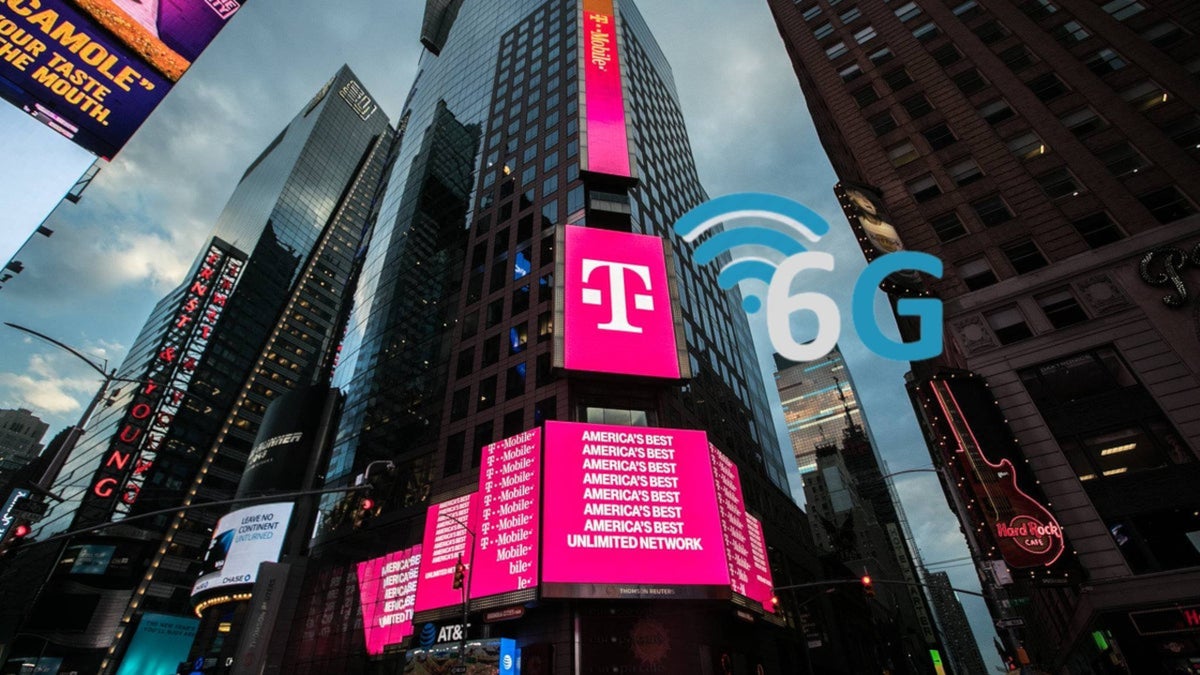
T-Mobile and Verizon test spectrum for 6G | Image by T-Mobile
So let me ask you a question. Has your experience with 5G matched or exceeded the expectations you had for the current generation of wireless connectivity? Or has 5G been a total disappointment for you?
In some ways, 5G proved to be disappointing
Some of the things that the launch of 5G was expected to bring have appeared. Self-driving taxis are available in some areas, although not as widespread and error-free as forecast. We've also heard about some remote surgeries being successfully completed using 5G connectivity, but these operations were performed at nowhere near the numbers predicted before 5G arrived.
The 4GHz band appears to be the best for 6G
Some of the US Big 3 carriers have been testing out frequencies in the 4GHz band for 6G service. Last week, a report from the CTIA (formerly the Cellular Telecommunications Industry Association), the wireless industry's main trade association, revealed that the 4 GHz band, along with Upper C-Band, 2.7 GHz, and 7 GHz airwaves are perfect for 6G.
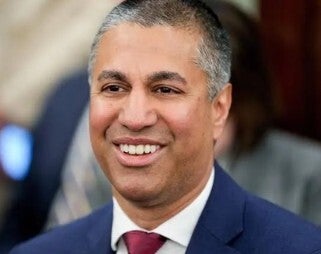
Ajit Pai, President and CEO of the CTIA. | Image by CTIA
Former FCC Chairman Ajit Pai, the current President and CEO of the CTIA, says, "The 4 GHz band is a unique opportunity to strengthen America’s wireless future." That band ranges from 4.4-4.94 GHz. While some might say that 4 GHz is perfect for 6G service, Verizon and T-Mobile aren't 100% sold yet; both carriers are seeking FCC permission to perform tests in these airwaves.
Which US Big 3 carrier will be the 6G leader?
2 Votes
For example, Verizon is requesting that the FCC grant its request for an experimental authorization to use the 4.8-4.9 GHz band to test Ericsson software and hardware in a non-commercial environment near its lab in Los Angeles. Verizon also lists Samsung as a manufacturer of some of the gear being tested. The carrier seeks the grant to test this as a private network not connected to any commercial operator, for a period of one year.
The 4 GHz band is a unique opportunity to strengthen America’s wireless future. Beginning work this fall is our best chance at freeing up the spectrum needed to meet surging AI demand, fuel innovation, expand access to affordable broadband, and reassert America’s global wireless leadership.
Ajit Pai President, CEO, CTIA
T-Mobile and Verizon seek FCC approval to run tests in the 4.8-4.9 GHz band
Like Verizon, T-Mobile is seeking experimental authorization for a two-year period. The wireless provider also seeks to conduct tests in the 4.8-4.9 GHz band and these tests would be held at six sites near the carrier's Bellevue, Washington headquarters.
Unlike its rival, T-Mobile didn't name the companies whose equipment it is testing. However, it did state that the testing would involve up to six temporary fixed base stations with three installed at T-Mobile's Bellevue headquarters and the other three will take place at T-Mobile’s lab campus.
Each base station is expected to be used with up to six experimental mobile devices. Aside from the aforementioned tests, T-Mobile is also requesting permission to conduct tests at 2.7 GHz.
It should be noted that the government is very knowledgeable about 4 GHz because the band is used by federal agencies related to defense, public safety, and homeland security. But a study commissioned by the CTIA revealed that the spectrum used by these agencies could be moved to comparable spectrum, squeezed into smaller slices of airwaves, or moved to a different frequency.
While it appears that AT&T has not filed to test at 4 GHz, such a request might have been made under the radar.
Analysts project that US networks, with wireless demand rising 20% each year, need to add 820 MHz of additional mid-band spectrum. Without it, Accenture, the company that helps corporations and government agencies solve complex issues and use new technologies, warns that one-third of future wireless demand could go unmet. This would threaten America's AI and 6G leadership.
It's never too early to figure out which bands you need for the next generation of wireless connectivity. When Verizon and AT&T decided to use the fastest mmWave spectrum to build out their 5G network, it was a bad idea because high-band spectrum does not travel large distances or penetrate buildings and trees, making the use of mmWave an expensive proposition.
T-Mobile, on the other hand, decided to use mid-band spectrum for its 5G build out. While not as fast as mmWave, mid-band travels faster and penetrates buildings better. Obtaining Sprint's hoard of 2.5 GHz mid-band spectrum in the $26 billion deal gave it a lead in 5G, that it arguably kept to this day. But the launch of 6G will wipe out the advantages that T-Mobile has in 5G leaving the top spot in 6G wide open to whoever wins the competition.
Which of the Big 3 US carriers will be the 6G leader?
Interestingly, no carrier has ever been the leader for two consecutive generations. Verizon was the leader in 3G, while AT&T was the early 4G LTE leader followed by Verizon. And of course, T-Mobile is the 5G leader. Will T-Mobile be the first to capture the lead for two consecutive generations? We may not know until after 2030.
Here are some more great articles to read:


Popular stories

Latest News
Things that are NOT allowed:
To help keep our community safe and free from spam, we apply temporary limits to newly created accounts: