T-Mobile shareholders and US government reportedly discourage a change of hands
T-Mobile has told Deutsche Telekom it's not interested in a merger.
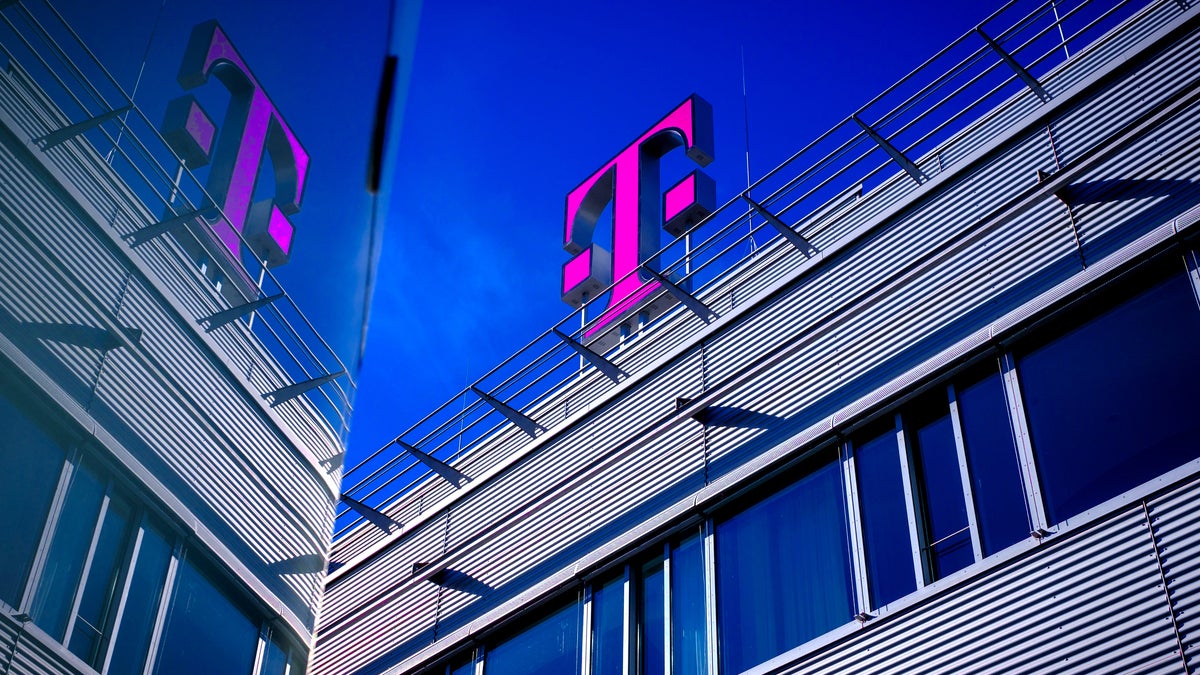
T-Mobile's German parent wants to absorb it. | Image by Light Reading
In April, reports surfaced that T-Mobile and its German parent company Deutsche Telekom (DT) were considering a merger. T-Mobile's US executives have reportedly told DT to back off.
Some of T-Mobile's minority shareholders, primarily large institutional investors, don't want the merger to go through because DT is growing much slower than T-Mobile, per Semafor.
Given this resistance, any vote to approve the deal is unlikely to pass.
Meanwhile, US government officials have told T-Mobile that regulators might demand guarantees that T-Mobile's revenue remains stateside. T-Mobile shelled out over $2 billion in dividends to DT last year alone.
Faced with the pushback from both investors and Washington, T-Mobile’s US leadership pulled its support for the deal, which would have valued the combined giant at $300 billion.
DT holds a controlling 53% stake in T-Mobile. Back in the day, the German company acquired VoiceStream Wireless, which later became T-Mobile.
A decade later, a struggling T-Mobile had become a headache for DT. After an unsuccessful attempt to sell the company to AT&T in 2011, DT turned things around, catapulting T-Mobile into one of the most valuable providers on the planet.
Today, T-Mobile generates the majority of DT's profit and is worth about two-thirds of its market value.
Former CEO John Legere gets credit for lighting a fire under T-Mobile, but it was DT's CEO Timotheus Höttges who transformed T-Mobile from a cash-burning carrier to the success story it is today.
However, T-Mobile seems to have hit a wall. Expanding into fiber appears to be the way out, but buying more companies requires investment. If DT and T-Mobile merge, securing capital will be much easier.
Because both companies operate in vastly different markets, a merger wouldn't create meaningful cost savings. And while a deal may make borrowing easier for T-Mobile, it's financially strong enough to chart its own course.
Instead of making the combined entity more valuable, a merger could drive investors away and tank the stock price.
T-Mobile will likely only be weighed down by DT. It has far more to gain by reviving its competitive spirit than by tangling itself in a cross-continental merger.
Nobody in the US wants it
Some of T-Mobile's minority shareholders, primarily large institutional investors, don't want the merger to go through because DT is growing much slower than T-Mobile, per Semafor.
Meanwhile, US government officials have told T-Mobile that regulators might demand guarantees that T-Mobile's revenue remains stateside. T-Mobile shelled out over $2 billion in dividends to DT last year alone.
Faced with the pushback from both investors and Washington, T-Mobile’s US leadership pulled its support for the deal, which would have valued the combined giant at $300 billion.
What should T-Mobile do?
297 Votes
Merge with DT.
4.04%
Merge with SpaceX.
20.2%
Become the Un-carrier again.
75.76%
It made little sense for T-Mobile
DT holds a controlling 53% stake in T-Mobile. Back in the day, the German company acquired VoiceStream Wireless, which later became T-Mobile.
A decade later, a struggling T-Mobile had become a headache for DT. After an unsuccessful attempt to sell the company to AT&T in 2011, DT turned things around, catapulting T-Mobile into one of the most valuable providers on the planet.
Today, T-Mobile generates the majority of DT's profit and is worth about two-thirds of its market value.
Why was T-Mobile considering it then?
Former CEO John Legere gets credit for lighting a fire under T-Mobile, but it was DT's CEO Timotheus Höttges who transformed T-Mobile from a cash-burning carrier to the success story it is today.
T-Mobile doesn't need DT to hold its hand
Because both companies operate in vastly different markets, a merger wouldn't create meaningful cost savings. And while a deal may make borrowing easier for T-Mobile, it's financially strong enough to chart its own course.
Instead of making the combined entity more valuable, a merger could drive investors away and tank the stock price.
T-Mobile will likely only be weighed down by DT. It has far more to gain by reviving its competitive spirit than by tangling itself in a cross-continental merger.
Want to know more about T-Mobile's struggles?
- Read about the SpaceX threat
- Discover why it's losing its 5G lead
- Find out why some customers want to ditch it


Popular stories


Latest News

Things that are NOT allowed:
To help keep our community safe and free from spam, we apply temporary limits to newly created accounts: