Editorials · Reviewer Insight
Samsung no longer deserves to call its flagships "Ultra"
Sorry Samsung, Chinese flagships made your Galaxy Ultra look ordinary

This article may contain personal views and opinion from the author.
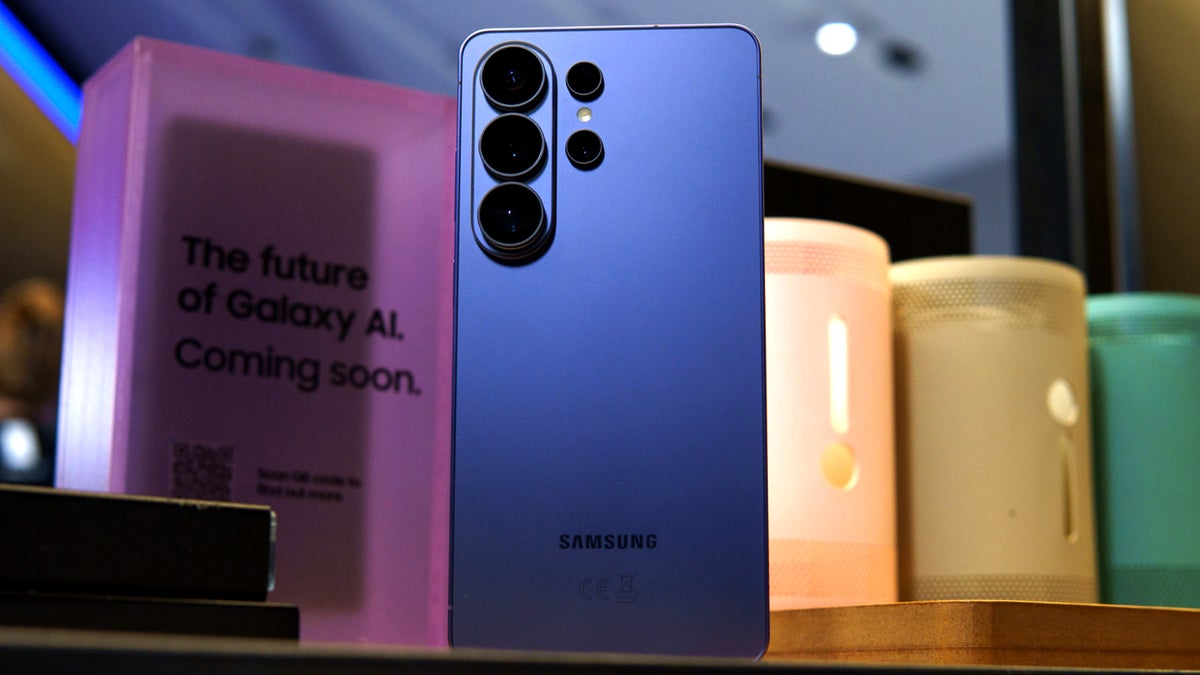
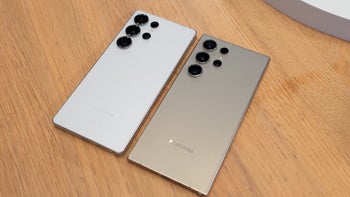
Ultra in name only. | Image by PhoneArena
We're living in the golden age of Ultra phones right now. Exceptional camera hardware, large batteries, and pretty much any modern hardware feature you can think about being part of their specs sheets.
And then… there's the Galaxy S Ultra model. It is called an "Ultra", surely, but is it on the same level as its similarly named rivals?
I don't think so.
It's a tier lower than devices like the Oppo Find X9 Ultra, Vivo X300 Ultra, the Huawei Pura 90s Pro Max (which undersells its ultra status with a more grounded Pro Max). Even recent top-tier flagships like the Oppo Find X10 Pro Max and the Vivo X500 Pro Max beat the Galaxy S26 Ultra in most scenarios I can think of.
Samsung has been idly resting on its laurels for far too long, and it has been overtaken by many of its rivals already. I'm afraid getting up to speed might no longer be possible here as long as the company skips actual hardware upgrades for small and iterative improvements that wouldn't help it make strides.
It's not about the name, but the message
You'd think I'm arguing semantics and stylistic choices here. No. It doesn't really matter what a device is called. What matters is that the largest Android manufacturer, the most influential and most capable one, seemingly fails to catch up with some of its direct rivals. It doesn't offer anything remotely similar to what they are peddling to the high-end market.
I mean, there was a time, nearly seven years ago (right when the Galaxy S20 Ultra arrived), when everything was roses for Samsung. The company was riding the high from the exceptionally well-received Galaxy S10+ and Galaxy Note 10+, which were proper flagships through-and-through. The exciting next step in early 2020 was the Galaxy S20 Ultra, a new, even more promising device family, which wanted to turn things up to eleven.
The Galaxy S20 Ultra was the crown jewel of Samsung's first truly 5G device launch, had a massive at the time 5,000 mAh battery (ironically just as large as the one on the Galaxy S26 Ultra this year), had 12 GB of RAM, and most importantly, a quad camera with a long 4X periscope. It also had a microSD card slot.
And certainly, it was an outstanding device that definitely deserved the extremely exclusive at the time Ultra moniker.
But then... things got really repetitive really fast. After a slightly iterative Galaxy S21 Ultra, we finally got back the S Pen stylus with the Galaxy S22 Ultra, but the range peaked with the 2023 Galaxy S23 Ultra, which I still think is the best device to be released by Samsung in this decade.
Competition never sleeps
Meanwhile, while Samsung was playing "spot the difference" with its Ultra phones, China's industrious and exceptionally competitive Android manufacturers observed from the sidelines and quietly launched an overwhelming offensive on the Android market that easily captured the very high end of it.
The biggest gap is camera hardware and performance. Although Samsung supplies sensors to some of the finest camera phones available right now (the Vivo X300 Ultra uses an ISOCELL sensor for its 200 MP periscope, while the Oppo Find X10 Pro Max relies on Samsung sensors completely), the Galaxy S26 Ultra doesn't really stack up in terms of quality or image processing despite mixing and matching ISOCELL and Sony sensors itself.
As a result of this less than impressive camera hardware, Galaxy cameras have stagnated and relied too heavily on basic photography crutches for a while now.
In low-light or just normal lighting conditions? Be certain that the Galaxy S26 Ultra or any previous flagship will favor the lowest shutter speed and ISO, which is almost always guaranteed to result in a blurry photo with a smudged subject that isn't worth saving. Just ask anyone with little kids or pets that uses a Galaxy device, and they will probably tell you the same if they are truthful. I've been in the same two scenarios and experienced this firsthand, which is the reason why I'm not daily driving a Galaxy phone anymore.
Recent additions to the camera assistant have introduced an optional minimum shutter speed of either 1/60s or 1/120s. However, this is a geeky option that doesn't fix the core problem but only addresses the symptom. Even with this feature utilized, photos still turn out way grainier and noisier than what a rival device like a Pixel or an iPhone would deliver, let alone a camera-centric flagship like a Vivo X300 Ultra or the Find X10 Pro Max.
Past problems are still plaguing the company
What about the battery?
I get where Samsung is coming from. The Galaxy Note 7 is a PR stigma it will never fully recover from, which is why the company has been extra careful about its batteries ever since. But then again, a literal decade has passed since, and it's time to move on as technology has largely progressed since then.
Samsung's reluctance to rely on the latest silicon-carbon battery technology until the Fold 8 series launched this summer is a direct correlation to this murky past, and its flagships have always relied on measly 5,000 mAh batteries ever since.
In the meantime, China has been developing the silicon-carbon technology to such extents that locally made mid-range compact phones with 8,000-9,000 mAh batteries and possibly larger are now a reality. The Honor Magic 9 Super, for example, is just 8.1 mm thin but has an 11,000 mAh silicon-carbon battery in the back. Astonishing.
And I get it, it could be a mix between economical reasons and long-term degradation concerns, but silicon-carbon batteries haven't proved to be any worse than their older lithium-ion predecessors. I've been using a device with a silicon-carbon battery, and it has been smooth sailing for more than a year and nearly 200 charge cycles on it with perfect health. I don't think any phone with a lithium-ion battery would have held up just as fine.
The Galaxy S27 Ultra doesn't sound like a major upgrade
Based on all the rumors, the Galaxy S27 Ultra will not be a major step in the right direction.
While it will possibly feature a slightly larger battery, it will be "sidegrading" the camera by dropping the obsolete 3X telephoto (an outstanding move), and possibly the laser autofocus, which is baffling to me. It definitely has a spot on an Ultra flagship, and removing it makes no sense at all. If anything, dropping the laser autofocus would make things worse for Galaxy shutterbugs.
Generally, I'm pessimistic that the Galaxy S27 Ultra will turn things around for the company.
I criticize Samsung because I want it to succeed
You know what they say: "Your biggest haters are secretly your biggest fans", and I'd agree with that. While my criticisms could easily label me as a "Samsung hater" by the manufacturer's most devoted fans, I want to assure you I'm anything but. I do want the Galaxy S27 Ultra to be great, and I want it to kick off a new era for the company.
I use a Samsung tablet at home to enjoy multimedia and read e-books, as well as enjoy social media on a large screen, and I love it. I also have a pair of Samsung Buds 4, and I love these as well. It's only the phones that don't really meet my requirements.
We should also acknowledge the fact that One UI is wonderful right now. Functional and customizable, this one is peak Android. Samsung, along with Google, are the last two remaining Android makers that haven't defaulted to an iOS-like interface and still maintain a semblance of uniqueness.
I am rooting for Samsung and definitely want to see the company back on track with developing frontier flagships that surely feel "Ultra".
Because right now, they really don't.

Popular stories


Latest News
Things that are NOT allowed:
To help keep our community safe and free from spam, we apply temporary limits to newly created accounts: