Samsung just unveiled the Ultra watch we've all been waiting for.
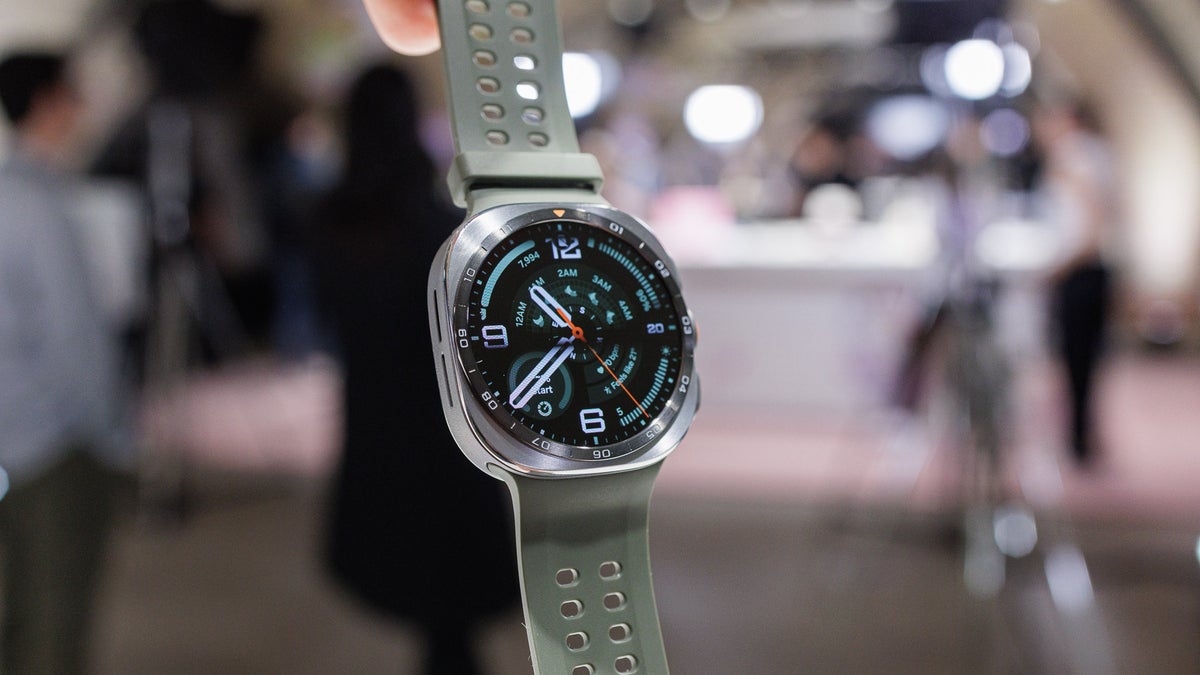
The new Galaxy Watch Ultra 2 fixes my biggest gripes with the first edition — it no longer feels too bulky. With a much thinner and lighter body (and improved bands), it's much more comfortable to wear. But Samsung did not stop here and the Watch Ultra 2 now comes with a massive 800mAh battery, 35% bigger than the original.
This is a big deal, the first Galaxy Ultra 1 lasted me around two days, and this second gen brings multi-day endurance. While it’s still too early to tell, I think most people will get three full days on a single charge with the Ultra 2.
Those with Garmin watches lasting more than a week might be giggling in the corner, but the Galaxy Watch Ultra 2 is no Garmin. It has a real operating system, Wear OS, while the Garmin runs on a limited proprietary platform, so the Galaxy has apps and a lot more polish.
Samsung also updated the base series watches with the new Galaxy Watch 9 family which is thinner, lighter and cheaper. The Watch 9 comes in two sizes at 40mm and 44mm. These watches, however, have a much smaller battery than the Ultra, so you need to charge them every single day.
Here are the battery sizes for all the watches:
Galaxy Watch Ultra 2 — 800mAh (up 35% from 600mAh on Ultra 1)
Galaxy Watch 9 44mm — 445mAh (up 2% from 435mAh on Watch 8)
Galaxy Watch 9 40mm — 390mAh (up 20% from 325mAh on Watch 8)
Galaxy Watch Ultra 2: now $250 off with trade-ins
$449
99
$699
99
$250 off (36%)
The Galaxy Watch Ultra 2 has just landed at the official store. With a larger battery and a rugged design, this new smartwatch is the ultimate companion for many. Get yours and save up to $250 with a trade-in or receive a $100 Samsung Credit, no trade-in required.
The Galaxy Watch 9 brings improved health and wellness features. It's already available at the Samsung Store, and you can now buy it for up to $250 off with a trade-in.
The Galaxy Watch 9 brings improved health and wellness features. It's already available at the Samsung Store, and you can now buy it for up to $250 off with a trade-in. This is the 44mm variant with Bluetooth connectivity. Alternatively, you can get a $50 Samsung Credit, no trade-in required.
Another big change to all new Galaxy Watches is that they now run on a Qualcomm chip, the Snapdragon Wear Elite (also known as Qualcomm SDW6100, and it's a 3nm chip). The original Ultra shipped with a Samsung-made Exynos W1000 processor, and Qualcomm chips are just more powerful, they enable more on-device AI capabilities, but most importantly — they promise to be more efficient.
Samsung says you get 30% more CPU and 20% more GPU performance with the Snapdragon Wear Elite chipset, plus improved response and launch times, and the watch indeed feels a bit snapper and smoother.
Both the Watch Ultra 2 and Watch 9 come with 2GB of RAM on board, with the Ultra getting 64GB of on-board storage and the Watch 9 gets 32GB.
I guess that at least some of the new features like raise to talk (without the need to say any keyword) arrive on the new Galaxy Watches thanks to the Snapdragon chipset.
Display
Image by PhoneArena
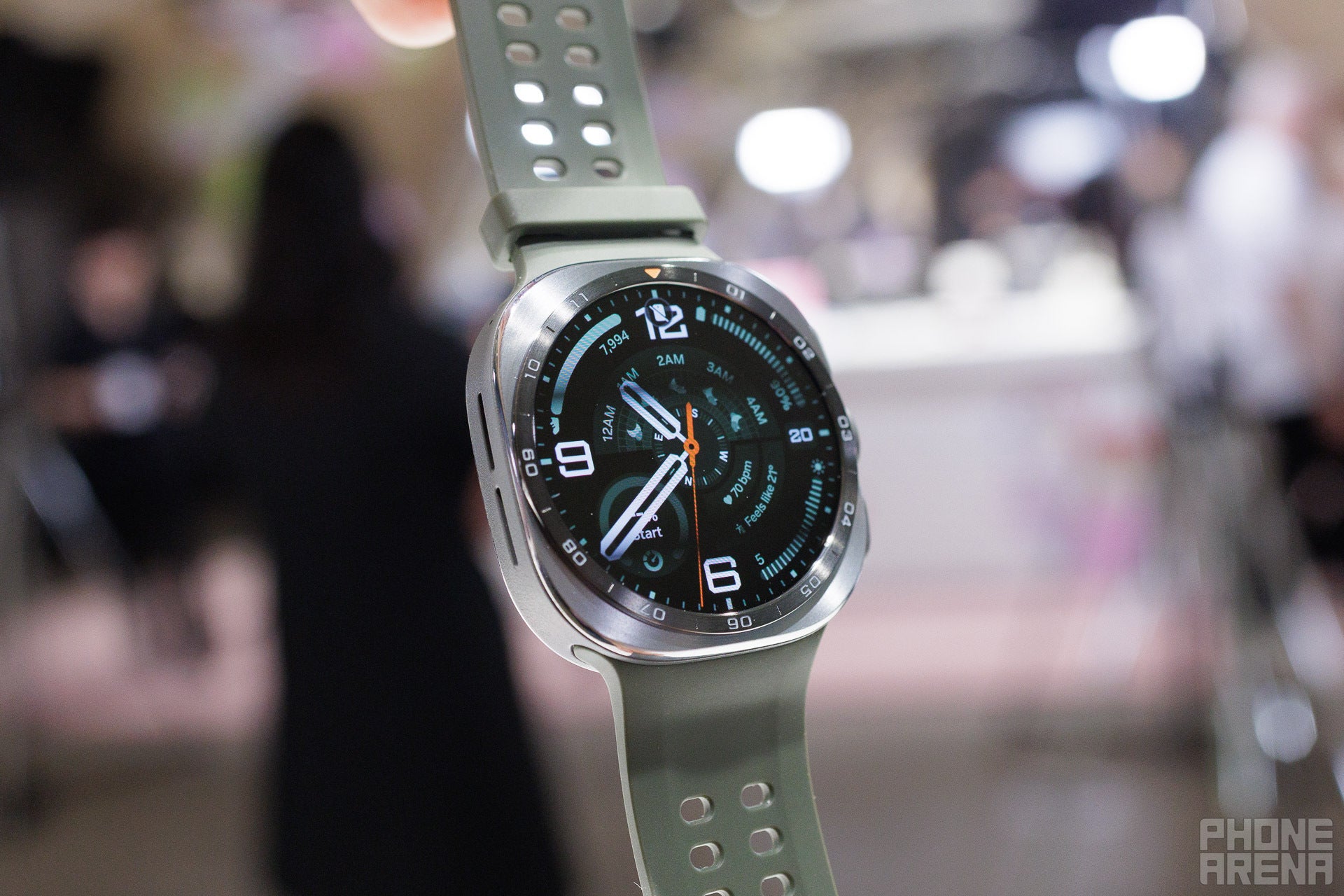
The Watch Ultra 2 also gets the world’s brightest 5000 nit display, up from 3000 nits before, or in simple terms — it’s just much easier to see the screen outdoors now.
The Watch 9, however, can only hit 3,000 nits, so that's one distinction.
The display size itself hasn’t changed on the watches. It’s still 1.52 inches for the Watch Ultra 2, and then you have a 1.47" display for the Watch 9 44mm and 1.34" for the Watch 9 40mm.
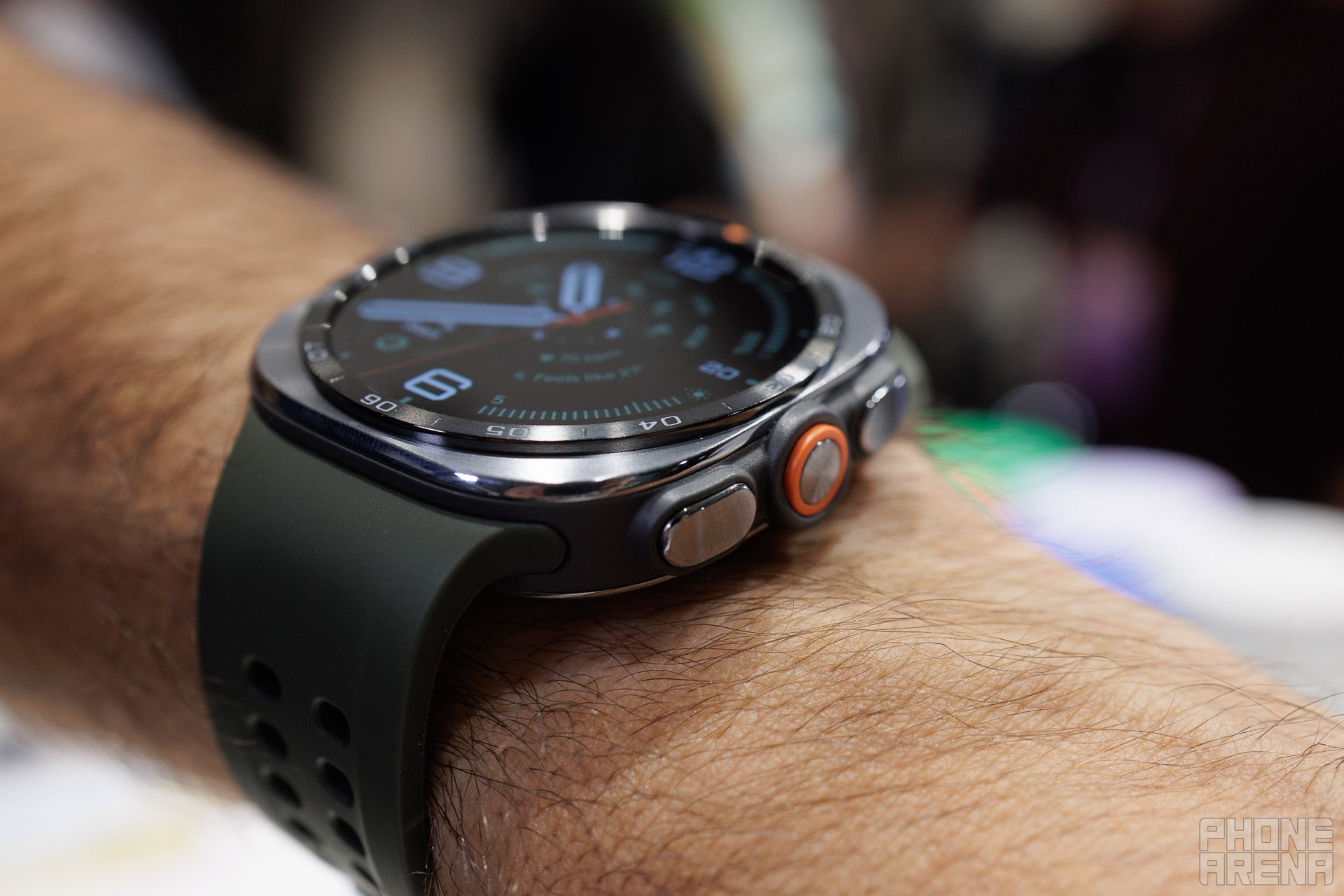
I also really dig the design changes. I have a small wrist and the original Galaxy Watch Ultra just felt too heavy and bulky, and while I could still wear it during the day, I just did not want to wear it to bed to track my sleep. This second generation is WAY more comfortable. It’s 12% thinner, at less than 11mm, but also the stock band is now thinner too, dropping from 2.9mm to 1.9mm, and the band is 25% lighter too.
That’s a lot of numbers, but it ultimately means more comfort. Samsung even bragged it used a complex AI modeling to arrive at this new design, but whatever it did, the results are worth it.
While the Galaxy Watch Ultra 2 has a titanium body, the Watch 9 features an aluminum body. Aluminum is a softer material that dents and scratches a bit easier, so titanium is definitely preferable, but also clearly more expensive.
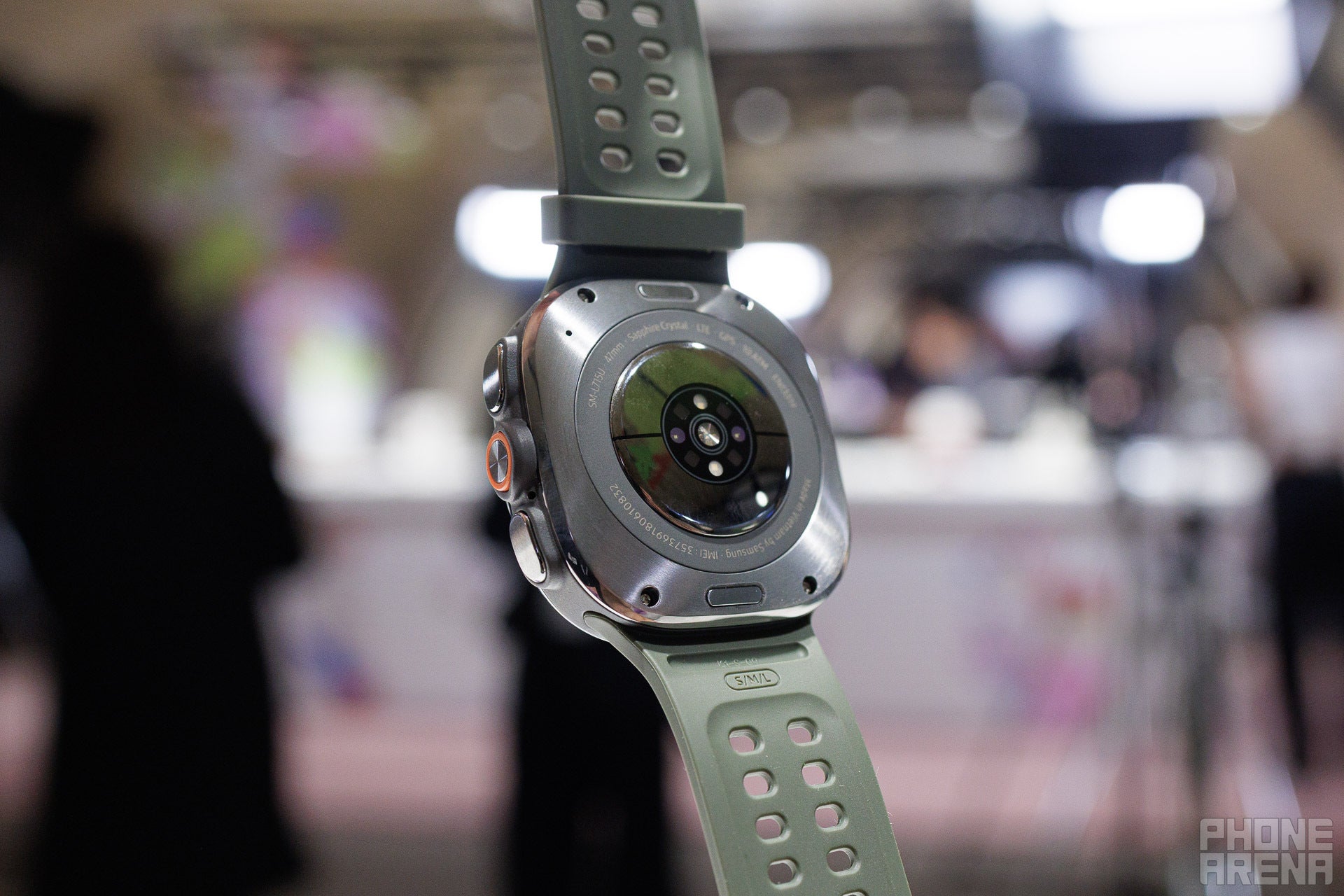
Both the Ultra 2 and Watch 9, however, come with sapphire crystal which is much more durable than just regular glass (like the one Apple uses for the base Apple Watch models), so they are better protected against scratches.
And here are the sizes and weights:
Galaxy Watch Ultra 2 47mm — 47.4 x 47.1 x 10.7mm (61.5g)
Galaxy Watch 9 44mm — 46.0 x 43.7x 8.6mm (34.0g)
Galaxy Watch 9 40mm — 42.7 x 40.4x 8.6mm (31.5g)
As for durability, the Watch Ultra 2 is clearly the more rugged one. The Watch 9 has 5ATM + / IP68 / MIL-STD-810H ratings, while the Watch Ultra 2 covers the same military standard plus it has a 10ATM rating, great for diving, as well as IP69K (protection against high-temperature water jets) and the European EN13319 diving standard.
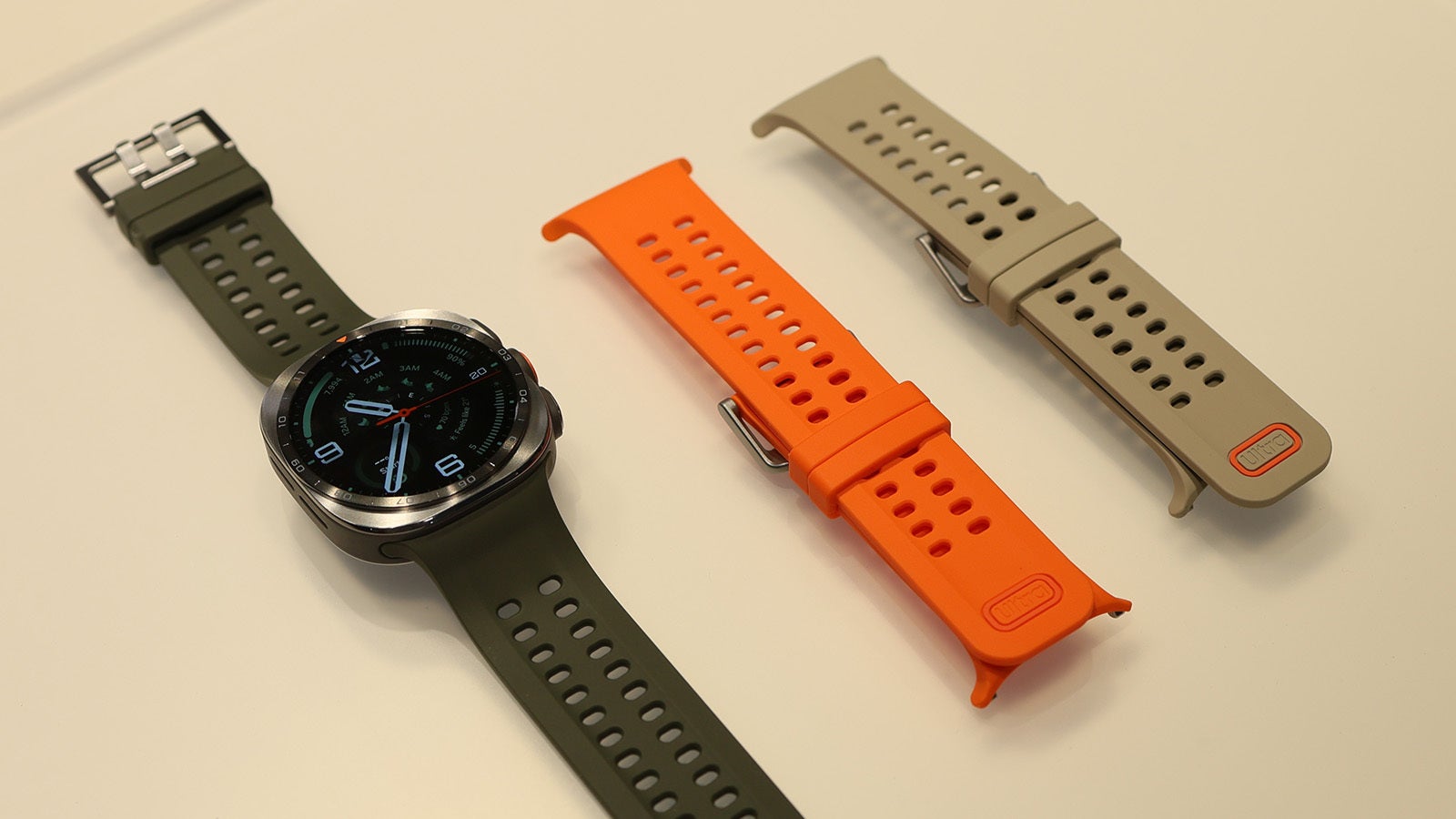
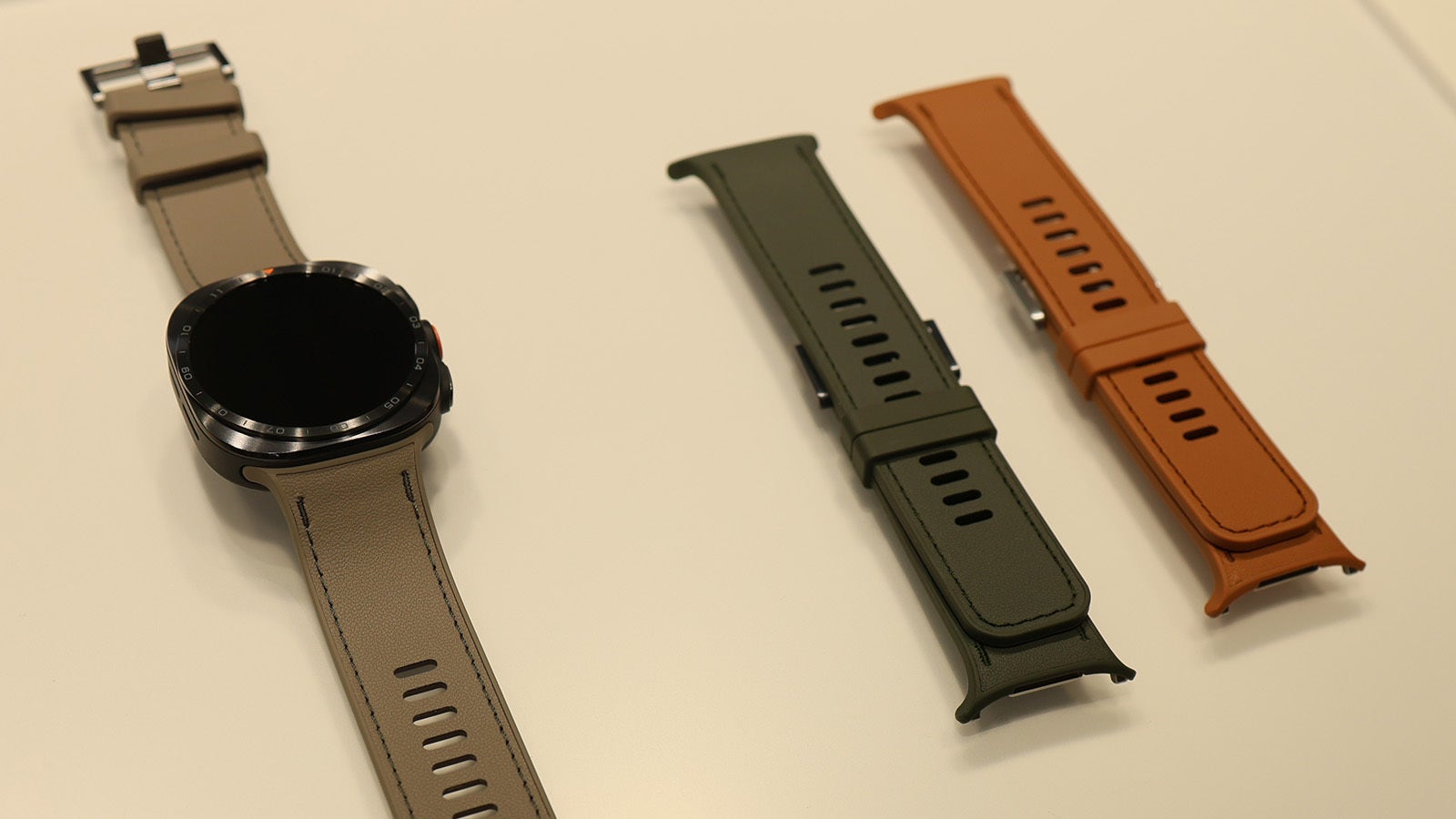
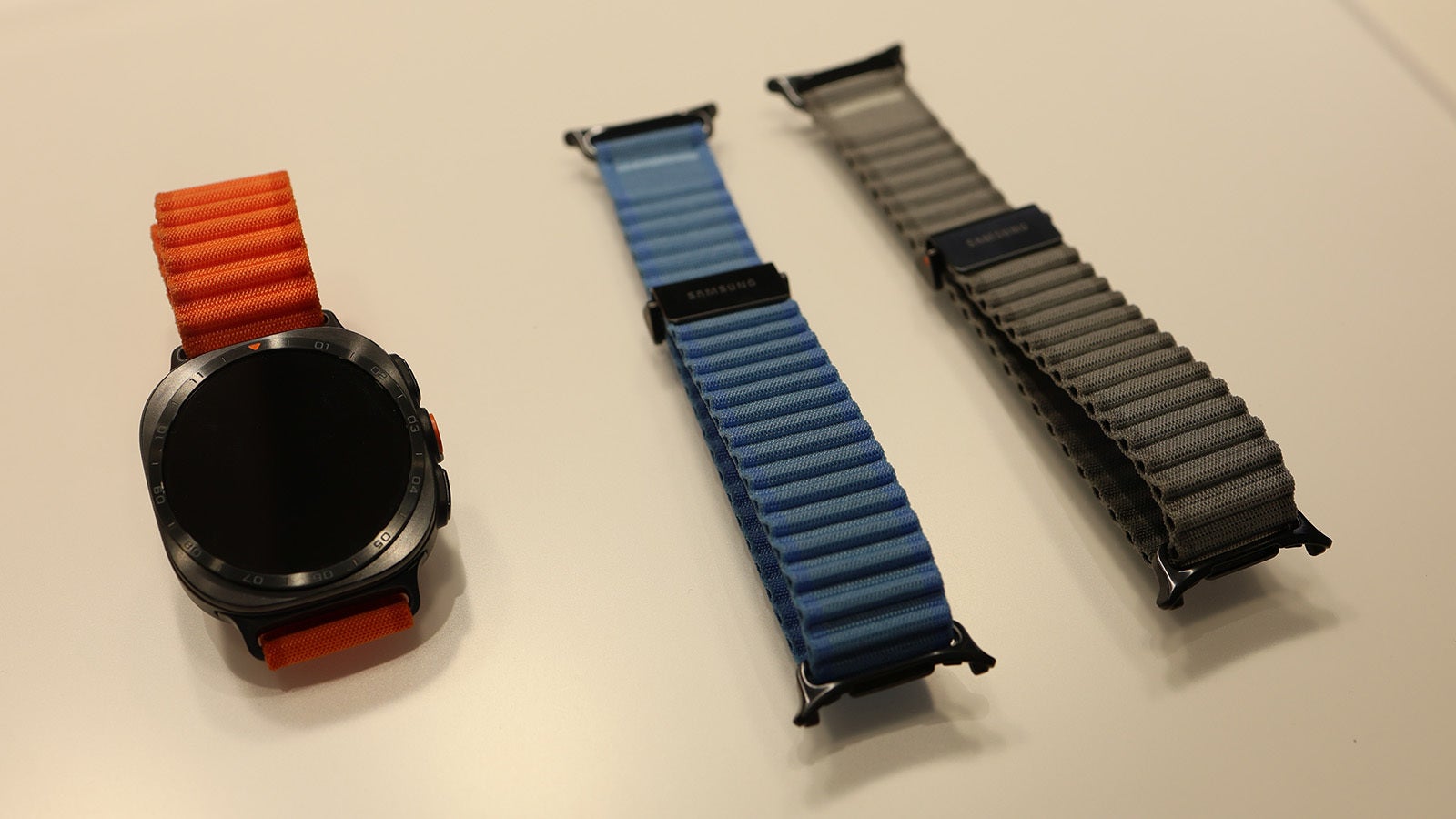
Galaxy Watch Ultra 2 bands
You also have three stock band options, the default Marine band is a breathable silicone band designed for all day adventure, so it's great for more extreme sports.
The Peakformband is more suitable for the office or bigger events, like a wedding, as it has a more classic style that mimics leather.
And you also have the Trail band that is made of fabric. It's stretchy light, easy to adjust and very comfortable, so I would actually pick this band for sleep tracking.
Galaxy Watch 9 bands
The smaller Watch 9 comes with a slightly different style of bands, but you still have three main varieties:
The Sports band is now thinner and softer for comfort and for an easier transition from a workout to daily life.
The Misty band is the most flashy one, with soft two-tone color that looks a lot of fun. It's also made from premium soft silicone.
The Fabric band remains all about comfort (and my personal favorite for all watches I wear). It's lightweight and breathable, offering maximum comfort as it stretches freely, so it's the one to go for if you are going to track your sleep.
So what about the new features?
First, you now have raise to talk, no need to press any buttons or use any words, just raise your wrist.
Samsung has also basically copied Apple’s Vitals app, which is a widget that tracks five markers which update every morning after your sleep. This serves as a kind of an early-warning panel for potential health issues.
The metrics Samsung tracks are slightly different than Apple though. Apple tracks heart rate, respiratory rate, wrist temperature, blood oxygen and sleep duration, while Samsung does not look at the sleep duration, but instead shows you your heart rate variability readings.
It gives you a baseline after 7 days of use.
You also have a new Heart Health Score. Now to be clear this is not certified by a medical institution, it’s just a Samsung estimation, but it takes into account your 7-day sleep time average, your 7-day average activity time, your BMI, and your estimated blood pressure to come up with this score.
Blood pressure is the holy grail of wearables, and I am just not very sure Samsung can have the required accuracy for this, so I was a bit surprised that it’s used for this score. More testing is definitely needed here.
Then, you have a few metrics that are typical of Garmin watches. The Daily Cardio Load helps runners understand when to push or take a rest.
And the Fitness Index score based is on your VO2Max, body composition, heart rate, step count and activity time, and it again helps you decide when to push and when to take it easy. And you can also use this to compare yourself against other users of similar age.
For this, you can also set a personalized goal, it can be running or soccer, or something else, and it will give you recommendation content in the Samsung health app and programs to reach those goals.
You now also get new workouts, like Trail run with route, elevation, terrain impact, climb progress, nutrition alerts and sweat loss. Exclusive to the Ultra watch is hydration notification, which can be particularly helpful.
It doesn’t have a special sensor for sweat loss, but it’s an estimation based on factors like body weight, height, gender, skin temperature, the outside temperature, the intensity of the workout, and all these metrics are given to an algorithm and it estimates the sweat loss. You can also customize that alert and set different thresholds, this would be very useful for Ultra runners.
You also now get pro-level Diving capabilities with the Watch Ultra 2 with an exclusive diving app. It automatically activates upon water entry, and gives you depth, time and water temperature, it was developed with diving specialites Mares.
Prices
Prices just keep on rising for everything these days, and Samsung watches are no exception.
The Galaxy Watch Ultra 2 now starts at $700, $50 pricier than the first-gen Ultra. It’s just one model with 47mm size and it includes LTE.
The Galaxy Watch 9 is also available for preorder now for a base price of $380 for the 40mm model, and $410 for the 44mm version. Add $50 more for LTE on either size.
Keep in mind that this is the second year in a row that Samsung is bumping the prices on this base model. Last year, the Watch 8 started at $350, and the year before that, the Watch 7 price was $300.
Despite all of this, I am really impressed with the new Ultra 2 and the clever engineering that made the slimmer design with much larger battery. I will be wearing it over the next few weeks, so stay tuned for my full review with battery life numbers and a test of the new health and fitness features.
Free Galaxy A17 5G with Straight Talk
Get a free Galaxy A17 with Straight Talk. To claim this deal, you need to pair the phone with activation on a Silver Unlimited Plan or higher. This tier costs $45 per month. Offer valid through 01/10/27 while supplies last online.
Victor, a seasoned mobile technology expert, has spent over a decade at PhoneArena, exploring the depths of mobile photography and reviewing hundreds of smartphones across Android and iOS ecosystems. His passion for technology, coupled with his extensive knowledge of smartphone cameras and battery life, has positioned him as a leading voice in the mobile tech industry.
A discussion is a place, where people can voice their opinion, no matter if it
is positive, neutral or negative. However, when posting, one must stay true to the topic, and not just share some
random thoughts, which are not directly related to the matter.
Things that are NOT allowed:
Off-topic talk - you must stick to the subject of discussion
Offensive, hate speech - if you want to say something, say it politely
Spam/Advertisements - these posts are deleted
Multiple accounts - one person can have only one account
Impersonations and offensive nicknames - these accounts get banned
To help keep our community safe and free from spam, we apply temporary limits to newly created accounts:
New accounts created within the last 24 hours may experience restrictions on how frequently they can
post or comment.
These limits are in place as a precaution and will automatically lift.
Moderation is done by humans. We try to be as objective as possible and moderate with zero bias. If you think a
post should be moderated - please, report it.
Have a question about the rules or why you have been moderated/limited/banned? Please,
contact us.






Things that are NOT allowed:
To help keep our community safe and free from spam, we apply temporary limits to newly created accounts: