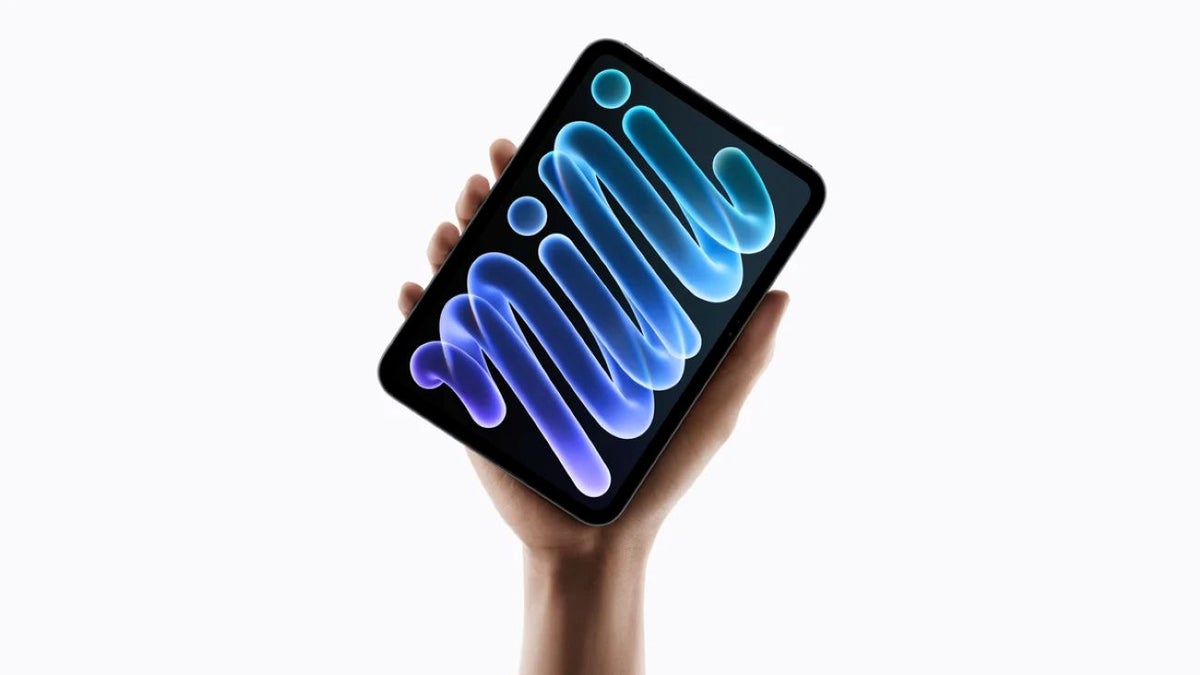
The new OLED iPad mini didn't get the most important display upgrade, as we told you. Sure, the iPad mini 8 is sleek and all, but it's still stuck at a 60Hz refresh rate. It's less than two months until 2027 and the words "Look, it has a great 60Hz panel!" shouldn't be in any OEM's vocabulary today. Especially when we're talking about Apple and especially when it comes to the new iPad mini's starting price of $699.
But… what if you could jailbreak your iPad and "unlock" its 120Hz refresh rate? Tech heads have been obsessing with this lately. Is that even possible and what makes them think the mini's panel is even capable of 120Hz?
What is what
"I’ve heard some people say the iPad mini might actually be capable of 120Hz, but Apple has it locked to 60Hz through software or drivers. Not sure if that’s true though", says Reddit user by the nickname of silvurnurn.
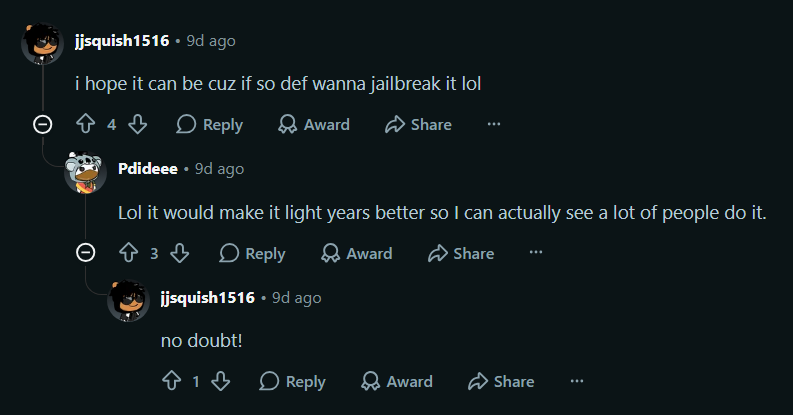
And many want to jailbreak it so badly:
Are you confident enough to jailbreak your brand-new tablet? | Image by Reddit
There are some who suggest that the iPad mini 8's display may be technically capable of running a 120Hz refresh rate, but it's deliberately "locked" on X, too:
The new iPad mini (A20 Pro) may have a 120Hz display but artificially locked at 60Hz.
The reason is quite simple. It uses an LTPS panel with no variable refresh rate, hence no ProMotion. If 120Hz was enabled, it would constantly run at 120Hz and drain battery.
Apple did not want to spend extra for an LTPO 120Hz panel, and this is the result.
But it appears that it's more complicated than that.
Poll
157 Votes
What's the new iPad mini's biggest problem?
Well-known analyst Max Weinbach argues that Apple may have a technical reason for not going for 120Hz ProMotion on this iPad mini's OLED displays. The panel in question is likely LTPS OLED rather than LTPO, which can physically handle 120Hz but doesn't necessarily support the more advanced display control needed for variable refresh rates.
Recommended For You
LTPS panels have trouble maintaining consistent brightness and color calibration at different refresh rates, potentially causing flickering, brightness drops and extra battery drain. They also generally offer fewer refresh-rate options, often switching between 60Hz and 120Hz rather than smoothly adapting to different situations.
LTPO solves many of these problems, which is why Apple uses it in ProMotion-equipped iPhones, iPad Pros and Apple Watches. Weinbach's point is that, while consumers don't have to agree with Apple's decisions—and many certainly don't agree at all—there are technical and battery-life considerations behind Cupertino's decisions.
Do I need 120Hz?
Yes, but not because 60Hz is that horrendous, but, as I pointed out above, it's 2027 soon: screen technology has advanced big time and there's no reason to settle for 60Hz these days.
What makes it truly outrageous is that we're talking about an iPad here. Apple charges a premium for its slates and that's because they're that good. The mini shouldn't be left out of the 120Hz (ProMotion) bonanza—it doesn't cost $299, right?
Besides, a 120Hz display makes scrolling, animations and general navigation look noticeably smoother than a 60Hz screen. On a small tablet, the difference is still visible, especially when browsing websites or moving between apps, but it's less dramatic than on a large phone or jumbo-sized tablet. A 60Hz screen is perfectly usable for reading, watching videos and basic tasks. However, if you frequently scroll or use the tablet for gaming, 120Hz makes the experience feel more fluid and responsive.
Get a free Galaxy A17 with Straight Talk. To claim this deal, you need to pair the phone with activation on a Silver Unlimited Plan or higher. This tier costs $45 per month. Offer valid through 01/10/27 while supplies last online.
Sebastian is one of PhoneArena’s senior opinionators. A veteran news writer with almost 20 years of experience in media and technology, he not only covers all the hot news about Galaxies and iPhones, but often provides hot takes on industry trends. He’s fascinated with camera-focused flagships from the likes of Oppo and Vivo, as well as foldable phones.
A discussion is a place, where people can voice their opinion, no matter if it
is positive, neutral or negative. However, when posting, one must stay true to the topic, and not just share some
random thoughts, which are not directly related to the matter.
Things that are NOT allowed:
Off-topic talk - you must stick to the subject of discussion
Offensive, hate speech - if you want to say something, say it politely
Spam/Advertisements - these posts are deleted
Multiple accounts - one person can have only one account
Impersonations and offensive nicknames - these accounts get banned
To help keep our community safe and free from spam, we apply temporary limits to newly created accounts:
New accounts created within the last 24 hours may experience restrictions on how frequently they can
post or comment.
These limits are in place as a precaution and will automatically lift.
Moderation is done by humans. We try to be as objective as possible and moderate with zero bias. If you think a
post should be moderated - please, report it.
Have a question about the rules or why you have been moderated/limited/banned? Please,
contact us.




Things that are NOT allowed:
To help keep our community safe and free from spam, we apply temporary limits to newly created accounts: