Researchers at Flinders University in Australia have developed a new type of battery that can last for 60,000 cycles and charge in just three minutes. The battery uses a completely different zinc-iodine technology and can't catch fire because it's water-based. Could this new battery power the next iPhone or Galaxy phone?
Australian researchers develop new zinc-iodine battery
The key ingredient in the new zinc-iodine battery. | Image by Eco Food Agri
Ah, batteries. The big bottleneck in our current technology. Scientists are struggling to make the next battery breakthrough, as lithium-ion technology dates way back to the 1960s. Nowadays, with the rise of electric vehicles, more and more companies are keen to invest in new research.
Now, a team of researchers at Flinders University in Australia may have made that breakthrough. The key ingredient is starch!
This system offers a new approach to mitigate polyiodide shuttling by using polymers derived from inexpensive, biodegradable oligosaccharides, thereby enabling sustainable and long-lasting aqueous zinc-iodine batteries
- chemistry professor Zhongfan Jia from Flinders University
Zinc-iodine batteries are not new, they've been researched for more than 20 years (the first documented zinc-iodine battery dates back to 1984). However, the team from Flinders University found a way to use a low-cost organic cyclodextrin-based polymer as a host material.
Recommended For You
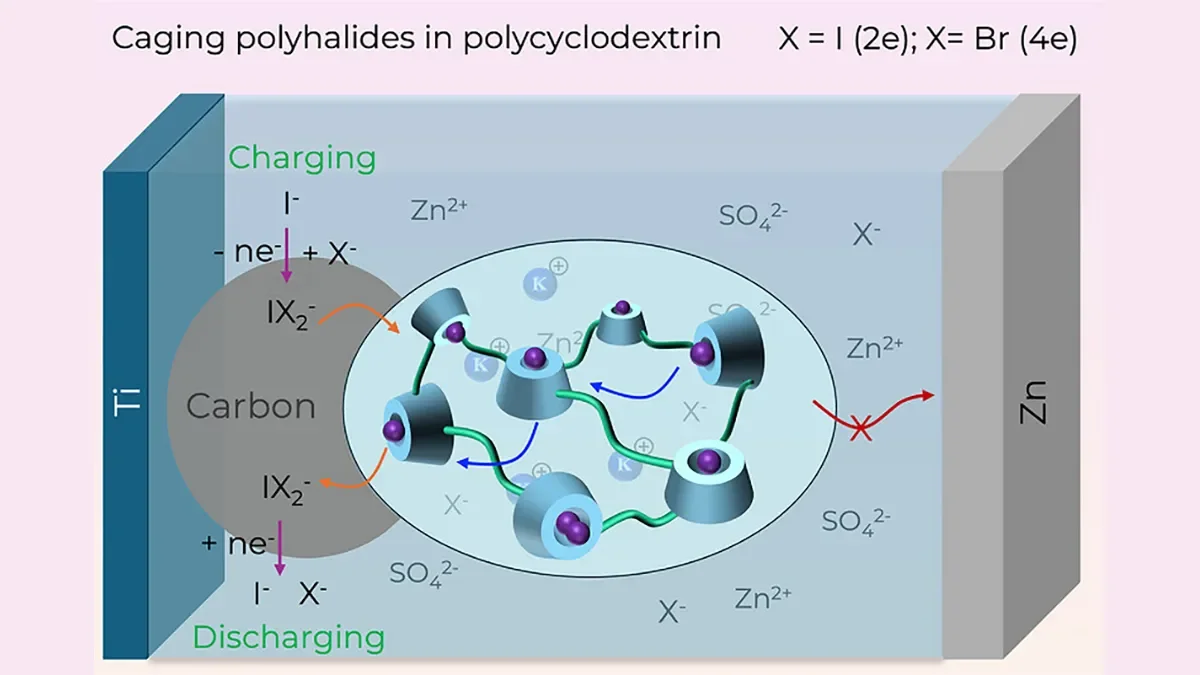
Scientists have figured out how to restrict the iodine to stop battery degradation. | Image by Jiang et al., Angewandte Chemie, 2026
It's a sugar molecule derived from starch! Cyclodextrins are widely used in food, cosmetics, pharmaceuticals, and many other fields, but they also have the ability to trap and release polyiodines — atoms that carry electrical charge.
Would you keep your phone for 21 years if the battery holds up?
134 Votes
Is this battery good?
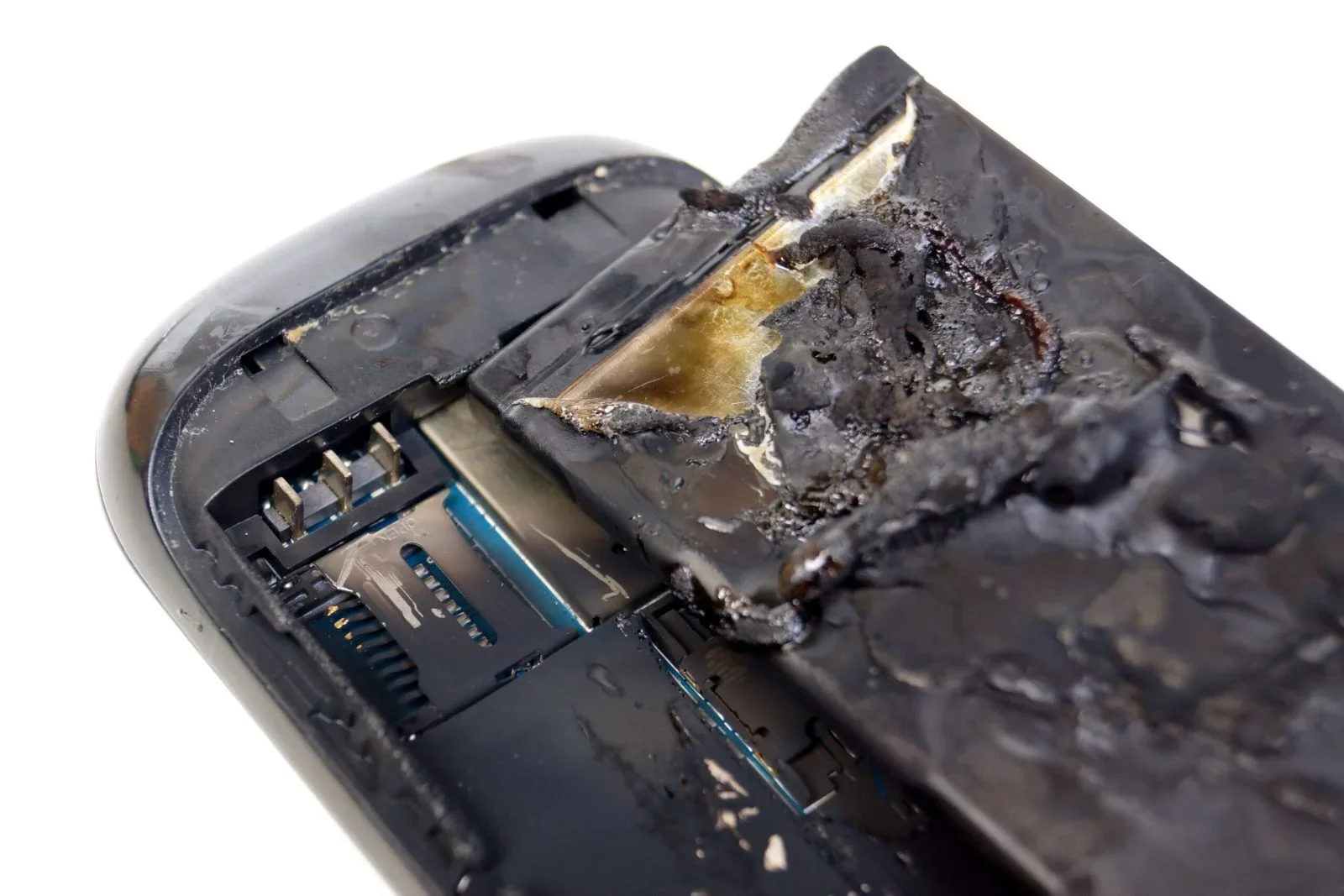
Zinc-iodine batteries are water-based and extremely safe. | Image by Clemson University
So, what are the specs of this new water-based, starch battery? For starters, it's very safe; water-based batteries can't spontaneously combust and catch fire due to thermal runaway. The chemistry is also very stable; the research showed 8000 cycles at 205 mAh/g capacity and full charge in seven minutes, or 60,000 cycles at 150 mAh/g and super-fast charging in just three minutes. What does that mean, exactly?
AZIBs with poly(β-CD)/KI3 can achieve 2e storage at 205 mAh/g or 4e storage at 365 mAh/g. The specific inclusion chemistry between polyhalide anions and poly(β-CD) enables batteries to operate for more than 60,000 cycles, with a capacity fade of 0.0001%–0.0003% per cycle for 2e and 4e storage, respectively.
- Angewandte Chemie International Edition, German Chemical Society
The Galaxy Z Fold 8 battery, for example, is rated for 1,200 cycles. If you charge every single day, this equals a little over three years. 60,000 cycles, on the other hand, equals 164 years! Even the 8,000 cycles scenario yields 21 years of everyday charging.
When it comes to charging, the numbers are even more impressive. The Z Fold 8 charges in about an hour. These new zinc-iodine batteries charge 10 to 20 times faster. Where's the catch?
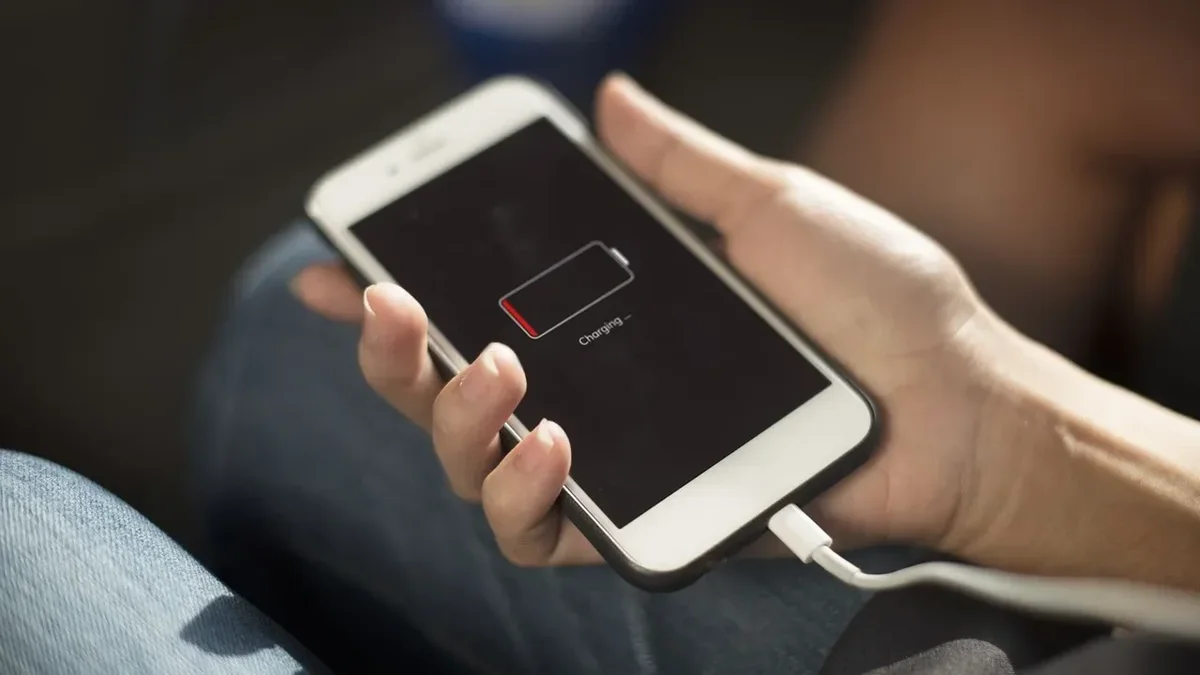
Zinc-iodine batteries are too large for smartphone application, at least for now. | Image by Pixabay
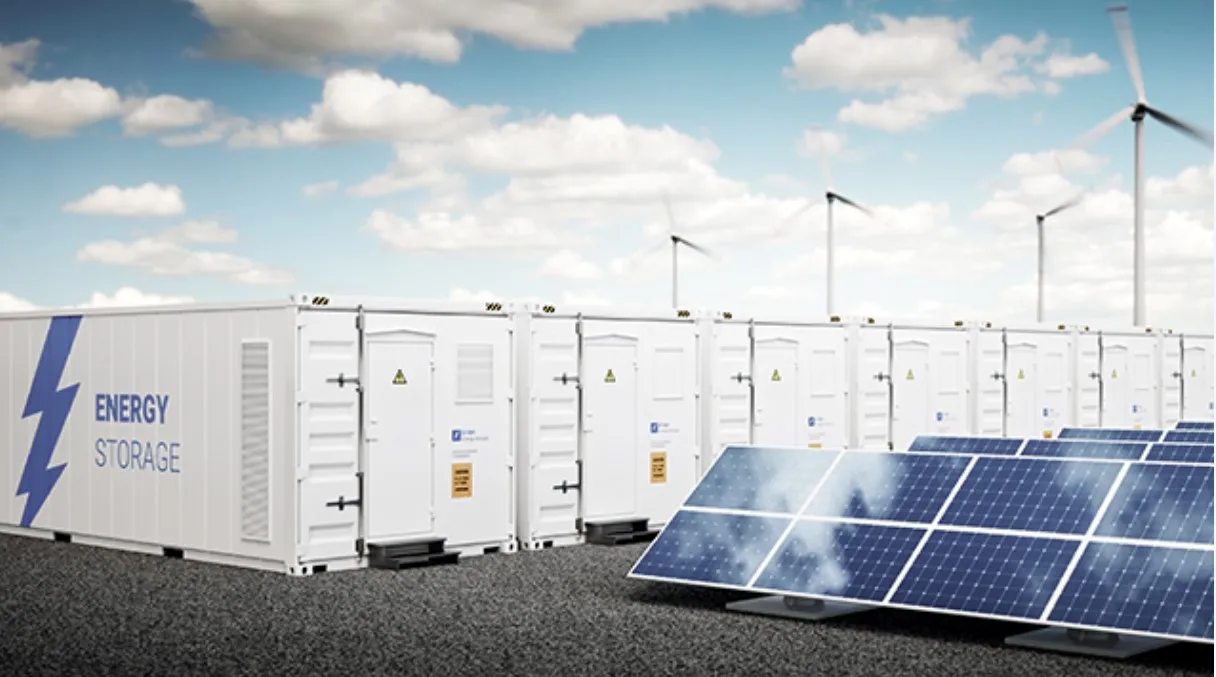
Sadly, not yet. Professor Zhongfan Jia from Flinders University thinks the system could pave the way for new battery chemistry for large-scale energy storage, replacing conventional lithium-ion batteries.
Rechargeable aqueous zinc-iodine batteries are shaping up as a viable alternative to lithium-ion batteries for large-scale energy storage, and our group is now working with industry to establish a prototyping platform for this battery system
- professor Zhongfan Jia from Flinders University
The thing is, even though the chemistry is superior to lithium-ion batteries, zinc-iodine batteries have much lower volumetric capacity. This means the battery should be much larger to offer the same capacity as a lithium-ion cell.
That's why the first applications are aimed at big energy storage facilities, and photovoltaic storage systems for your house, for example.
Replacing silicon-carbon in modern smartphone batteries?
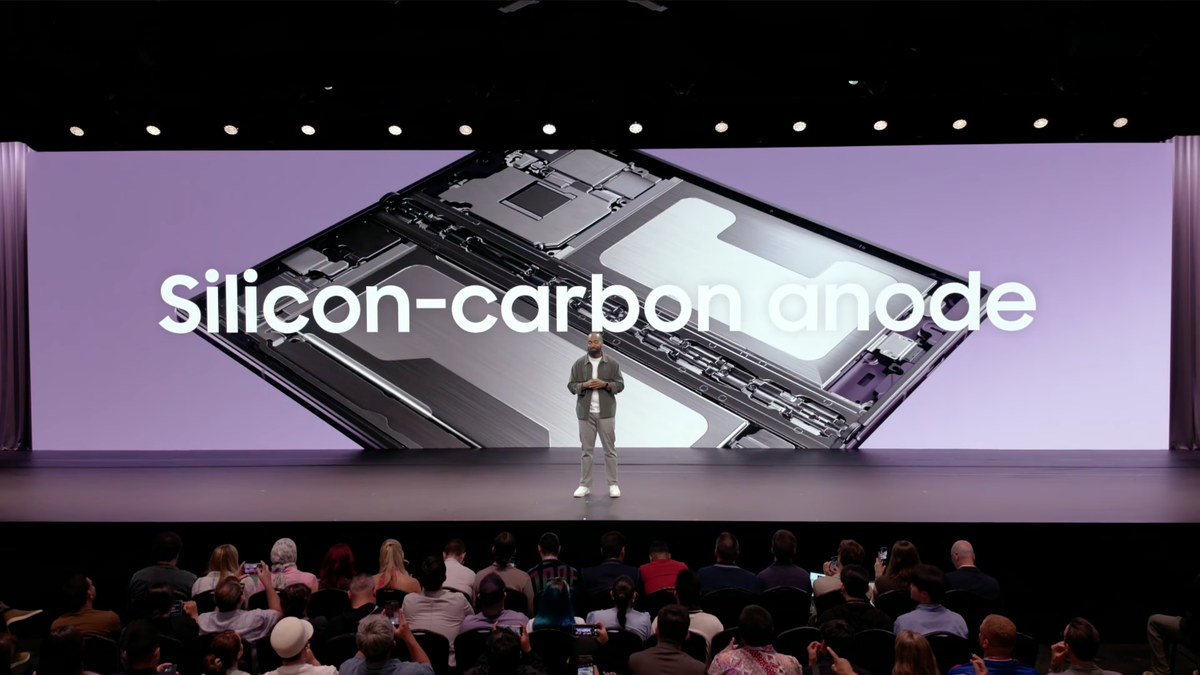
Samsung embraced silicon-carbon battery tech in the Galaxy Z Fold 8 family. | Image by Samsung
Could this new chemistry replace silicon-carbon battery tech that's been aggressively developed in the past couple of years? No. Silicon-carbon batteries use the same lithium-ion chemistry as conventional batteries but imbue silicon in the electrode to pack more ions and increase the energy density.
Zinc-iodine water-based batteries use completely different chemistry, and they operate at different voltages (1.3 volts and 1.4 volts). Lithium-ion batteries operate at 3.7 volts, the same as silicon-carbon batteries.
Don't lose hope, though. Once the technology is proven to work, it's just a matter of time for the engineers to polish it and miniaturize it, so smartphones that charge in three minutes and last for decades might be just around the corner.
Trade in your old phone for cash at ecoATM!
Recycle your used phone and get instant cash. Find out how at ecoATM!
Mariyan, a tech enthusiast with a background in Nuclear Physics and Journalism, brings a unique perspective to PhoneArena. His childhood curiosity for gadgets evolved into a professional passion for technology, leading him to the role of Editor-in-Chief at PCWorld Bulgaria before joining PhoneArena. Mariyan's interests range from mainstream Android and iPhone debates to fringe technologies like graphene batteries and nanotechnology. Off-duty, he enjoys playing his electric guitar, practicing Japanese, and revisiting his love for video games and Haruki Murakami's works.
A discussion is a place, where people can voice their opinion, no matter if it
is positive, neutral or negative. However, when posting, one must stay true to the topic, and not just share some
random thoughts, which are not directly related to the matter.
Things that are NOT allowed:
Off-topic talk - you must stick to the subject of discussion
Offensive, hate speech - if you want to say something, say it politely
Spam/Advertisements - these posts are deleted
Multiple accounts - one person can have only one account
Impersonations and offensive nicknames - these accounts get banned
To help keep our community safe and free from spam, we apply temporary limits to newly created accounts:
New accounts created within the last 24 hours may experience restrictions on how frequently they can
post or comment.
These limits are in place as a precaution and will automatically lift.
Moderation is done by humans. We try to be as objective as possible and moderate with zero bias. If you think a
post should be moderated - please, report it.
Have a question about the rules or why you have been moderated/limited/banned? Please,
contact us.








Things that are NOT allowed:
To help keep our community safe and free from spam, we apply temporary limits to newly created accounts: