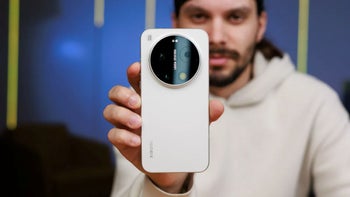
Huawei phones have been gone for years from the pockets of US customers (thanks to US-imposed sanctions on the company). Only a handful of mobile maniacs dare to use a Huawei phone (that's because, sanctions or not, Huawei still makes absurdly capable phones, especially in the camera department).
Huawei is the codeword that makes US lawmakers stay awake at night. Thanks to the sanctions, the company took a serious blow but somehow survived (and it thrives in its home country).
However, it's not just the US that has its crosshairs on Huawei. The EU has something to say, too.
Have we seen that one?
Telcos have it difficult as of lately. | Image by PhoneArena
Now, Huawei could be facing a major setback in Europe and this one is particularly interesting for T-Mobile customers because it involves Deutsche Telekom, T-Mobile's German parent company and majority shareholder.
For years, Deutsche Telekom has continued using Huawei equipment across parts of its European network despite the European Union pushing member states to reduce their reliance on the Chinese company. Huawei has remained a significant player in Europe's 5G infrastructure, and Germany has been particularly slow to force operators to remove it.
Why would you want Huawei phones back in the US?
4 Votes
Germany is changing the rules of the game
Germany's Federal Network Agency is proposing to classify the radio access network (RAN) as critical infrastructure. That might sound like some boring telecom regulation, but the implications for Huawei are anything but that. The RAN includes the equipment responsible for connecting phones to the mobile network, including 5G base stations and their antennas.
Recommended For You
Germany has already ordered operators to remove certain Huawei and ZTE components from their 5G networks. The country previously gave operators until the end of 2026 to remove Huawei equipment from their network cores, while some Huawei RAN management technology is supposed to be replaced by the end of 2029.
The problem is that replacing the software controlling Huawei equipment isn't necessarily the same thing as removing Huawei equipment.
Not so fast
Critics of Germany's current approach have argued that simply changing the management layer doesn't eliminate the potential security concerns surrounding the underlying hardware and software. Modern cellular base stations aren't just boxes full of electronics. They're full of highly software-driven systems, meaning the distinction between the equipment and the software controlling it isn't as straightforward.
Huawei, unsurprisingly, has pushed back against efforts to classify its 5G radio equipment as critical. The company has argued that the base stations themselves don't control traffic, user profiles or access to the network in the way that more sensitive core-network equipment does.
For Deutsche Telekom, the argument could become much harder to make if Germany formally treats the RAN as critical infrastructure. The financial side is probably the biggest reason operators have been reluctant to move faster. According to research cited in the report, Huawei equipment makes up around 58% of Germany's RAN footprint, representing roughly 46,000 sites. Replacing it could cost less than €2.5 billion, although that's still a substantial bill for the operators involved.
The Nokia path
Deutsche Telekom has already started moving in the opposite direction at some sites, using Nokia equipment and open RAN technology. But progress has been gradual, which isn't particularly surprising when you're talking about replacing thousands of pieces of network infrastructure.
If Germany eventually forces Deutsche Telekom to accelerate its Huawei replacement strategy, we'll get another interesting glimpse at how one of the world's biggest telecom groups is adapting to a future where Chinese networking equipment is becoming increasingly difficult to use in Western networks.
On the Visible+ Pro plan, you get access to 5G Ultra Wideband data on Verizon's fastest network. Along with unlimited roaming across Mexico and Canada, 2 days of Global Pass per month, 3x hotspot speeds, 4K streaming, and Smartwatch service.
Sebastian is one of PhoneArena’s senior opinionators. A veteran news writer with almost 20 years of experience in media and technology, he not only covers all the hot news about Galaxies and iPhones, but often provides hot takes on industry trends. He’s fascinated with camera-focused flagships from the likes of Oppo and Vivo, as well as foldable phones.
A discussion is a place, where people can voice their opinion, no matter if it
is positive, neutral or negative. However, when posting, one must stay true to the topic, and not just share some
random thoughts, which are not directly related to the matter.
Things that are NOT allowed:
Off-topic talk - you must stick to the subject of discussion
Offensive, hate speech - if you want to say something, say it politely
Spam/Advertisements - these posts are deleted
Multiple accounts - one person can have only one account
Impersonations and offensive nicknames - these accounts get banned
To help keep our community safe and free from spam, we apply temporary limits to newly created accounts:
New accounts created within the last 24 hours may experience restrictions on how frequently they can
post or comment.
These limits are in place as a precaution and will automatically lift.
Moderation is done by humans. We try to be as objective as possible and moderate with zero bias. If you think a
post should be moderated - please, report it.
Have a question about the rules or why you have been moderated/limited/banned? Please,
contact us.












Things that are NOT allowed:
To help keep our community safe and free from spam, we apply temporary limits to newly created accounts: