The company that is currently the world's top smartphone manufacturer, Samsung, is having a difficult year. Despite leapfrogging Apple to recapture the top spot among global smartphone manufacturers, the company's Mobile eXperience unit, the division behind the company's Galaxy smartphones, reported its first quarterly loss ever during the second quarter of 2026.
Samsung to cut smartphone production in Q4 by 30%
To prevent the company from spilling more red ink during the fourth quarter, Samsung is planning to cut smartphone production by a whopping 30%. What more could the firm do when every smartphone it sells generates a loss for the company?
RAM prices have soared in 2026
Behind this strange turn of events is the RAM shortage that has driven prices of the component to surge 70% to 100% since the start of the year. During the first quarter alone, the price of LPDDR5X RAM modules rose by approximately 60%, and tacked on another 89% during the second quarter.
For example, a 12GB LPDDR5X RAM module that cost $25 to $70 early in 2026 reached $146 by the second quarter of this year. The price for the component is forecast to reach $180-$206 this quarter.
Two Samsung units fight with each other over RAM pricing
You might think that the price increase for RAM modules wouldn't affect Samsung's smartphone pricing because the company's Device Solutions (DS) unit produces its own RAM modules. However, because Samsung treats each division as an independent profit center, the DS unit will sell RAM modules to the Mobile eXperience segment at the highest price it can get even though both businesses belong to Samsung.
Why RAM prices have surged
So why have RAM prices surged? You can blame it on AI data centers, which require rapid access to huge amounts of data. As a result, these data centers require High Bandwidth Memory (HBM) chips that outperform RAM.
Recommended For You
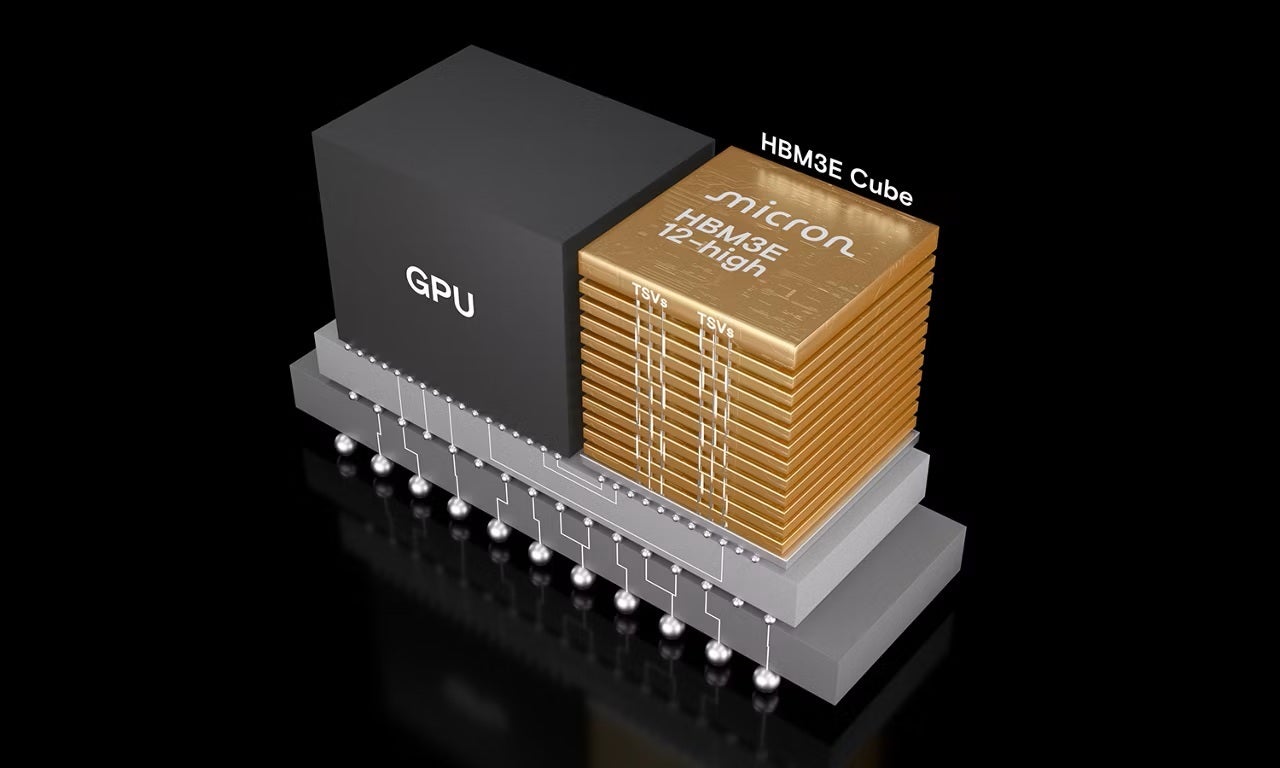
While RAM modules are placed flat on a motherboard, HBM memory dies are stacked vertically on top of each other and connect directly to the processor via a much wider data path, allowing significantly more data throughput while using less power.
Chip maklers are producing HBM chips, like the one poictured here, instead of RAM. | Image by Micron
HBM chips help prevent what is known as the "memory wall," which happens when traditional memory can't feed today's faster processors with enough data fast enough to prevent a bottleneck from occurring.
Companies that manufacture memory modules, like Samsung, SK hynix, and Micron, chose to build HBM chips over RAM because the former generates a higher profit margin and is currently in great demand.
As a result of this decision, not enough RAM is being produced, leading to higher smartphone prices and a reduced amount of RAM on some handsets. The RAM shortage could last until 2028, with some analysts calling for it to last through 2030, with RAM prices remaining elevated during this time. Eventually, new production facilities will come online, improving the supply-and-demand picture for RAM.
Spend $100 and save $25 on Otterbox cases and screen protectors
Flash sale: Cover your device with brand new styles and reliable safety. Spend $100 on Otterbox cases and screen protectors and save $25 instantly. Exclusions may apply. Valid 10/6-10/11
Alan, an ardent smartphone enthusiast and a veteran writer at PhoneArena since 2009, has witnessed and chronicled the transformative years of mobile technology. Owning iconic phones from the original iPhone to the iPhone 15 Pro Max, he has seen smartphones evolve into a global phenomenon. Beyond smartphones, Alan has covered the emergence of tablets, smartwatches, and smart speakers.
A discussion is a place, where people can voice their opinion, no matter if it
is positive, neutral or negative. However, when posting, one must stay true to the topic, and not just share some
random thoughts, which are not directly related to the matter.
Things that are NOT allowed:
Off-topic talk - you must stick to the subject of discussion
Offensive, hate speech - if you want to say something, say it politely
Spam/Advertisements - these posts are deleted
Multiple accounts - one person can have only one account
Impersonations and offensive nicknames - these accounts get banned
To help keep our community safe and free from spam, we apply temporary limits to newly created accounts:
New accounts created within the last 24 hours may experience restrictions on how frequently they can
post or comment.
These limits are in place as a precaution and will automatically lift.
Moderation is done by humans. We try to be as objective as possible and moderate with zero bias. If you think a
post should be moderated - please, report it.
Have a question about the rules or why you have been moderated/limited/banned? Please,
contact us.













Things that are NOT allowed:
To help keep our community safe and free from spam, we apply temporary limits to newly created accounts: