Google's Pixel 11 series is up for pre-order, and the entry Pixel 11 Pro and Pro XL now carry 12GB of RAM instead of 16GB, at about $100 more.
The Pixel has always ranked among the best Android phones on the strength of its software, so cutting memory in the on-device AI era, with the Galaxy S26 Ultra and iPhone 17 Pro Max going the other way, bothers me.
Google cut the memory and raised the price in the same breath
This one is not a leak we have to hedge, because Google confirmed it. The entry 256GB versions of the Pixel 11 Pro and Pro XL drop to 12GB, and you have to buy the 512GB or 1TB model to get the 16GB the Pixel 10 Pro launched with.
Google's Vice President of Devices and Services, Shakil Barkat, pointed to a supplier-driven memory shortage, citing Morgan Stanley figures that put the cost of 1GB of RAM at $12 this year, up from $2.80 in 2025. A company spokesperson framed the response the same way.
We are aggressively engineering our way through these challenges.
Google spokesperson, in a statement on the Pixel 11 RAM changes, August 2026
We published an editorial arguing that Google is a software company whose hardware remains a blind spot, and the comment section did not settle into agreement. It turned into a real argument about which half of the phone is letting people down.
Recommended For You
Which Pixel 11 change bothers you most?
509 Votes
Less RAM on the entry Pixel 11 Pro
33.6%
The $100 price increase across the lineup
44.79%
Tensor G6 staying on a 3nm process
11.39%
None of it, the software still sells me
10.22%
The software was always the part covering for the hardware
For years the answer to a Pixel's spec sheet was that the specs were not the point. Google leaned on computational photography and on-device processing instead, and for eight generations that was a fair trade, because the software genuinely did more with less.
On-device AI does not work that way, though. Gemini and the Android 17 features Google spent its keynote on need memory to stay resident, which is why shipping less of it at a higher price sits so awkwardly next to the pitch.
Buy the Pixel 11 at Amazon for up to $850 off
$850 off (95%)
The Pixel 11 is finally here, giving users a refined experience and a better camera. The model can already be yours at Amazon. While it's available at its full price right now, the e-commerce giant lets you save up to $850 with an eligible device trade-in.
Grab the Pixel 11 Pro at Amazon for up to $815 off
$815 off (76%)
Google's Pixel 11 Pro has just been announced, giving you a polished Android experience. The device gives you better visuals and improved camera performance. You can either buy it at its full price or provide an eligible device trade-in to save up to $815.
Prefer a larger display? The Pixel 11 Pro XL is here for you. With its 6.8-inch display, the new model gives you a larger screen real estate, plus it's already available for purchase at Amazon, with discounts of up to $850 when you provide an eligible device trade-in.
Pixel 11 Pro Fold: buy at Amazon for up to $850 off
$850 off (45%)
The new Google Pixel 11 Pro Fold gives you a refined foldable experience with the familiar form factor. The device gives you an excellent Android experience. You can now get it at Amazon, with discounts reaching up to $850 when you provide an eligible device trade-in.
That contradiction is what our readers picked up on. One of them summed it up better than we did, pointing out that great software stops being great the moment it starts working against the hardware, and another described upgrading from a Pixel 7 Pro to a Pixel 10 Pro and finding both game performance and connection speeds noticeably worse.
Our own testing backs that up more than it comforts. The Pixel 9 Pro beat the newer Pixel 10 Pro outright in a GPU benchmark, with both sitting far behind the Galaxy S25+ and iPhone 16 Pro of the time.
Our Pixel 10 review put the Tensor G5 at roughly 2,300 points in single-core, about 30% behind the Galaxy S25. In our combined battery estimate, the Pixel 10 Pro XL finished last against its rivals despite carrying the biggest battery of the group.
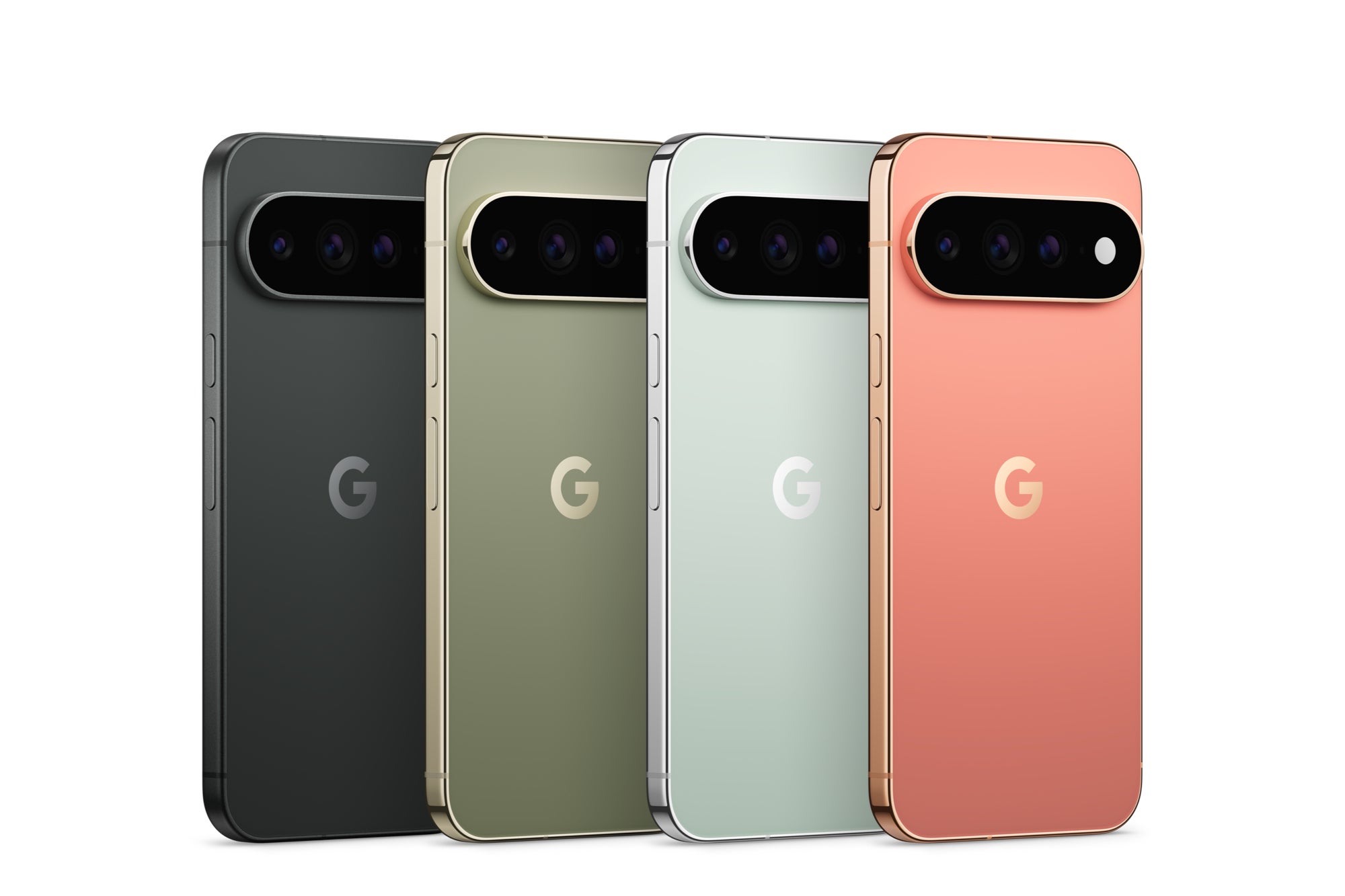
The Pixel 11 Pro XL arrives in four colors and one fewer memory tier than before. | Image by Google
The Tensor G6 does not obviously fix any of this. Google's Vice President of Hardware confirmed the chip stays on a 3nm-class TSMC process rather than the 2nm node many expected, so the silicon is holding roughly steady while the memory budget goes down.
So where does that leave the phones people would cross-shop? In our Pixel 11 Pro XL versus Pixel 10 Pro XL review we found the two close enough that software parity was the honest verdict, since both run the same Android 17 with the same seven-year update promise.
That is a genuine Pixel advantage, of course, and it is also the reason the upgrade is hard to justify this year. Against the Galaxy S26 Ultra the gap is the one we keep measuring, raw performance, and we have argued that the Galaxy S27 Ultra may end up in the same disappointing spot, so this is not a Google-only problem.
If you own a Galaxy S26 Ultra or an iPhone 17 Pro Max, none of this changes what is in your pocket. Samsung and Apple have little to worry about here either, at least this year, because trimming memory is not the move of a company about to out-muscle anyone on hardware.
Who this actually changes things for
The people this touches are the ones buying the entry 256GB Pixel 11 Pro or Pro XL, since that is where the 16GB became 12GB. If you want last year's memory you now pay for a storage tier you may not need.
Everyone else can mostly sit still. Pixel 10 Pro owners are getting the same Android 17 features on the same seven-year support window, so there is no software reason to move.
The signal I would not ignore is the reader who left for One UI after five years on Pixel, and said the reason was that Google slowed down on software changes. That is the one advantage Google cannot afford to let slip.
What I still think after reading the comments
I still believe the software is the reason to buy a Pixel, and nothing in that thread changed my mind. But the defense only works while the software keeps outrunning the silicon, and asking it to do that with less memory at a higher price is asking a lot.
Google says it is engineering its way through, and I hope that turns out to be true, because the alternative is a phone leaning on a trick it can no longer afford. I'd personally love to see next year's Pixel win an argument on hardware for once, so this one stops being about what the software has to make up for.
A few more things worth your time:
Our Pixel 10 Pro review, if you are weighing last year's model instead
The Pixel that makes the most sense to buy right now
Come argue with me on X and Threads, where I post hot takes and the behind-the-scenes bits that do not fit in an article
Johanna Romero is a Senior News Writer at PhoneArena, covering mobile technology news across Android, iOS, wearables, and the Google ecosystem she knows best. Drawing on 15 years in IT and tech support from 2007 to 2022, she brings a user-friendly eye for the practical features and lesser-known tricks readers care about. Google named her an official #TeamPixel member in 2022, and she also reviews the latest devices on her YouTube channel, JoJo the Techie.
A discussion is a place, where people can voice their opinion, no matter if it
is positive, neutral or negative. However, when posting, one must stay true to the topic, and not just share some
random thoughts, which are not directly related to the matter.
Things that are NOT allowed:
Off-topic talk - you must stick to the subject of discussion
Offensive, hate speech - if you want to say something, say it politely
Spam/Advertisements - these posts are deleted
Multiple accounts - one person can have only one account
Impersonations and offensive nicknames - these accounts get banned
To help keep our community safe and free from spam, we apply temporary limits to newly created accounts:
New accounts created within the last 24 hours may experience restrictions on how frequently they can
post or comment.
These limits are in place as a precaution and will automatically lift.
Moderation is done by humans. We try to be as objective as possible and moderate with zero bias. If you think a
post should be moderated - please, report it.
Have a question about the rules or why you have been moderated/limited/banned? Please,
contact us.











![Another batch of Galaxy S26 series users in the US are getting a nice surprise today [UPDATED]](https://m-cdn.phonearena.com/images/article/183643-wide-two_350/Another-batch-of-Galaxy-S26-series-users-in-the-US-are-getting-a-nice-surprise-today-UPDATED.webp)
Things that are NOT allowed:
To help keep our community safe and free from spam, we apply temporary limits to newly created accounts: