I tried Apple’s iPhone Duo – Samsung should be worried
Apple's first foray into foldables makes me hopeful about the future of the entire category.
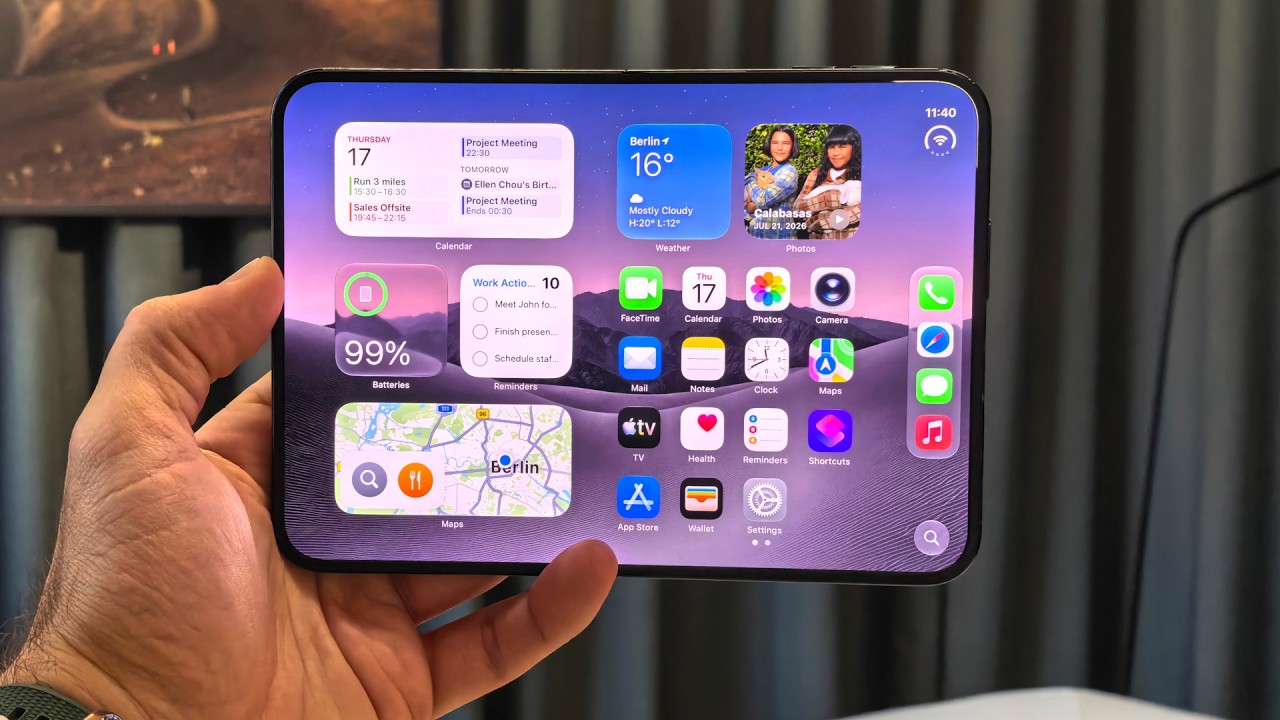

The iPhone Duo is not coming out until October 23, but I was lucky enough to spend some quality time with it already. And let me tell you: Apple is doing so many things right with this product.
Now, is it perfect? As a long-time foldable user, I can definitely see some areas of potential improvement, but on the whole? I think Apple has done enough to convince a substantial part of its massive audience that this might very well be their next iPhone.
Which is a big deal, considering the $2000 starting price and the foldable form-factor that many people still consider dangerously fragile. If you ask me, I think the future is bright for the iPhone Duo and for foldable phones in general (especially now that Apple is joining the game).
Has Apple chosen the right form-factor?
This is a tough question, and one that we won't be able to answer for at least one or two years more. We simply don't have enough experience with this new breed of passport-style foldables yet.
Currently, shorter and wider foldables like the Galaxy Fold 8 and iPhone Duo are very interesting and attractive to consumers. They look fresh and cute, and they make a ton of sense (at least on paper). The idea goes: you have a nice, compact phone that is still sufficiently functional, but that can also unfold to present a large display when you need it.
My biggest gripe with this concept so far is that while you do get an internal display that has a much more familiar aspect ratio, you are not getting a larger display compared to a classic foldable phone like the Galaxy Fold 8 Ultra or the Honor Magic V6. If you watch video, for example, or play a game that is in 16:9 or 4:3 aspect ratio, the size will be roughly the same between the iPhone Duo and something like the Fold 8 Ultra (turned in landscape orientation).
The only difference would be that you won't be seeing as much letterboxing on the iPhone Duo (or the Fold 8). So, we're not gaining much in real estate; we're actually losing some. And while I'm not crazy about losing screen real estate, it's true that sometimes it's good to eliminate the unnecessary. Whether or not that is the case with passport-style foldables, remains to be seen.
The most invisible crease ever
One of the big questions that people want to know is whether or not Apple succeeded in eradicating the crease. I believe this is a question that mostly comes from people who are not foldable phone users, because those who have used one know that you stop noticing the crease in about a week or so.
Regardless, we all knew that Apple was going to try to get rid of it. The crease is a very un-Apple thing, so to speak.
And the company has largely succeeded. Now, I wouldn't say the crease is gone, but it's the least visible crease I've seen so far, and by a good margin. You can still barely see and feel it, but it's less perceptible than ever.
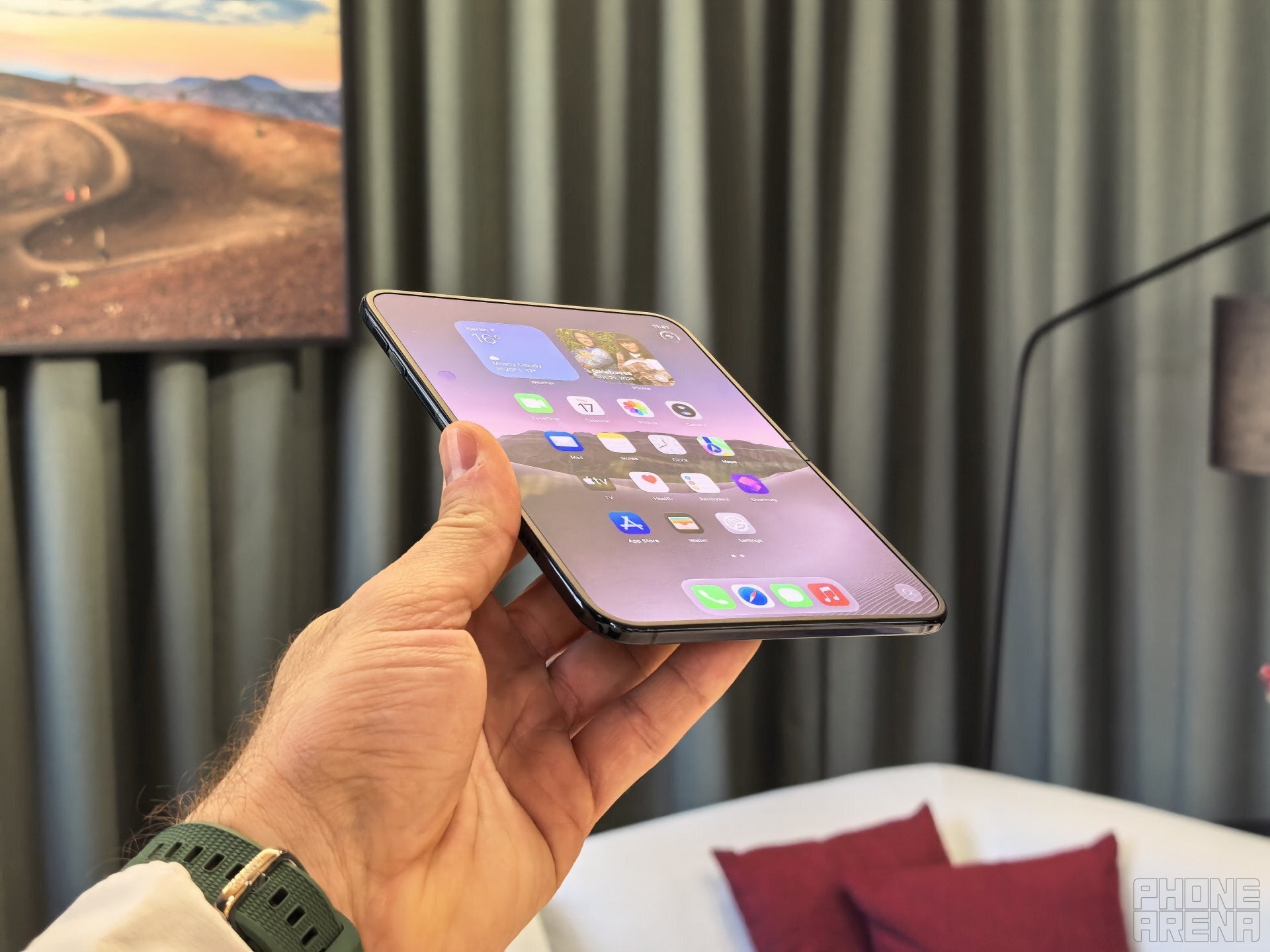
You can hardly see or feel the crease. | Image by PhoneArena
The nano-texture matte coating of the internal screen helps in this regard, as it eliminates reflections and makes everything feel flatter. And while many people would love the idea of a matte display and lack of reflections, I will forever be of the opposite opinion, because the fact is that any matte screen coating reduces contrast, clarity and vibrancy – things that I prioritize over a lack of reflections.
Don't get me wrong – it's still a gorgeous display, but you'll get what I mean the first time you use the inner screen of the Duo for a while, get used to the look, and then close the iPhone Duo to catch a glimpse of the (properly glossy) cover screen. All of a sudden, you'll realize how much is lost in the quest of eliminating reflections. Or, in Apple's case, eliminating the crease. This is one feature that I'd definitely like to see removed in future iterations of the product, or, at least, to have the option to pick a preferred screen coating.
The hinge feels like the best hinge in a foldable so far
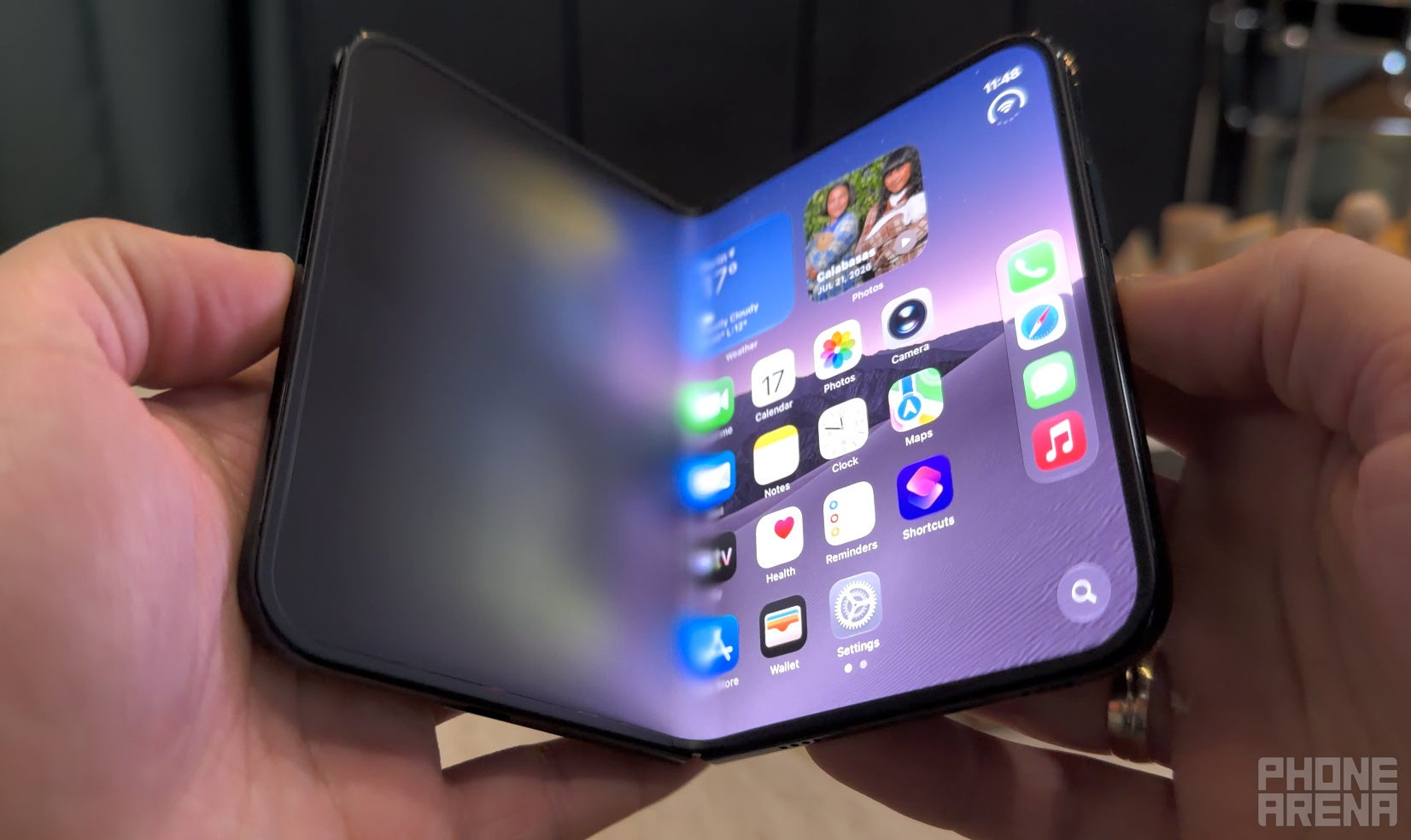
The iPhone Duo is easy to open, yet solid enough to stay in exactly the way you want it. | Image by PhoneArena
It's surprising how well balanced the hinge of the iPhone Duo is. It's pleasantly easy to open, but then it's also solid enough to stay exactly the way you want it.
Finally, the phone opens fully with a reassuring snap, which always feels great. The big question here is if Apple's managed to engineer a hinge that would keep opening fully after months and years of usage. With many foldables out there, while they open perfectly flat in the beginning, they can't quite pull it off later after you've used them for a while.
There are ways around that – I think it's generally a good habit to ever so slightly force the phone to open fully even if it doesn't immediately do it on its own (but watch out not to overdo this). Also, I've noticed that the flexible materials and screen layers need a bit of time to stretch, so they can achieve the perfectly flat shape. All in all, you have to do a little bit of work on your foldable to keep it in pristine shape, but that is a small price to pay for the convenience and capability that it enables.
So, we still don't know if Apple hinge will work better than the competition's – I'll have to use the iPhone Duo more before we find out. But I'm willing to bet it will remain in great condition for longer than what we're used to, especially with Apple ensuring all of us that it's done a lot of work to ensure the iPhone Duo lives up to the high expectations for reliability people have towards Apple.
iOS looks promising on the iPhone Duo, but it's yet to reach a state of maturity
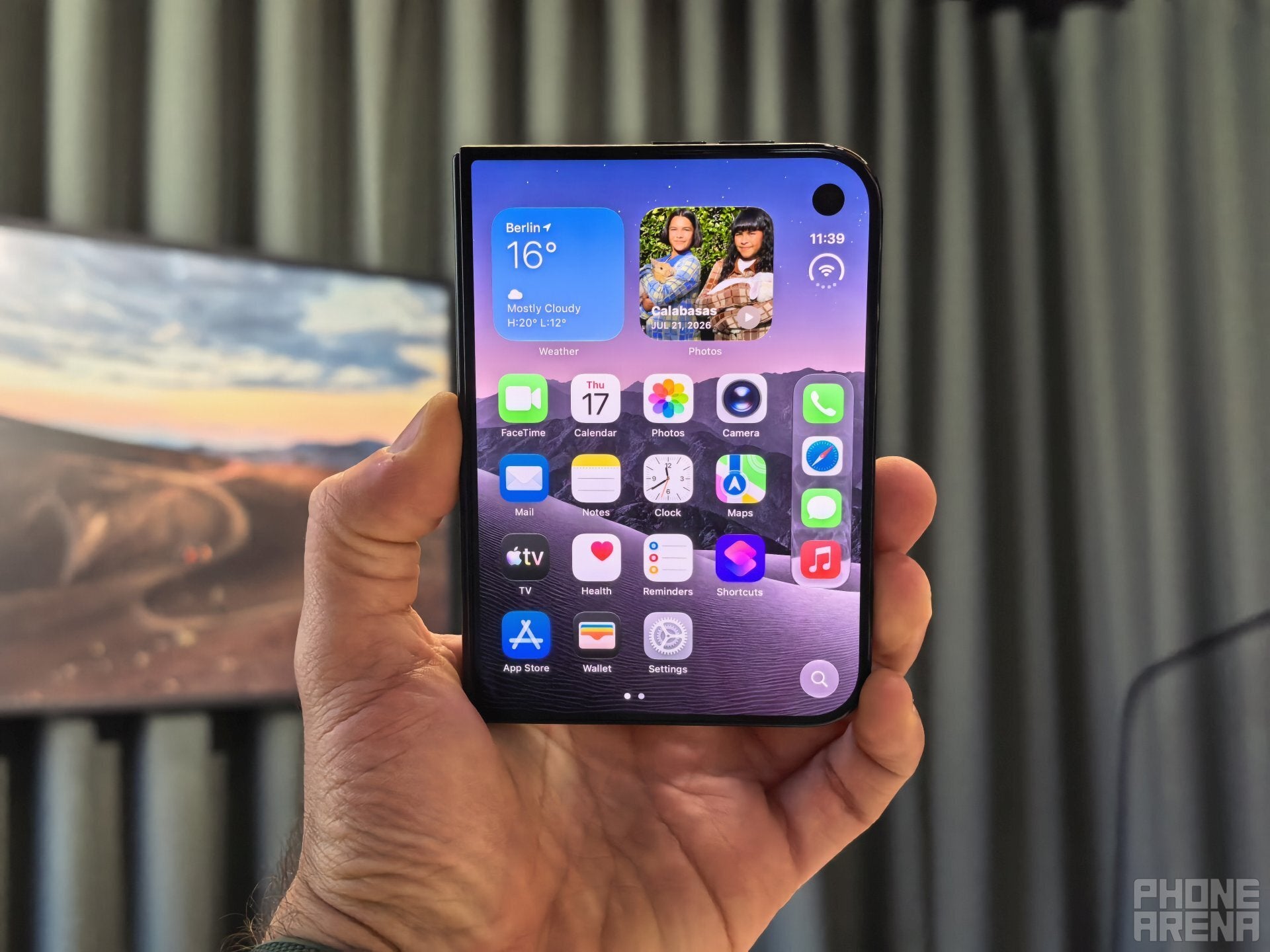
The UI and apps are areas where I expect the iPhone Duo to get even better with time. | Image by PhoneArena
This is not a shocker – Apple is the king of software user experience, so I was fully expecting the company to come out of the gate with a beautiful, polished iOS version on the Duo.
And it's done (mostly) that! The system looks great, works intuitively and fluidly, and for a first try, I don't think we could have asked for more.
That said, there are things that I'm sure Apple will be addressing in future versions. For example, with the homescreen dock now situated along the right-hand side, the icons there are pretty hard to reach for left-handed individuals. Perhaps, Apple will adapt the Reachability feature to let us pull the docked icons closer to the other end of the screen, or, perhaps, it'll allow us to change the position of the dock in the future. Who knows, but I'm certain a solution will be found at some point in the future.
Aside from that, you can expect many third-party applications to not take full advantage of the iPhone Duo's displays. Some may even look a bit weird or broken. This is to be expected with such a radical change like the iPhone Duo's completely new screen format. The good thing is that Apple's great at communicating and collaborating with developers to help them tailor their software better to its machines, so I'm confident that, before long, there will hardly be an app in the App Store that doesn't play nicely with the iPhone Duo.
And this is actually a good thing, because it means that, as great as the iPhone Duo already is, it's bound to only get better, which is super-exciting.
The camera and the price
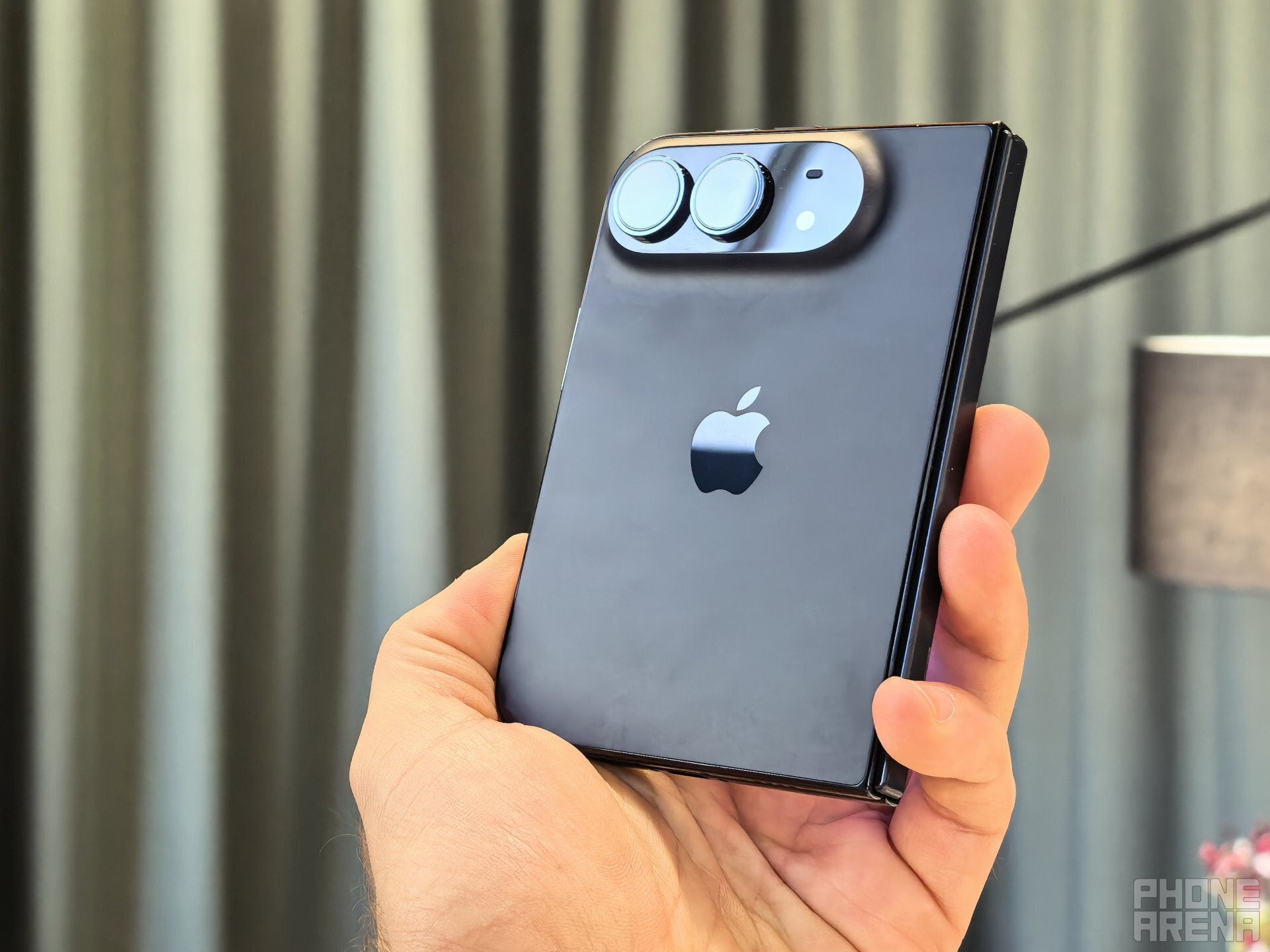
A telephoto camera would have made the Duo the perfect content powerhouse. Oh well, maybe next year... | Image by PhoneArena
The iPhone Duo has a great 48MP main camera. It works as you'd expect and produces photos that scream "iPhone". This is not a bad thing.
My problem here is that this is a cutting-edge, $2000 phone, and it still lacks a telephoto camera. I'm sure it's super tough to stuff it in there, in such a thin body. But it doesn't have to be the biggest and brightest telephoto – an average sensor, coupled with Apple's expert processing, would have been enough to expand the iPhone Duo's camera capabilities.
Instead, we're getting a 48 MP ultra-wide shooter, which I think will not be producing the fanciest photographs you've ever seen, but will enable the added utility of an ultra-wide cam, which is all it has to do.
The lack of optical zoom capabilities is another item we can add to the list of potential future improvements for Apple. A more versatile camera system will make the iPhone Duo even more of a content production powerhouse.
Which brings us to the question of who should be paying $2000 or more to get the iPhone Duo.
First of all, I think the price is very reasonable for what you're getting. All modern foldables cost about as much, so I'm sure we aren't even paying much of an Apple tax here. In comparison, the Fold 8 starts at $1900, while the Fold 8 Ultra starts at $2100.
That said, the iPhone Duo is still an extremely expensive product, so I don't think it's for everyone. The Duo is a meant for people who really do a lot of work on their phones. If the bulk of your screen time consists of social media and YouTube – do yourself a favor and get an iPhone 18 Pro Max – it'll be just suitable, if not more, to these kinds of use cases.
But if you crave multitasking, if you want to type text on a bigger keyboard while still seeing a good chunk of content, if you love playing games and want to be able to experience them on a larger screen, if you work with spreadsheets and other complicated files that hold a lot of information, numbers and details, the expanded view that the iPhone Duo offers you will prove to be an indispensable asset.
The iPhone Duo will be the perfect iPhone for power users, and I can't wait to spend more time with it.


Popular stories

Latest News

Things that are NOT allowed:
To help keep our community safe and free from spam, we apply temporary limits to newly created accounts: