AT&T taps Ericsson for dual-band radios that will improve the carrier's 5G network
AT&T will use dual-band 600MHz radios from Ericsson to deploy spectrum bought from EchoStar.
AT&T teams up with Ericsson to deploy 600MHz spectrum | Image by PhoneArena
Nearly a year ago, EchoStar, beset with financial issues, agreed to sell 20MHz of low-band 600MHz spectrum and 30MHz of mid-band 3.45GHz spectrum to AT&T for $23 billion. The deal ended EchoStar's hope of becoming the nation's fourth facilities-based carrier replacing Sprint following the latter's $26.5 billion acquistion by T-Mobile. The spectrum sale also meant the end of construction on the standalone 5G network that would have allowed EchoStar's Boost Mobile to deliver advanced 5G services and meet specific coverage requirements placed on it by the FCC.
EchoStar's spectrum sale to AT&T makes Boost a hybrid operator
As a result of the sale, Boost is now a hybrid operator. Subscribers connect to AT&T's physical towers for phone calls, but mobile data runs through Boost's own cloud network. The 600MHz airwaves purchased by AT&T is low-band spectrum which travels long distances and can penetrate trees and buildings. However, it offers the slowest data speeds among low-band, mid-band, and high-band spectrum.
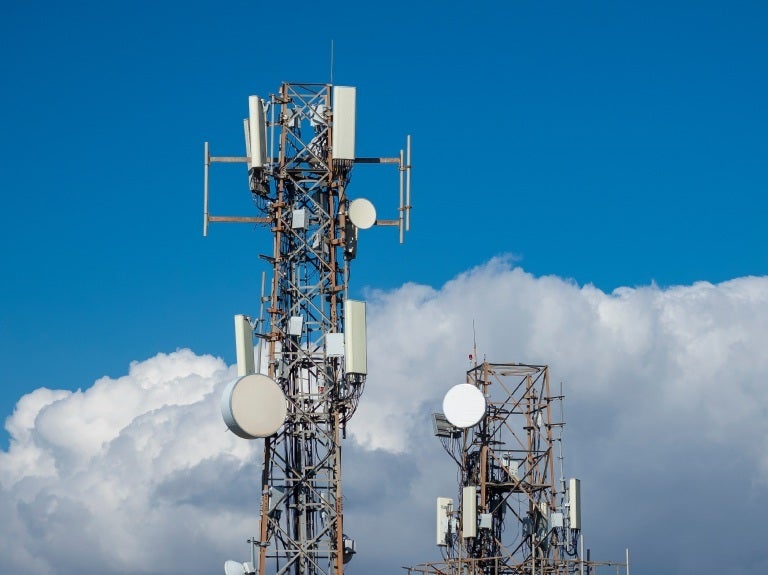
AT&T and Ericsson are teaming up on Open RAN 5G networks. | Image by AT&T
The long range of low-band spectrum makes it perfect for slower nationwide 5G service. Right now, of the Big 3 carriers, only T-Mobile relies on 600MHz spectrum for its coast-to-coast low-band 5G coverage. AT&T currently employs low-band 850MHz and some 600MHz airwaves for its slower nationwide 5G service.
AT&T to use Ericsson's dual-band 600MHz radios to help deploy its new 600MHz airwaves
AT&T has announced today that to help it deploy the airwaves purchased from EchoStar, Ericsson will provide it with 600 MHz dual-band radios. These radios will work with AT&T's Band n71 600MHz spectrum holdings, and its Band 14/12 700MHz holdings used for FirstNet first responders and public safety personnel.
AT&T and Ericsson's previous commitment to Open RAN allows AT&T to build a network using components from different vendors. It also allows the wireless provider to integrate the 600MHz airwaves acquired from EchoStar alongside existing bands such as Band 14, without requiring the use of proprietary hardware.
We’re more than halfway through our wireless network modernization, and we're executing to plan. By combining our newly acquired 600MHz spectrum with Ericsson’s advanced radio, we're improving coverage and performance for customers while building a more modern, flexible network for the future.
Yigal Elbaz, SVP and Network CTO, AT&T
The carrier says that the spectrum and the new radios will help it improve its wireless service and give its customers a better everyday experience. That all goes back to the propagation of low-band frequencies which allow such signals to travel long distances and deeply penetrate buildings.
The carrier's wireless network modernization will result in these improvements for its customers
The characteristics of low-band spectrum will help its urban and rural wireless customers stay connected whether at home, at work, or on the road. AT&T says that it is over 60% of the way through its wireless network modernization effort and in areas featuring upgraded Ericsson's infrastructure, customers are seeing:
- Improvement in average speeds of as much as 2x.
- A 10% reduction in dropped and blocked calls increasing the carrier's call reliability.
- Slower data speeds are now up to 70% less likely to occur.
- Uplink interference is reduced by up to 80% after standardizing the equipment at the top of cell towers.
AT&T hopes to move closer to T-Mobile's holdings of 600MHz spectrum
It should be pointed out that T-Mobile currently has the largest holdings of low-band 600MHz spectrum in the States. However, by deploying Ericsson's dual-band radios, AT&T is expected to close the 600MHz coverage gap that AT&T has at that frequency compared to T-Mobile.
Which Big 3 carrier would you switch to right now?
16 Votes
AT&T
37.5%
T-Mobile
18.75%
Verizon
12.5%
None of them
31.25%
Wall Street analysts were happy to hear that AT&T's planned capital expenditures related to today's announcement have already been accounted for in the full-year 2026 spending estimates released by the carrier along with its Q2 2026 report.
AT&T added that it will release more information at a later date about its 600MHz deployment plans. It should be noted that most analysts already expected Ericsson to be awarded the contract because of its previously announced Open RAN partnership.
If you want to learn more about AT&T, Ericsson, and Open RAN, read these articles:
- AT&T and Ericsson team up on Open RAN.
- AT&T reports its Q2 earnings.
- FCC approves AT&T's 600MHz spectrum purchase from EchoStar.


Popular stories

Latest News





Things that are NOT allowed:
To help keep our community safe and free from spam, we apply temporary limits to newly created accounts: