Xiaomi has started upgrading its phones to HyperOS 4 worldwide. Based on the update logs, this version of HyperOS has two substantial changes: first, the devs have reworked and rewritten a sizable chunk of HyperOS to make it run smoother and faster. Second, it has a glass-like theme now, replacing the flat look and feel of last year’s HyperOS 3.
The update is rolling out to all supported Xiaomi phones, from the top-of-the-line Xiaomi 17 Ultra to budget phones like the Redmi 15C.
Core apps, redesigned
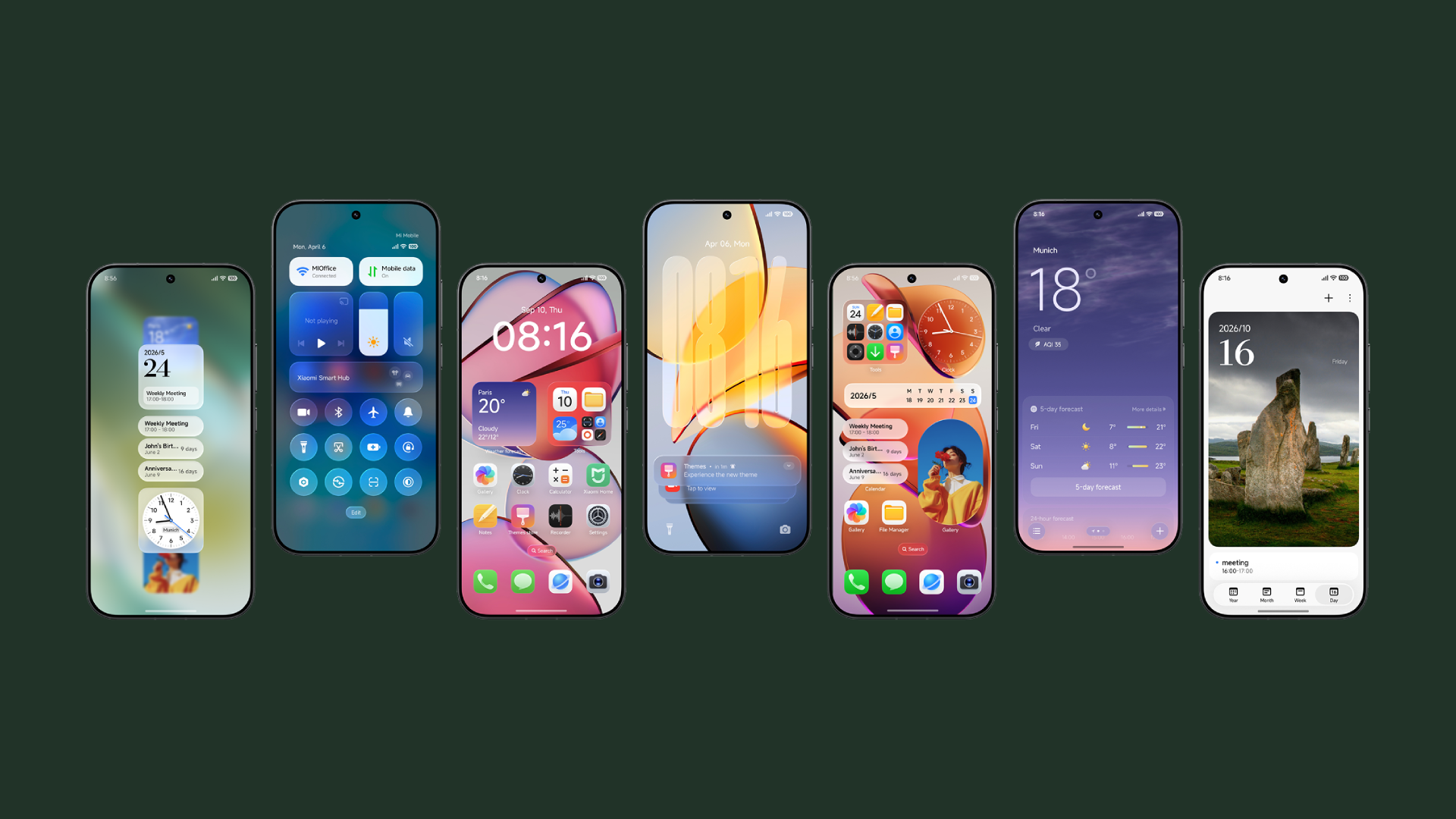
Several HyperOS 4 screens. | Image by Xiaomi
The focus, according to the company, is to aggressively optimize the OS this time. To that end, some core apps – including the system launcher and gallery apps – were redeveloped from scratch for HyperOS 4.
The gallery should load the thumbnail library 90% faster now, and opening apps should feel a little snappier. This version is apparently better at preloading apps, so they should also feel more responsive afterward.
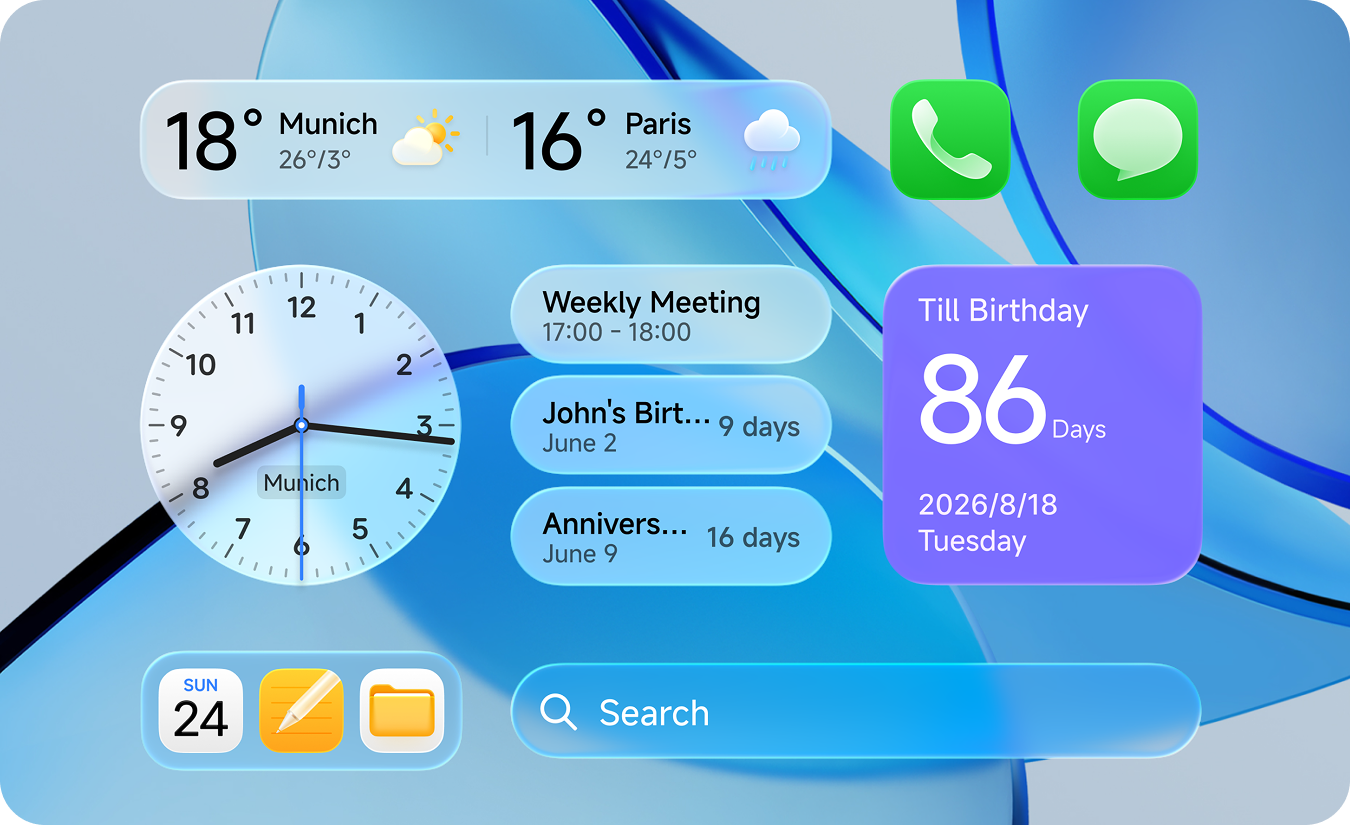
The other major overhaul is visual. Xiaomi is calling it “Soft Light Glass,” and it’s a translucent theme, featuring trendy glass-like and blurry widgets and buttons everywhere. When interacted with, the UI elements respond with soft glowing lights or flowing animations.
HyperOS 4 default look. | Image by Xiaomi
Users can also style the lock screen now, and its notifications stack on the bottom instead of crowding out the background. Widgets can be similarly stacked on the home screen. There are some new AI features in the notes and voice recorder apps – they help transcribe and summarize.
Recommended For You
Poll
1 Votes
What do you like best about the update?
Xiaomi users say it’s smoother and faster
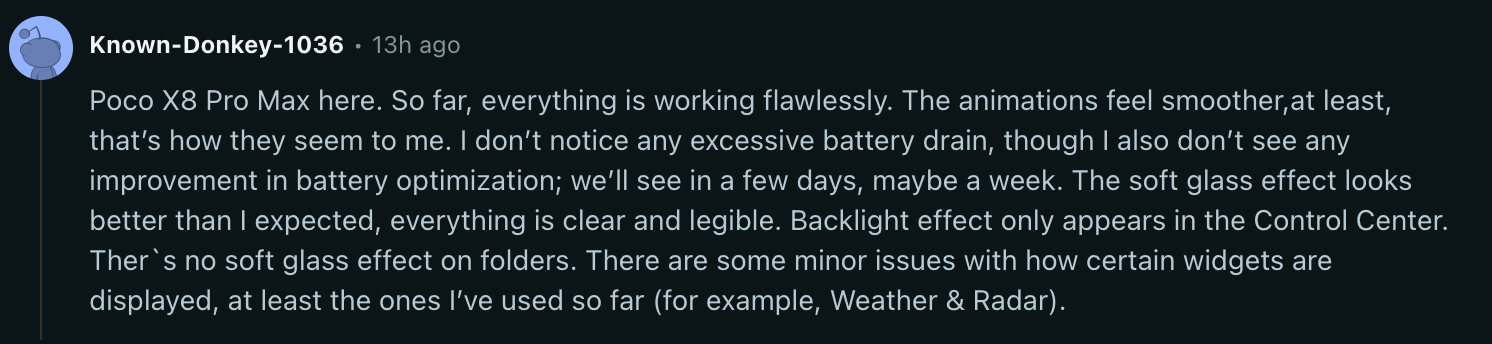
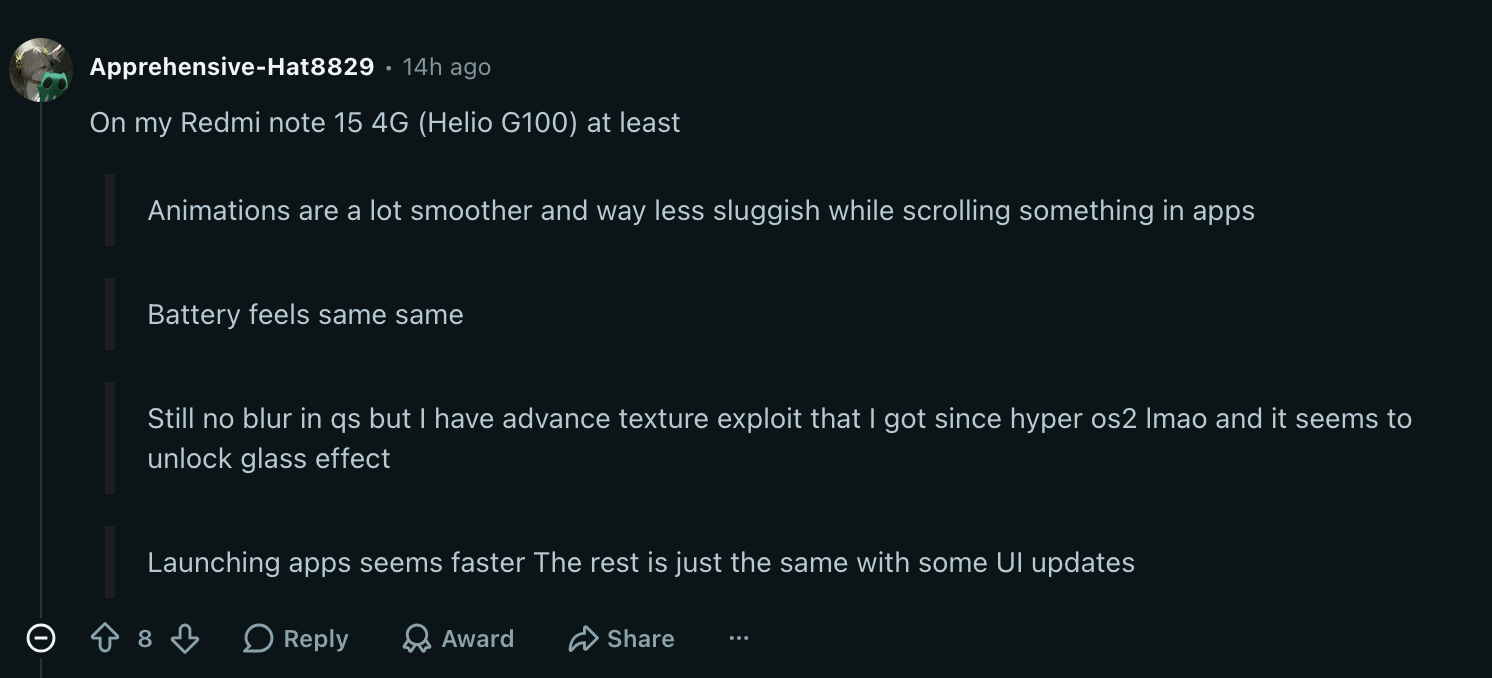
A Xiaomi user who upgraded to HyperOS 4. | Image by Reddit
Performance issues have plagued Xiaomi’s software for as long as I can remember, so I wondered how HyperOS 4 actually runs in the wild. Based on early reports, it looks like the company’s focus on optimization is paying off.
Xiaomi user relating their experience of using HyperOS 4. | Image by Reddit
Many Xiaomi users who installed the upgrade say that apps are opening faster, the interface feels smoother, and there’s less lag in scrolling.
I didn’t come across any concerning bug reports or hardware issues either, so the update seems stable so far. Battery life remains unaffected as far as the reports go.
You might remember Xiaomi shipping its phones with MIUI, but the company switched to HyperOS in 2023.
For about six months before the switch, I had used the very last version of MIUI, and it consistently felt underbaked and bloated. The interface wasn’t polished enough, and apps always lagged on launch, even when the phone was new.
When it came out, HyperOS version 1 somehow looked and felt more like MIUI than MIUI itself. But it cut a lot of the bloat, so the phone got a bump in performance, even though the interface still wasn’t polished enough. HyperOS 4 seems to have closed some of that gap too.
So while Xiaomi’s visual design once again looks Apple-inspired, it's also more refined than ever. The OS itself seems to be maturing in the right direction, and fans are excited to get the update.
Faisal Rasool has been writing about mobile tech for the past ten years. His favorite cousin used to be a mobile technician and, as a kid, Faisal learned how to repair and tweak phones in his workshop. Faisal's first phone was the Samsung Galaxy Europa (released 2010). More Android smartphones followed it, including the Samsung Galaxy S4, the Galaxy S6, Huawei P8, and currently the Galaxy A56.
He's a life-long Android guy because he loves other open-source platforms. He's been covering such platforms for websites like How-To Geek, Android Headlines, Android Police, SlashGear, and now PhoneArena.
Faisal has a bachelor's in English literature and he likes to write stories and paint in his free time.
A discussion is a place, where people can voice their opinion, no matter if it
is positive, neutral or negative. However, when posting, one must stay true to the topic, and not just share some
random thoughts, which are not directly related to the matter.
Things that are NOT allowed:
Off-topic talk - you must stick to the subject of discussion
Offensive, hate speech - if you want to say something, say it politely
Spam/Advertisements - these posts are deleted
Multiple accounts - one person can have only one account
Impersonations and offensive nicknames - these accounts get banned
To help keep our community safe and free from spam, we apply temporary limits to newly created accounts:
New accounts created within the last 24 hours may experience restrictions on how frequently they can
post or comment.
These limits are in place as a precaution and will automatically lift.
Moderation is done by humans. We try to be as objective as possible and moderate with zero bias. If you think a
post should be moderated - please, report it.
Have a question about the rules or why you have been moderated/limited/banned? Please,
contact us.









Things that are NOT allowed:
To help keep our community safe and free from spam, we apply temporary limits to newly created accounts: